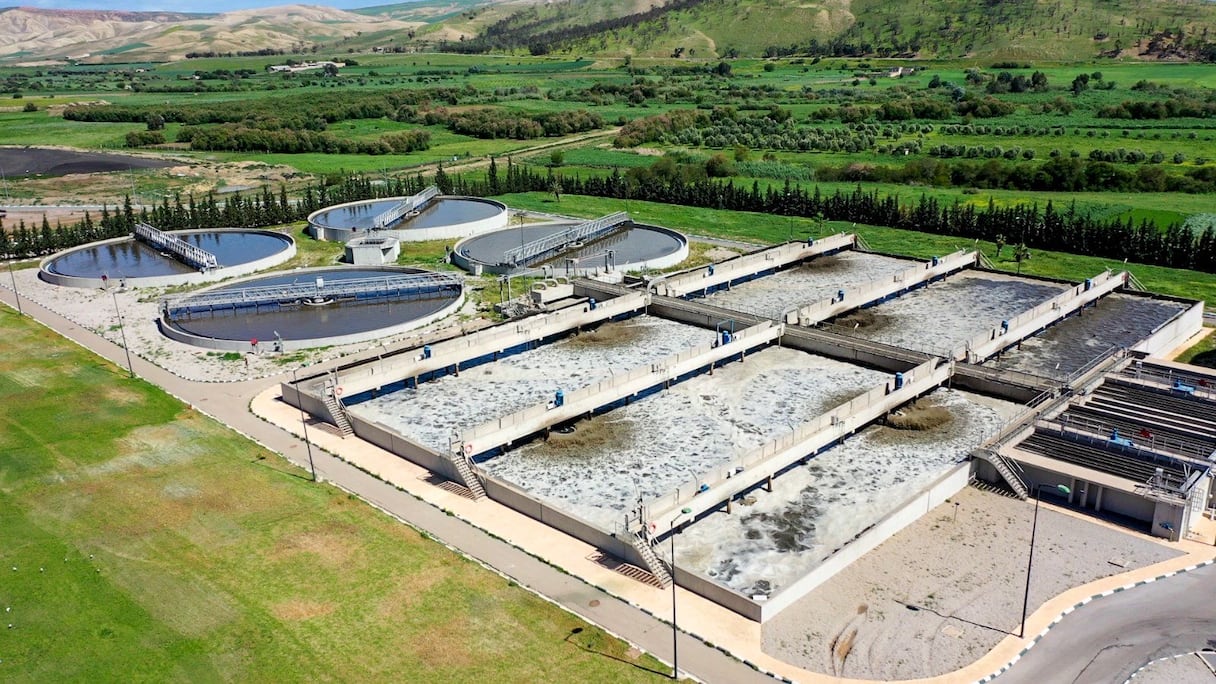
The Regional Multi-Service Company of Fez-Meknes has allocated around 22.84 million dirhams ($2.3 million) to draw up the plan, which will cover the prefectures of Fez and Meknes and the provinces of Moulay Yacoub, Sefrou, Taounate, Boulemane, Ifrane and El Hajeb.
The study will assess the condition and performance of existing wastewater infrastructure and networks, update projections for wastewater and stormwater flows, and identify projects and investments needed to expand network capacity and improve efficiency.
Read also : ‘Water Highway’ to grow by 300 Km, transferring up to 800 million cubic meters a year
It will also set out a framework for operating and maintaining wastewater facilities, strengthening flood resilience and expanding access to wastewater services. The plan will address the treatment and discharge of wastewater in line with environmental standards to protect receiving natural environments.
Another focus will be wastewater reuse and the management of discharges from industrial and craft activities. This will include identifying pollution sources and their characteristics and establishing conditions and standards for accepting such discharges into public networks.
The study is expected to produce an investment program based on several scenarios, taking into account constraints including networks under increasing pressure or approaching their maximum capacity.
Read also : Morocco’s dams remain above 70% capacity as summer water reserves hold strong
The plan will run through 2045. The first phase, covering 2026-2028, will focus on urgent interventions and priority works, followed by short-term projects through 2030, medium-term projects through 2035 and long-term projects through 2045. The scenarios will also account for different stages of network capacity saturation.
The regional plan is intended to anticipate infrastructure needs arising from economic and urban growth and strengthen the region’s readiness for major projects, including preparations for the 2030 FIFA World Cup.
