The agreement was signed in Casablanca on Tuesday, September 30, during a ceremony attended by AfDB President Sidi Ould Tah and Morocco’s Minister of Economy and Finance Nadia Fettah. It was signed by AfDB Country Manager for Morocco Ashraf Tarsim and National Airports Office (ONDA) Director General Adel El Fakir.
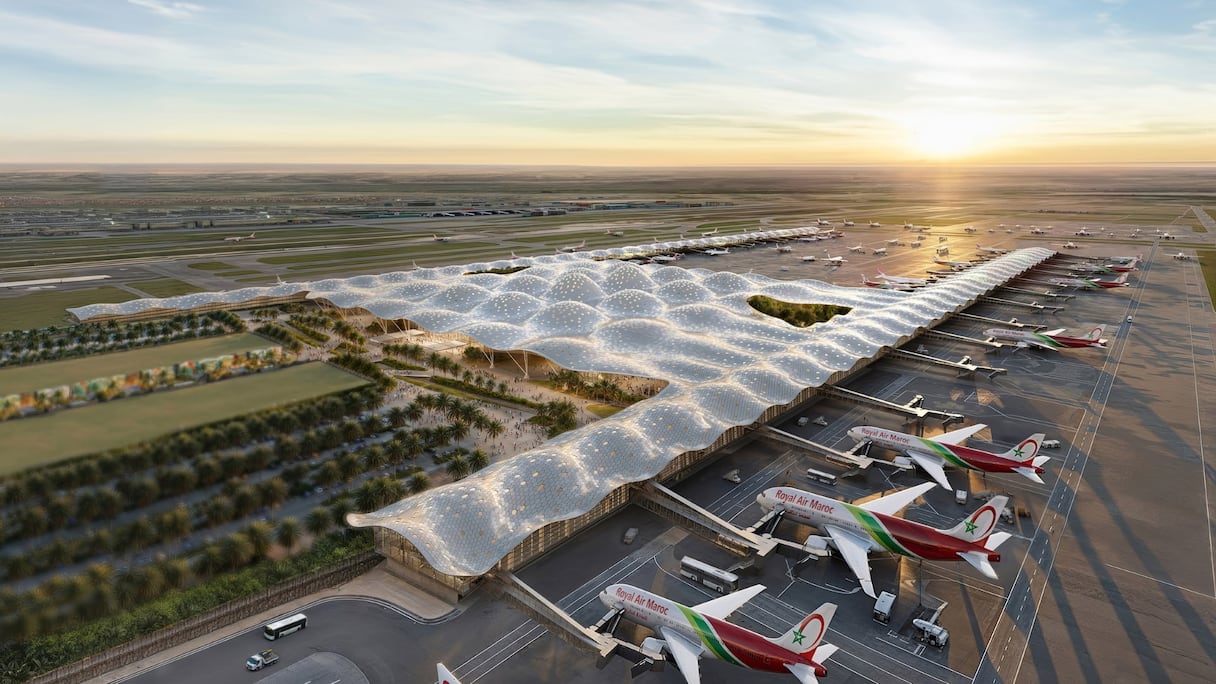
The financing will support the modernization and expansion of several major airports, including those in Marrakech, Agadir, Fez and Tangier.
By 2030, the program is expected to raise annual passenger capacity to 14 million in Marrakech, 5 million in Agadir, 3.6 million in Tangier and 3 million in Fez.
According to the AfDB, the project will upgrade airport infrastructure, expand air navigation systems and strengthen safety and security systems. The investments will also provide airports with next-generation safety equipment, automated baggage-handling systems and digital solutions designed to make passenger journeys faster and more convenient.
Read also : New uniforms, twice the staff as airport passenger service gets a makeover
AfDB President Sidi Ould Tah said the €270 million loan to ONDA supports Morocco’s plans to modernize and strengthen its airport capacity, particularly in strategic hubs such as Marrakech, Agadir, Fez and Tangier.
He also said the financing supports Morocco’s preparations for major international events and forms part of the AfDB’s broader efforts under its Integrated Program for the Transformation of Africa’s Aviation Sector, which aims to help African countries modernize, finance and integrate their air transport systems.
The agreement, signed in the presence of Tamwilcom Director General Said Jabrani, is expected to contribute to Morocco’s efforts to strengthen its position as an air transport hub connecting Africa with Europe and other parts of the world.
The program also supports Morocco’s tourism strategy through 2030 and is aligned with the AfDB’s strategic priorities, the bank said.
The investments are expected to improve airport safety and create thousands of jobs in the short term, particularly for young people and women. Over the medium term, the program is also expected to support tourism, trade and logistics and encourage public and private investment linked to air transport.