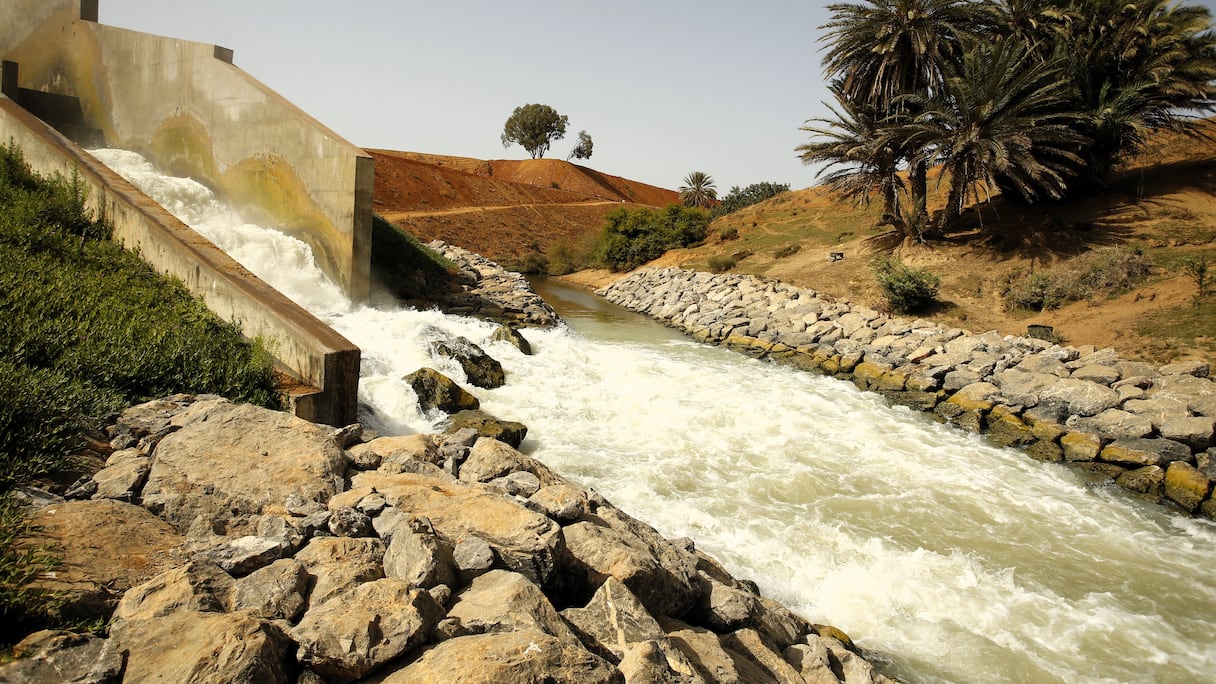
Work on a new water transfer link connecting the Bouregreg and Oum Er-Rbia basins will begin in early 2027, Water Minister Nizar Baraka told the House of Councillors on Tuesday, as Morocco prepares to extend its network of inter-basin connections to areas facing pressure on drinking water and irrigation supplies.
The project will initially have a capacity of 400 million cubic meters, with plans to double that volume at a later stage.
It will extend the existing Sebou–Bouregreg connection, allowing water to be transferred further south towards the Oum Er-Rbia basin.
Baraka said the new link would benefit Chaouia, Berrechid and areas dependent on the Oum Er-Rbia, as well as the Tensift basin and surrounding districts.
The water will serve both households and agriculture.
Read also : Morocco’s dams hold 11.2 billion cubic meters, more than double last year’s reserves
The announcement came as the minister reported a sharp improvement in dam reserves following autumn rainfall.
Morocco’s reservoirs have received 1.2 billion cubic metres of water since September, compared with 340 million cubic metres over the same period last year.
Total reserves now stand at 11.2 billion cubic meters, with the national dam filling rate reaching 66.2 percent.
Baraka said the available water would be sufficient to secure drinking water supplies for “at least two years,” although the situation varies between regions.
The government is also preparing four major seawater desalination projects.
A 300-million-cubic-meter plant in Nador is at the contract-signing stage, while negotiations are under way for a 150-million-cubic-meter facility in Tangier under a public-private partnership.
Two more projects are scheduled to be launched in 2027: a 350-million-cubic-meter plant in Tiznit, serving the Souss region, and a 100-million-cubic-meter facility for Tan-Tan and Guelmim.
All four are intended to supply drinking water and irrigation.
Read also : Sebou basin: 12 dams on radar for floating solar panels
By 2031, Morocco aims to raise its total desalination capacity to 1.8 billion cubic meters, including 500 million cubic meters earmarked for agriculture.
The minister said the reuse of treated wastewater had already increased from 40 million to 59 million cubic meters, with a target of 100 million cubic meters in 2027.
Dam construction is continuing alongside the transfer and desalination projects.
Fourteen large dams are under construction at a cost of MAD26 billion, along with six medium-sized dams with a combined capacity of 197 million cubic meters.
Another 12 large dams are planned, with a combined capacity of 4.9 billion cubic meters.
The program includes 155 small dams, around 30 of which have already entered the construction phase.
Morocco’s total dam storage capacity currently stands at 21 billion cubic meters, with a target of 27 billion cubic meters by 2031.
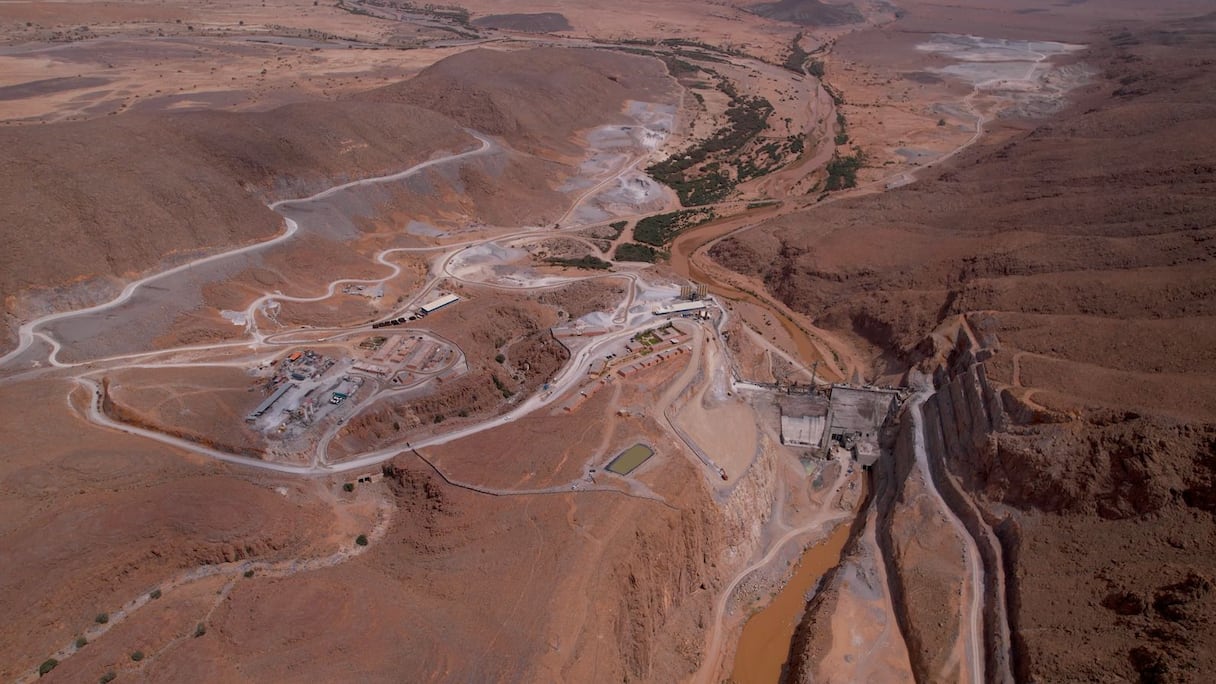
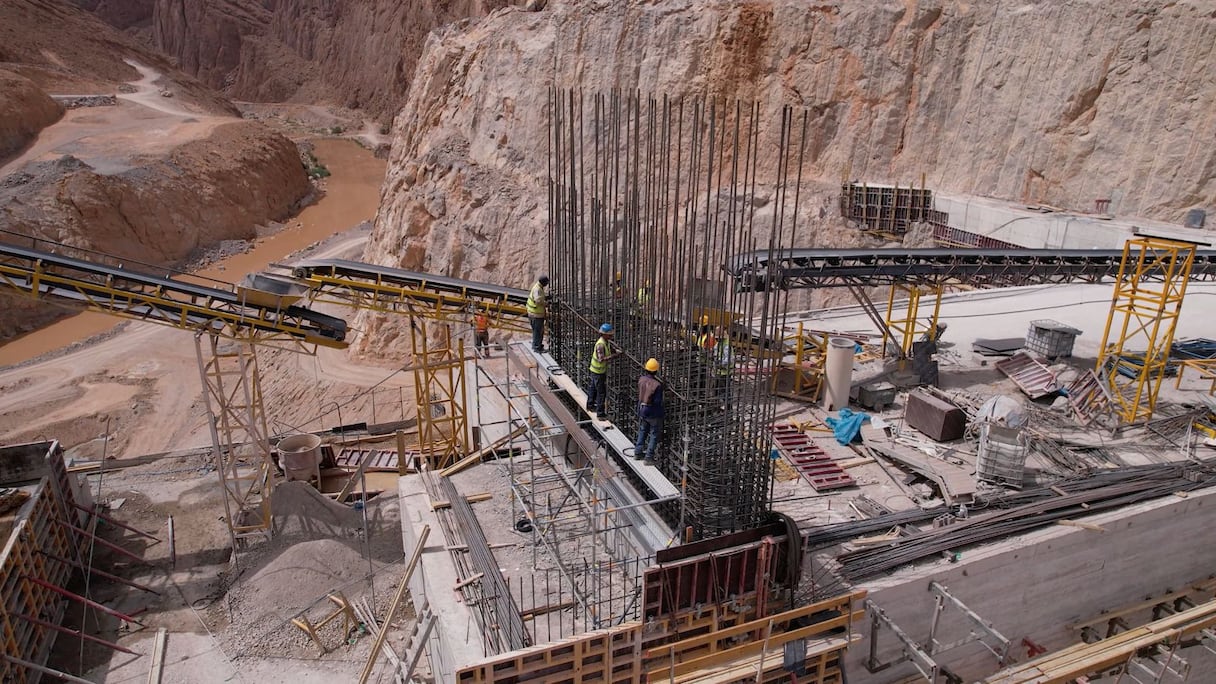
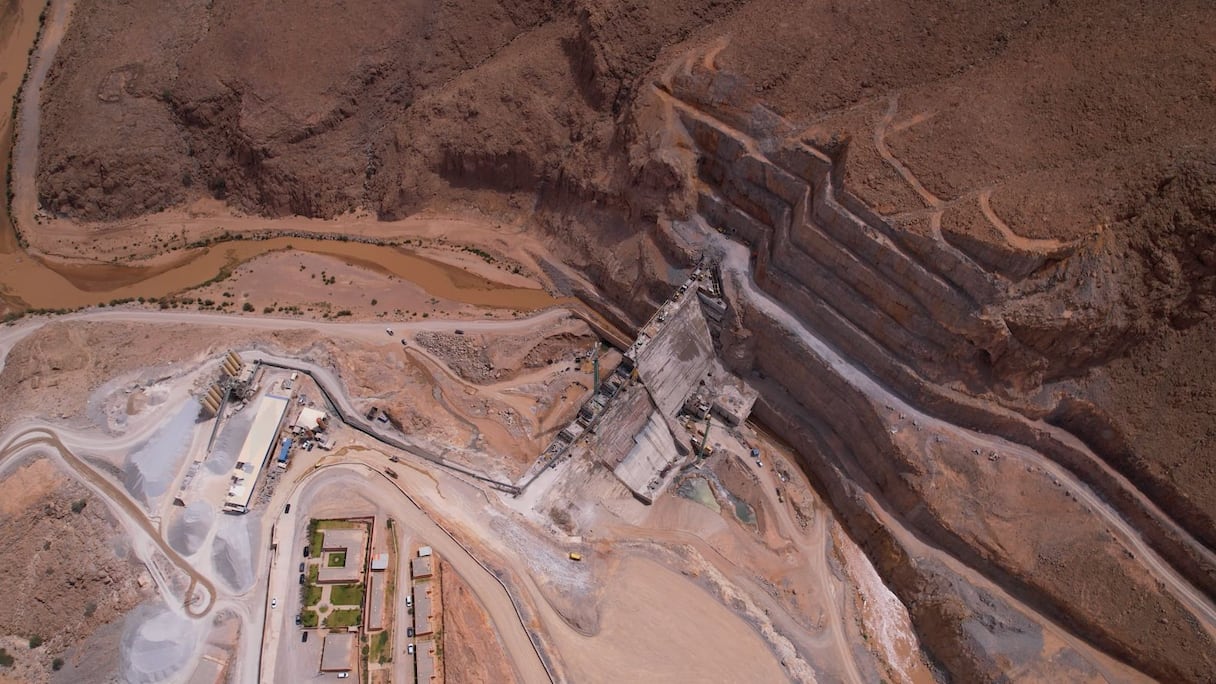
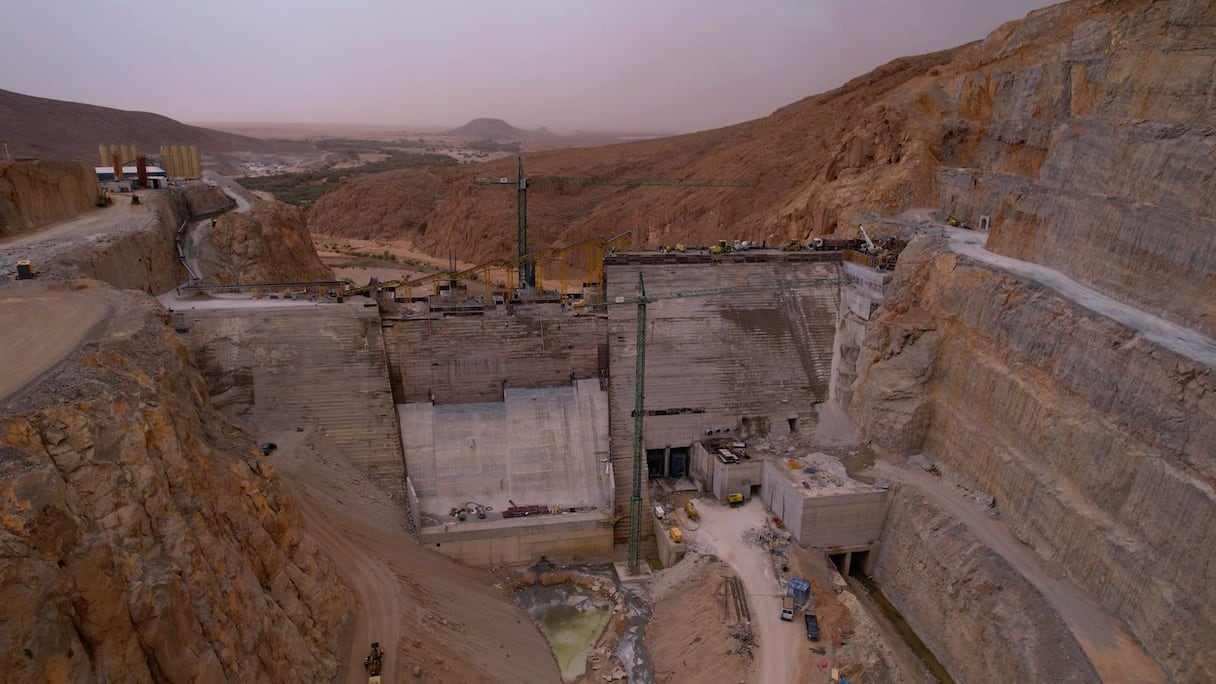


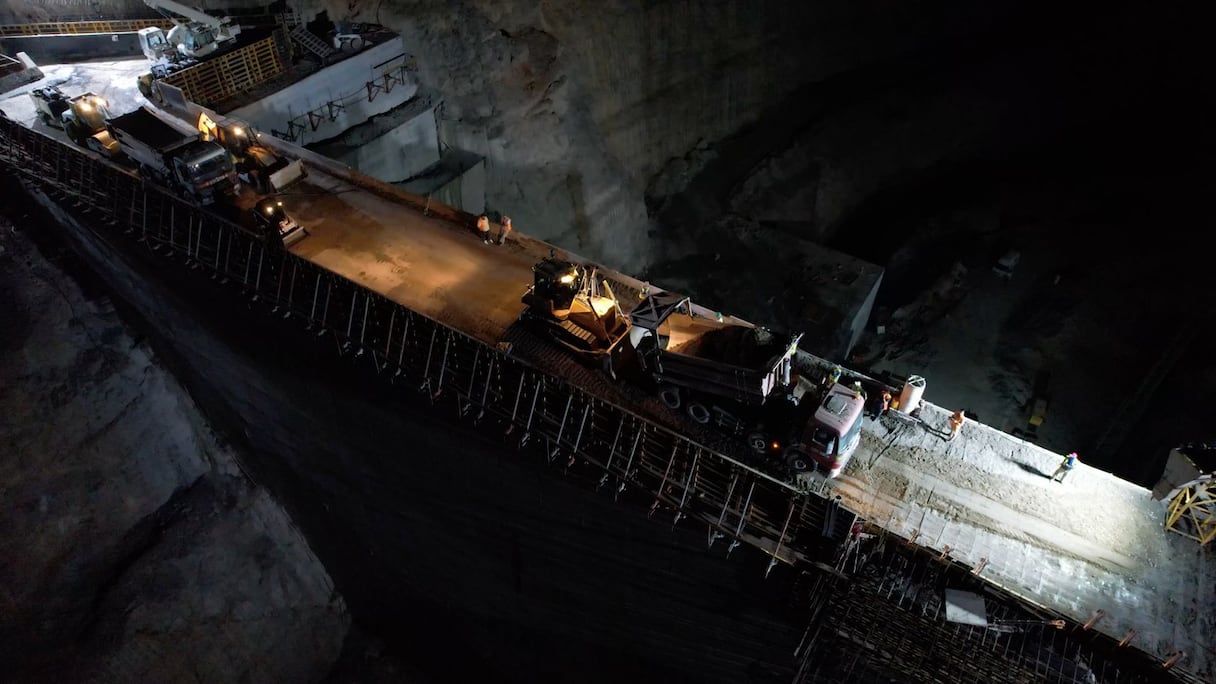


Inside the Kheng Grou Dam construction site, Morocco’s fifth-largest dam, on Thursday, October 15, 2026. Construction is 91% complete.
Baraka also outlined measures to improve flood warnings after successive years of drought and episodes of heavy rainfall.
The new Vigicrues system monitors rivers and is intended to provide warnings up to three days before a possible flood, particularly in rural areas.
Working with the Interior Ministry and the Natural Disaster Effects Fund, the department has also arranged for residents in flood-prone areas to receive advance warnings by text message.
Commune presidents are receiving daily weather bulletins tailored to their areas, while the ministry wants to extend its forecasting horizon from three to 10 days.
A new atlas of flood-prone areas is being prepared, including locations previously considered safe but now exposed to flooding.
Baraka said his department was working with urban planning authorities to prevent new construction in areas identified as being at risk.
