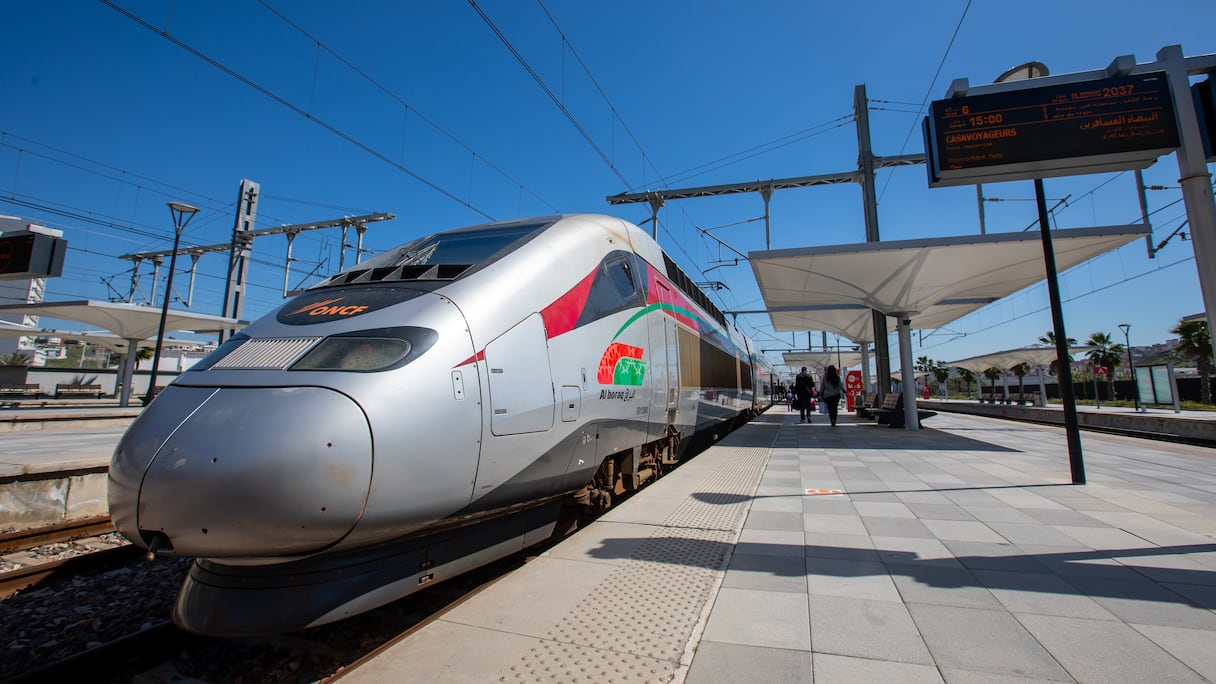
ONCF entered 2026 on the back of another year of growth. In 2025, it carried 55.6 million passengers and 23.2 million tonnes of freight. Consolidated revenue rose 7% to MAD 6.191 billion, including MAD 2.905 billion from passenger services, of which MAD 848 million came from Al Boraq high-speed trains, according to the report on public institutions and state-owned enterprises accompanying the draft 2027 Finance Bill.
By the end of June 2026, ONCF had generated MAD 2.479 billion in revenue, up 2% from the same period a year earlier. Capital expenditure reached MAD 4.834 billion in the first six months, following investment of MAD 18.984 billion in 2025. The operator also established a new subsidiary during the first half of the year.
For 2026 as a whole, ONCF expects revenue of MAD 5.276 billion and operating profit of MAD 216 million, with capital expenditure projected at MAD 18.2 billion.
Revenue growth forecast through 2029
ONCF forecasts revenue of MAD 6.051 billion in 2027, rising to MAD 6.565 billion in 2028 and MAD 7.045 billion in 2029. The projected growth reflects the gradual introduction of new railway infrastructure and rolling stock. Investment spending is expected to peak in 2027 at MAD 29.021 billion.
The MAD 96 billion development program has three main components. The largest, worth MAD 53 billion, covers the extension of the high-speed line from Kenitra to Marrakech, together with associated infrastructure and equipment. A further MAD 29 billion is earmarked for 168 next-generation trains. The remaining MAD 14 billion will fund a program to maintain and improve network performance, including MAD 8 billion to support the high-speed extension and the development of regional express rail infrastructure and MAD 6 billion to maintain the existing network.
Construction of the approximately 430-kilometer Kenitra–Marrakech high-speed line began in April 2025. A separate railway development program for the Casablanca region was launched in September 2025. It includes a new multimodal station at Casa-Sud and new stations serving Mohammed V International Airport and the future Hassan II Grand Stadium. The program also aims to improve rail connections between Mohammedia and Nouaceur.
ONCF’s fleet renewal program covers 18 high-speed trains, 40 intercity trains and 110 trains for regional express and shuttle services. The procurement contracts also include industrial offset commitments, with plans to establish manufacturing capacity for regional express trains in Morocco and strengthen the domestic railway industry.
Passenger numbers expected to approach 100 million by 2030
As new lines, stations and trains gradually enter service, ONCF expects a substantial increase in network capacity. The expansion is intended to accommodate rising passenger demand, particularly around Morocco’s major cities and along its principal economic corridors.
By 2030, ONCF expects to carry nearly 100 million passengers a year, up from 55.6 million in 2025. It is also targeting revenue of around MAD 10 billion and an operating margin exceeding MAD 5 billion.
