With the 2030 FIFA World Cup approaching, which Morocco will co-host with Spain and Portugal, financing the infrastructure needed for the tournament has become a major challenge for public finances. The scale of investment required in railways, motorways and airports means substantial funding must be raised without placing the entire burden on the general state budget or adding directly to Treasury debt.
To meet that challenge, the National Agency for the Strategic Management of State Holdings (ANGSPE) has helped several state-owned enterprises develop alternative financing arrangements. According to its latest State Shareholder report, the financing packages designed for the National Railways Office (ONCF), National Motorways Company (ADM) and National Airports Office (ONDA) amount to 53 billion, 14.5 billion and 38 billion dirhams, respectively—a combined 105.5 billion dirhams across the three operators.
The aim is to give these companies greater financial capacity to deliver their investment programs through a combination of asset monetization, securitization, bank borrowing, bond issuance and, depending on the project, state contributions or internally generated funds.
Read also : Inside Morocco’s major infrastructure projects taking shape before 2030
The agency, headed by Abdellatif Zaghnoun, estimates that these arrangements could ease pressure on the general state budget by around 100 billion dirhams by strengthening the companies’ equity positions and borrowing capacity.
High-speed rail and regional express networks: Regions and banks to provide funding
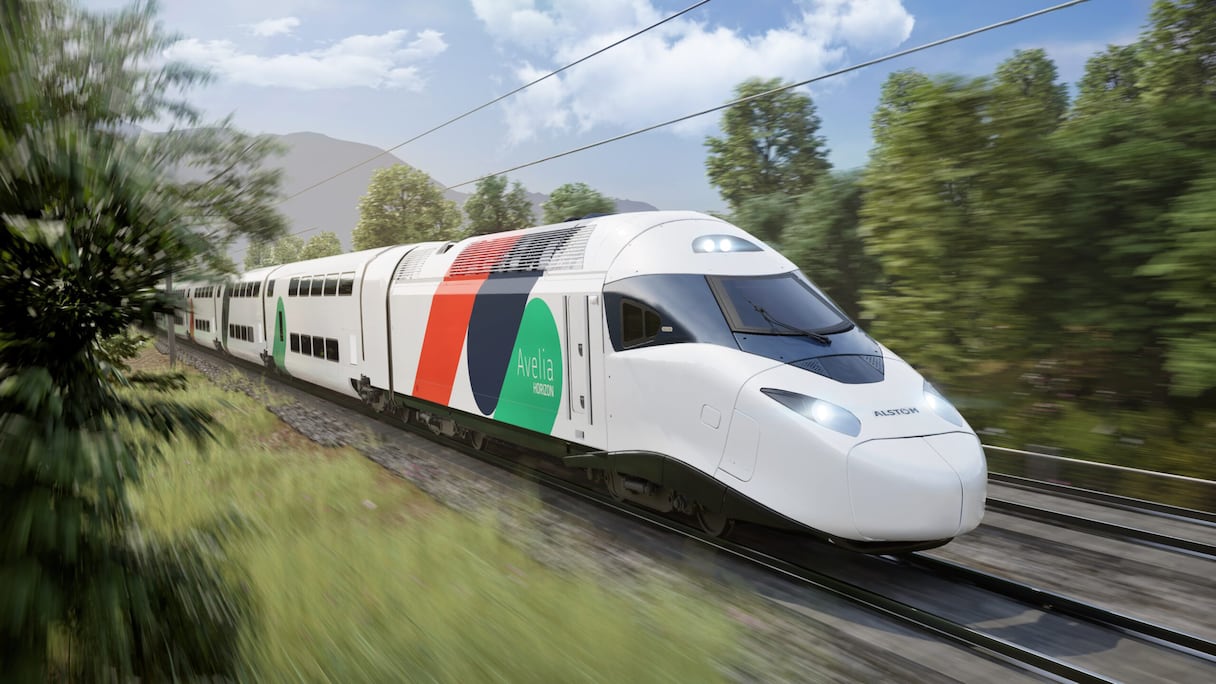
The rail investment program is among the most ambitious. Its main projects include extending the high-speed line from Kenitra to Marrakech and developing regional express rail networks (RER) serving Casablanca, Rabat and Marrakech.
ANGSPE has designed a 53-billion-dirham financing package for these projects. Of that amount, 48 billion dirhams would be borrowed from a banking consortium by five regions: Tangier-Tetouan-Al Hoceima, Fez-Meknes, Rabat-Sale-Kenitra, Casablanca-Settat and Marrakech-Safi. The remaining 5 billion dirhams would come directly from the state as an equity contribution.
The arrangement is intended to avoid the need for a sovereign guarantee and keep the borrowing from directly increasing Treasury debt. Denominating the financing in dirhams also eliminates foreign-exchange risk. Another objective is to spread the funding requirements across several sources rather than relying exclusively on Morocco’s domestic bond market.
The financing plan also provides for ONCF to contribute towards servicing both its existing debt and the new infrastructure debt once the high-speed rail extension becomes operational and passenger traffic builds up. Its contribution would therefore increase as the investments begin to generate additional business for the rail operator.
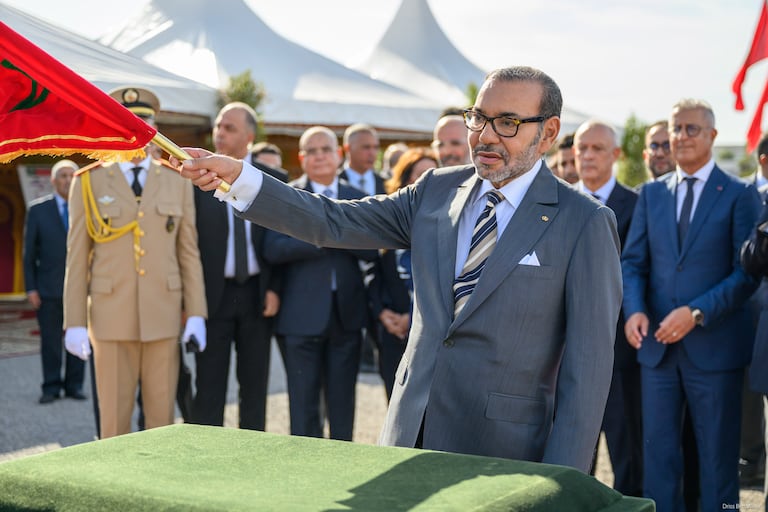
The arrangement was approved following an interministerial meeting on January 8, 2025, before the state and ONCF signed a memorandum of understanding in May that year. Preliminary consultations with prospective lenders indicated potential financing interest exceeding 50 billion dirhams, according to the report.
ADM turns to securitization and bond markets
In the motorway sector, ADM plans to invest approximately 14.5 billion dirhams by 2032, excluding major repair works. The projects include the Rabat–Casablanca continental motorway and completion of the Tit Mellil–Berrechid motorway.


Construction work on the new Tit Mellil-Berrechid highway. (A. Et-Tahiry/Le360). عبد الرحيم الطاهيري
To finance the program, ANGSPE recommends a two-pronged approach. The first involves securitizing, over 20 years, the fees ADM pays the state for temporary use of public land. The transaction is expected to raise 7 billion dirhams, which would be injected into the company through a capital increase to strengthen its equity base.
The remaining investment would be financed through bonds issued directly by ADM without a state guarantee, alongside loans raised on the domestic market. Securitization transactions and bond issues would be carried out in alternating stages. The stronger equity position would improve the company’s borrowing capacity, making subsequent fundraising easier.
A memorandum of understanding covering the arrangement was signed on March 21, 2025, by the state, represented by the ministries of Economy and Finance and Equipment and Water, alongside ANGSPE and ADM. Once implemented, the plan should allow the motorway operator to issue bonds without a sovereign guarantee for the first time, according to the report.
Airports: 38 billion dirhams in planned investment
ONDA’s investment program totals 38 billion dirhams, including 25 billion dirhams to expand airport capacity and another 13 billion dirhams for upgrading facilities and acquiring land.
The financing plan combines internal and external resources. Securitizing, over 20 years, the fees ONDA pays the state for temporary use of public land is expected to generate 5 billion dirhams, which would be injected as an equity contribution. A further 25 billion dirhams would be raised without a state guarantee through bond issues, bank loans and financing from multilateral banks. ONDA would cover the remaining 8 billion dirhams from its own resources.
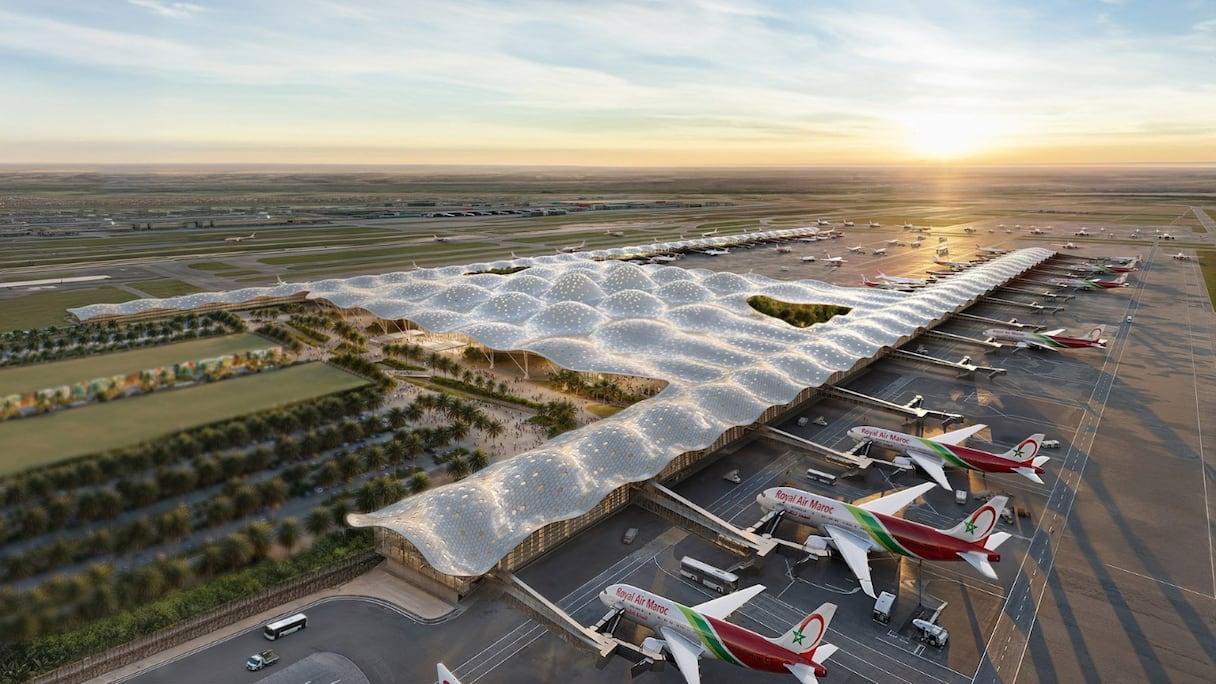
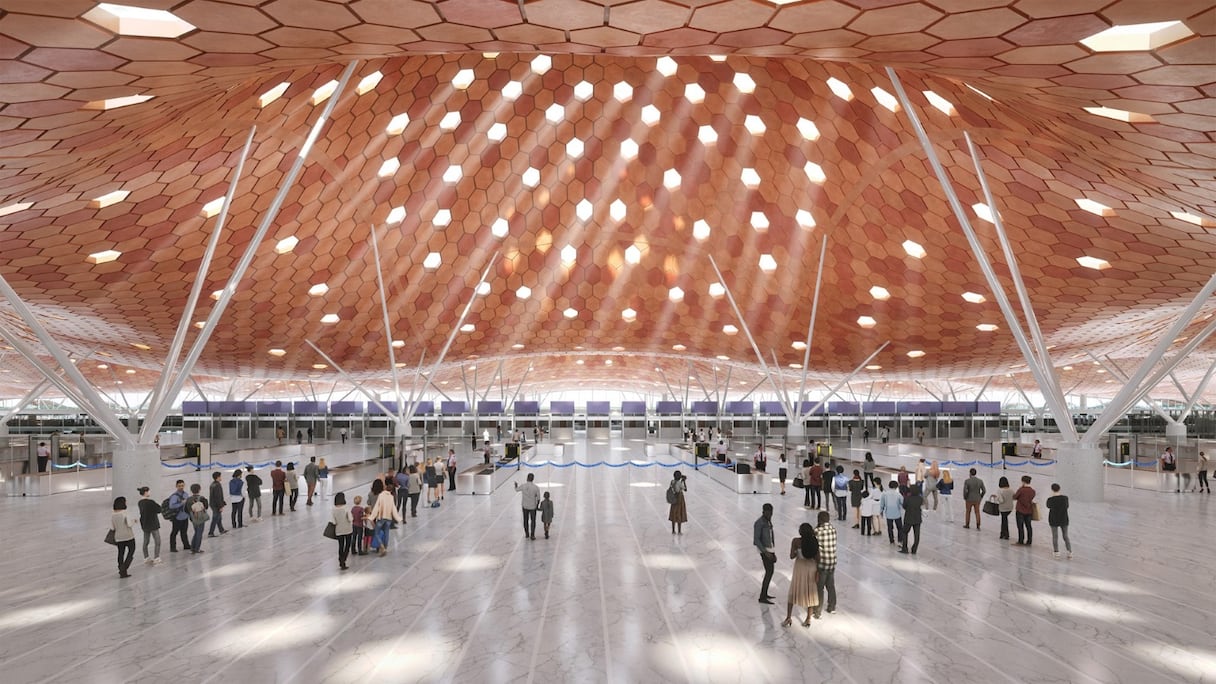
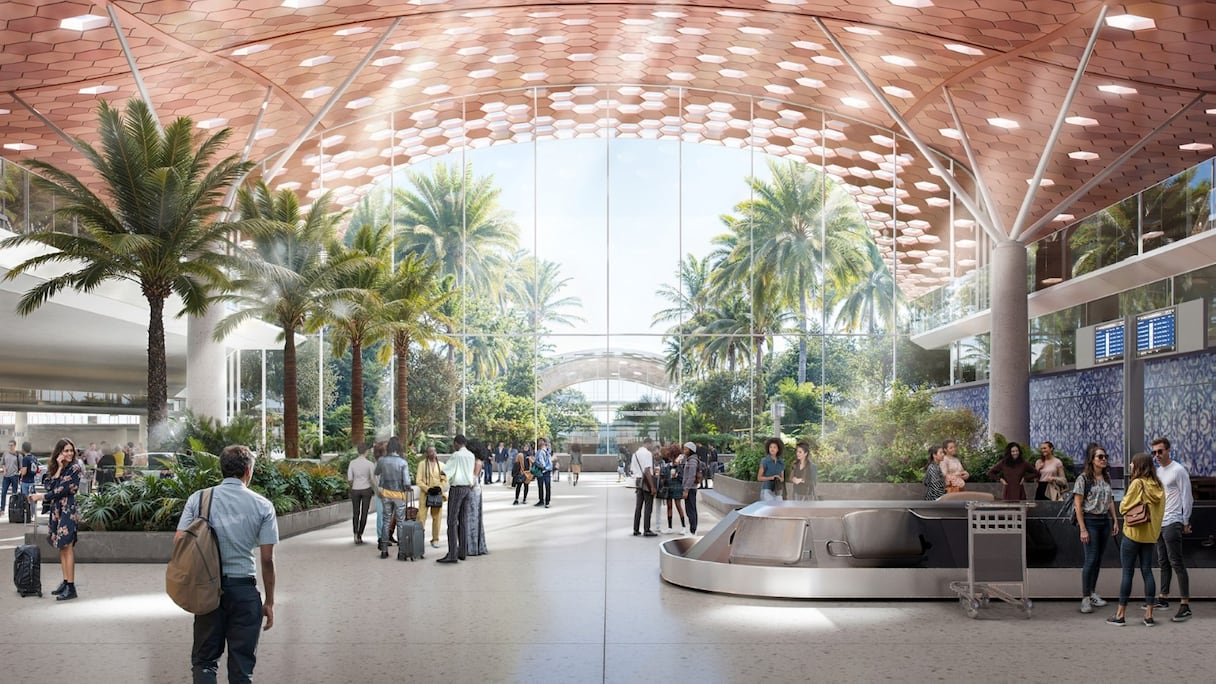
New terminal at Mohammed V Airport in Casablanca.
The arrangement is designed to strengthen ONDA’s equity base while diversifying its funding sources. Bond issues, in particular, would allow the airport operator to tap savings held by institutional investors, including collective investment funds, pension funds and insurance companies.
The financing plan was approved following consultations between ANGSPE, ONDA and the relevant government ministries. A memorandum of understanding was signed on July 24, 2025, at a ceremony chaired by the head of government.
Beyond the sums involved, these arrangements mark a shift in how Morocco intends to finance major public investments. Rather than routinely drawing on the state budget or relying on sovereign guarantees, ANGSPE wants to make greater use of state-owned companies’ assets, strengthen their balance sheets and improve their ability to raise capital in financial markets.
Securitization is one of the main tools underpinning this approach. It allows future revenue streams to be converted into funds that can be used immediately to finance investment. Under the proposed arrangements, the proceeds would be reinvested in the companies concerned through capital increases or equity contributions, strengthening their financial position.
Read also : Casablanca’s 20-billion-dirham rail project: Where work stands one year on
That does not mean, however, that the projects will be financed without debt or public support. The rail program, for example, includes a 5-billion-dirham state equity contribution, while the other financing arrangements rely partly on borrowing that operators will have to repay from their own resources and revenues generated by their activities.
The objective, then, is not to eliminate the cost of these investments but to distribute the financing burden differently, limiting the immediate impact on the general state budget and avoiding sovereign guarantees on the borrowing involved. Whether the arrangements prove sustainable will ultimately depend on the state-owned companies’ ability to meet their financial obligations, the economic returns generated by the infrastructure and their success in keeping construction costs under control.
