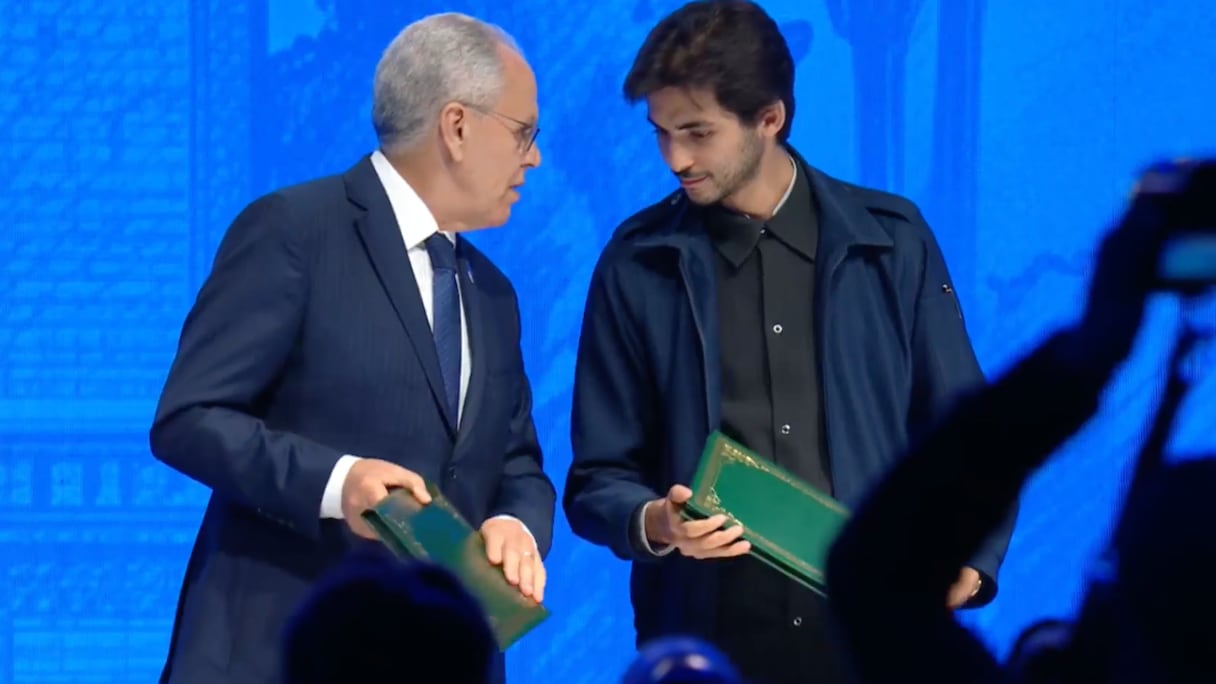
According to Loudiyi, “the aerospace sector, together with the full range of technologies it encompasses, has become an essential driver of national industrial capacity.” The industry has undergone a significant transformation in Morocco, which the minister attributed to the royal vision “aimed at establishing the Kingdom as a global strategic hub for aircraft manufacturing and maintenance.”
(From 09:25)
That vision has several components. It includes “modernizing airport infrastructure to support the development of tourism and prepare for major international sporting events. It should also enable Morocco, as an emerging player, to contribute to the development of global production chains in the sector.”
From basic assembly to advanced engineering
Morocco’s aerospace industry has moved from basic assembly into manufacturing and advanced engineering, Loudiyi said. “This move up the value chain has been accompanied by the arrival of major global groups,” he said, citing Boeing, Airbus and Pratt & Whitney, among others.
Highlighting the industry’s progress, he recalled that “King Mohammed VI inaugurated advanced aerospace manufacturing facilities. These sites notably produce aircraft engines and landing systems, as well as other components manufactured in Morocco.”
Loudiyi then turned to Morocco’s efforts to develop a domestic defense industry. The process has unfolded in several stages. Morocco first established the necessary legal framework, laying the foundations for the country’s entry into military manufacturing. The Kingdom then created dedicated defense industrial zones, equipped with advanced logistics and services tailored to the specific requirements of the industry.
Defense manufacturing falls within the category of strategic investment. To encourage it, Morocco has introduced a range of incentives while also strengthening the overall support available to investors, he said.
According to the minister, these measures have made Morocco more attractive to investors and led to the launch of several industrial projects with a range of international partners. The projects are intended to manufacture and supply military equipment, materiel and services, either to meet the Kingdom’s domestic requirements or for export.
Why Morocco
Alongside these measures, Loudiyi highlighted Morocco’s broader advantages as a destination for defense investment. He cited a favorable business environment and strong security and economic stability, as well as the country’s geographic position linking the Arab world, Africa and Europe, with access to the Atlantic Ocean.
These factors make Morocco an attractive and competitive location for defense industries, he said, as part of the broader development drive underway in the Kingdom under the King’s leadership.
Morocco has pursued two main avenues to advance its domestic defence industry. The first is attracting foreign investment. The second is localizing military-related technologies. The Kingdom has also mobilized domestic public- and private-sector players, encouraging them to forge partnerships with foreign investors.
Loudiyi stressed that the sector enjoys royal support. He cited King Mohammed VI’s speech marking the 27th anniversary of his accession to the Throne, in which the sovereign said that establishing an industrial and technological base dedicated to defense industries would gradually strengthen the Kingdom’s sovereignty in this field. It would also create new development opportunities and consolidate Morocco’s position as a regional power in the defense industry.
The minister concluded this part of his remarks by setting out the Kingdom’s ambition. Morocco is determined to develop the sector, he said, and to mobilize the necessary resources and expertise to achieve that goal. It wants to turn the defense industry into a genuine lever for strengthening relations with its partners. The objective, he said, is to “move from a country that imports defense capabilities to one that builds a national capability.”
