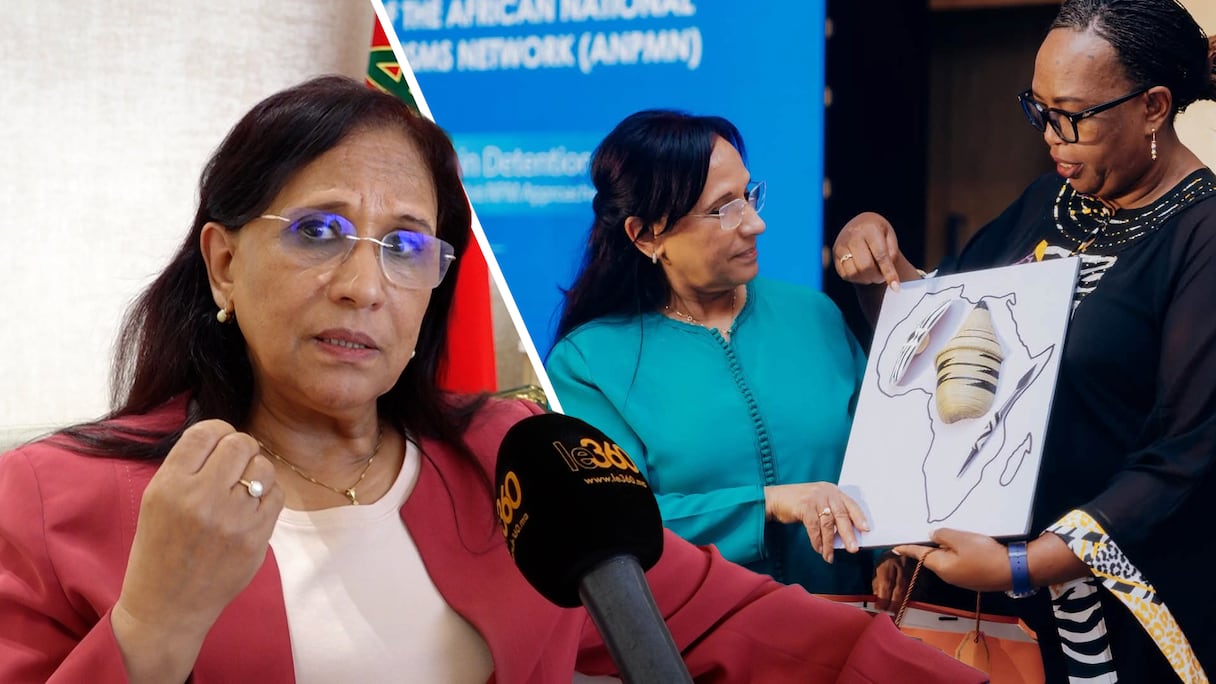
The National Human Rights Council (CNDH) has launched the training of 1,000 observers, including 40% women, who will be tasked with independently monitoring Morocco’s legislative elections scheduled for Wednesday, Sept. 23, 2026. The announcement was made on Friday, July 24, by CNDH President Amina Bouayach.
In an interview with Le360, Bouayach detailed the mechanism that will be deployed across polling stations nationwide. “Their mission is to observe the conduct of the vote and the vote-counting process, in accordance with legal provisions and the standards applicable to election observation,” she said, describing the upcoming elections as an important stage in Morocco’s democratic process.
To prepare the observers, the CNDH has established a training program delivered through 31 centers across the country. Complying with international standards for election observation, the program includes simulation exercises replicating the different stages of the electoral process, from the opening of polling stations to the announcement of results. “These simulations enable observers to acquire the skills needed to monitor the voting process, vote counting, and the various stages leading up to and accompanying the announcement of the results,” Bouayach said.
The training program also incorporates artificial intelligence tools designed to facilitate participants’ understanding of the legal and regulatory framework governing elections.
As in previous elections, the CNDH will establish a special accreditation commission to oversee the independent observation of the vote. The body will be responsible for defining accreditation criteria, setting the ethical rules applicable to observers, and issuing accreditations to associations and independent observers.
Read also : Istiqlal reveals first list of candidates for Morocco’s 2026 legislative elections
Bouayach also discussed the agreement recently signed between the CNDH and the High Commission for Planning (HCP). The partnership aims to develop a system of human rights indicators based on official statistical data. “The HCP will make its statistics available to us so that we can develop and measure reliable human rights indicators,” she said.
The CNDH president also referred to the tribute recently paid to her in Kigali by the African Network of National Preventive Mechanisms Against Torture. “This tribute is first and foremost addressed to the CNDH, through my person, in recognition of the role played by Morocco, which hosts the network’s permanent headquarters,” she said.
Finally, Bouayach recalled the CNDH’s participation in the international conference on the abolition of the death penalty held in Paris. The conference confirmed that Morocco will host the next World Congress Against the Death Penalty, which is scheduled to take place in Marrakech in 2029.
