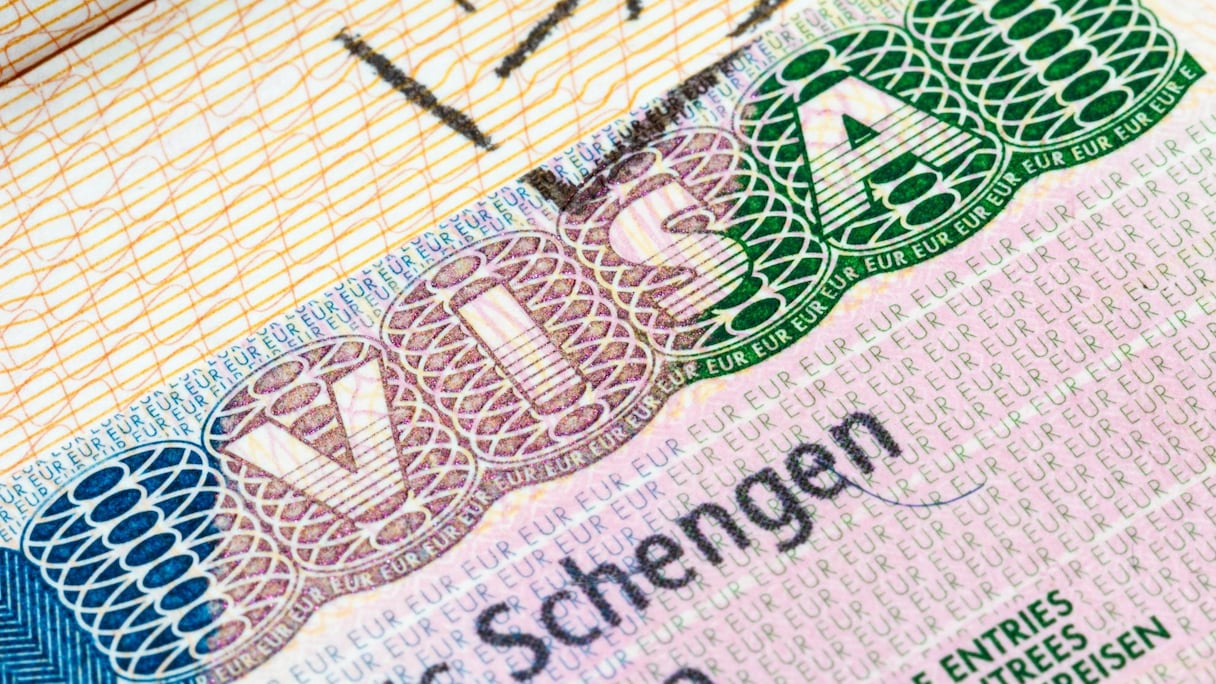
Could Schengen visas soon cost more for Moroccans? The question arises as the European Commission prepares to revise the rules governing short-stay visas. One of the options under consideration is the introduction of an additional European fee on top of the existing visa charges.
For Morocco, the issue concerns a large number of travelers. Nearly 620,000 Schengen visa applications were filed in 2025, according to European Commission statistics. The Kingdom is therefore among the world’s five largest applicant countries, alongside China, Türkiye, India and Russia.
Any change in fees or procedures could therefore directly affect Moroccan tourists, students, professionals, businesspeople and families.
The main financial proposal involves creating a separate European fee in addition to the current visa charges. The Commission is examining this possibility with EU member states as part of preparations for the reform.
The amount and terms of such a fee have not yet been determined. More importantly, it would not be specific to Morocco: if adopted, it would apply to nationals who are required to obtain a Schengen visa.
Read also : Schengen Visas: BLS International rolls out new system to end appointment Chaos
The current fee remains €90 for adults and €45 for children aged 6 to under 12. These rates have been in effect since the increase decided in June 2024, when the adult visa fee rose from €80 to €90.
For a family, higher application fees would mechanically increase the cost of traveling to Europe, in addition to expenses that may already include visa application services, travel insurance and transportation.
Morocco particularly exposed by the volume of applications
The significance of the issue lies mainly in the number of applications filed from Morocco. Schengen countries received more than 12 million short-stay visa applications in 2025.
With around 620,000 applications, Morocco is therefore one of the European visa policy’s main markets. The figure reflects the intensity of travel between Morocco and Europe for tourism, business, education and family visits.
A general change to the system would therefore have a significant impact on Moroccan travelers, without Morocco benefiting from or being subject to any special arrangements at this stage.
The revision of the Visa Code is not limited to fees. The European Commission is also considering making certain procedures easier for travelers considered reliable, particularly for business trips.
Among the options are simplified procedures for employees of companies considered reliable, including the possibility of faster processing, priority appointments or fewer supporting documents.
Read also : UK expands Global Talent visa: what changes for African scientists
These changes could be of interest to Moroccan companies whose activities involve regular travel to Europe, particularly in sectors that are deeply integrated into European value chains.
The proposal also includes new tools that would allow certain categories of visas to be suspended or restricted in certain circumstances. Brussels is considering using them in response to specific political, security or migration situations.
The Commission’s document does not mention Morocco in this context. This aspect concerns a general mechanism designed to give the European Union greater flexibility in managing its visa policy.
Towards a more digital visa system
The reform is also part of the digital transformation of the European visa system. The European Union is working toward the gradual digitization of procedures, with the aim of simplifying the process and strengthening the interconnection of IT systems.
The European strategy also provides for longer-term multiple-entry visas for certain travelers considered reliable.
For Moroccan applicants, the changes could therefore involve several aspects: the cost of applications, simplified procedures for certain profiles and the gradual digitization of the process.
The timeline will be the next key step. The European Commission plans to present its legislative proposal between January and March 2027. The text will then have to be discussed with EU member states and the European Parliament.
Read also : African students in France: minimum visa income requirement rises to €878 per month
The fees currently in force therefore remain unchanged. For Moroccans, the issue is the possible evolution of a system that already affects several hundred thousand applicants every year.
With nearly 620,000 applications in 2025, Morocco is among the countries that would be significantly affected by any general changes to the European visa system, alongside other major applicant countries.
