At midnight, the candidates were ready.
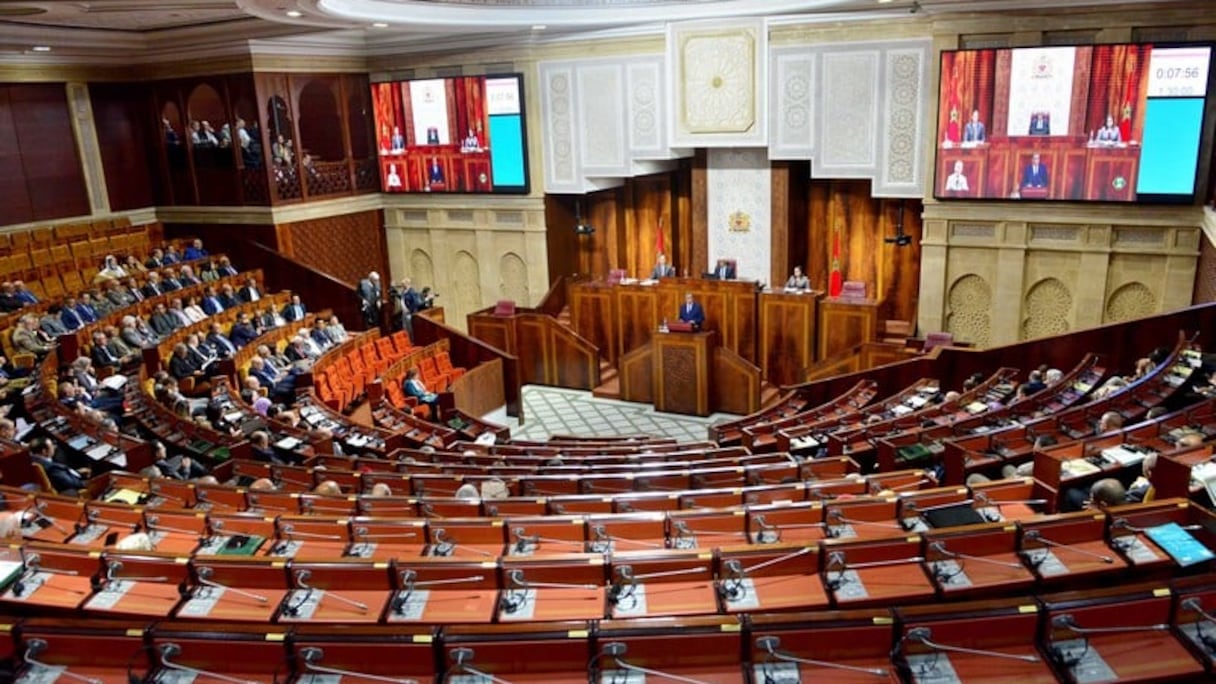
Within the first minutes of Thursday, photographs, party symbols, videos and appeals for votes were already pouring onto social media. After weeks of meetings, defections, programs, and claims of who would win what, the campaign for the September 23 legislative elections was officially under way.
It will last 13 days. The more complicated business may begin on the 14th.
There are many parties in this election and no serious prospect of one of them taking enough seats to govern by itself. What they are seeking first is precisely that—first place.
The party that tops the election gets the head of government, appointed by the King from its ranks under the constitution. It then has to turn an electoral lead into a governing majority by bringing other parties on board.
Read also : September 23 elections: Candidate filings open, campaign starts September 10
So the question before voters is not quite “who will govern?” September 23 cannot answer that on its own.
It will answer who gets to try first.
That has always made Moroccan elections a two-stage affair: voters establish the pecking order; politicians then discover what government that order can produce.
This time, the second stage could be particularly interesting.
RNI, PAM and Istiqlal have spent five years around the same cabinet table. They are not the only parties seeking votes—PJD, MP, USFP, PPS and others have their own ambitions—but relations inside the outgoing majority offer a useful warning against taking today’s political positions too literally.
PAM and RNI have spent the run-up quarrelling over defecting politicians, purchasing power, programs, and, eventually, the Finance Ministry.
PAM’s Fatima-Zahra El Mansouri has said she personally does not favor another coalition under RNI if the latter comes first again, while leaving the final decision to her party.
Fouzi Lekjaa, a minister in the outgoing government and now one of PAM’s biggest draws, has been even less delicate about the record.
“The current course has made the household basket harder for Moroccan families to bear and has pushed part of our youth towards emigration,” he told a Marrakech rally this week.
He wants the country to “change course."
There is an obvious awkwardness here. PAM helped steer the course.
That does not make the criticism irrelevant. It tells us something about the election.
The three parties that shared government do not need to convince voters that everything since 2021 went well. Each needs to convince them that it should be the one leading whatever comes after 2026.
The opposition has an easier argument to make about the past but a harder one about the numbers: it needs enough seats to matter when the coalition sums are done.
And there will be sums.
PAM has offered one of the largest: MAD350 billion over five years, one million jobs and growth of 5pc. Its program also promises to remove income tax on salaries below MAD15,000 and double direct assistance.
When opponents asked where MAD350bn would come from, Lekjaa reached for another number.
What, he asked, happened to the MAD280bn spent in the name of supporting purchasing power? If that money could be found, why is MAD350bn suddenly beyond reach?
RNI has put MAD5,000 forward as a minimum wage.
Lekjaa welcomed that one.
PPS is promising 500,000 jobs and a 15pc wage increase. USFP has its own target of 500,000 jobs and wants exports to grow by 40pc.
There will be more figures before September 23. The campaign has only just begun.
The useful question is not which party can produce the largest one. It is how these promises fit into the government balance sheet awaiting whoever comes first.
The next government will take office with the 2030 deadline already visible.
High-speed rail is being pushed south. The Hassan II Grand Stadium is being built. Airports and urban transport are being expanded. Casablanca is getting the international broadcasting center intended to serve the World Cup.
There are projects without a football deadline too.
Years of drought have forced billions into dams, desalination and moving water between basins. Social protection has expanded. Nearly four million households are receiving direct assistance. Health and education are still being reworked.
Then there are the less grand numbers that explain much of what politicians are saying at their rallies: salaries, grocery bills and jobs.
Lekjaa’s reference to young people leaving the country was not accidental. Nor is the frequency with which purchasing power now appears in party programs.
The government formed after September 23 will have to do all of that while deciding which campaign promises survive contact with the budget.
For the next 13 days, however, the parties are free to make their case.
Not entirely free.
The campaign that exploded onto social media in its opening minutes is being conducted under election rules that now explicitly extend to social networks, streaming platforms, internet applications and artificial intelligence.
Read also : Up to five years in jail for fake news aimed at influencing September 23 elections
Campaign material cannot be distributed on polling day through any of them. The offense carries three to six months in prison and a fine of MAD20,000 to MAD50,000.
The rules are equally precise in the physical world. Campaigning is barred from places of worship, schools, vocational training establishments and public administrations. Marches, processions and loudspeakers require 24 hours’ notice. There are designated spaces for posters, and unofficial campaign material cannot combine the colors red and green.
Using gifts or benefits to obtain a vote—or persuade somebody not to cast one—is prohibited. So are intimidation and threats involving a voter’s job, family or property.
Public officials who use their positions to campaign face six months to a year in prison and fines of MAD50,000 to MAD100,000.
Campaign accounts will eventually go before the Court of Auditors.
Read also : Over 3,000 observers accredited for September 23 elections
There will also be people watching.
The accreditation commission has approved 3,006 observers: 783 from the National Human Rights Council and 2,023 from Moroccan NGOs.
Around 200 others are expected from 20 international and regional organizations and 10 diplomatic missions. They will be deployed across all 12 regions.
The Parliamentary Assembly of the Council of Europe has already made a preliminary visit, meeting government departments, institutions, civil society and media representatives between Aug 31 and Sept 2.
For candidates, all that comes later.
On Thursday morning, their concern was considerably simpler: getting noticed.
The posts that appeared within minutes of the campaign opening offered a glimpse of what the next 13 days will look like. Faces, slogans, promises and requests for votes will compete for space on screens as much as on streets.
On September 23, those appeals become seats.
And then comes the paradox at the heart of the exercise.
Every party wants voters to give it more seats than its rivals. The one that comes first gets the head of government and the initiative.
But first place is not a majority.
The winner will still have to look across the aisle—quite possibly at people it spent the previous 13 days telling voters not to choose—and find enough of them to govern.