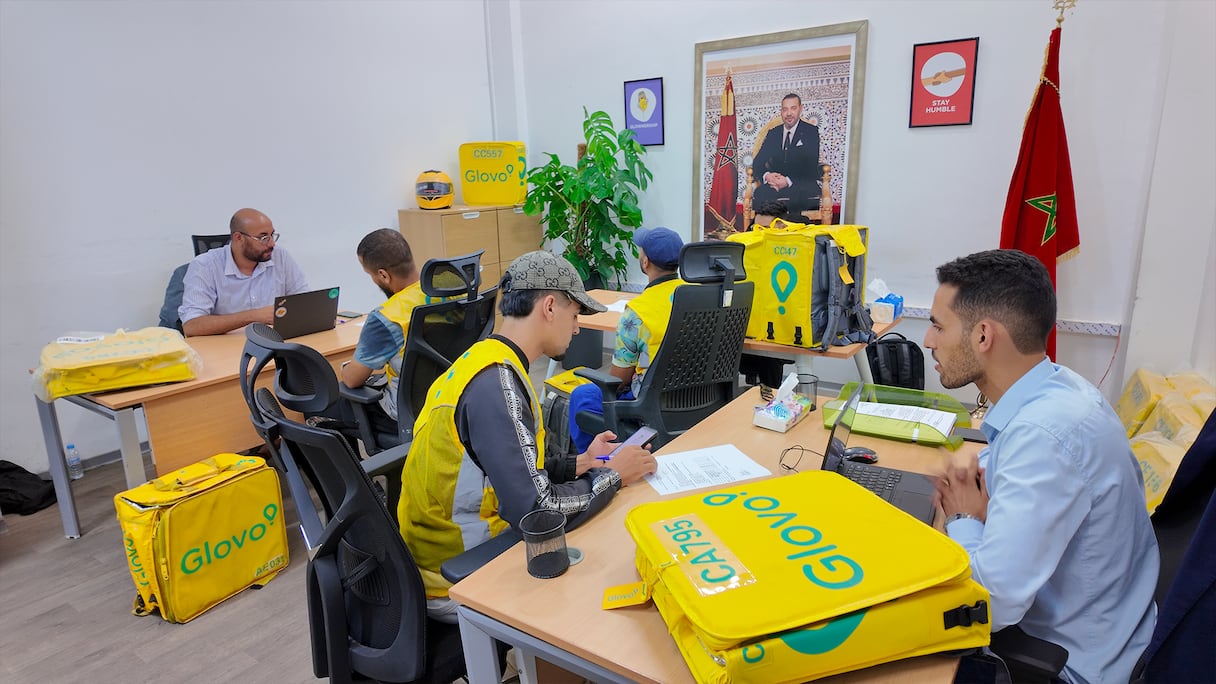
As motorcycle delivery services become an increasingly common sight on Morocco’s streets, authorities and private operators are stepping up efforts to improve road safety without slowing the sector’s rapid growth. Glovo Morocco has announced the rollout of delivery bags featuring large, visible identification numbers as part of its Glovo 2030 Road Safety Initiative, developed in partnership with the National Road Safety Agency (NARSA).
The company plans to gradually introduce 10,000 numbered delivery bags during the second half of 2026.
The initiative comes as Morocco’s booming food delivery and e-commerce sectors have fueled a sharp rise in motorcycle traffic in major cities, bringing greater scrutiny to road safety and the conduct of delivery riders.
Each delivery bag will carry a unique identification number, allowing riders to be quickly identified if dangerous driving or another incident is reported. Glovo says the system will enable its teams to review complaints, identify the rider’s account and take appropriate action when necessary.
The company says the initiative is designed to promote prevention, accountability and support rather than penalize delivery riders, reflecting the increasingly important role delivery services play in Morocco’s urban economy.
“The Moroccan context is unique. Road safety challenges, particularly those involving motorcycles, are a collective responsibility,” said Hamza Naciri Bennani, General Manager of Glovo Morocco.
“With thousands of delivery partners on the streets across the Kingdom every day, we have decided to make this issue a strategic priority.”
He added that the numbered bags represent only the first phase of a broader roadmap developed jointly with NARSA.
“It was essential for us to build this initiative together with the competent authorities so we could benefit from their expertise and develop measures tailored to Morocco’s realities,” he said.
Beyond the numbered bags, the Glovo 2030 Road Safety Initiative includes six complementary measures, including a dedicated WhatsApp channel for reporting incidents, field compliance officers, technology designed to detect certain risky behaviors, rider training and awareness campaigns, and a safety score that evaluates delivery partners’ driving practices.
Read also : Morocco’s ONEE to invest MAD 248 billion in energy transition and water security by 2030
For Ghali Bennis, Glovo Morocco’s Road Safety and Compliance Manager, the visible identification number is primarily an accountability tool.
“When a bag is identifiable, the associated account can be located more easily if an incident is reported. This allows us to handle reported situations more efficiently,” he said.
He stressed, however, that identification alone is not intended to change behavior.
“They are part of a broader set of measures that make it possible to take appropriate action, whether through awareness campaigns, training, or, when necessary, stronger measures,” he said.
He added that the system could also benefit delivery partners by ensuring reported incidents are assessed using concrete evidence, creating a fairer process for riders who comply with traffic rules.
Among the delivery partners consulted by Glovo, the initiative has been broadly welcomed. Riders said the identification system could help distinguish those who drive responsibly from those who engage in risky behavior, while also strengthening public confidence in delivery workers who follow the rules.
