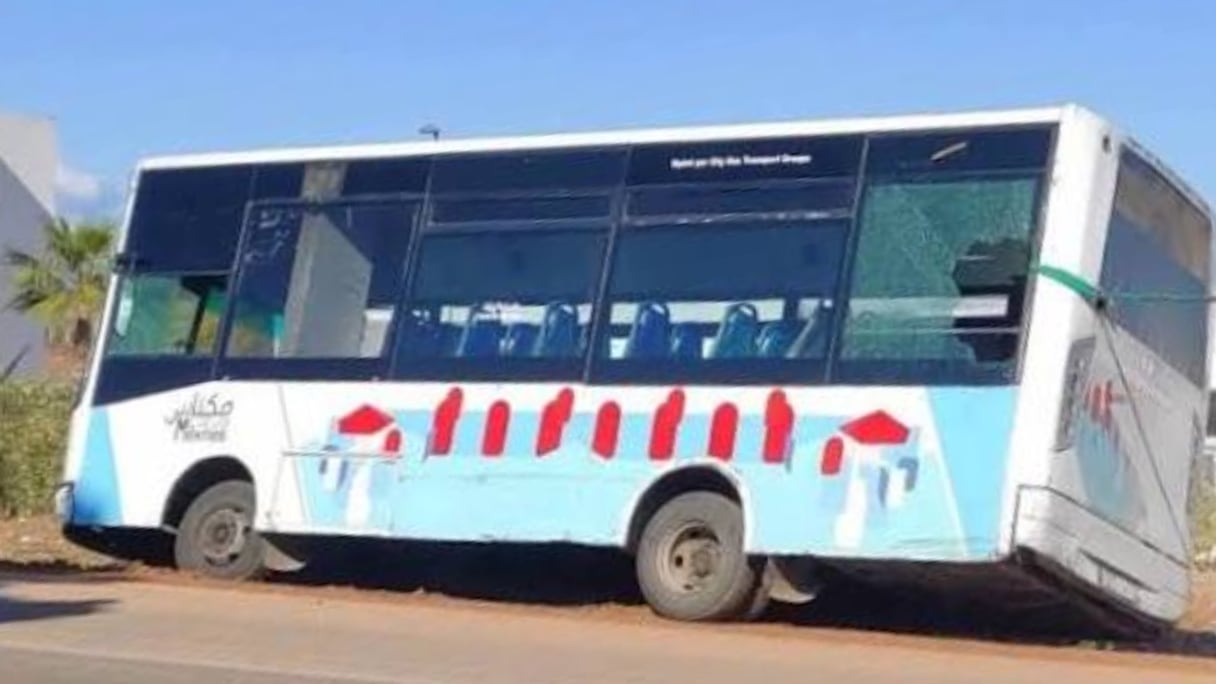
Five weeks after the crisis began, urban transport in Meknes remains almost completely paralyzed. The continued absence of City Bus vehicles has disrupted the daily commute of thousands of residents, with no emergency solution yet put in place. The lack of communication from the authorities has also fueled uncertainty over the future of the public transport service.
During visits to several of the city’s main streets and thoroughfares, Le360 observed that buses had almost disappeared from circulation. In this city of more than half a million residents, commuters have largely turned to taxis, which have been unable to meet the surge in demand.
According to several passengers, some drivers of both small and large taxis have begun imposing their own transport conditions in the absence of a viable public transport alternative.
Residents interviewed by Le360 expressed growing frustration, saying the crisis has placed a heavy financial burden on households, particularly low-income families, workers and students, for whom daily commuting has become increasingly difficult.
Najia Qarmadi, a Meknes resident, described it as “unacceptable” that a city of this size has been facing an urban transport crisis for several weeks without concrete measures to ease its impact. She said many commuters spend long hours each day waiting, often under intense heat, before finding transportation.
Qarmadi said improving essential public services should be a priority. She also questioned the allocation of significant budgets to festivals and major events while the city continues to rely on an aging bus fleet that has long been criticized for repeated breakdowns and past safety incidents.
Read also : With entry priced at 5 dirhams, Meknes residents flock to the municipal pool as temperatures soar
Mohamed El Bourkhissi, a retired teacher living in Meknes, said the crisis has now entered its fifth week without any temporary solution or clear timetable for resolving it. He added that the situation has become even more difficult because it coincides with the summer season and high temperatures.
He also noted that Meknes receives residents from surrounding municipalities and rural communities every day, many of whom also depend on buses to travel into the city, further increasing pressure on local transportation.
According to El Bourkhissi, the overwhelming demand for taxis has also led to abuses, with some drivers taking advantage of the situation by imposing their own conditions on passengers to increase their earnings in the absence of collective transport alternatives.
Contract termination under consideration
El Bourkhissi called for urgent action to end the crisis. He urged the municipality to improve communication with residents regarding developments in the case and to accelerate the deployment of a new bus fleet, following the example of other Moroccan cities that have benefited from the Interior Ministry’s urban transport renewal program.
As commuters continue to face disruption, the Municipality of Meknes is preparing to enter a new phase in the management of urban transport. During an extraordinary session scheduled for Monday, the city council is expected to examine the issue and decide whether to terminate its contract with City Bus.
This move would pave the way for a new operating model aimed at ensuring the continuity of urban transport services and improving their quality for the city’s residents.