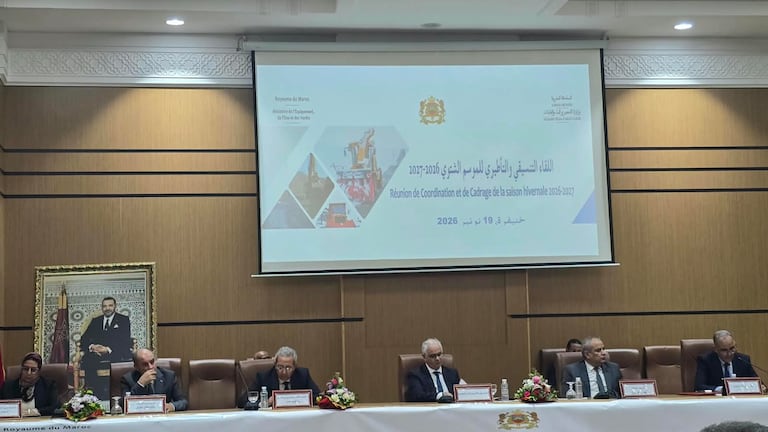
Equipment and Water and Forests Minister Nizar Baraka chaired the ministry’s annual coordination and preparation meeting for the winter season on Thursday, November 19, in Khenifra.
Baraka said recent winters have brought increasingly frequent and severe weather events, including heavy snowfall, intense rainfall, floods and landslides. This, he said, requires a shift in road network management away from responding after damage occurs and toward prevention, anticipation and integrated risk management.
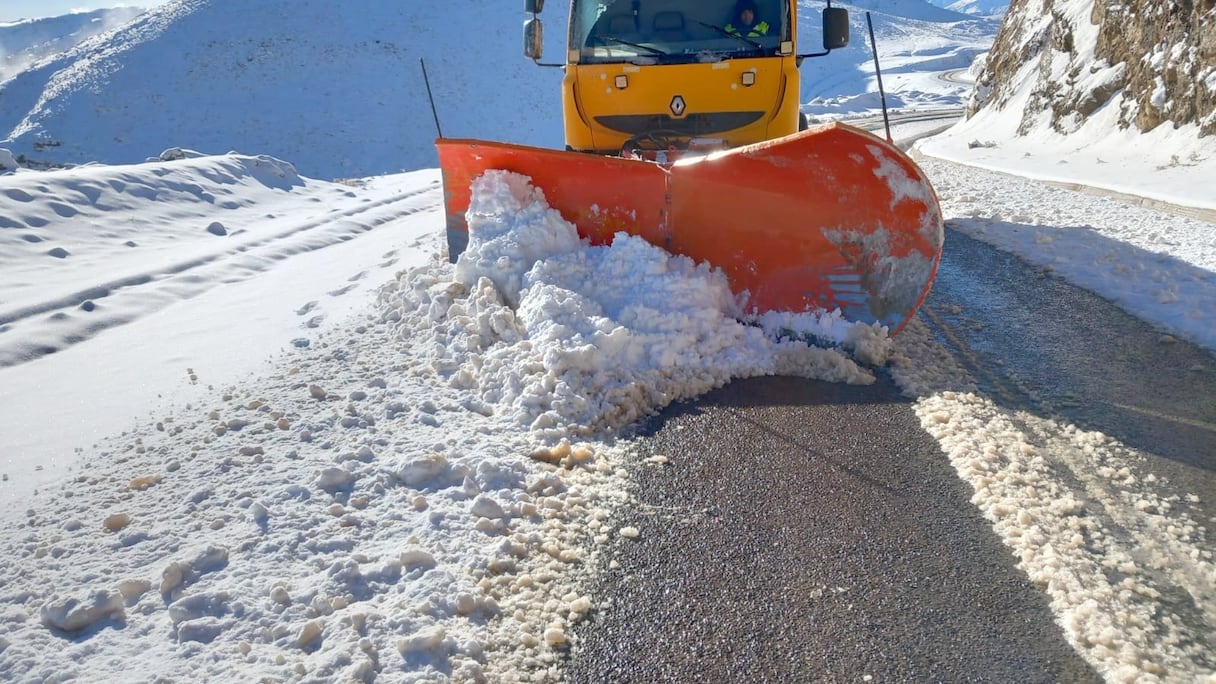
The 2025-2026 winter season brought exceptional weather disruptions. Snowfall affected 4,924 kilometers of classified roads, representing around 94% of the road network exposed to snow, the minister said.
Ministry teams also worked with local authorities on 59 sections of unclassified roads and tracks, covering a total of 876 kilometers, to restore access to isolated communities.
Rainfall and flooding also disrupted traffic on more than 170 road sections. The interruptions were caused by rising water levels in rivers and streams, flooding in low-lying road areas, waterlogged soil, landslides and ground slippage.
Baraka described the annual meeting as an important opportunity to prepare for the winter season, review interventions during previous winters and assess ways to improve them. The meeting also covered the action plan for the coming season, which focuses on strengthening field teams and equipment readiness, organizing on-call crews, maintaining machinery and snow shelters, preparing roads and snow barriers, and improving communication with road users. The plan also includes renewing and maintaining snow-clearing equipment to ensure faster and more effective responses.
Winter preparations
The ministry said preparations for the 2026-2027 season began in June 2026. They have included servicing vehicles and equipment, clearing ditches and water infrastructure, improving road signs and stocking essential supplies, particularly salt, de-icing materials and fuel.
The ministry has also raised awareness among field staff and held coordination meetings involving the relevant regional and provincial directorates.
Read also : Chefchaouen launches plan to prevent rural isolation this winter
The plan covers 21 provinces exposed to snowfall, particularly in mountainous areas: Ifrane, El Hajeb, Sefrou, Boulemane, Taounate, Taza, Beni Mellal, Khenifra, Azilal, Al Haouz, Chichaoua, Midelt, Tinghir, Ouarzazate, Chefchaouen, Al Hoceima, Oujda, Figuig, Taourirt, Guercif and Taroudant.
Throughout the winter season, regional and provincial equipment and transport directorates will coordinate with local authorities, security services and meteorological services.
Teams will take preventive action, including spreading salt and de-icing materials to limit ice formation and snow accumulation, preferably before weather conditions reach their peak, the ministry said.
When meteorological services announce a winter storm, road monitoring will be stepped up so that interventions can be adapted to the type of precipitation and road conditions. Snow-clearing equipment will be deployed to reopen roads and restore safe traffic conditions.
The ministry said these measures are particularly important given the scale of Morocco’s road network exposed to snowfall, which extends for approximately 5,228 kilometers nationwide. Snow can reach depths of 150 centimeters on some road sections, while snowdrifts can exceed four meters in parts of the High and Middle Atlas Mountains.
