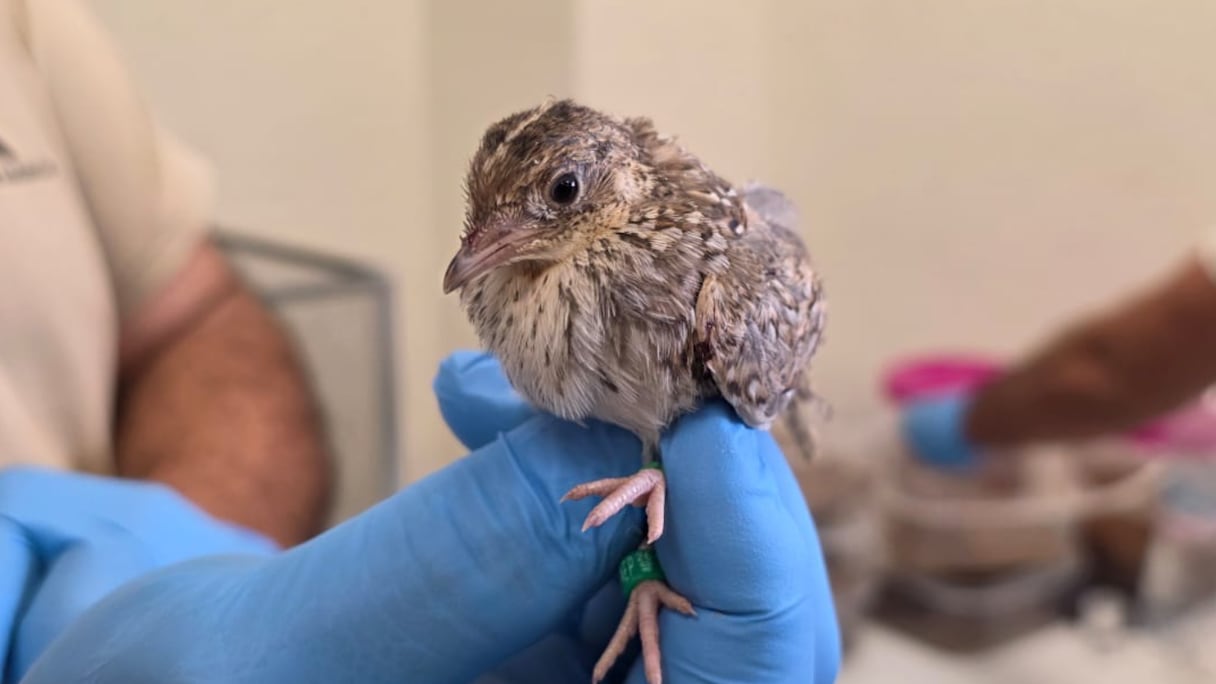
The National Agency for Water and Forests (ANEF) announced Thursday, September 17, the launch of an ex situ conservation program for the Andalusian hemipode (Turnix sylvaticus sylvaticus), aimed at helping protect the endangered subspecies and strengthen conservation efforts already underway in Morocco.
The program combines monitoring of wild populations, ex situ conservation, captive breeding and the preservation of genetic diversity, with the goal of improving the species’ long-term conservation prospects, ANEF said in a statement.
A discreet species found in agricultural and natural environments across the Mediterranean basin, the Andalusian hemipode has experienced a sharp decline in population over recent decades.
In Morocco, a population still survives along the Atlantic coast, particularly around Oualidia, where it remains closely associated with traditional agricultural landscapes and habitats suitable for its survival, the agency said.
The presence of this population gives Morocco a particular responsibility for conserving the subspecies. Protecting its habitats and monitoring changes in its population are therefore important to ensuring the survival of the Andalusian hemipode.
Against this backdrop, the program’s first actions in 2026 focused on surveying and monitoring wild populations. These efforts notably led to the collection of eggs, followed by their incubation and hatching in captivity in Morocco, marking an important step in establishing an ex situ conservation system for the species.
A first breeding population is now being maintained at Ain Sebaâ Zoo in Casablanca. According to ANEF, it serves as a safety reserve for the species and provides a foundation for future conservation efforts, particularly breeding and, eventually, efforts to strengthen wild populations.
Management of this breeding population is based on close monitoring of reproduction, health and the genetic characteristics of individual birds. These measures are intended to preserve the genetic diversity of the ex situ population as effectively as possible while gradually establishing a system that can support conservation efforts in the species’ natural habitat.
ANEF Director Abderrahim Houmy, quoted in the statement, said conserving the Andalusian hemipode is a particular concern given the vulnerability of the population that still survives in Morocco. He added that establishing an ex situ conservation system strengthens measures already underway to protect the species and provides an additional safeguard for its future.
“Our objective is to gradually consolidate the knowledge, breeding capacities and conservation resources needed to sustainably support the wild population,” he said.
Through the program, ANEF is continuing its efforts to protect biodiversity and endangered species while developing complementary conservation systems that combine in situ and ex situ conservation, scientific population monitoring and the mobilization of national and international expertise.
The initiative is part of the implementation of the Forests of Morocco 2020-2030 strategy, which places significant emphasis on biodiversity conservation, the protection of endangered species and the development of knowledge and expertise in natural heritage conservation.
Through this approach, ANEF aims to contribute to the survival of the Andalusian hemipode and, more broadly, strengthen Morocco’s national capacity to conserve wildlife species facing significant conservation concerns, the statement concluded.