By the time Zineb Aboutaj’s sixth-graders have been sitting through a lesson for five or 10 minutes, she says, many of them are already somewhere else.
Aboutaj has been teaching since 2012 and now works as an educational director at a private school in Casablanca. Over those years, she says, something has changed in the classroom.
“There is a huge gap between students in the past and those today,” she told Le360.
It shows in the repetition. Instructions have to be given again. A blackboard does not always hold a class. Teachers reach for interactive screens and more visual material, trying to win back attention that Aboutaj says disappears much faster than it once did.
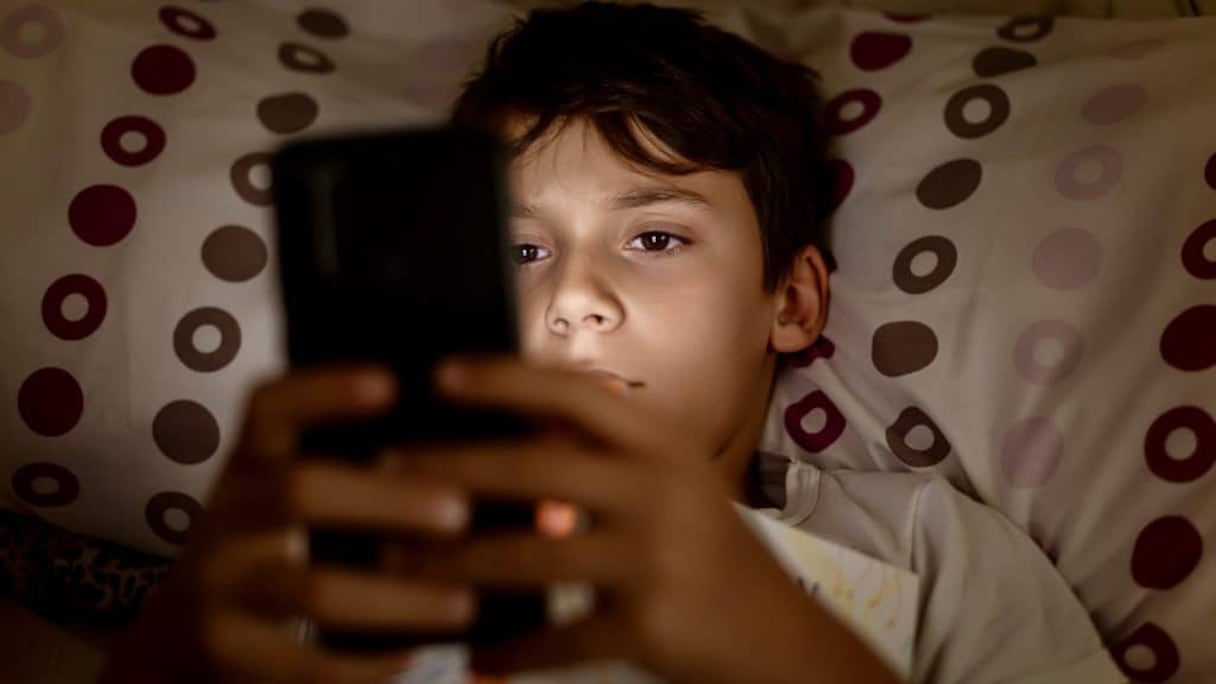
Then there are the children who have hardly slept. She says some primary-school pupils remain on their phones until 1am and turn up tired the next morning. Others have been handed screens from such an early age that the phone has become the easiest way for adults at home to keep them occupied.
Put those five or 10 minutes beside Morocco’s latest PISA results and the contrast is difficult to miss.
Read also : Morocco ranks among the world’s lowest-performing education systems in PISA 2025
Around 7,000 15-year-olds from public schools spent two hours taking computer-based tests. They were asked to read, work through mathematical problems and apply scientific knowledge. Morocco finished close to the bottom in all three.
Its pupils averaged 358 points in science against an OECD average of 482, ranking 82nd among 90 economies. Mathematics brought a score of 355 against 463 and 82nd place among 86. Reading fell to 321 points against an OECD average of 461, putting Morocco 86th out of 89.
The results cannot be laid at the door of a smartphone. Aboutaj does not claim they can. Neither does Sami Akoudad, a psychomotor therapist in Casablanca who works with children experiencing attention and developmental difficulties.
But Akoudad has watched the same habit become increasingly familiar. A child moves through one six-second video, then another, then another. Nothing asks for much patience because something new is always a swipe away.
School asks for precisely the opposite.
“You need the brain to work like a muscle,” Akoudad says. His concern is that children accustomed to constant stimulation get less practice at staying with an activity when the reward is not immediate.
He worries even more about babies being placed in front of screens at two or three months old. At that age, he says, staring at moving images can take the place of something much less spectacular but far more important—looking at people, responding to voices, touching things and learning through interaction.
Some of the children he later encounters show attention and relational difficulties that, he says, can superficially look like symptoms associated with autism spectrum disorder. The resemblance needs careful handling. Screen exposure has not been shown to cause autism, and Akoudad is describing what he encounters in practice, not making that diagnosis.
Read also : PISA 2025: Another poor report card for Morocco; ministry says its reforms are not yet on the test
Scientists have been trying to disentangle some of the same questions.
Researchers at Cincinnati Children’s Hospital reported in JAMA Pediatrics in 2019 that young children with higher screen use showed lower white-matter integrity in brain areas involved in language and reading. In 2025, researchers at the University of Fukui reported structural differences associated with prolonged exposure after studying nearly 10,000 children between nine and 12.
Association is the important word. Neither study showed that screens caused those differences.
Even the apparently simpler question of what short videos do to attention has produced untidy answers. San Diego State University researchers found in 2025 that participants who scrolled through short videos before reading moved through the text faster and less deeply. Dublin Business School researchers found no significant immediate effect on attention or working memory in another experiment. A study presented in 2022 even recorded better sustained attention in a group that had watched TikTok videos than in one that had been reading.
Badr Almajdi sees the problem less in one spell of scrolling than in what happens when it becomes the normal way of consuming information.
Almajdi, co-founder of clubscolaires.com and a specialist in anticipating skills needs, says working memory has only so much room. Keep feeding it disconnected pieces of information, he argues, and the pupil has less capacity to hold on to something long enough to work with it.
A page of text demands that kind of patience. You have to remember the beginning while reading the end, follow an argument and decide what matters. Almajdi says pupils who stop reading that way also lose practice in comprehension and analysis.
Some, he says, have already stopped participating in school in any meaningful sense without actually leaving it.
He calls it “passive school dropout”.
The pupil is still at the desk, still marked present and still moving from one grade to another. Mentally, Almajdi says, some are on “autopilot”, waiting for the lesson to end and the phone or games console to come back out.
PISA is particularly unforgiving of that kind of learning.
The OECD assessment does not simply ask whether a 15-year-old remembers the formula or lesson that appeared in a textbook. It gives pupils problems and expects them to work out what they know, what information matters and how to use it.
Abderrahmane Lahlou thinks that is where Morocco’s results become much more than a story about screens.
For years, he argues, schools have been preparing pupils to reproduce what they have learnt rather than do something new with it. Memorize the lesson, recognize the expected question, produce the expected answer.
PISA changes the question.
Lahlou, an education expert, told Medi 1 TV that pupils reach the test carrying weaknesses accumulated from primary school, alongside problems with curricula, teaching quality, classroom conditions and continuous teacher training. But he considers the gap between what schools teach pupils to do and what PISA asks of them fundamental.
The international comparisons make it difficult to argue otherwise.
Children in Singapore and South Korea are hardly growing up without screens. Smartphone use is widespread in both, and South Korea has itself reported high levels of excessive dependence among young people. Their pupils nevertheless sit at the other end of the PISA tables.
Screens may make a pupil harder to teach. They do not explain why one school system teaches that pupil to reason better than another.
Lahlou sees some progress in the Pioneer Schools program, particularly its work on basic reading, writing and arithmetic. He also thinks those gains will run into a ceiling if the rest of the system remains largely unchanged. High-school curricula, he says, have gone two decades without an overhaul, while assessment still gives pupils too little reason to move beyond recall.
Aboutaj has to deal with the child who arrives before any of that can be fixed.
Teachers, she says, are increasingly expected to compete with the pace and stimulation pupils know from their phones. Lessons become more visual and more interactive. The teacher repeats, changes activity, tries another way in.
Akoudad would rather some of that work begin at home. He recommends keeping phones away from family meals, cutting recreational screen use before bedtime and allowing children to experience something screens are particularly good at eliminating—boredom.
There is no objection in any of their accounts to children learning with technology. PISA itself now tests computational thinking, and tools such as Scratch can put a child in front of a screen and ask for sustained thought rather than passive consumption.
The child still has to stop, think and work something out.
That is what PISA asked Morocco’s 15-year-olds to do for two hours.
