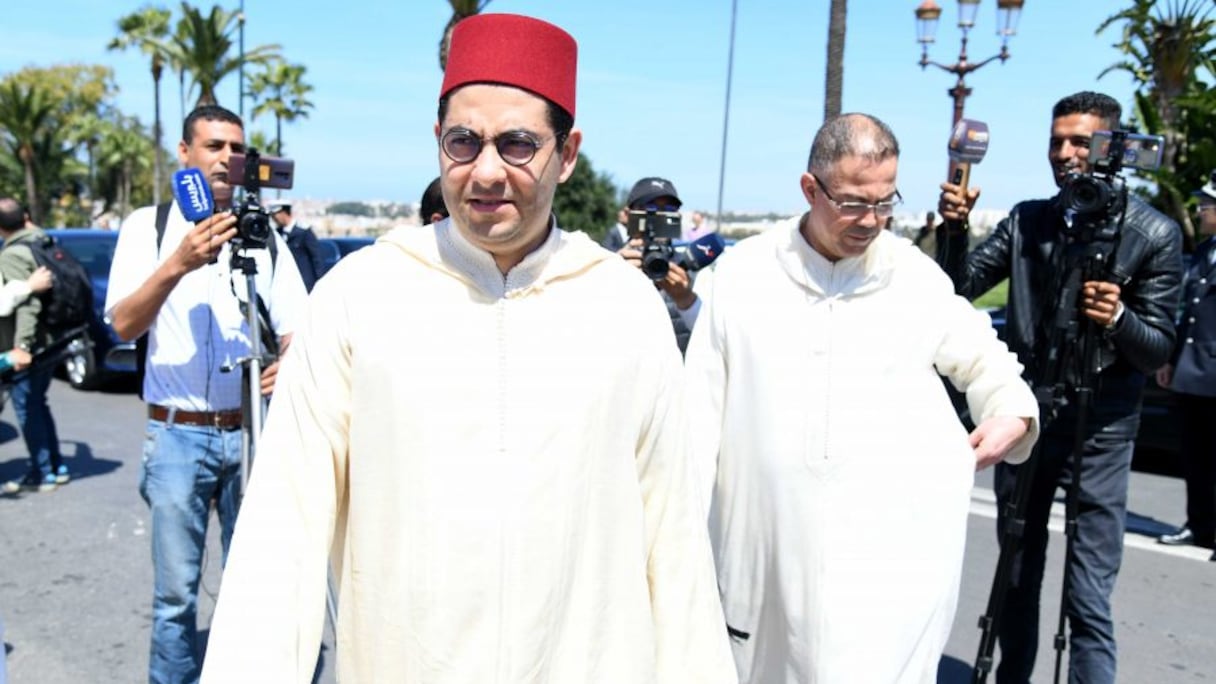
As the 2025–2026 season has only just come to an end and relegation has been decided on the pitch, an old temptation has resurfaced in Moroccan football: expanding the Botola Pro Inwi to 18—or even 20—clubs. The idea first emerged before the championship concluded through petitions, only to be swiftly quashed by the Royal Moroccan Football Federation (FRMF) under pressure from the country’s historic clubs and football heavyweights. That was at the beginning of last month.
Curiously, now that the verdict of the pitch has been delivered and the relegated clubs are known, the proposal has resurfaced as the 2026–2027 season approaches. Shown the door, the initiative is now trying to climb back in through the window. This time, the lobbying effort has dressed itself in technical garb, using a meeting of coaches convened at the FRMF headquarters on Monday, July 27, to formulate proposals aimed at “improving the standard of the Botola.” The outcome? A recommendation to expand the league... to 20 clubs. The argument is that such a move would broaden the competition’s base and create greater opportunities for clubs and players. The pretext is so transparent that it borders on the crude. The real story lies elsewhere.
Political Calculation at the Expense of Sporting Integrity
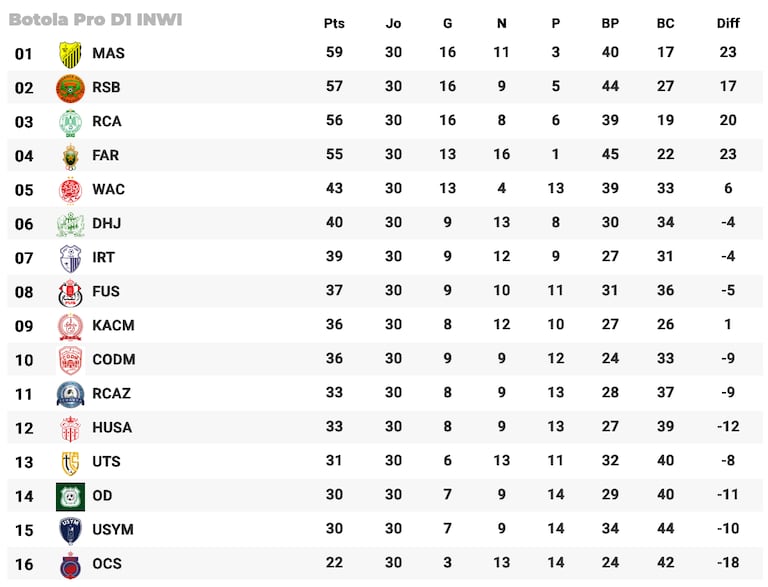
At the center of this behind-the-scenes campaign stands one club in particular: Union Sportive Yacoub El Mansour (USYM). Founded in 1989 and confined to Morocco’s lower divisions for more than three decades, the club representing one of Rabat’s emblematic working-class neighborhoods achieved a historic promotion to the Botola Pro D1 on May 18, 2025. A fairy tale that unfortunately collided with the reality of top-flight football the following season. Unable to secure survival on the pitch, USYM collapsed and was relegated alongside Olympique de Safi and Olympique Dcheira, another club deeply rooted in Head of Government Aziz Akhannouch’s political stronghold. It is worth noting that even before the relegation play-offs, maneuvering had already reflected these overlapping interests.
Read also : A 20-team Botola? Not so fast
USYM is chaired by Mohamed Mehdi Bensaïd, a leading figure in the Authenticity and Modernity Party (PAM) and Morocco’s Minister of Youth, Culture and Communication. Widely credited until now with an impressive political trajectory and an unblemished ministerial record, he now finds himself at the center of a highly risky maneuver. Persistent reports suggest that Bensaïd is attempting to leverage his close relationship with FRMF president Fouzi Lekjaa to secure his club’s survival through administrative means rather than sporting merit. That proximity has itself been reinforced by Lekjaa’s recent appointment to PAM’s National Council.
The immediate stakes of this drift are no longer sporting—they are purely political, with the decisive legislative elections of September 23 fast approaching. Bensaïd is running in the Yacoub El Mansour constituency, one of the capital’s largest and most politically sensitive districts. The simplistic calculation appears to be that the relegation of the local club could damage his popularity and translate into electoral punishment at the ballot box.
Such reasoning betrays a striking lack of judgment. First, it confuses two entirely different issues. Sport and the management of public affairs are not the same thing. Voters in a working-class neighborhood expect a credible political project, not regulatory tinkering in football.
Second, it undermines credibility. What moral authority will an elected official retain if he is accused of engineering an unsporting survival through methods that violate the principles of fair play? Finally, it stigmatizes the club itself. What legitimacy would USYM enjoy throughout the coming season and beyond? Branded as a beneficiary of political favoritism rather than sporting merit, the club would face endless ridicule from its rivals.
A football club lives, wins, and learns through defeat. The best way to support the Yacoub El Mansour project is to give it the structural means to rebuild and earn promotion back to the first division with dignity next season—not to keep it alive on artificial life support among an elite where it no longer belongs on sporting grounds.
A Structural Miscalculation
Beyond the political strategy, the very idea of expanding the league to 18 or 20 clubs represents a dramatic economic and logistical mistake for Moroccan football.
Supporters of expansion point to the Premier League, LaLiga, and Serie A, all of which feature 20 clubs. But those models are sustained by colossal broadcasting revenues. The Premier League alone reaches more than 4.5 billion viewers worldwide.
Conversely, several viable leagues—and others undergoing economic restructuring—have moved in the opposite direction. France’s Ligue 1 reduced its size to 18 clubs in 2023 to protect player welfare and concentrate television revenues during a period of financial strain. Germany’s Bundesliga has consistently remained at 18 clubs. Switzerland has even demonstrated the success of a 12-team format designed to raise competitive intensity.
Despite an overall budget estimated at 965 million dirhams—a figure disclosed on Friday, July 17, by Abdeslam Belkchour, president of the National Professional Football League (LNFP), during the resumption of the FRMF Executive Committee’s work—the Botola Pro continues to suffer from countless structural weaknesses. At present, it remains a product that struggles to sell.
Television rights have stagnated and attract little international interest. Even with just 16 clubs, fixture scheduling remains chaotic. The LNFP already struggles to manage the competition in its current format. Endless postponements and fixture congestion have created chronic disorder, illustrated last season by the inability to complete the Throne Cup on schedule, depriving its eventual winner of qualification for the CAF Confederation Cup in favor of the league’s fourth-placed team.
Financial fragility is equally structural. Many clubs are weighed down by financial disputes, lack adequate stadiums, operate without proper training centers, and suffer from chronic administrative instability.
Adding two or four more clubs to such a system without first imposing rigorous licensing standards would simply dilute the already limited revenues while further eroding the credibility of Moroccan football.
Reject the Logic of Backroom Deals
If the FRMF and the LNFP genuinely intend to reform the competition, the priority is not expansion but consolidation. A league of 12 or 14 clubs combined with a play-off and play-down system would guarantee maximum intensity, eliminate meaningless fixtures, improve calendar management, and significantly enhance the league’s appeal to sponsors and broadcasters.
Read also : As 2030 World Cup nears, Morocco seeks to close gap between national team and domestic league
Moroccan football currently stands under the global spotlight: preparations for the 2030 FIFA World Cup, the national team’s qualification for the quarter-finals of the 2026 World Cup, and the country’s growing infrastructure prestige. Expectations have never been higher.
On July 27, at the Mohammed VI Football Complex in Maâmora, Fouzi Lekjaa openly—and at length—acknowledged the alarming gap between the Botola and the international stature of the Atlas Lions. Whereas in 1998 the domestic league formed the backbone of the national team, today it is no longer capable of producing top-level outfield players for the senior squad.
The priorities are clear: youth development for players aged 17 and 18, greater autonomy and marketing modernization for the LNFP, improved stadium security, and the definitive resolution of longstanding financial disputes.
To yield now to backroom arrangements designed to rescue relegated clubs would mark a dramatic step backward. It would send a destructive message: that the rules of the game are no longer decided on the pitch, but behind closed doors.
Mehdi Bensaïd, USYM, and the Botola Pro deserve far better than the politics of backroom deals and favors among friends. To preserve his image as a modern statesman and uphold sporting fairness, the minister must halt this drift, accept the verdict of the game, and work honorably to earn his club’s return to the top flight on the pitch. His credibility—and that of Moroccan football—depends on it.
