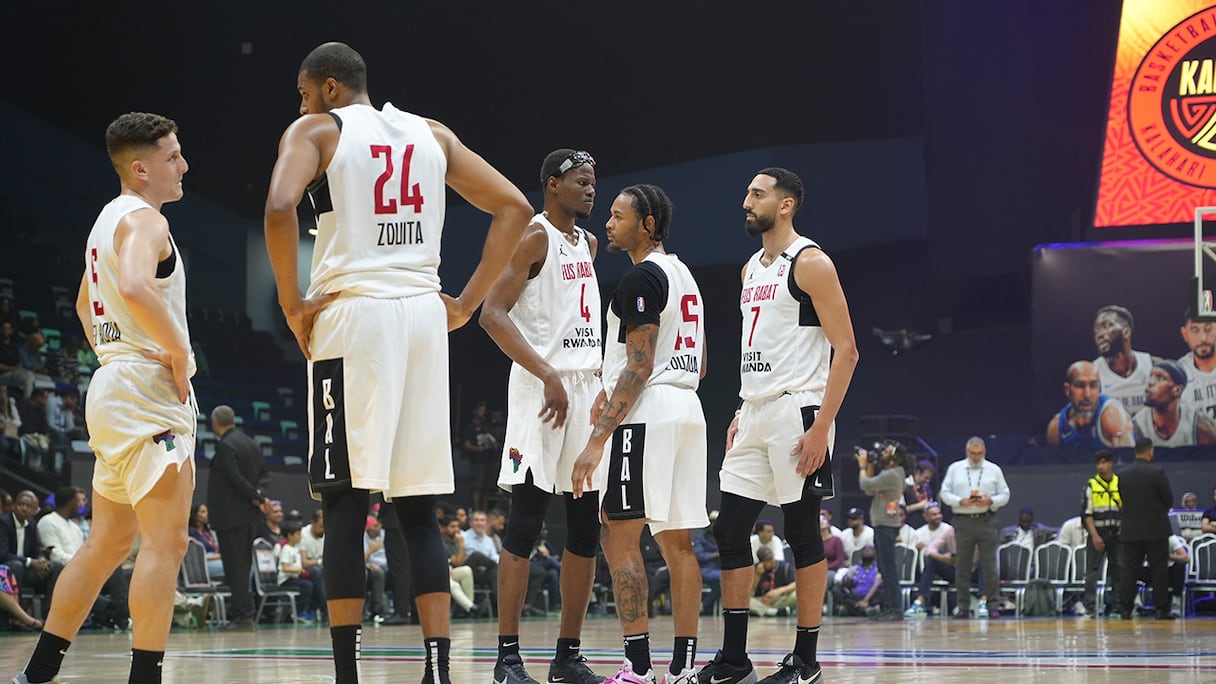
The Mohammed V Sports Complex indoor arena hosted the final game of the third round of the men’s Excellence Division on Monday, with Wydad facing FUS. In addition to the matchup between two of the league’s major clubs, another detail stood out: the Dislog branding on the court. It reflected another attempt to put Moroccan basketball on a more professional footing.
The partnership between the Moroccan distribution and industrial group and the FRMBB was unveiled a few days ago, following a crisis that hit the federation hard and brought the championships to a standstill. Unstable governance and institutional disputes had left Moroccan basketball at a standstill.
The suspension of activities stemmed from a serious financial crisis, attributed in particular to unpaid government subsidies. The federation was unable to settle some bills and even struggled to pay its employees.
Read also : Mohamed Mehdi Bensaïd: the key challenges facing Morocco’s new sports minister
The former FRMBB president eventually suspended competitions even as Morocco was hosting one of the Basketball Africa League (BAL) conferences, the continental competition created by the NBA.
Activities returned to “normal” under a temporary committee chaired by Driss Chraibi. Following an elective general assembly, Chraibi was elected federation president. At the time, he told Le360 that the sport would follow a roadmap to put things back in order.
The championship now bears Dislog’s name under a four-year strategic naming partnership intended to restore the reputation of a sport that has struggled for years. Beyond the commercial dimension, the challenge is to rebuild the federation’s image and turn the page on months of crisis that prevented players, including foreign recruits, from carrying on with their careers normally.
“We have set several goals for the next four years: increase the ministry’s subsidy, develop a federal training center, attract an institutional sponsor and establish a professional league. All of this is aimed at improving the federation and Moroccan basketball,” Driss Chraibi told Le360.
Read also : Morocco exits 2026 wheelchair basketball World Championships after Brazil defeat
The FRMBB wants to give the sport fresh momentum and rebuild the foundations of a discipline that has long been held back by recurring problems.
The effort is beginning to show results for Chraibi and his team. The government subsidy has risen from 13 million to 25 million dirhams. The four-year partnership with Dislog has also been finalized, with funding of 3.5 million dirhams, including 2.5 million fixed and an additional one million tied to match broadcasts.
On professionalizing the championship, Chraibi said: “We have reduced the number of participating teams to 12, with the goal of bringing it down to 10 to increase competitiveness.”
A training center to develop young talent
For a sport to thrive over the long term, both competitively and across generations, youth development is essential. Moroccan football offers a clear example, with the rise of the Mohammed VI Football Academy and club training centers such as those run by FUS and Raja. These institutions have built strong reputations and helped bring through numerous talents.
“It would be dishonest to claim that we shouldn’t learn from models that work. Fouzi Lekjaa has shown the way forward and what needs to be done. Basketball, however, has its own specific characteristics,” the FRMBB president acknowledged.


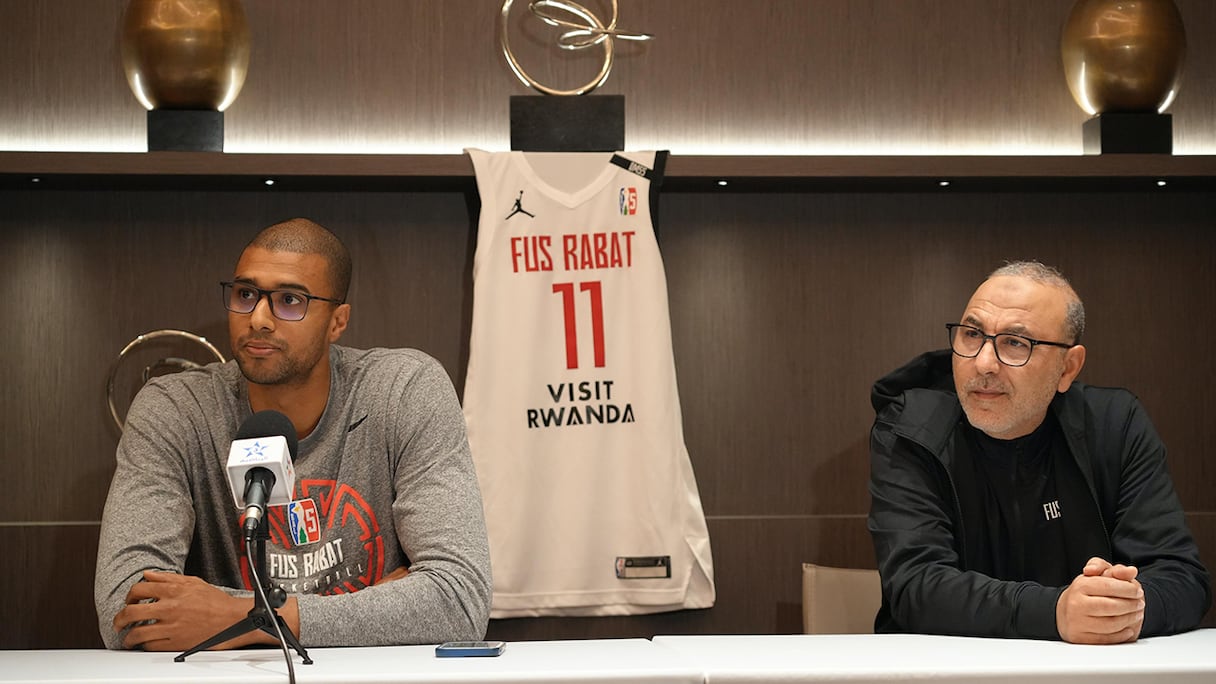
The federation’s training center in Mohammedia is not “an end in itself,” but rather the beginning of a new chapter. Located between Casablanca and Mohammedia, near the highway, the project is ready and in the final stages of preparation. Accessibility from nearby cities, surrounding schools and training conditions have all been taken into account. “We had to organize an entire ecosystem,” Chraibi said. The center is expected to accommodate around 60 children.
When will it open? “We wanted to start in early January, but there are still a few details to finalize, and we want to do things properly. The facilities are ready.”
Regional training centers will depend first on a key step: professionalizing the regional leagues. “We need people with the right skills who are available and committed to making progress,” Chraibi explained. The federation president wants to professionalize all those involved in the sport, with the leagues responsible, among other things, for setting up regional training centers. “For the regional centers, we will work with the regions, their officials and elected representatives to establish the necessary structures,” he said.
A financial burden of 20 million to 30 million dirhams
The debts inherited from the previous administration remain a major challenge. The federation’s outstanding liabilities, estimated at between 20 million and 30 million dirhams, are still being addressed.
“We are working and trying to show that the federation is moving forward. As for the debts, we are looking for solutions with the resources available to us. The outstanding liabilities amount to between 20 million and 30 million dirhams.”
Chraibi intends to settle the arrears while steering the federation toward the future and tackling the problems inherited from the previous administration one by one.
“We are managing the federation responsibly, like a family managing its household. We want to restructure it. We know where we are going and where we want to go. Change is never easy, but we have ambition and want to make the federation stronger and more effective.”
Read also : Work starts on MAD127m sports hall in Casablanca
Television coverage remains a major challenge for the DBL
The Dislog partnership, higher government funding, strategic agreements and training centers are encouraging signs. But broadcasting games remains crucial to building interest in the championship, attracting sponsors and raising the sport’s profile.
“In the past, we broadcast two or three games per season because there was no vision,” the FRMBB president told Le360. This year, he added, the DBL should be broadcast “at least once a week, with the goal ideally being to offer two games, particularly on Mondays and Fridays, barring exceptions.”
Moroccan basketball has yet to deliver tangible results under Chraibi’s new presidency, and the work has only just begun. But the FRMBB is signaling its determination to change course, restore the reputation of the national game and gradually move beyond the financial and administrative problems that have weakened the sport.
The federation’s goals go beyond administrative reform.. “The ultimate goal is to raise the level of Moroccan basketball and help our teams improve. In the long run, we want to see a Moroccan playing in the NBA and winning continental titles,” Chraibi concluded.
