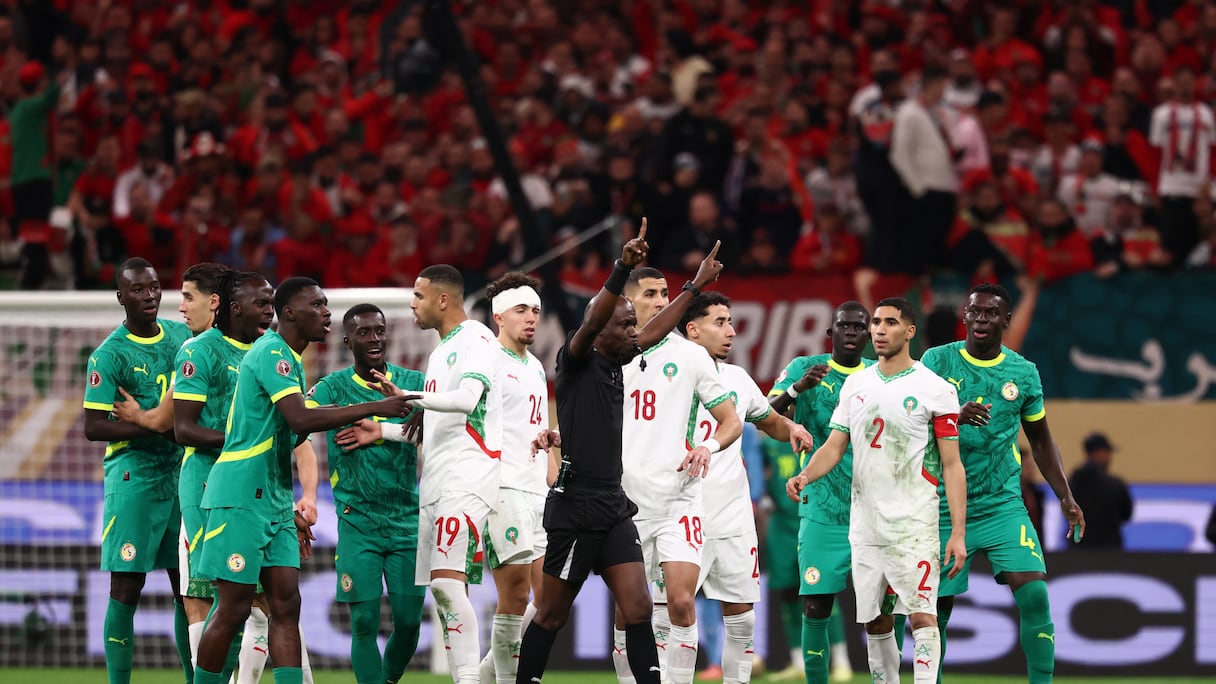
The case will take another decisive step on Thursday, October 8, when the three arbitrators appointed to hear the appeal will listen to arguments from the Senegalese Football Federation (FSF), the Confederation of African Football (CAF) and the Royal Moroccan Football Federation (FRMF). The dispute centers on the Senegalese players leaving the pitch during the January 18 final and the application of Articles 82 and 84 of the competition regulations.
The hearing will begin at 09:30 at the CAS headquarters in Lausanne and is expected to continue for much of the day. It will be held behind closed doors before a three-member panel chaired by French arbitrator Gérald Simon, with Italy’s Luigi Fumagalli and Germany’s Ulrich Haas. The proceedings will be conducted in French.
Representatives of the FRMF and FSF will attend the hearing in Lausanne, while CAF will be represented by its legal advisers.
Everything began with 16 minutes of the final
To understand what will be discussed before the CAS, it is necessary to go back to January 18 at the Moulay Abdellah Sports Complex in Rabat.
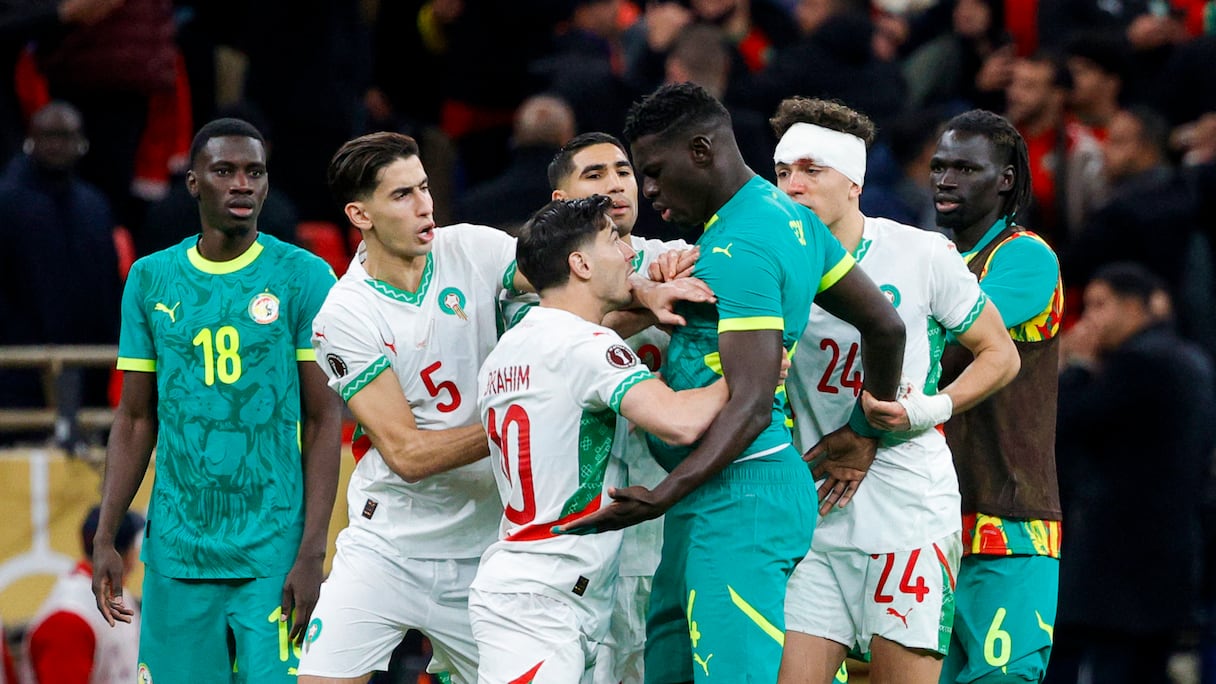
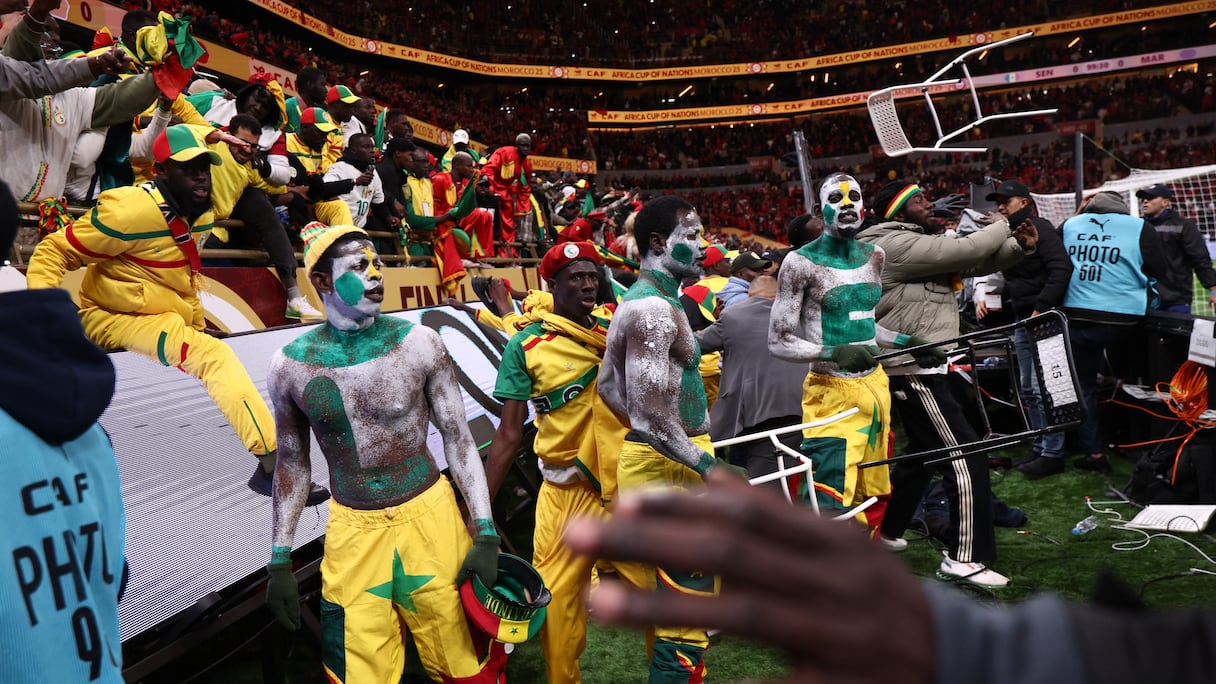
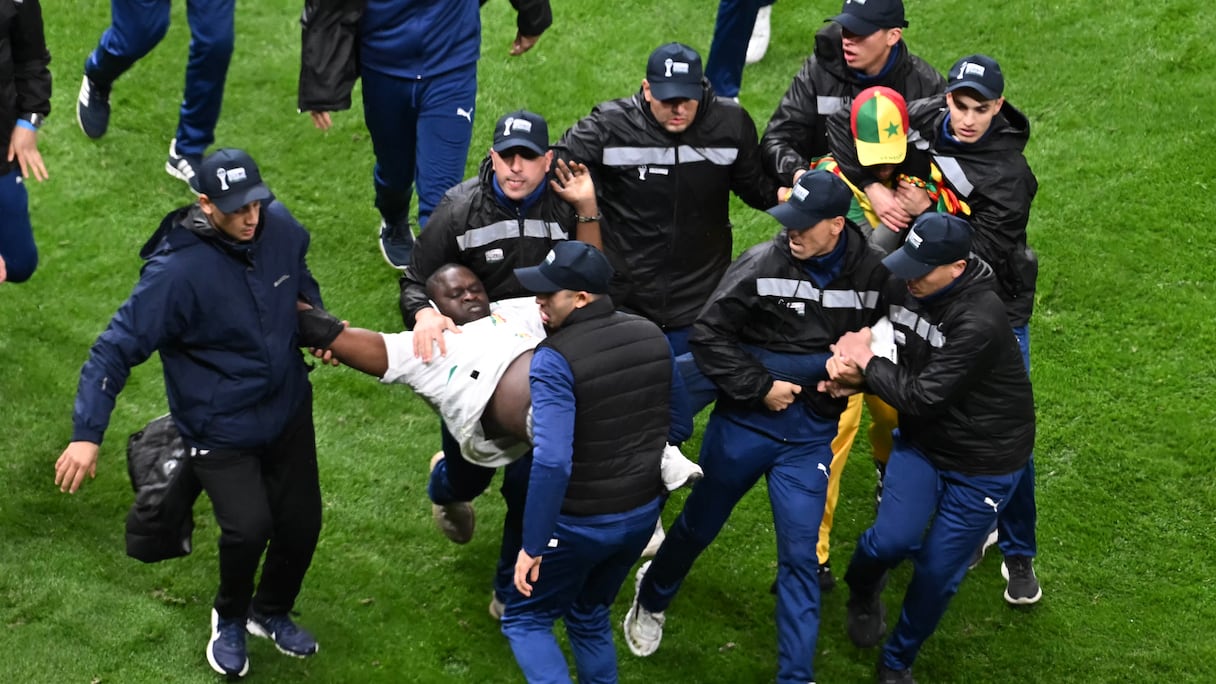
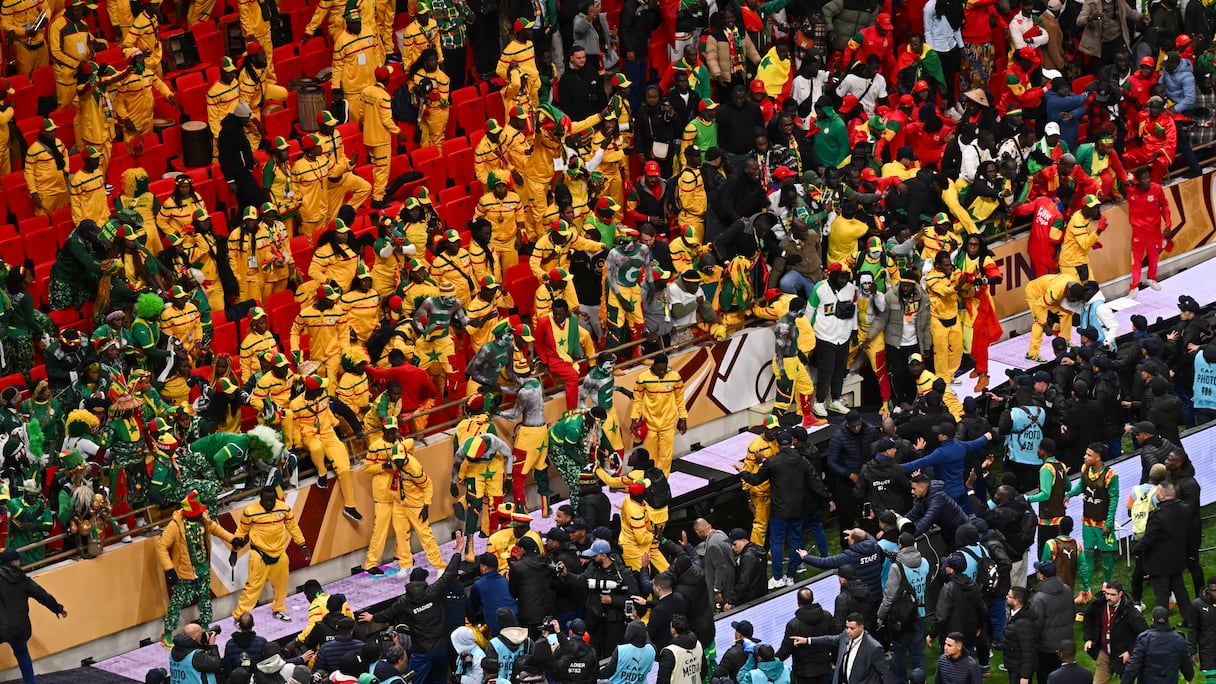
Deep into second-half stoppage time of the 2025 AFCON final, with the score still 0-0, Congolese referee Jean-Jacques Ndala awarded Morocco a penalty after a VAR review. The decision sparked anger on the Senegalese side. On the instructions of coach Pape Thiaw, the Lions of Teranga then left the pitch, bringing the match to a halt for nearly 16 minutes.
The Senegalese players eventually returned. Brahim Diaz missed Morocco’s penalty and the match resumed before going into extra time. Pape Gueye then scored the goal that gave Senegal a 1-0 victory.
On the pitch, Senegal therefore left that night with the trophy. Legally, however, the dispute was only beginning.
First ruling goes Senegal’s way
After the events of the final, CAF’s disciplinary body initially chose to sanction various incidents recorded during the match without challenging the result obtained on the pitch. The FRMF disputed that interpretation.
For the Moroccan side, the central issue is not whether the penalty awarded in the closing stages was justified. It concerns what happened afterwards. Can a team leave the pitch, cause a prolonged interruption to a final and then return to the match without facing the consequences provided for under the competition regulations?
That question became the basis of Morocco’s appeal.
Read also : AFCON final row: CAS reveals first details of much-awaited Oct 8 hearing
March 17 changes the case
The CAF Appeal Jury, after the FRMF challenged the initial ruling, issued its decision on March 17, 2026, completely changing the legal outcome of the final.
It overturned the Disciplinary Jury’s decision on this point and found that the Senegalese team’s conduct fell within the scope of Articles 82 and 84 of the AFCON regulations.
The Appeal Jury found it “established” that the Senegalese Football Federation, through the conduct of its team, had breached Article 82. As a result, and in application of Article 84, Senegal was declared to have forfeited the match and the final was recorded as a 3-0 victory for Morocco.
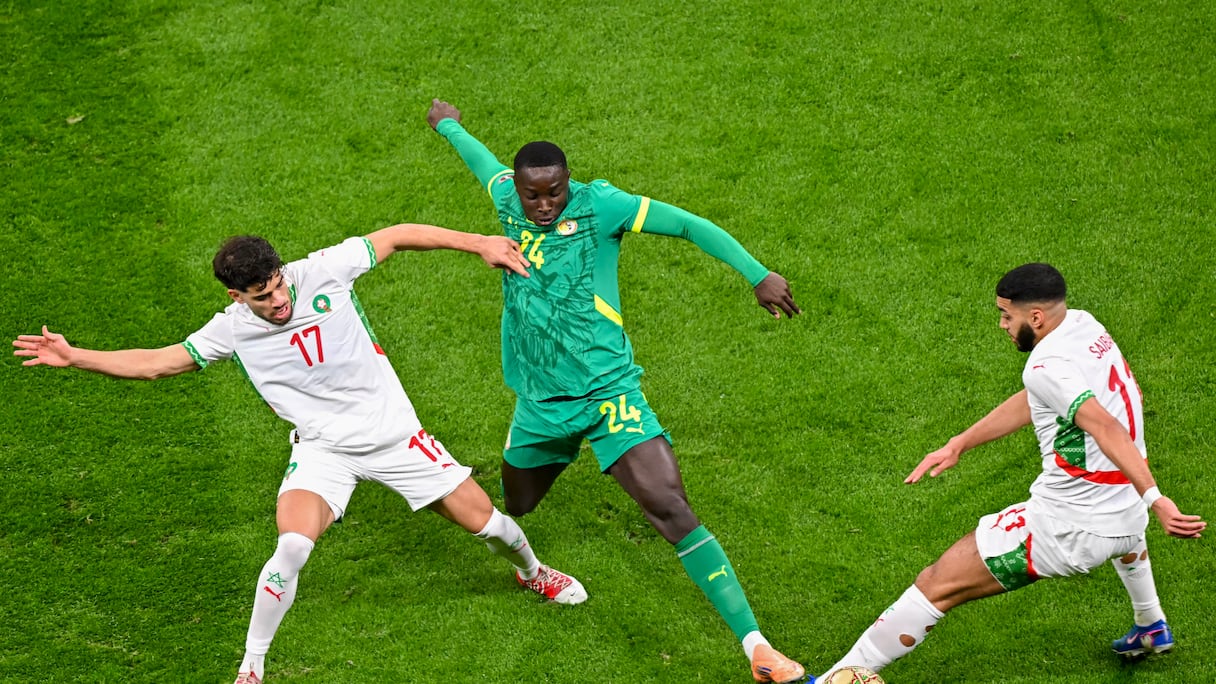

El centrocampista marroquí nº17 Abde Ezzalzouli, el defensa senegalés nº24 Antoine Mendy y el centrocampista marroquí nº11 Ismael Saibari disputan un balón durante el partido de la final de la Copa Africana de Naciones (CAN) entre Senegal y Marruecos, en el Estadio Príncipe Moulay Abdellah de Rabat, el 18 de enero de 2026. (Foto de Paul ELLIS / AFP). AFP
The 2025 AFCON therefore officially changed hands, with Morocco declared African champions.
The FSF rejected the decision and appealed to the Court of Arbitration for Sport. Its appeal was registered on March 25. It is seeking to have the CAF ruling annulled and the result obtained on the pitch recognized.
Articles 82 and 84 at the heart of Morocco’s case
These two provisions are likely to be central to the legal battle in Lausanne.
The Moroccan position is based on a relatively straightforward sequence of events. Senegalese players left the pitch during the match, play was interrupted for a particularly long period and the withdrawal came on instructions from the Senegalese bench.
For the FRMF, the key issue will therefore be how that conduct should be classified under the AFCON regulations.
Morocco is expected to defend before the CAS the interpretation ultimately adopted by CAF’s Appeal Jury: the events during the final fall under the provisions governing a team’s refusal to play or continue a match and therefore justify the sanction provided for in the regulations.
The case is therefore not about replaying the match, nor about revisiting the referee’s decision that led to Morocco’s penalty. The legal issue lies elsewhere.
The arbitrators will have to determine whether the Senegalese team’s departure from the pitch legally constitutes an offence covered by Articles 82 and 84 and, if so, whether the forfeit imposed by CAF is the appropriate regulatory consequence.
On this point, the Moroccan side enters the case with a favourable ruling from CAF’s Appeal Jury. Before the CAS, however, that decision alone does not guarantee that it will stand.
IFAB has since tightened the rules but not retroactively
Another element entered the case several weeks after the CAF ruling. It does not change the rules that applied to the January 18 final, but it reflects how football’s governing bodies now intend to deal with similar conduct.
At an extraordinary meeting on April 28, 2026 in Vancouver, the International Football Association Board (IFAB) unanimously approved two amendments to the Laws of the Game proposed by FIFA.
One of the new provisions specifically concerns players leaving the pitch in protest. Such conduct can now result in a sending-off, at the discretion of the competition organizer, rather than simply a yellow card. The measure also applies to officials who encourage their players to leave the pitch. The new framework also provides, in principle, for a team responsible for permanently stopping a match to be awarded a forfeit loss.
Given the timing, the changes are difficult to separate from the debate sparked several months earlier by the AFCON final.
Legally, however, a distinction must be made. The amendments were adopted after the events of January 18 and therefore cannot be applied retroactively to Senegal in the proceedings currently before the CAS. The arbitrators will have to rule on the case based on the regulations in force at the time of the incident and the competition’s own rules.
Morocco’s case therefore cannot rely on the new IFAB provisions as the legal basis for Senegal’s forfeit. Its argument remains based on Articles 82 and 84 of the AFCON regulations.
CAS to review the case
This is an important part of the procedure. The Court of Arbitration for Sport will not simply carry out a formal review of CAF’s work. Under Article R57 of the CAS Code, an appeal panel has full power to review both the facts and the law.
The three arbitrators can therefore examine the case in full, review the evidence submitted by the parties, hear their arguments and reach their own legal assessment.
Senegal will seek to demonstrate that the March 17 decision should be overturned. CAF will defend the ruling of its Appeal Jury, while the FRMF will have to establish that the classification of the conduct under Articles 82 and 84 is consistent with the facts and the competition regulations.
For the FRMF, this will include documenting in detail the sequence of the interruption, the Senegalese players’ departure from the pitch, the circumstances of their return and the regulatory obligations applying to both teams.
Official reports, footage of the match, successive decisions by CAF’s judicial bodies and the interpretation of the relevant regulations are therefore expected to play a central role in the hearing.
Three arbitrators and several possible outcomes
After the hearing, the arbitration panel will have several options. It can uphold the decision of CAF’s Appeal Jury, in which case Senegal’s forfeit and Morocco’s 3-0 victory will stand. It can also annul or modify the contested decision and issue a new ruling. Finally, the CAS Code allows the panel, where appropriate, to set aside the decision and refer the case back to the previous instance.
Thursday’s hearing therefore cannot simply be reduced to a choice between “Morocco champions” and “Senegal champions.” The arbitrators have a broader range of legal options.
No verdict on Thursday
Another point is essential. The final decision will not be known on Thursday. The CAS has already indicated this. October 8 will be devoted to the hearing, the parties’ arguments and the examination of the case. Once that stage is completed, the three arbitrators will deliberate. No date has yet been announced for the final ruling.
There will therefore be two separate stages: Thursday’s hearing in Lausanne and the decision, which will come at a later date.
On the eve of the hearing, the dispute will move away from the noise that has surrounded the case since the final and into the hands of the three CAS arbitrators. In Lausanne, the question will not be whether to replay the January 18 final, but whether the events that night legally justified the forfeit imposed on Senegal. The focus will be on the regulations, the evidence and how the relevant provisions should be interpreted.
