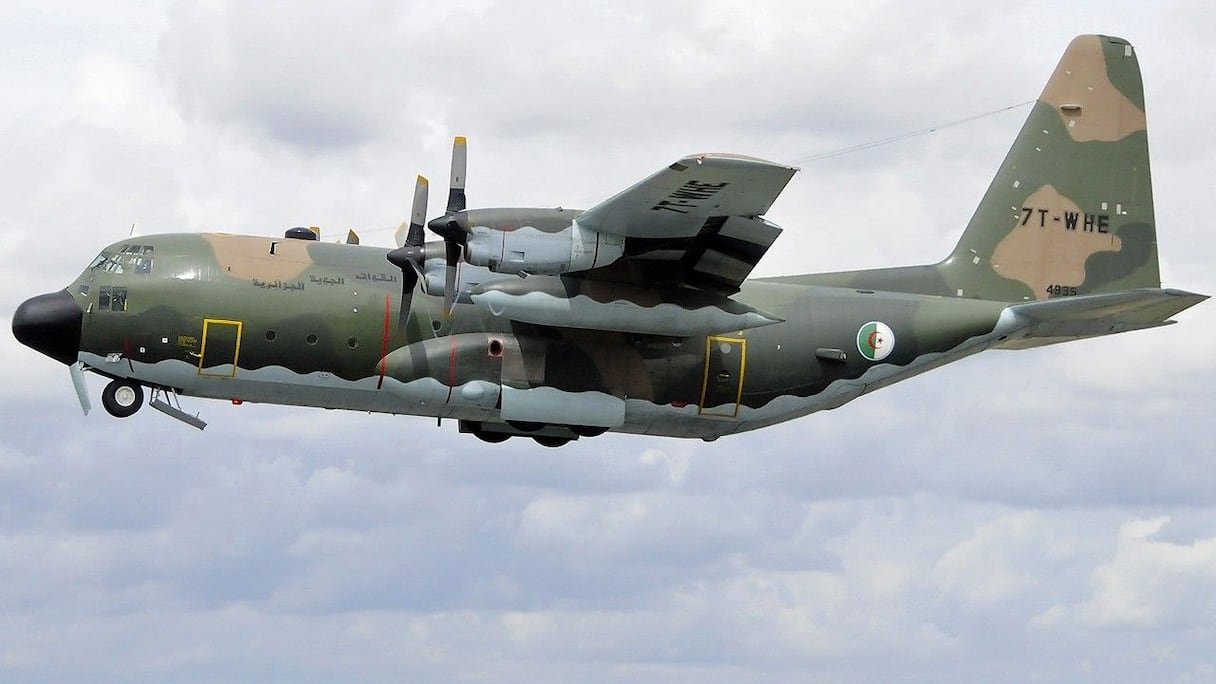
The first report came on Tuesday, October 6. According to the Polish Military Radar tracking service and specialist defence website Defence24, an Algerian Air Force Lockheed C-130H-30 Hercules, registration 7T-WHL, took off that day from Boufarik airbase, south of Algiers. It flew over Italy, Croatia, Hungary and Slovakia before entering Poland from the south, crossing into Belarus near Hajnówka and landing at Vnukovo, one of Moscow’s airports. A few days later, Polsat News reported a flight in the opposite direction, from Moscow to Algeria via Belarus and Poland. On October 22, Defence24 tracked another aircraft, this time a C-130J-30, crossing Poland from Żywiec to the Belarusian border, passing over Kraków, Kielce and Radom.
Three documented flights in a single month, and Polish newspapers are now describing the route as a “regular” service. According to Forsal, other aircraft, including Il-76MDs and LM-100Js, have been spotted flying similar routes in recent weeks. The pattern is always the same: military aircraft belonging to a non-NATO country crossing Alliance territory to reach the capital of a country at war with Ukraine, via its ally Belarus.
Read also : Niger: Algeria’s army moves into a former French military base
Asked about the flights by Polish news portal WP, Lieutenant Colonel Jacek Goryszewski, spokesman for the Operational Command of the Polish Armed Forces, offered the only official explanation available: the Algerian side had “not declared any hazardous materials.” The overflight request had been submitted through Algeria’s diplomatic mission, and permission was granted on that basis. In other words, Poland allowed the aircraft through on the strength of a declaration it had no means of verifying. According to Defence24, bilateral cooperation arrangements also exempt some Algerian military flights from requirements to disclose the nature and quantity of their cargo.
In Warsaw, the issue has now become a political one. Aleksander Olech, editor-in-chief of Defence24 and a lecturer at the Baltic Defence College, called in Rzeczpospolita for Poland to stop granting such overflight permits, in coordination with other NATO countries. His argument is straightforward: Poland is “under no obligation” to open its skies to these flights. And without knowing what is in the cargo holds, he says, there is no way to rule out the possibility that equipment being returned to Russia could subsequently be used against Ukraine.
Algiers finally responded on October 28, three weeks after the first sighting. The Algerian embassy in Warsaw issued a statement in English and Polish. It dismissed reports of Algerian aircraft carrying weapons over Poland as “false,” insisted that the flights complied with international law and had all the necessary authorizations, and maintained that “no hazardous materials” were on board. It concluded by urging the public to “verify information” and consult “official sources.”
Algeria’s state news agency, APS, went one better. It presented the affair as a denial issued by the “Polish Armed Forces.” Except the Polish military had denied nothing of the sort. It had merely reported what Algiers had declared to it—which amounted to nothing. Turning “no hazardous materials were declared” into “the Polish military denies the allegations” is a familiar exercise for Algeria’s state media: putting words into other people’s mouths.
There is nothing surprising about the flights themselves. They are simply the most visible expression of a longstanding military relationship. Algeria has long been Africa’s biggest buyer of Russian arms, according to SIPRI data. Its fighter jets, air defense systems, tanks and submarines are Russian-made. They need maintenance, repairs and replacement parts.
Read also : Algeria: Tebboune adviser’s Geneva trip exposes power struggle between presidency and military
What is surprising is the contradiction. The Algeria that sends its military logistics flights to Moscow through NATO airspace is the same Algeria that courts Europe as a customer for its gas, seeks favor in Washington, presents itself as a partner for stability in the Sahel and has just deployed troops to a former French military base in Niger. It demands that Paris respect its sovereignty and apologize for its colonial past, yet expects Warsaw to let its aircraft pass without asking questions.
Poland, which borders both Ukraine and Belarus, cannot afford the luxury of naivety. Every week, it reports drones, balloons and Russian aircraft near its borders. Hardly surprising, then, that it should regard military planes crossing its territory on their way to Moscow with suspicion when nobody will say what they are carrying.
And the Poles have other reasons to worry. It is not just what is in the cargo holds that raises questions, but also the condition of the aircraft and the competence of their crews. The Algerian Air Force has one of the world’s worst aviation accident records. In February 2014, a C-130 Hercules—the very type of aircraft now flying over Poland—crashed in the Oum El Bouaghi region, killing 77 people and leaving just one survivor. In April 2018, an Il-76 crashed shortly after takeoff from Boufarik, the same airbase from which these flights to Moscow depart. The death toll was 257, making it the deadliest aviation disaster in Algeria’s history. Since then, crashes involving fighter jets and training aircraft have continued.
Algiers tells the Poles to check their facts. Warsaw would rather have answers to two questions: what’s in the hold, and who’s at the controls?
