
Nepalese rescue teams are racing against time to reach hundreds of workers believed to be trapped inside hydropower tunnels following last week’s devastating floods in the country’s Himalayan region.
According to Nepalese authorities and the Independent Power Producers’ Association of Nepal (IPPAN), 933 workers remain unaccounted for at 11 hydropower projects in the flood-hit districts of Rasuwa and Nuwakot. Around 500 are believed to be trapped inside tunnels.
The disaster struck on Wednesday, Aug. 26, after a glacier collapse triggered a massive surge of water, ice, rocks, mud and debris through valleys along the Nepal-China border. The flooding destroyed roads, bridges, buildings and parts of several hydropower facilities, leaving some tunnels among the few structures still standing.
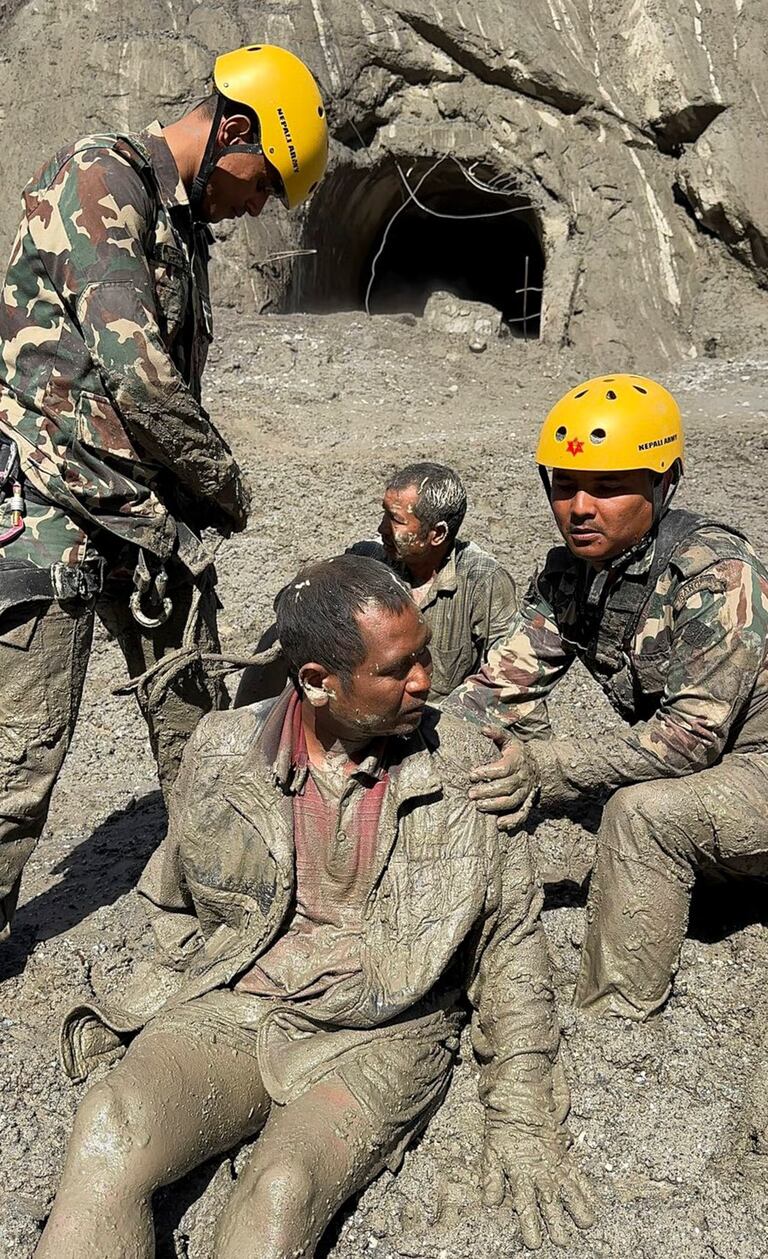
The scale of the disaster has made the rescue operation difficult. Nepal reported 903 deaths and 4,247 people missing as of Monday, while Chinese authorities reported 16 deaths and 546 missing on the other side of the border.
More than 10,000 people have been rescued from the affected region, including 323 foreign nationals, according to Nepal’s foreign ministry. The Red Cross estimates that more than 90,000 people have been affected.
Hundreds believed trapped underground
Each hydropower facility presents different challenges for rescuers because of the length and layout of its underground tunnels.
At the Upper Trishuli-1 Hydropower Project in Rasuwa, at least 576 people are missing, with about 300 believed to be inside the project’s tunnel, according to IPPAN.
Read also : No Moroccans among 644 tourists missing after Nepal floods
At the Trishuli 3A project, 42 people are listed as missing. The tunnel leading to the underground powerhouse extends for more than four kilometers, raising concerns over how far mud and water may have penetrated.
Australian tunnel-rescue specialist Arnold Dix, who has been assisting operations, said rescuers do not yet know whether they will need to clear a relatively short section or much longer stretches of the tunnel.
The operation is further complicated by the possibility that water may have accumulated inside underground facilities. Drilling into certain areas could release trapped water and create additional risks for rescuers.
At the Chilime Hydropower Plant, six people are believed to be missing. Rescue teams managed to advance about 130 meters into a 250-meter tunnel before deep mud and damaged infrastructure forced them to stop.
The tunnel contains a kitchen and food supplies, potentially offering some support to anyone trapped inside, although rescuers remain uncertain about the availability of oxygen.
Read also : Guatemala declares orange alert as Fuego volcano enters more explosive phase
Nepal Army and police teams have been working alongside specialists from India and China to locate the missing workers.
Rescuers are using excavators, controlled blasts, searchlights and drones equipped with thermal cameras to identify possible survivors and clear access routes.
At Trishuli 3A, teams drilled through the reinforced structure from above and created an opening large enough for rescuers to enter using ropes and harnesses. They also pumped air into the tunnel and sent food inside.
The next stage involves sending teams equipped with oxygen, medical supplies, communications equipment and cameras into the tunnels.
But the scale of the obstacles remains significant. Rescue teams must deal with layers of steel and reinforced structures around underground turbine rooms, while mud and debris continue to block access.
Nepal Army spokesperson Brig. Gen. Raja Ram Basnet said the main priority was to clear the tunnels and reach those who may still be inside.
Teams have already recovered several bodies from two tunnels, while other sections remain inaccessible.
Survivors offer clues about those still missing
At least 279 hydropower workers have either been rescued or managed to escape the tunnels themselves.
Some survivors said large numbers of their colleagues remained underground when the flood struck.
Read also : Search for survivors after powerful Japan quake kills 13
Arnold Dix said rescuers remained hopeful but acknowledged that time was becoming a major factor. Some tunnels may contain areas with food and oxygen, potentially allowing trapped workers to survive for an extended period, but conditions vary from one site to another.
For now, however, rescuers remain focused on one priority: clearing the tunnels and reaching the workers who may still be trapped underground.
