A working paper prepared by central bank staff explores the potential benefits of a central bank digital currency (CBDC), including greater financial inclusion, lower payment costs and more efficient money transfers. It also highlights challenges involving cybersecurity and digital infrastructure.
Could the Moroccan dirham eventually circulate in fully digital form alongside banknotes and coins? This is one of the options being examined by Bank Al-Maghrib (BAM) through its research into a central bank digital currency.
The aim is to assess how a digital dirham could modernize payments, expand access to financial services and reduce reliance on cash.
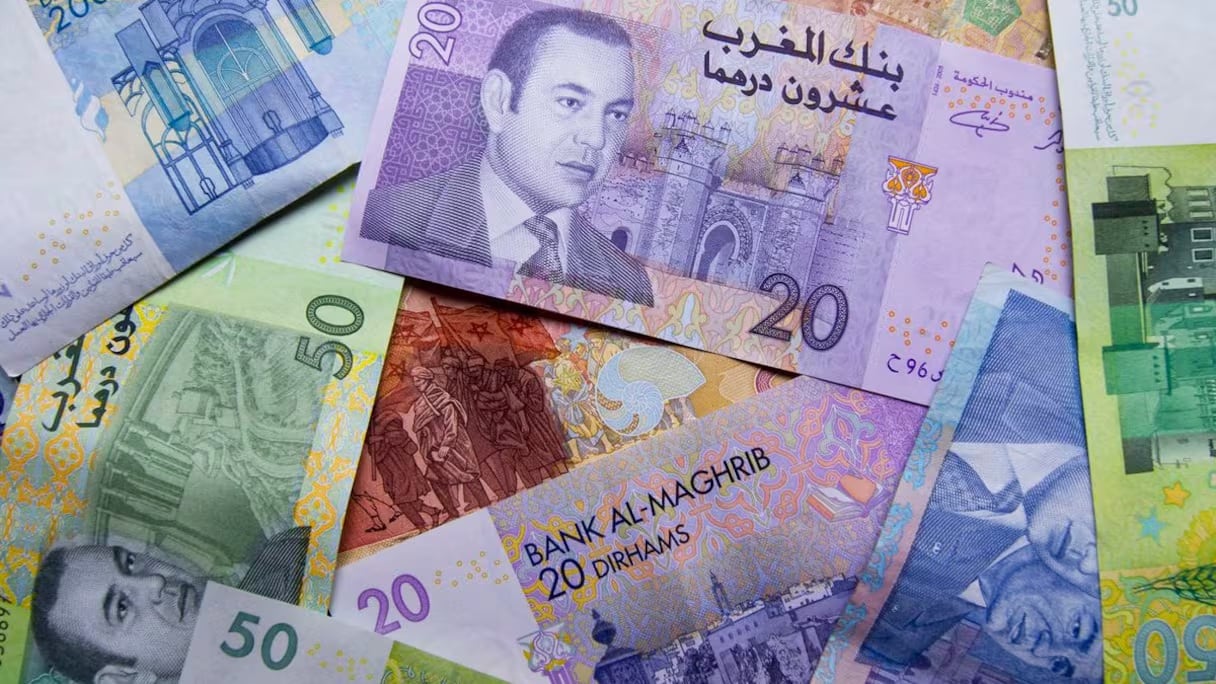
For now, the initiative does not signal an imminent currency launch. Instead, the central bank is studying the conditions under which a digital version of the dirham could be introduced. Its working paper points to the sharp increase in cash in circulation, which climbed from 70 billion dirhams in 2001 to more than 500 billion in 2025.
A digital currency alongside cash
Unlike cryptocurrencies, whose prices can fluctuate sharply, a digital dirham would be a digital form of Morocco’s official currency, issued or backed by the central bank under the model eventually adopted.
It would not be designed to eliminate cash, but to offer an additional payment method combining the convenience of digital transactions with some of the advantages associated with physical money, including simplicity, security and accessibility.
Read also : BAM holds the line at 2.25pc amid uncertain economic outlook
Several central banks have already tested or launched digital currencies, including those in the Bahamas, Jamaica and Nigeria. Their experiences show, however, that making the technology available does not automatically ensure widespread use. Public trust, ease of use and acceptance by merchants remain decisive factors.
One potential benefit for Morocco is greater financial inclusion. According to figures cited in the working paper, 62% of resident individuals held bank accounts in 2025. Women remain less likely than men to be banked, while people aged 15 to 24 account for only about 10% of bank account holders.
A digital dirham offering low-cost payments and the ability to complete certain transactions offline could improve access to financial services, particularly in rural areas far from bank branches or with limited internet coverage.
It could also help bring transactions in the informal economy into formal financial channels. The informal sector is estimated to account for nearly 30% of Morocco’s GDP, according to figures cited by the authors.
A survey by the High Commission for Planning (HCP) counted more than two million informal production units in 2023. Only 2% of the people running these units had a dedicated bank account for their business.
Read also : Digital currencies: What Morocco can learn from Nigeria, Kenya, Mauritius and Egypt
An accessible digital payment method with features resembling cash could help these businesses gradually enter the formal economy. That transition would also depend on other measures, including simpler administrative procedures and better access to financing.
Potentially cheaper international transfers
A digital dirham could also create opportunities for cross-border payments, particularly for Moroccans living abroad. Remittances have averaged the equivalent of 8% of GDP in recent years, according to the working paper.
Interoperability between digital currencies issued by different central banks could eventually reduce transfer times and fees by limiting the number of intermediaries involved.
The authors point to mBridge, a project developed under the auspices of the Bank for International Settlements with several central banks, including those of China, Thailand and the United Arab Emirates. According to results cited in the paper, the pilot project reduced the cost of certain transactions by up to 50%, with some settlements completed in seconds.
Achieving similar gains for Morocco would depend on compatible payment infrastructure, appropriate legal frameworks and agreements with international partners.
Infrastructure and cybersecurity challenges
Introducing a digital currency would require reliable digital infrastructure across the country, with systems capable of keeping payments running smoothly. Despite progress in digitalization, disparities in internet coverage and the cost of equipment remain obstacles, particularly in rural areas.
Cybersecurity and personal data protection are equally important. Any system would need to safeguard transactions, prevent fraud and balance payment privacy with compliance with legal requirements.
The design of a digital dirham would therefore have to address practical questions about access, transaction limits, offline payments and the role of banks and other financial intermediaries.
Read also : Bank Al-Maghrib publishes two papers on central bank digital currency
A long-term project
The working paper advocates a gradual, cautious and coordinated approach to a potential digital currency. Its success would depend not only on technological readiness and an appropriate regulatory framework, but also on whether the system offers practical benefits to households and businesses.
The digital dirham is therefore part of a longer-term discussion about modernizing payments, expanding financial inclusion and strengthening digital sovereignty.
In a country where cash remains widely used, the challenge will be to develop a digital alternative that is simple, secure and widely accepted without abruptly displacing existing payment habits.
