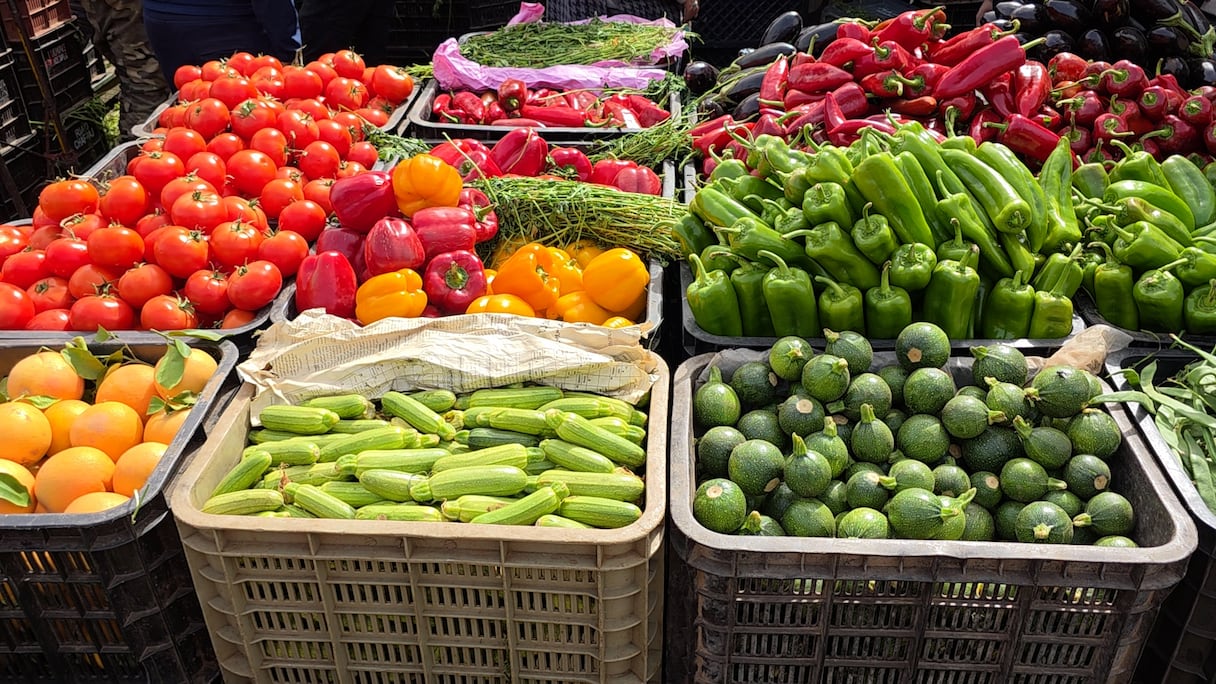
Abdelkebir Maïden, secretary-general of the Casablanca Wholesale Fruit and Vegetable Market Association, told Le360 that the recent price surge was largely driven by the extreme heat Morocco experienced in September.
“The high temperatures had a major impact on agricultural produce and caused significant losses for farmers. We did not see this kind of heat in July or August,” he said.
The temperatures hit crops during flowering and growth, when they needed favorable weather conditions. The damage led to widespread crop losses and nearly wiped out some production, particularly tomatoes in the Souss region, which was among the hardest hit.
A seasonal supply gap
Maïden said the market is currently going through a transition period in October. Supplies normally come in two main phases. From July to October, the market relies on locally grown produce from areas around Casablanca, including Doukkala, Abda and Gharb. This is followed by produce from Agadir, which would normally begin arriving around this time.
Read also : Import measures have failed to stabilize red meat prices, industry professionals say
But extreme weather has significantly delayed supplies from Agadir. Maïden said they are not expected to help make up the shortfall and meet demand until November and December.
Exports to African and European markets are also adding to the pressure on domestic supplies, he said.
“The Moroccan market is open, and exports are draining supplies when production is already scarce. This raises a real question about the value of continuing large-scale exports while the domestic market is facing a shortage,” Maïden said.
Asked about calls to temporarily suspend exports until domestic prices stabilize, he pointed to international obligations and contracts already signed between farmers and foreign buyers, some of which run for several years.
Some crops are grown primarily for export, he added, even when their producers receive government support. This raises another question, he said: why should public money support farmers growing products that Moroccan consumers do not benefit from, because the produce is directed mainly to foreign buyers?
Higher fuel prices add to transport costs
Maïden also highlighted the impact of rising fuel prices on transport costs and the prices of goods across the board.
“Diesel prices have risen from 11 or 11.5 dirhams last year to around 16 dirhams now. This has had a direct impact on the prices of vegetables and other food products, even though the government also provides support to the transport sector,” he said.
Read also : Beef at MAD 120, lamb at MAD 160 as food price pressure spreads to chicken, eggs
Wholesale vegetable prices on October 18
Maïden gave the following prices at Casablanca’s wholesale market on Sunday, October 18:
- Tomatoes: 5 dirhams for standard varieties and 8 dirhams for higher-quality produce.
- Potatoes: 4.5 to 6 dirhams.
- Onions: 4.5 to 5.5 dirhams.
- Carrots: 3.5 to 4.5 dirhams.
- Turnips: 8 to 10 dirhams.
- Peas: 16 to 17 dirhams.
- Green beans: 15 to 17 dirhams.
- Zucchini: generally 7 to 8 dirhams, with prices reaching 10 to 11 dirhams.
- Eggplants: 5 to 6 dirhams.
- Green peppers: down to 8 dirhams on Sunday, from 12 to 13 dirhams the previous week amid export pressure.
- Cucumbers: 6 to 7 dirhams.
- Pumpkin: 20 to 22 dirhams.
Winter vegetables, including fennel, artichokes and cauliflower, are also expensive and in short supply, Maïden said, partly because rainfall has yet to arrive.
He concluded by questioning how public subsidies are distributed, particularly support for tomato farmers and fuel, and whether recipients should be required to prioritize domestic needs.
Maïden alleged that the system suffers from mismanagement, with support benefiting owners of inactive bus fleets and holders of transport permits, while ordinary consumers and professional drivers ultimately bear much of the cost.
