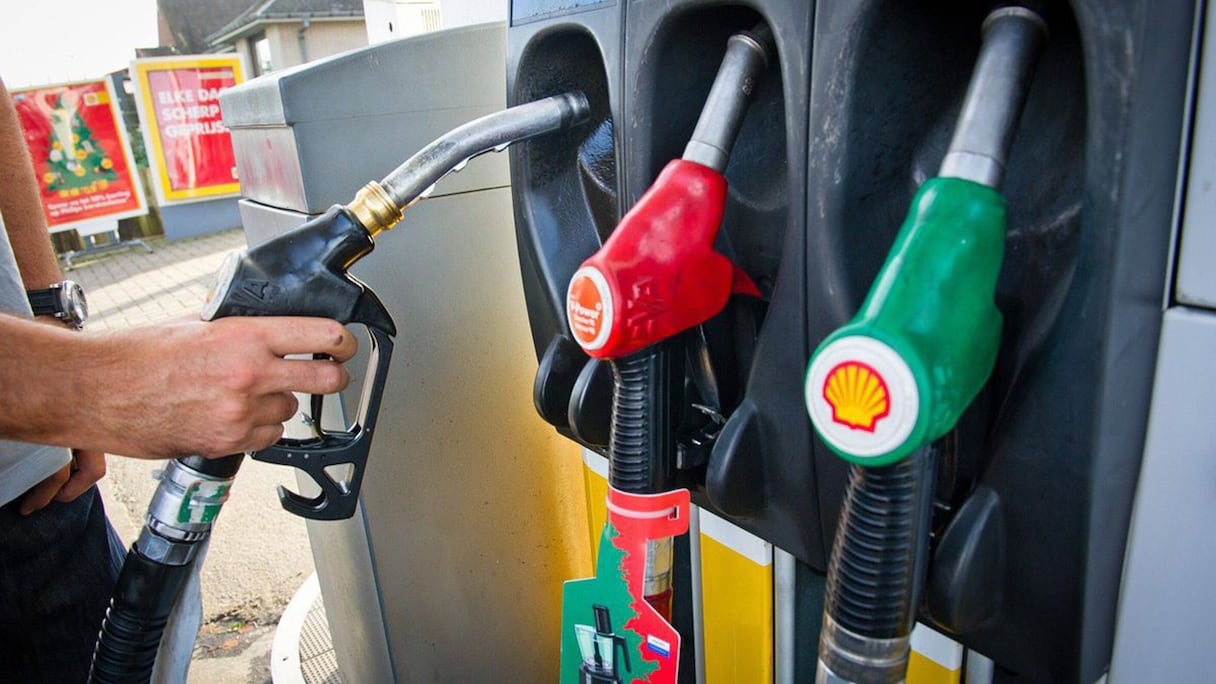
Since the outbreak of the war in the Middle East between the United States and Iran, fuel prices have fluctuated constantly in response to developments on the ground and statements by the U.S. president. The strongest trend, however, has been upward. This is hardly surprising given that the Strait of Hormuz, at the heart of the tensions, is a major transit route for more than 20% of the world’s crude oil.
The blockade of the strait has disrupted supply chains and affected the supply of some refineries that rely on crude from the Middle East. The situation has been further aggravated by major shipping companies — including Frontline, Euronav, Teekay Tankers, Nordic Tanker and DHT Holding — rerouting vessels around the Suez Canal, resulting in much longer delivery times for European refineries. This combination of factors has pushed up crude prices, which rise with each escalation and retreat when tensions between the United States and Iran ease.
Read also : Fuel prices: A one-dirham hike raises fresh questions over competition in Morocco’s fuel market
At the same time, refined fuel prices have tended to rise much faster than crude prices. This is largely due to declining global refining activity and reduced fuel supplies from Gulf countries, as regional tensions have affected some refineries and the blockade of the Strait of Hormuz has disrupted supplies to the global market. These factors are also affecting pump prices worldwide.
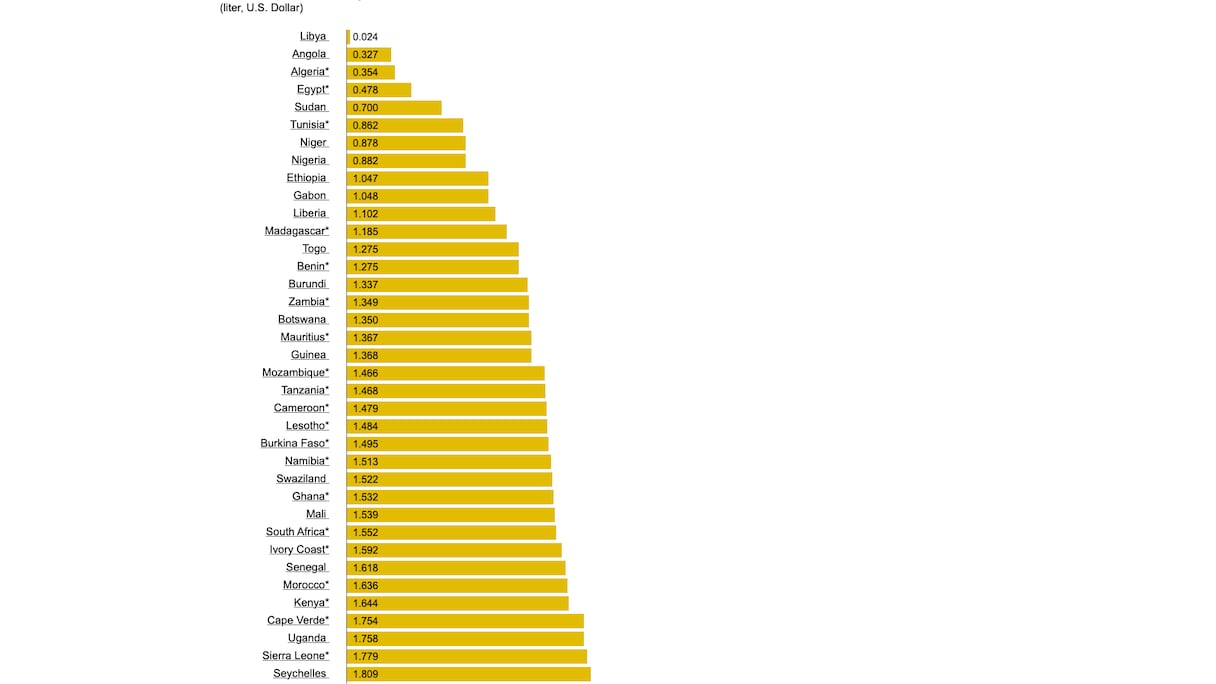
According to Global Petrol Prices, a platform that provides fuel price data in U.S. dollars for 170 countries, as of Aug. 10, 2026, the price of a liter of gasoline ranged from $0.024 in Libya — the lowest in the world — to $4.163 in Hong Kong, the highest globally. In other words, the price of one liter of gasoline in Hong Kong would buy 173.5 liters in Libya.
Across Africa, all countries other than oil producers that subsidize fuel have been affected by the increase in prices.
Read also : Fuel prices: A one-dirham hike raises fresh questions over competition in Morocco’s fuel market
There are, however, huge differences from one country to another, driven by a range of factors including geographical isolation, taxes and logistics. On Aug. 10, 2026, a liter of gasoline cost $3.237 in Malawi, compared with $1.047 in Ethiopia, a difference of $2.19.
Fuel prices are generally high across Africa, except in countries where they are heavily subsidized, particularly oil producers such as Libya, where gasoline and diesel are among the cheapest in the world at $0.024 per liter.
In Tripoli, a 1.5-liter bottle of mineral water generally costs between $0.15 and $0.20. That means the price of one bottle of water can buy between 6.25 and 8.33 liters of gasoline or diesel.
After Libya, fuel is relatively cheap in Angola ($0.327 per liter), Algeria ($0.354) and Egypt ($0.478). In these countries, fuel costs far less than in Saudi Arabia ($0.622 per liter), despite the kingdom being the world’s second-largest oil producer and largest oil exporter.

Libya has the cheapest fuel prices in the world. A liter of gasoline or diesel sells for $0.024.
Prices are also relatively low in Sudan ($0.70 per liter), Tunisia ($0.862), Niger ($0.878) and Nigeria ($0.882), Africa’s largest oil producer.
The top 10 African countries with the lowest fuel prices are rounded out by Ethiopia ($1.047 per liter) and Gabon ($1.048).
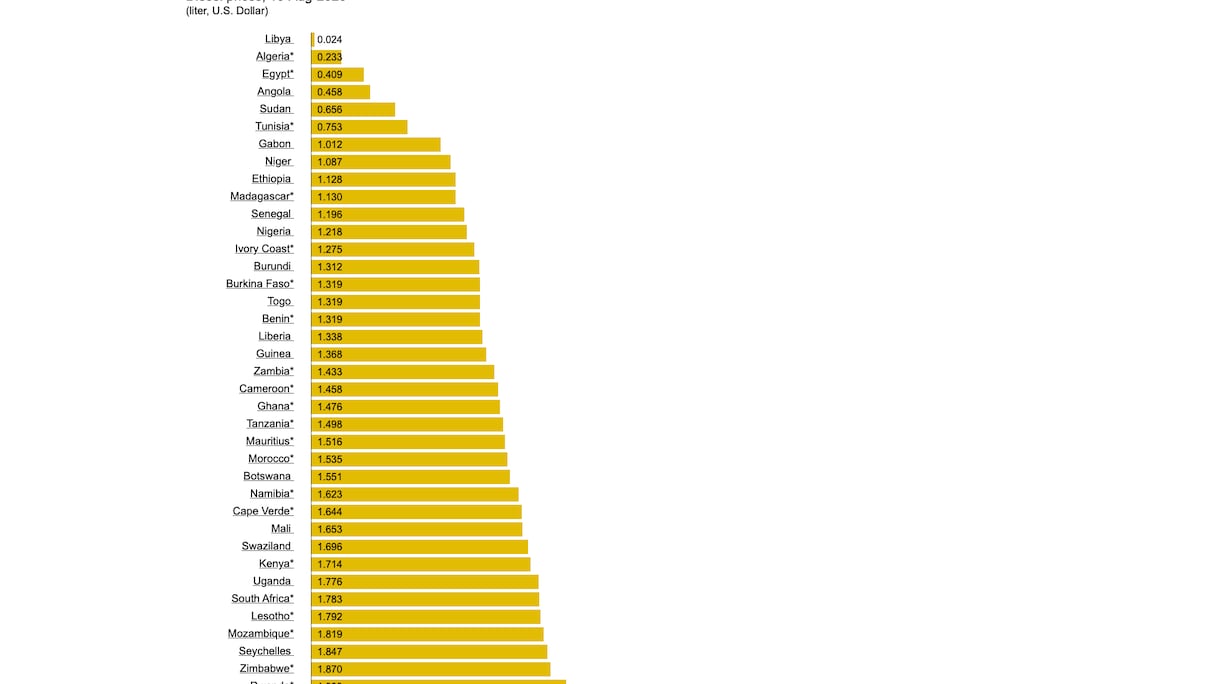
Lowest gasoline and diesel prices in Africa, as of Aug. 10, 2026 (U.S. dollars per liter)
| Country | Gasoline | Country | Diesel |
|---|---|---|---|
| Libya | 0.024 | Libya | 0.024 |
| Angola | 0.327 | Algeria | 0.233 |
| Algeria | 0.354 | Egypt | 0.409 |
| Egypt | 0.478 | Angola | 0.458 |
| Sudan | 0.700 | Sudan | 0.656 |
| Tunisia | 0.862 | Tunisia | 0.753 |
| Niger | 0.878 | Gabon | 1.012 |
| Nigeria | 0.882 | Niger | 1.087 |
| Ethiopia | 1.047 | Ethiopia | 1.128 |
| Gabon | 1.048 | Madagascar | 1.130 |
Source: Global Petrol Prices
All of these countries where fuel is cheaper are oil producers, with the exception of landlocked Ethiopia. Given that most of these African countries import nearly all of their fuel, with a few exceptions including Nigeria, Algeria, Libya and Egypt, these low prices are largely the result of heavy subsidies funded by public finances.
In Ethiopia, keeping prices low costs the government about 20 billion birrs ($130 million) a month in subsidies, excluding emergency spending triggered by sudden spikes in pump prices, as happened when war broke out between the United States and Iran. Faced with the cost of these subsidies, authorities are encouraging electric vehicles and have even banned imports of gasoline- and diesel-powered cars since 2024.
Read also : Russia imports gasoline shipment from Morocco as fuel shortages persist
Outside these oil-producing countries that subsidize fuel, pump prices are generally high across the continent. In fact, the world’s second-most expensive fuel is found in Africa: Malawi. There, a liter of gasoline costs $3.237.
Currency pressures, particularly the need for U.S. dollars to finance fuel imports, and Malawi’s landlocked position, which creates logistical challenges, have had a major impact on fuel prices. The depreciation of the local currency, the Malawian kwacha, has further increased the cost of imports priced in hard currencies, prompting authorities to make sharp adjustments to pump prices.
After Malawi, fuel is also expensive in Rwanda ($2.00 per liter), Zimbabwe ($1.930), the Central African Republic ($1.849), Seychelles ($1.809), Sierra Leone ($1.779), Uganda ($1.754), Cabo Verde ($1.754), Kenya ($1.644) and Morocco ($1.636).
Highest gasoline and diesel prices in Africa, as of Aug. 10, 2026 (U.S. dollars per liter)
| Country | Gasoline | Country | Diesel |
|---|---|---|---|
| Morocco | 1.636 | Uganda | 1.776 |
| Kenya | 1.644 | South Africa | 1.783 |
| Cabo Verde | 1.751 | Lesotho | 1.790 |
| Uganda | 1.758 | Mozambique | 1.819 |
| Sierra Leone | 1.779 | Seychelles | 1.847 |
| Seychelles | 1.809 | Zimbabwe | 1.870 |
| Central African Republic | 1.849 | Rwanda | 1.993 |
| Zimbabwe | 1.930 | Sierra Leone | 2.033 |
| Rwanda | 2.000 | Central African Republic | 2.201 |
| Malawi | 3.237 | Malawi | 3.377 |
Source: Global Petrol Prices
Pump prices are not determined solely by movements in global crude oil prices, even though a surge in crude prices is generally accompanied by higher fuel prices.
Several other factors influence pump prices. First, because fuel is a strategic component of the transportation sector, prices for refined petroleum products — diesel, gasoline and fuel oil — are regulated in many African countries.
Governments set pump prices. Even in countries where prices have been liberalized, authorities often determine how prices are adjusted. Subsidies, which remain in place in most countries across the continent, are another major factor.
These subsidies allow governments to cushion increases in pump prices and regulate the cost of passenger and freight transportation. Oil producers are the countries that subsidize fuel most heavily.
Read also : Fuel prices rise in Morocco as diesel and gasoline increases take effect
As a result, fuel prices in Algeria, Angola, Egypt and Libya do not reflect the actual cost of fuel — including extraction, refining, transportation and distribution. Instead, they are prices aimed at maintaining social stability by making fuel more affordable and keeping transportation costs down. But these subsidies can also encourage waste, with the cost ultimately borne by public finances. They also discourage energy efficiency and more responsible consumption.
The state of crude oil refining also affects pump prices. Africa has relatively few refineries and continues to import a large share of its fuel. But amid the Middle East crisis, supply has fallen and refined petroleum product prices have risen much faster than crude prices, to which they are generally linked.
Because African countries largely import their fuel, prices are also driven up by logistics costs, including transportation, insurance, storage and distribution, as well as exchange-rate fluctuations.
Finally, the factors that appear to have the greatest impact on fuel prices, particularly when crude oil prices are stable, are taxes. These include the domestic consumption tax, known as TIC, and value-added tax, or VAT. While the TIC is fixed and does not depend on changes in the price of refined products, VAT fluctuates with the price of crude.
These taxes help explain differences in fuel prices across African countries. In Senegal, for example, taxes — including the specific fuel tax and VAT — account for about 45% of the pump price. In other words, the high price of fuel in Senegal is partly the result of taxation that contributes to public finances.
In Morocco, where pump prices are adjusted every 15 days, the TIC and VAT also have a significant impact on prices. The TIC is set at MAD 2.422 per liter for diesel and MAD 3.764 per liter for gasoline, while a 10% VAT is applied to the purchase cost declared by the importer, which varies according to international market prices.
This is not unique to African countries. In France, for example, taxes account for the majority of the price of a liter of gasoline or diesel, at 55% to 60%. These include the domestic consumption tax on energy products, or TICP, which ranges from 61 to 69 euro cents per liter, and VAT at 20% of the pretax price, which includes the TICP. As a result, taxes make up the majority of the final fuel price.
Read also : Fuel prices in Morocco fall for second time in two weeks
Thus, while oil shocks lead to higher subsidies borne by governments in many countries, they can also provide a windfall for the public finances of some countries, which collect significant VAT revenues.
Ultimately, it is consumers who bear the brunt, as fuel prices have repercussions across national economies, particularly in transportation and industry.
Faced with increasingly frequent oil shocks, some countries have sought ways to secure their fuel supplies. In Madagascar, for example, the new authorities have nationalized fuel imports, which had previously been handled by private operators.
More broadly, fuel prices at the pump should encourage African countries to make greater use of renewable energy, taking advantage of the continent’s vast solar, wind and hydropower potential to produce cleaner and cheaper electricity while accelerating the shift toward electric vehicles.
