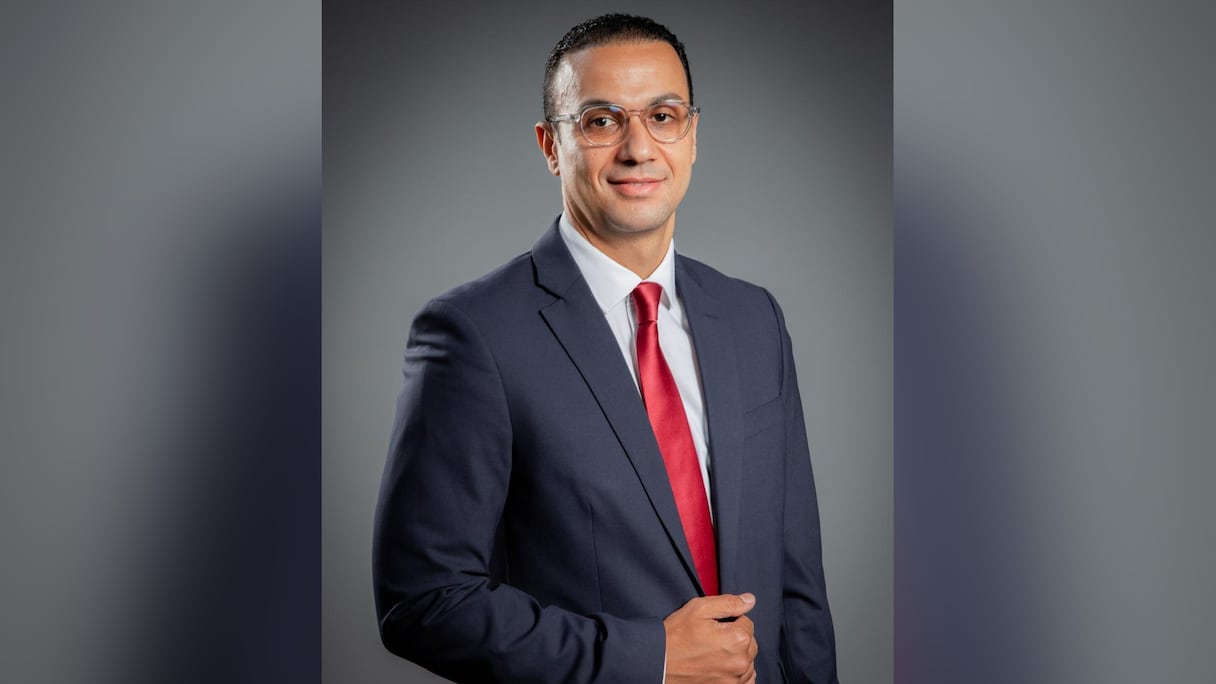
The dirham has weakened against both the euro and the dollar, reflecting a combination of domestic factors and the strength of the US currency. For Mohamed Filali, Head of Morocco Capital Markets at Attijariwafa Bank, the movement does not signal weakness in Morocco’s exchange rate regime. Rather, it demonstrates the system’s ability to absorb external shocks within a controlled framework.
While a weaker dirham makes imports more expensive, it can also improve exporters’ competitiveness and increase the value, in local currency, of tourism revenues and remittances from Moroccans living abroad. Offering a positive assessment of Morocco’s gradual transition towards greater exchange rate flexibility, Filali encourages companies to hedge their foreign exchange exposure more effectively. The dirham’s trajectory over the coming months will nevertheless depend on decisions by major central banks, commodity prices and geopolitical developments.
Le360: The dirham has weakened against the euro and the dollar. How exactly is its exchange rate determined?
Mohamed Filali: To understand this movement, we need to look at Morocco’s exchange rate regime. The dirham is pegged to a basket comprising 60% euros and 40% dollars. Around the value determined by that basket, the dirham can fluctuate within a band of ±5%, according to supply and demand for foreign currencies on the domestic foreign exchange market.
Its exchange rate therefore depends on two components. The first is the euro-dollar exchange rate, which determines the value of the basket. This is an external factor over which Morocco has no control. The second is the dirham’s position within its fluctuation band, reflecting the balance between foreign currency inflows and outflows. That is a domestic factor. The dirham’s recent depreciation results from a combination of the two.
Let’s start with the domestic factor. What happened in the local market?
This is the more decisive factor. During the summer, the dirham was trading at around -3% relative to the central rate of the reference basket, within the permitted fluctuation band. The band is supported by remittances from Moroccans living abroad and tourism receipts.
Since the start of the autumn season, that seasonal effect has faded, while rising international commodity prices, among other factors, have increased importers’ demand for foreign currency. The dirham is now trading at around +3%. This domestic movement has been compounded by an external factor: the strength of the dollar.
Why, precisely, has the dollar strengthened so much?
The euro has fallen from a summer peak of $1.1680 to $1.1242 today, a decline of 3.75%. Three main factors explain this movement.
First, the divergence in monetary policy, with the Federal Reserve maintaining a more restrictive stance than the European Central Bank (ECB), and an interest rate differential of approximately 1.5 percentage points in favor of the dollar.
Second, rising US bond yields, which make dollar-denominated assets more attractive.
Finally, geopolitical tensions, which reinforce the dollar’s status as a safe-haven currency during periods of uncertainty. This movement does not affect the dirham in the same way against both currencies.
Is that why the decline has been more pronounced against the dollar?
Exactly. Against the dollar, the two effects reinforce each other, amplifying the dirham’s depreciation. Against the euro, by contrast, the European currency’s decline partly offsets the domestic factor because it reduces the value of the basket expressed in euros. The depreciation is therefore considerably more moderate.
What are the consequences of these developments for the economy?
There are two sets of effects, which partly offset one another.
For importers, purchases denominated in foreign currencies become more expensive, particularly in dollars, the currency used to invoice energy and many raw materials. Some of these additional costs may be passed on to consumer prices. The extent will depend on how long the movement lasts and on developments in global commodity prices.
For exporters, tourism operators and Moroccans living abroad, a weaker dirham improves price competitiveness and increases the dirham equivalent of foreign currency earnings.
Together, these effects form part of a natural adjustment mechanism that gradually helps rebalance foreign currency supply and demand. That is precisely the purpose of a more flexible exchange rate regime.
Should we nevertheless be concerned about this development?
No, and I want to emphasize that point. On the contrary, this movement demonstrates that the exchange rate regime is functioning properly.
The fluctuation band was designed to absorb precisely this kind of adjustment, and the dirham still has comfortable room to maneuver. The ±5% limit is one of the system’s strengths, as it ensures that fluctuations remain within defined bounds.
Bank Al-Maghrib has all the necessary tools to ensure the market functions properly. It is not for me to anticipate its decisions, but the framework is clear, credible and familiar to all market participants.
Experience bears this out. The market has already weathered far more pronounced episodes, including the health crisis in 2020, followed by the inflationary shock and sharp appreciation of the dollar in 2022. On each occasion, the shocks were absorbed in an orderly manner.
What is your assessment of the exchange rate reform?
The assessment is clearly positive. The reform has been implemented successfully, particularly thanks to the approach adopted by Bank Al-Maghrib: gradual, prudent, orderly and based on consultation.
A carefully managed transition: the fluctuation band was widened from ±0.3% to ±2.5% in January 2018, then to ±5% in March 2020, with each step taken under favorable conditions.
A deeper market: the interbank foreign exchange market has matured, and banks are fully performing their role as market makers.
Stronger credibility: the central bank operates within a clear framework, has adequate foreign exchange reserves and communicates transparently and consistently.
Better-prepared businesses: awareness and use of foreign exchange hedging have increased considerably.
The dirham now fulfills its role as a buffer against external shocks while remaining within a regulated framework. This flexibility, however, places greater responsibility on businesses to manage their foreign exchange risk.
What advice would you give companies exposed to currency risk?
The objective is not to predict exchange rate movements, but to protect costs and margins. The Moroccan market now offers suitable instruments. Forward foreign exchange contracts allow companies to lock in today the exchange rate for a future transaction.
Currency options provide protection against adverse exchange rate movements while allowing companies to benefit from favorable ones. And executing transactions gradually helps spread the risk associated with timing.
These precautions are all the more important given the uncertainty surrounding the international outlook.
How do you see the dirham evolving over the coming months?
It is difficult to make any firm predictions, given the uncertainty surrounding external factors. Several developments will be decisive, particularly the decisions expected from the US Federal Reserve and the European Central Bank at the end of October, movements in commodity prices and the geopolitical environment.
There is, however, one point on which I remain confident. Morocco has a robust exchange rate framework, a credible central bank and a market that has demonstrated its resilience. Whatever episodes of volatility lie ahead, experience shows that we have the tools to manage them.
