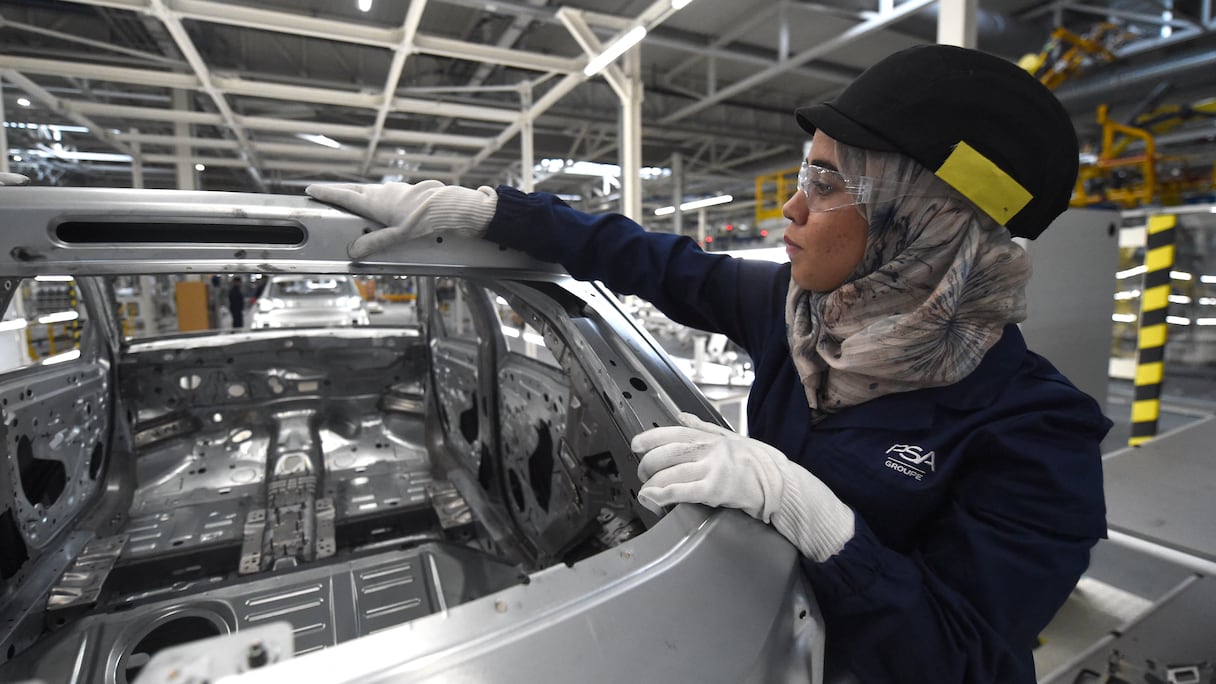
The World Bank highlighted these findings in a dedicated annex titled “Expanding Women’s Economic Inclusion”, published as part of its 2026–2035 Country Partnership Framework (CPF) for Morocco. The report notes that women’s labor force participation has declined over the past two decades, while unemployment remains particularly high among women with higher levels of education.
According to the report, many women previously engaged in unpaid agricultural work or employed in the informal sector have exited the labor market without securing new employment opportunities, amid limited job creation, particularly in higher-productivity sectors.
The World Bank identifies several barriers preventing Moroccan women from entering and remaining in the workforce. These include limited access to safe and reliable transportation, insufficient affordable childcare services, and the continued burden of unpaid caregiving responsibilities, which disproportionately falls on women.
The report also points to persistent gaps in financial inclusion and access to finance and productive assets, as well as the influence of prevailing social norms that continue to shape household decisions and women’s participation in economic activity.
To address these challenges, the World Bank said its new Country Partnership Framework with Morocco for 2026–2035 will adopt a multi-sector approach built around three main pillars.
The first pillar focuses on supporting business growth, improving productivity, and expanding access to finance to help create new jobs that can benefit women, both as employees and entrepreneurs.
This includes providing women-led businesses with financial and technical support, promoting digital and financial inclusion, and encouraging women’s participation in promising sectors such as agri-food value chains, aquaculture, and coastal tourism.
The second pillar aims to reduce regional disparities that limit women’s access to employment by investing in infrastructure, improving urban transport, strengthening regional connectivity, and supporting local development projects in areas where employment opportunities for women remain limited.
The third pillar focuses on investing in human capital by strengthening social protection systems, improving healthcare services, expanding training and skills development programs to facilitate women’s transition from education to employment, and increasing access to quality childcare services while encouraging greater private-sector investment in the childcare sector.
The report adds that these measures will be supported by a dedicated mechanism for women’s economic and social inclusion across the Maghreb. The initiative aims to mainstream gender equality across World Bank projects, strengthen research and policy analysis to support public policymaking, and improve data collection to help address the structural barriers that continue to limit women’s participation in Morocco’s economy.
