Chirihan Chergui arrived in Vietnam on August 6, in advance of the Miss World 2026 competition, which is scheduled to run from August 9 to September 5. The Moroccan candidate plans to showcase a national costume inspired by Fassi zellige, designed in Fez, and will also perform the reggada dance.
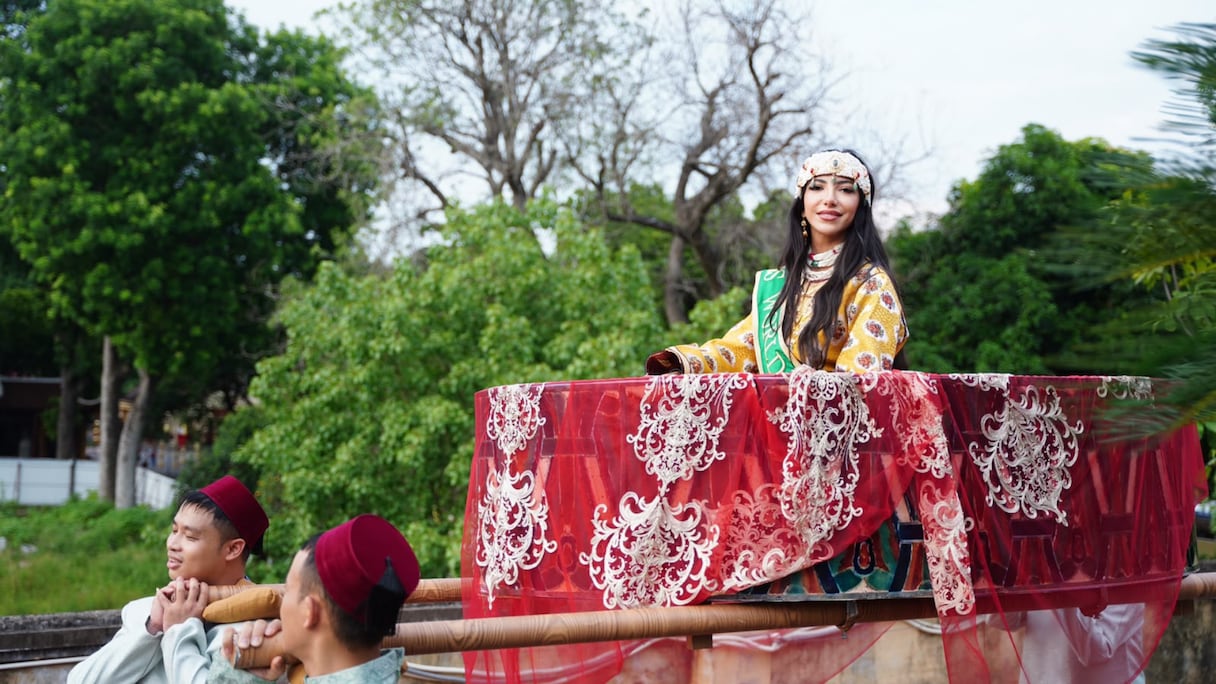
For a special event last Friday, she brought the ammaria, carried on the shoulders in the traditional manner seen at Moroccan weddings, to the grounds of Hanoi’s Thang Long Imperial Citadel, a UNESCO World Heritage Site. During the event, she wore a yellow-gold Moroccan caftan known as “Al Kharib,” adorned with sfifa, aqad and a traditional mdamma, highlighting the craftsmanship of Moroccan artisans.
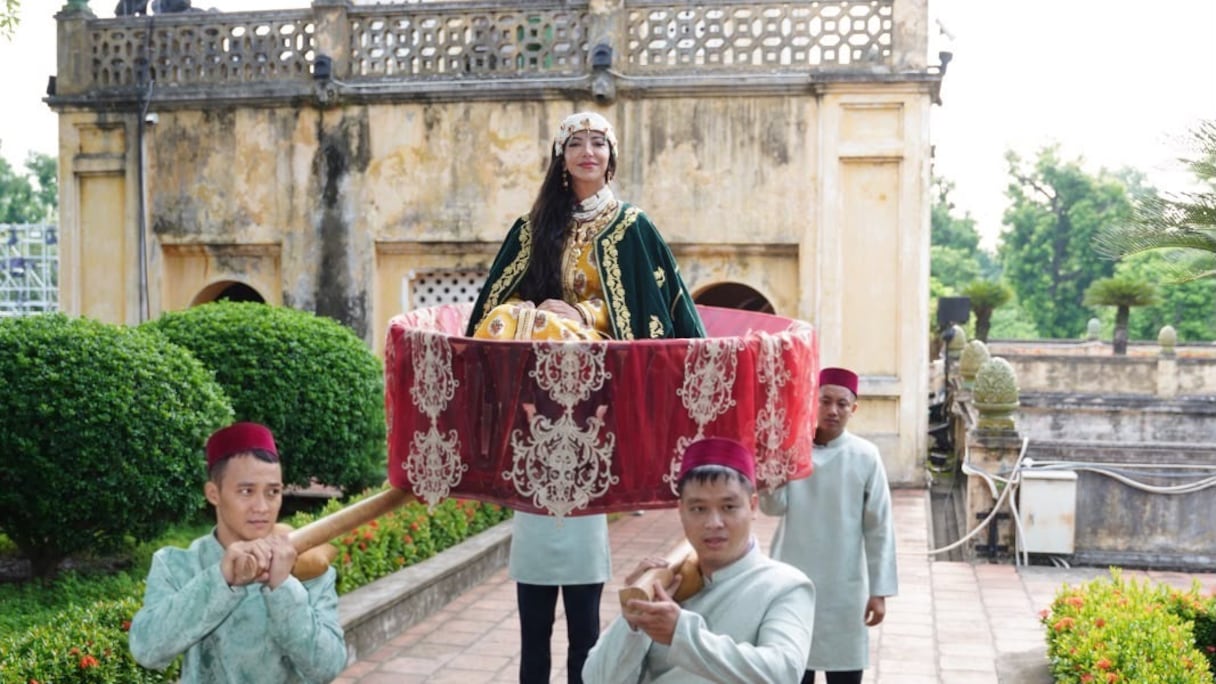
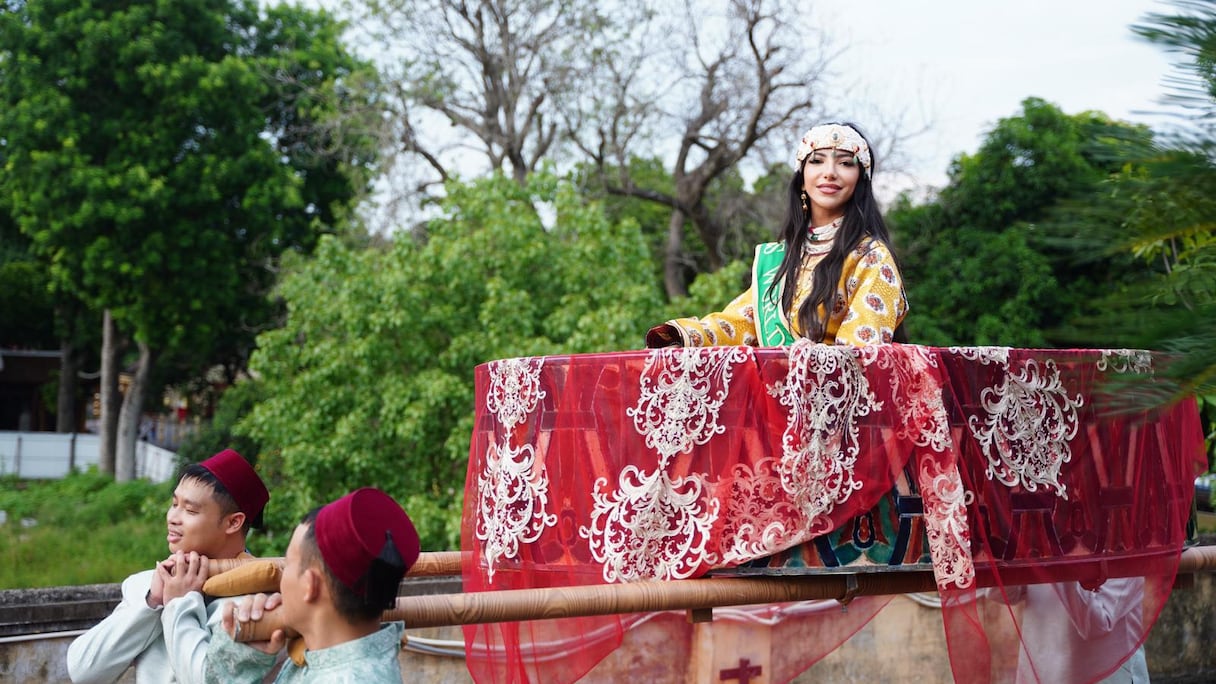
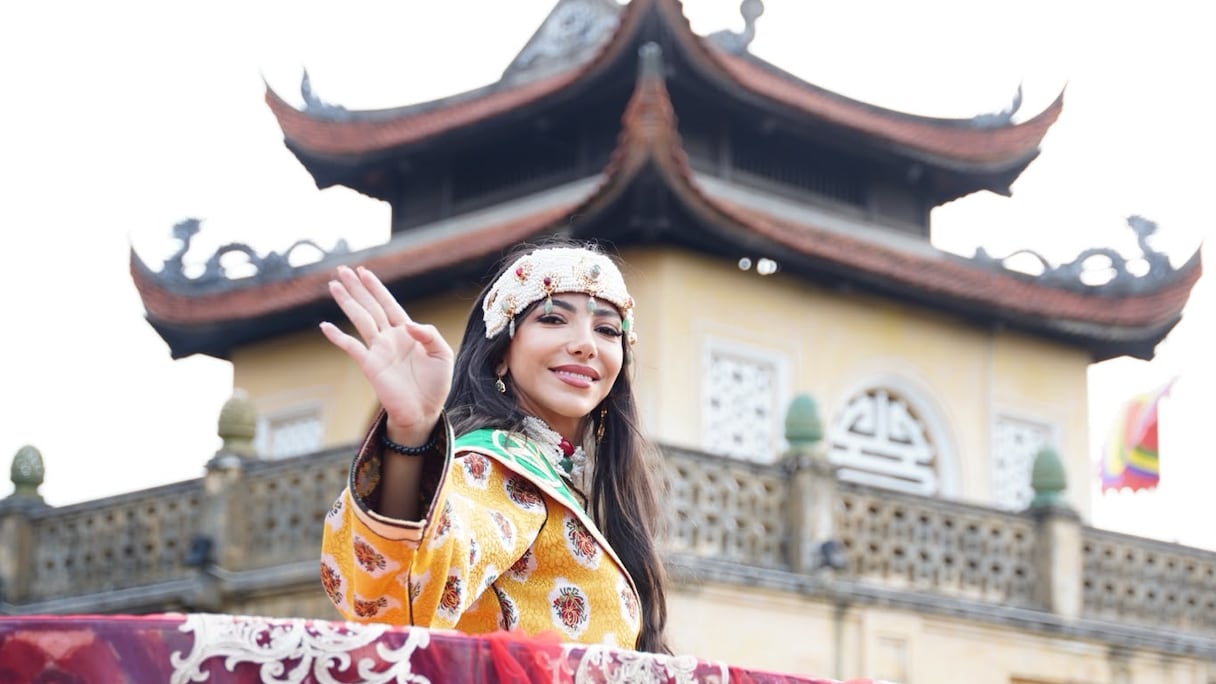
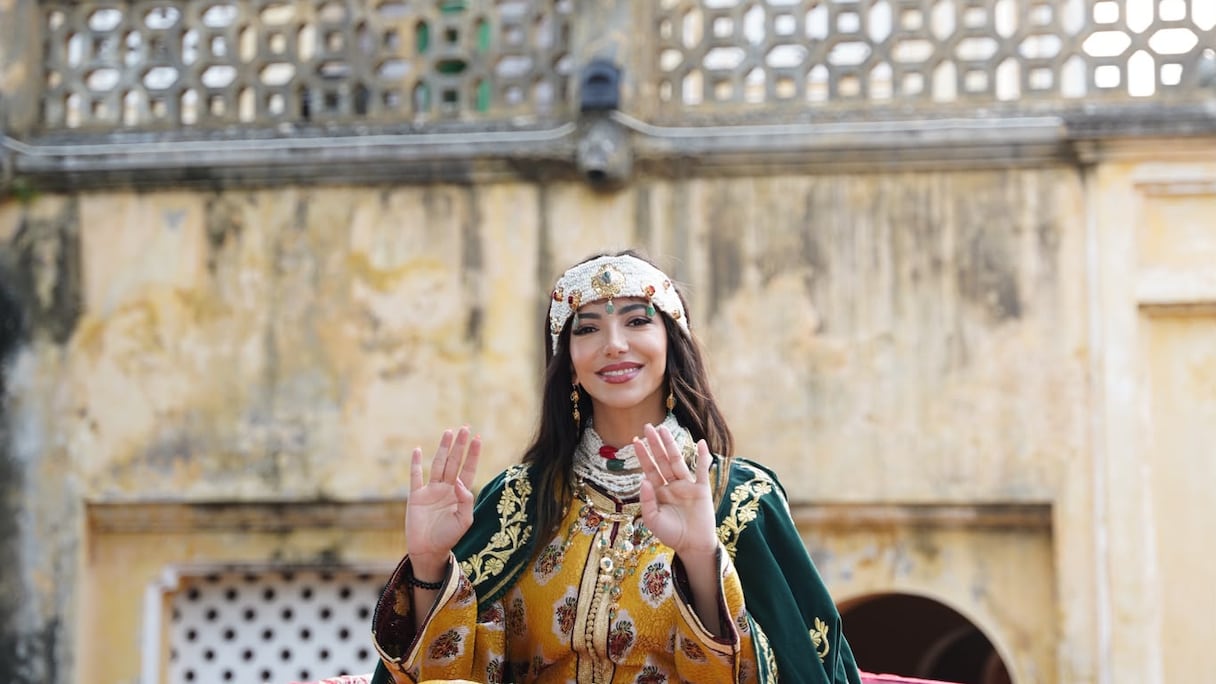
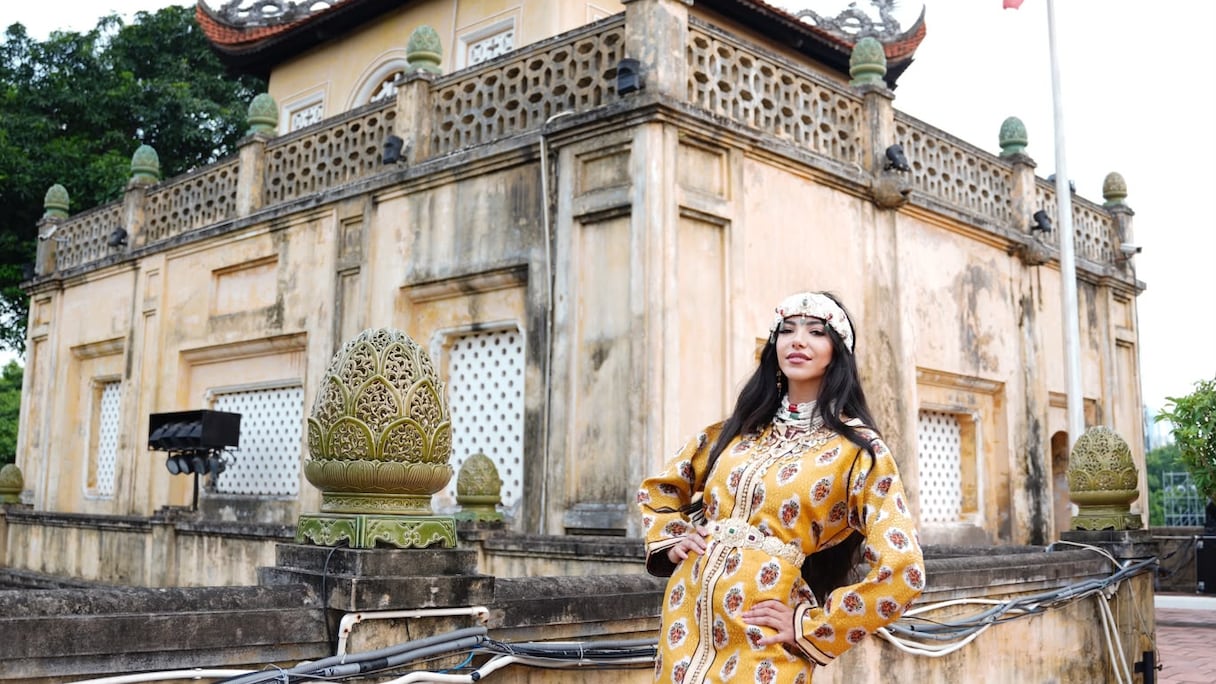
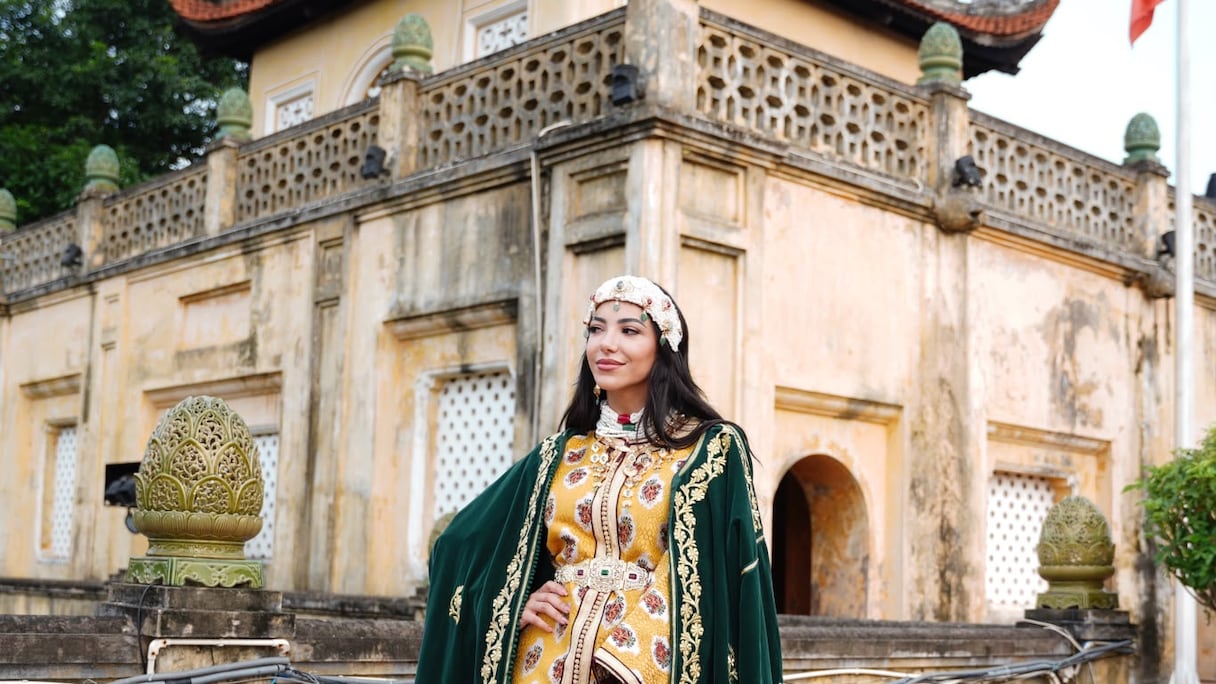
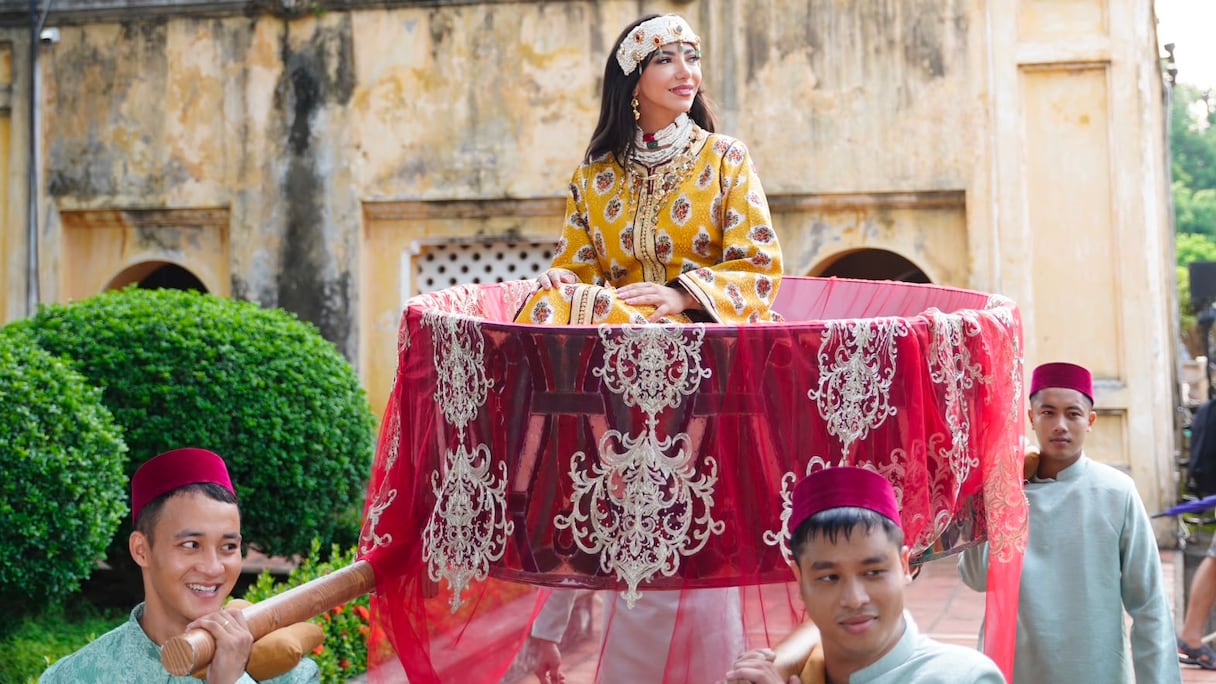
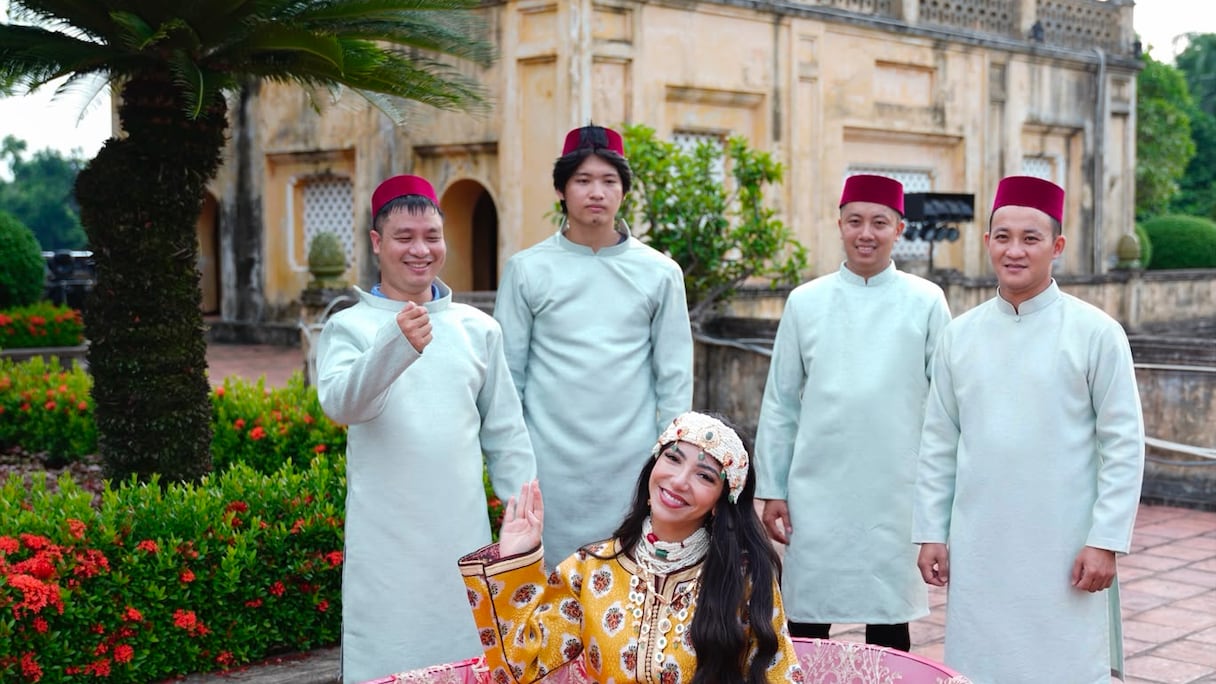
Morocco’s ammaria showcased at Hanoi’s Imperial Citadel of Thang Long
According to the entrepreneur from Berkane, this experience “is above all a way to highlight Moroccan craftsmanship and traditions,” while also promoting her Doors Open project, which currently assists 17,000 young people in achieving financial independence.
Le360: What is your background and what do you do for a living?
My name is Chirihan Chergui, I am Moroccan and I live in France. I grew up in Berkane until I was 17, before moving to France for my studies. I attended preparatory classes and then an engineering school, where I graduated in computer science. I then worked for major German, American and French companies before starting my own company in artificial intelligence two years ago. Today, I am an entrepreneur working in technology and AI. My company operates in both France and Morocco, with clients in both countries.
Alongside this work, I practice modeling in Paris as a passion. Regarding my selection, there is no official Miss Morocco competition because there is no organization dedicated to it. I therefore applied to the competition directly through my modeling agency.
How do you feel about representing Morocco at Miss World?
It is an immense source of pride to represent my country, especially in a competition like Miss World, which brings together more than 130 countries and remains very respectful of Moroccan customs. The competition places particular emphasis on the candidates’ charitable projects, on culture and on promoting the countries represented, as well as the host country, through numerous trips. The competition lasts four to five weeks for the highest-ranked candidates, allowing the host country’s tourism to be highlighted, as well as our own traditions through clothing and customs.
What do you think made the difference in your selection?
What probably made the difference was my international charitable project, a criterion to which the Miss World organization attaches great importance. My project, Doors Open, consists of building partnerships with companies to help young people enter the workforce and achieve financial independence.
The Miss World organization works closely with the United Nations, and each candidate supports a project linked to one of the 17 Sustainable Development Goals. Mine is linked to Goal 4, quality education, and Goal 10, reduced inequalities. My professional background and modeling experience probably also played a role in the selection.
What prompted you to enter the competition?
Entering this competition was not a priority for me at first. My modeling agency had already offered me the opportunity to take part in several beauty contests, but I was not particularly interested. However, the proposal to compete in Miss World appealed to me. After doing some research into the values promoted by the competition, I found that they matched my own, particularly the desire to represent Moroccan culture and introduce Morocco to the world.
The so-called Big Four competitions, the four largest beauty pageants, are very popular in Asia and Latin America, regions where I believe Morocco deserves to be highlighted more than it is today.
My participation is also intended to set an example for other young Moroccan women and to change perceptions of beauty pageants, which have an important cultural, tourism and even economic dimension for host countries. Since its creation, Miss World has helped raise $1 billion for charities, both in host countries and in the countries of the winners. I think it is important for Morocco to be part of this.
How did you prepare for the different stages of the competition?
The Miss World competition includes several events, each requiring specific preparation. The first is the national costume, worn by each candidate to represent her country. In my case, it is the Moroccan caftan. I designed it in collaboration with Fez-based stylist Hind Iraqui and Mrs. Benjelloun, a neggafa from the same city. The costume follows the theme of Fassi zellige and will be presented during the first stages of the competition.
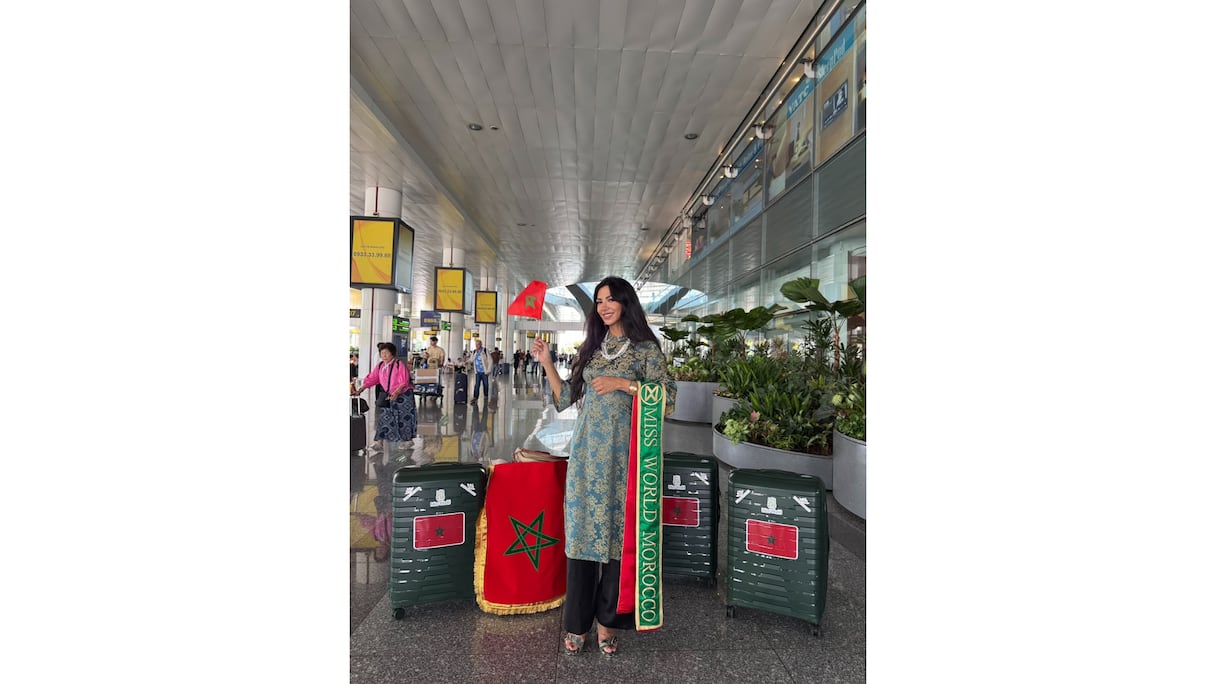
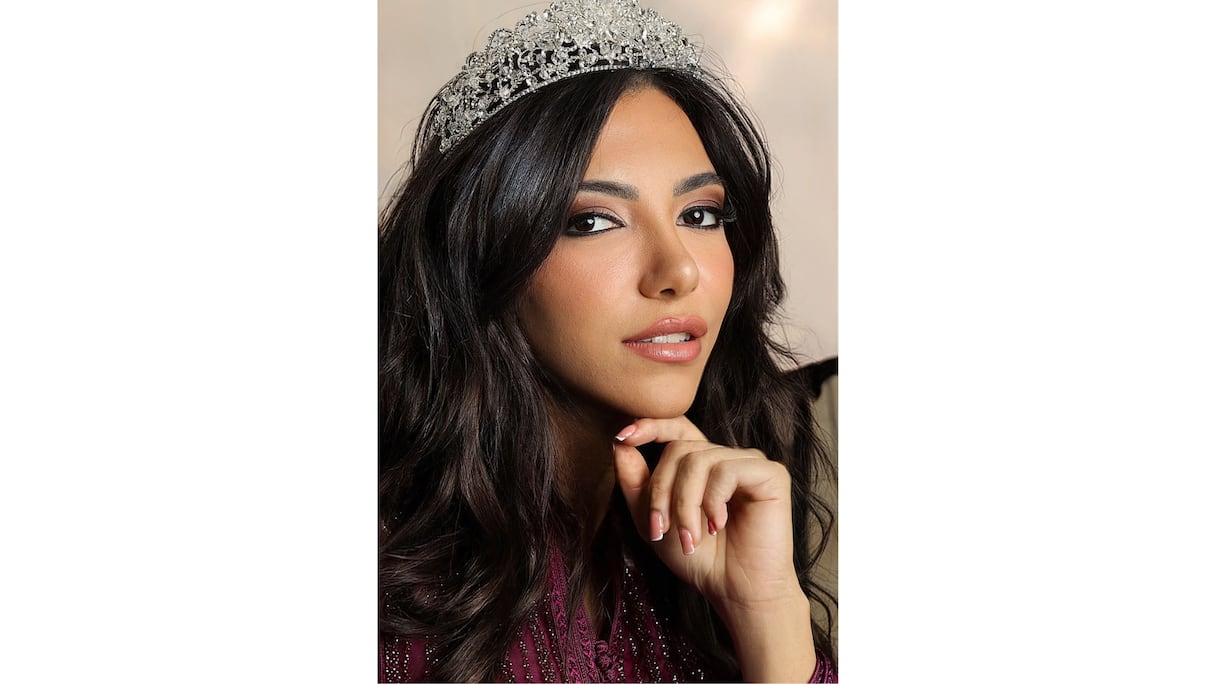
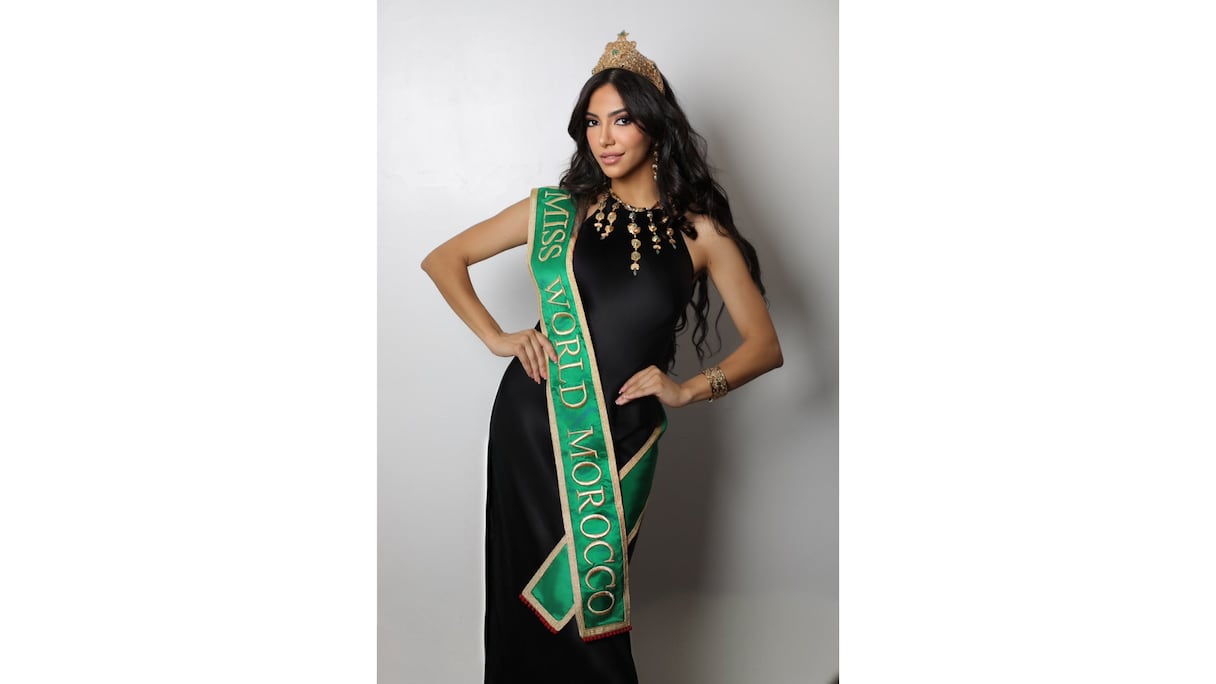
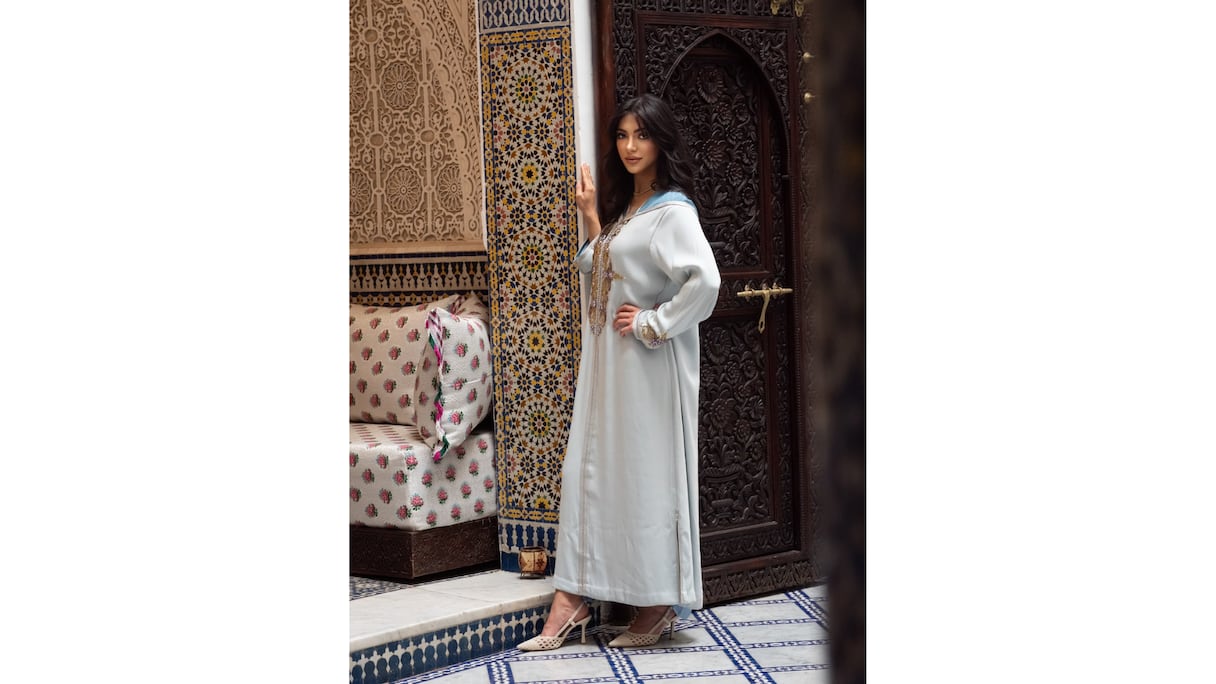
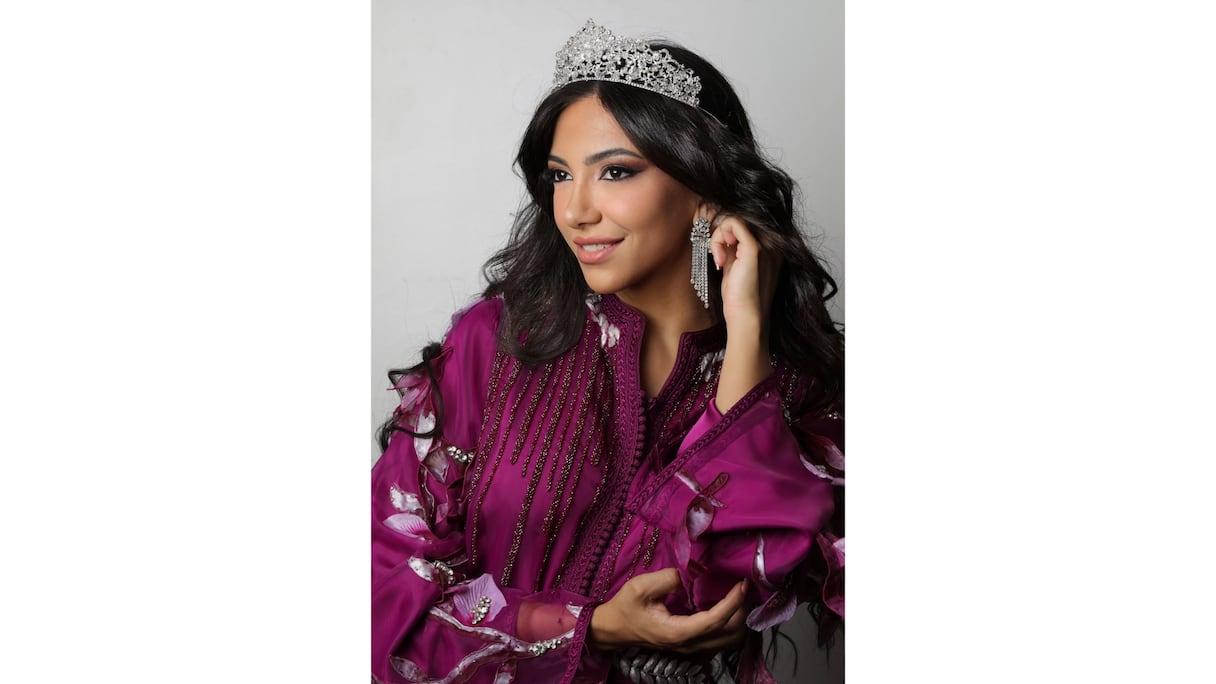
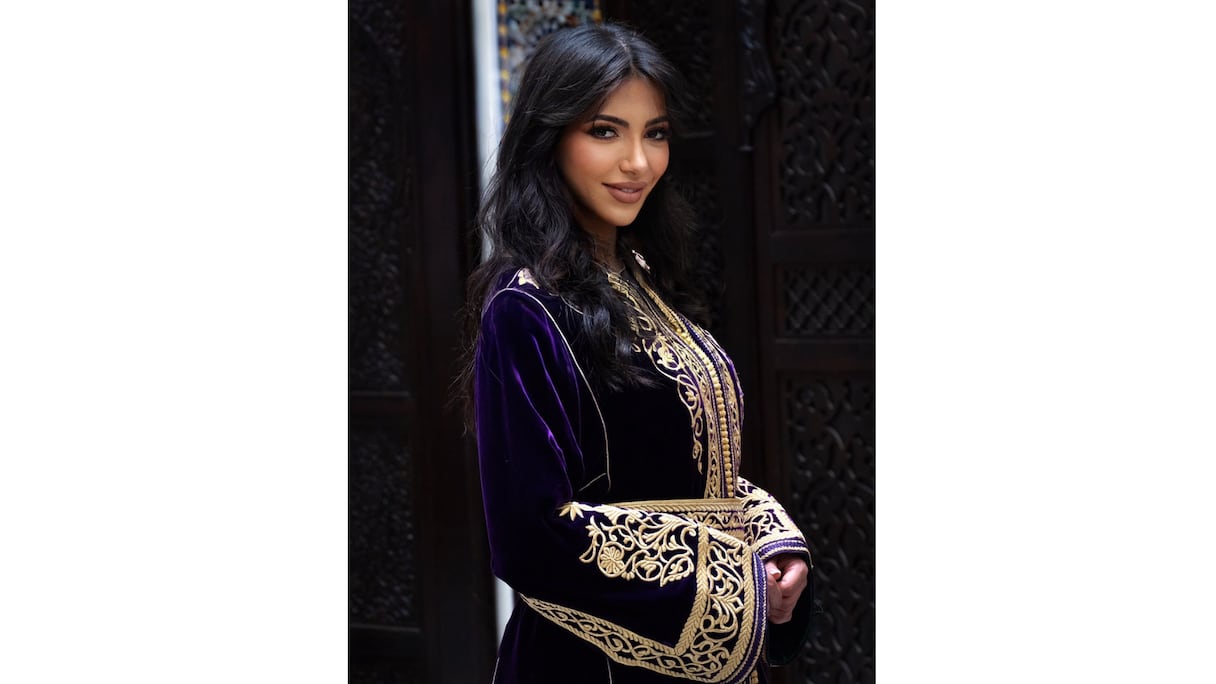
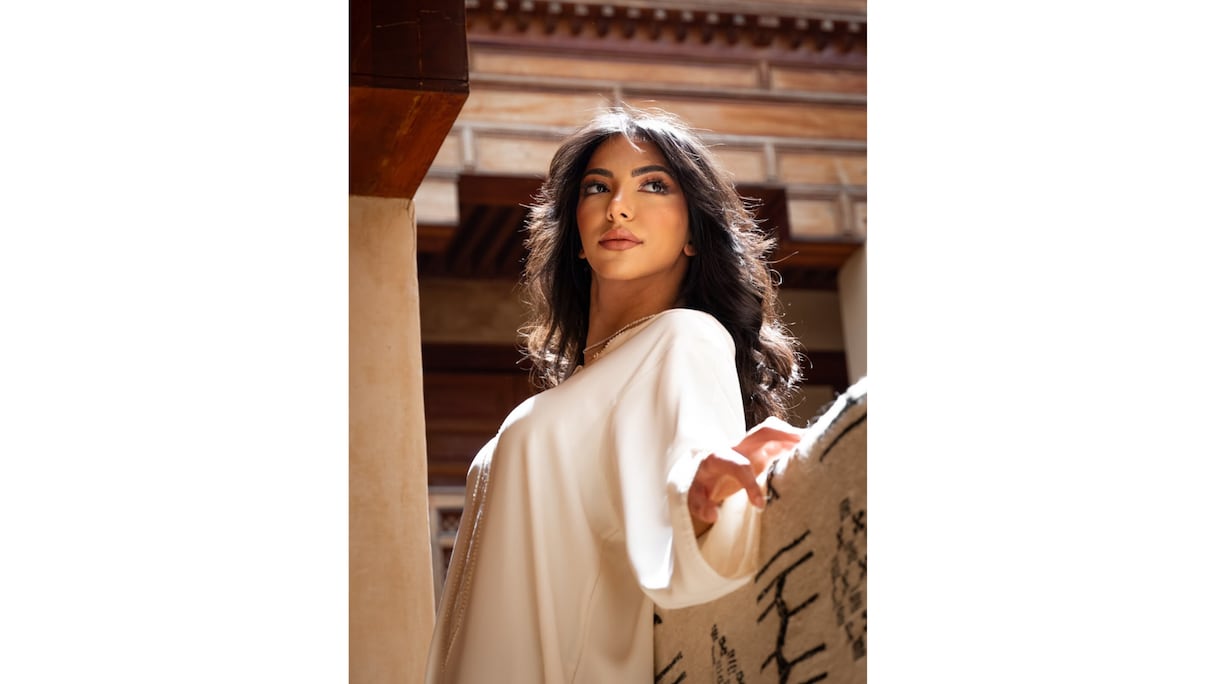
Chirihan Chergui, who hails from Berkane, is representing Morocco at the 73rd edition of Miss World, which will be held in Vietnam from August 9 to September 5, 2026.
There is also a sports challenge, for which I train regularly, particularly focusing on endurance and cardio. The Head to Head challenge focuses on public speaking, through debates on humanitarian issues linked to the United Nations’ goals, such as climate change and equal opportunities.
The Talent challenge allows each candidate to showcase a skill, such as playing a musical instrument. I chose a traditional dance from my region, the Oriental, namely reggada, performed while wearing an oujdi blousa.
Finally, the Beauty with Purpose challenge focuses on defending our charitable project. This gives me the opportunity to present Doors Open, my initiative aimed at helping young people enter the workforce. I believe this is an important issue in Morocco. Many young people struggle to find the right opportunities and obtain the training they need to achieve financial independence. The project currently supports 17,000 young people through partnerships with several companies and universities, including the American company Abrid, founded by a Moroccan.
There is also the Top Model challenge, for which I received specific coaching despite my experience in the field, as the jury has its own expectations. This comes in addition to preparations involving outfits and presentation videos, including one dedicated to Morocco that is available on the Miss World website. It highlights Moroccan culture, its landscapes, the fact that the world’s first university founded by a woman is located in Morocco, as well as our hospitality and passion for football.
What were the most demanding parts of your preparations?
The most demanding part for me was managing my time. I had to devote many hours to preparations while also running my company and managing my employees, with many demanding projects. Alhamdulillah, I was able to carry out my preparations properly thanks to the support of my family and friends.
Because there is no official organization in Morocco, I did not have the possibility of delegating certain tasks, unlike candidates from other countries. Nevertheless, I remain confident and hope that, through my efforts, I will represent Morocco as I should.
How was your arrival in Vietnam?
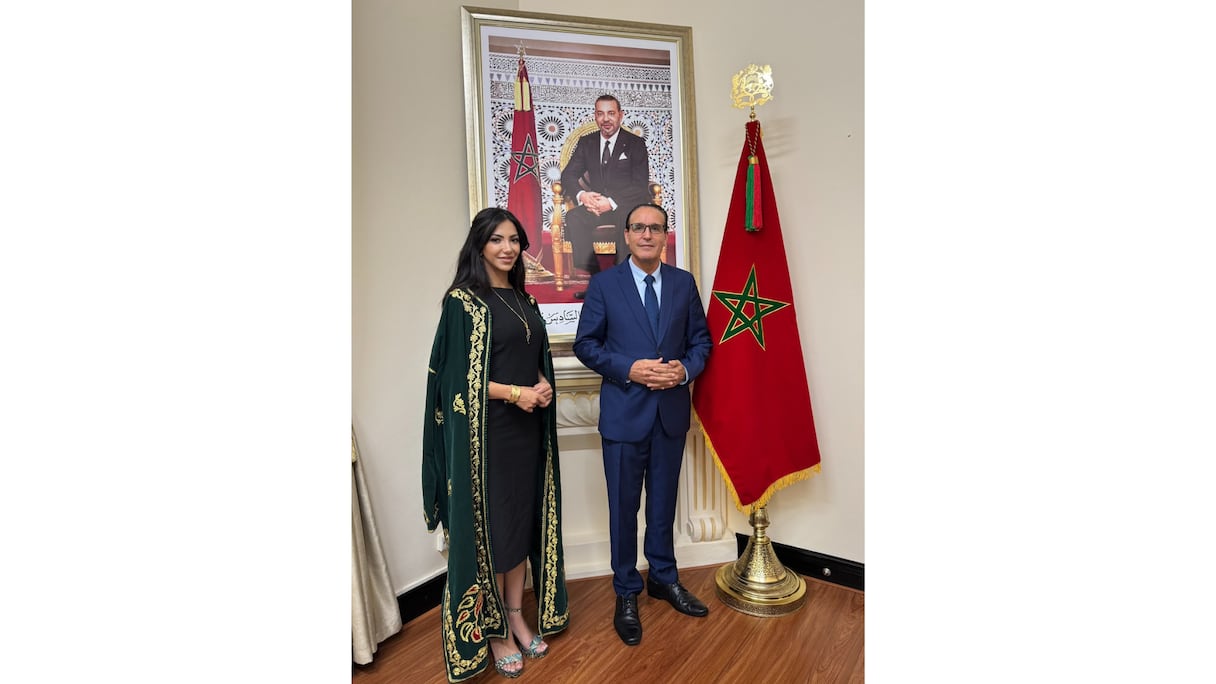
I arrived in Vietnam on August 6, ahead of the start of the competition. Above all, I wanted to meet the Moroccan ambassador to Vietnam and his team. This type of competition is not only about a sash and a stage; it is also a diplomatic occasion.
I received a warm welcome from the Moroccan Embassy, which took great care of me, including regularly checking on me through the hotel. We also had many discussions about relations between Morocco and Vietnam, which enriched my thinking and helped me prepare for questions I might receive during the competition on this subject.
I also wanted to showcase the ammaria at an iconic Vietnamese site, the Thang Long Imperial Citadel, a UNESCO World Heritage Site, while wearing the Moroccan caftan, which is also listed as UNESCO heritage. The official events of the competition begin on Sunday.
How do you plan to highlight Morocco during the competition?
I want to highlight Moroccan heritage through jewelry, clothing and traditional dance. Candidates are also invited to bring souvenirs from their countries. I therefore brought several objects representing our culture, particularly in the field of beauty, such as aker fassi, rose water, kohl, Essaouira wood and serghina, as well as the Moroccan caftan and ammaria, symbols of Moroccan bridal traditions. There is also dance, through reggada, and jewelry from the Souss region.
Beyond these material elements, I want to showcase tamaghrabit, the Moroccan way of being, characterized by hospitality, warmth and openness to other cultures. This is an important aspect, especially since candidates are observed on a daily basis and in how they interact with others. Simply being Moroccan and carrying this sense of tamaghrabit will help me greatly in this competition.
What message do you want to convey as Morocco’s representative?
Each candidate carries a message, sometimes on behalf of her country. Mine is particularly relevant to Morocco today. It can be summed up in English as: “No dream is too big, no nation is too small, and no limit is too high for anyone to attain,” meaning that no dream is too big, no country is too small and there is no limit that cannot be reached through hard work and perseverance.
I believe this message represents both Morocco and my personality, as I am someone who is very persistent.
Can you tell us more about your Doors Open initiative and its link with SOS Village?
My Doors Open initiative is a platform, also available as an application, that already exists in Morocco and will soon be launched in Egypt. SOS Village is fully involved in it, although the project is broader.
The partnership aims in particular to support young people after they turn 18, a period when it can sometimes be difficult to find one’s way when entering adulthood. The Doors Open project was actually born from this observation, which I made while working directly with young people.
What does this experience mean to you personally?
It is an immense source of pride to represent my country on the international stage. I had already represented Morocco when I was younger, as part of the Moroccan delegation to NASA, when I was still in high school. Today, I feel a similar sense of pride carrying the Moroccan flag in another country.
On a personal level, I am certain that this experience will be very enriching because of the many encounters it will bring. But above all, for me, it is a way to set an example and change the stereotypes surrounding beauty pageants since the 1950s, which are often reduced to beauty alone. I want to show that this type of competition can also be a tool for diplomacy, tourism and culture for participating countries.
I also hope to inspire other young Moroccan women to represent their country, because Morocco has many talented young women capable of doing so with distinction. It is also a way of opening doors, in keeping with my Doors Open project, and encouraging others to follow this path and perhaps, one day, inspire the creation of a genuine official Miss Morocco competition.