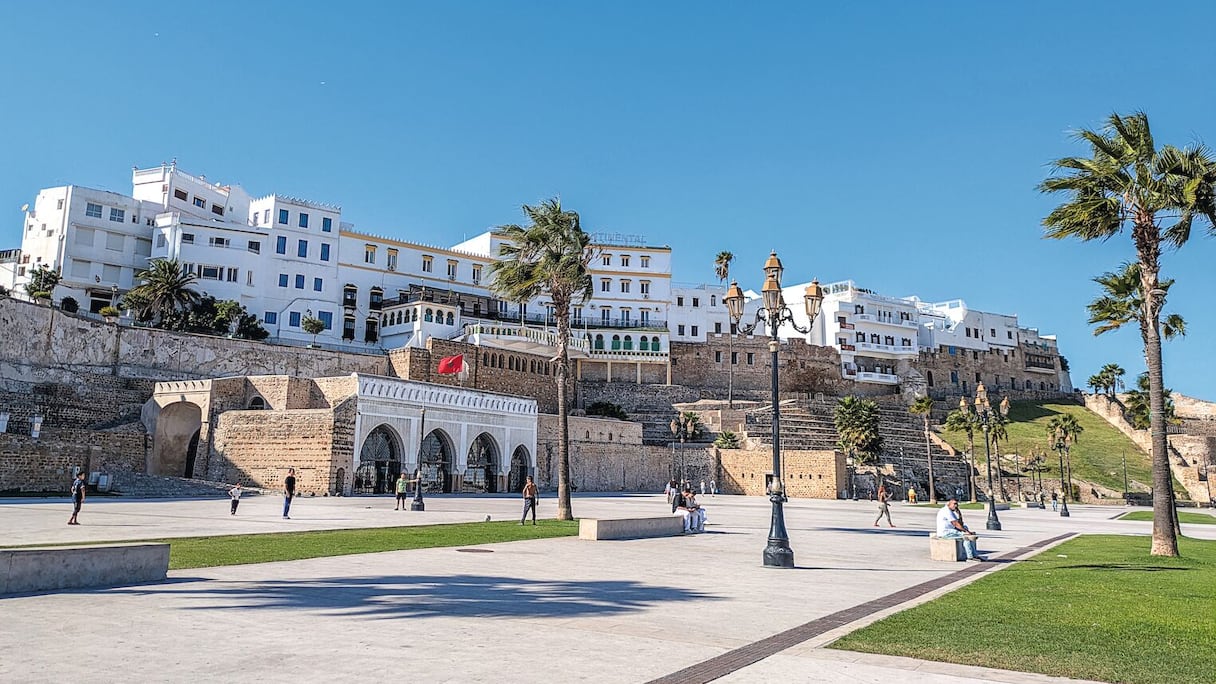
A crossroads of civilizations, exile, and endless inspiration, Tangier has long captivated Beat Generation writers and inspired some of the greatest Orientalist painters. Today, however, the City of the Strait is undergoing a profound transformation. Rather than relying solely on its legendary past, Tangier has emerged as one of North Africa’s leading artistic and museum destinations. Backed by ambitious restoration projects, the city now offers an exceptionally rich cultural itinerary.
The Kasbah heights: Where history meets contemporary art
The journey begins at the summit of the ancient citadel, in Kasbah Square, where several of the city’s flagship cultural institutions stand within walking distance of one another. The first stop is the Kasbah Museum of Mediterranean Cultures, housed in the magnificent Dar al-Makhzen Palace. Steeped in history, the museum traces the region’s past from prehistoric times through rare archaeological collections, while visitors can also enjoy the tranquility of its beautiful Andalusian garden.
Just next door, the former Kasbah prison has been carefully restored and transformed into the Kasbah Contemporary Art Space. Its austere former prison architecture now provides a striking setting for works by Moroccan and North African contemporary artists. Admission to both venues is available through a combined ticket priced at 30 dirhams. Both museums are closed on Tuesdays. Nearby, the Ibn Battouta Space, located inside Borj Naam, offers an engaging historical journey into the life of the famous 14th-century explorer who was born in Tangier.
Descending into the Medina
Leaving the citadel behind and venturing into the maze of the old city’s narrow streets, visitors discover Tangier’s deeply cosmopolitan character. In the heart of the Medina stands the Dar Niaba Museum, also known as the House of Diplomacy and Culture. Housed in a historic 19th-century building that once served as Morocco’s first headquarters for foreign affairs, the museum offers two complementary exhibitions for an admission fee ranging from 20 to 30 dirhams. Visitors can explore the history of Morocco’s international diplomacy alongside an impressive collection of paintings by Western artists drawn to the city’s distinctive light. Like the Kasbah museums, Dar Niaba is closed on Tuesdays.
Read also : Tourism in North Africa: Morocco maintains its lead over Egypt
Further down, the American Legation—the only U.S. National Historic Landmark located outside the United States—is home to the TALIM Cultural Center. For an entrance fee of 20 dirhams, visitors can wander through its courtyards, corridors, and elegant salons, discovering an entire wing dedicated to writer Paul Bowles, along with works by internationally renowned artists such as Claudio Bravo and Marguerite McBey. The American Legation is closed on Sundays.
Emerging onto the Grand Socco, Tangier’s artistic scene takes on a more contemporary urban atmosphere. Here stands the Tangier Cinémathèque, housed inside the iconic Cinema Rif. A true landmark for independent and arthouse cinema, its café has become a favorite gathering place for the city’s creative community. A short walk away, on Touahin Street, the Lorin Foundation Museum offers a nostalgic glimpse into Tangier’s past through a remarkable collection of photographs spanning the 1930s to the 1990s.
From the city center to the waterfront: Modern museums and independent galleries
The final stage of this cultural journey leads toward Tangier’s modern districts and waterfront. In Malabata, facing the new Palace of Arts and Culture, stands the elegant Villa Harris. This magnificent late-19th-century residence, surrounded by an expansive botanical garden, has been converted into the Tangier Museum. Its permanent collection traces the evolution of modern Moroccan art, from pioneering naïve painter Mohamed Ben Ali R’bati to contemporary artistic movements, while also featuring works by traveling Orientalist masters. The museum is open daily except Tuesdays.
Tangier’s cultural vitality is equally reflected in its network of independent and institutional galleries. On Rue de la Liberté in the city center, the Delacroix Gallery hosts free temporary exhibitions showcasing contemporary Franco-Moroccan art and is closed on Mondays. Visitors wishing to continue their exploration can also discover several well-established private galleries, whose exhibitions of painting, sculpture, and photography complete the portrait of a vibrant city that continues to embrace the future while proudly preserving its rich artistic and historical heritage.
