Some countries never cease to reveal new landscapes, and Morocco is certainly one of them. It is a land of remarkable diversity and striking contrasts, where a lifetime would not be enough to uncover all its secrets.
Just when you think you know one region, the next mountain range reminds you that you have barely scratched the surface. This endless allure encourages travelers to leave the main roads behind and venture deeper into the country’s highlands.
That journey naturally leads to the Middle Atlas, a destination that reveals itself to those seeking the true character of Morocco’s landscapes. As the plains gradually give way to the mountains, the heat begins to fade, replaced by a landscape where geology tells its own story.
It quickly becomes clear that this region possesses a unique identity—a hidden life beneath the surface expressed through one of its greatest natural assets: its thermal springs.
Read also : Best budget-friendly tourist destinations in Morocco for summer 2026
Among Morocco’s thermal destinations, Moulay Yacoub stands out as the country’s leading spa town. Located just 20 kilometers north of Fez, the town revolves around its mineral-rich springs, which emerge from depths of around 1,500 meters at a temperature of 54°C.
The distinctive smell of sulfur immediately reflects the water’s mineral composition. Long recognized for helping relieve joint pain and certain skin conditions, these waters offer visitors a natural alternative for relaxation and well-being.
A stay in Moulay Yacoub, however, is about more than the thermal baths alone. The key to making the most of the experience lies in balancing therapeutic relaxation with exploration of the surrounding region.
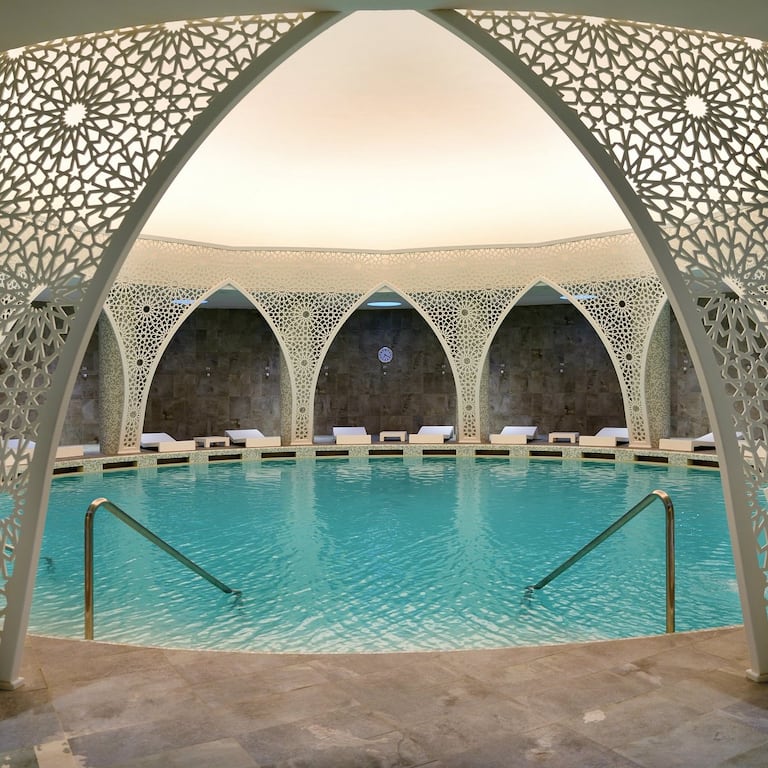
Early morning is considered the ideal time to enjoy the thermal waters, when the quiet atmosphere over the surrounding hills enhances their soothing effect on tired muscles. Afterward, the region naturally invites visitors to explore. Less than an hour away, the cedar forests of Ras El Ma and the lush hills surrounding Sefrou provide ideal settings for gentle hikes or scenic photography.
Those looking for a livelier atmosphere can round off the day by stopping at one of the area’s restaurants, where local specialties reflect the simplicity and authenticity of mountain life.
Its proximity to Fez also makes it possible to end the day wandering through the cultural richness of the imperial city’s medina. Moving from the calm of thermal springs to the dramatic landscapes of the Middle Atlas—or the vibrant streets of Fez—transforms a simple spa visit into a genuinely restorative journey.
Visitors should not underestimate the experience awaiting them. Moulay Yacoub is, above all, a lesson in patience. It is a place where people learn to listen to their bodies and allow the sulfur-rich waters to work naturally. It leaves a lasting impression through the intensity of the experience.
Sidi Harazem: A peaceful oasis on the edge of the plains
Descending from the mountains toward the plains, the landscape transforms, and Sidi Harazem comes into view. The atmosphere here contrasts sharply with that of Moulay Yacoub. While the latter is defined by its intense, sulfur-rich waters, Sidi Harazem is known for its calm, gentle setting.
Renowned since antiquity, the spring produces water that feels noticeably lighter and softer on the skin. Visitors come to benefit from its reputed purifying properties, making it an ideal destination for relaxation and restoring a sense of natural balance.
The site itself resembles a landscaped garden. Shaded by fruit trees, its green spaces provide welcome relief from the summer heat, even during the hottest June afternoons.
Throughout the day, the spring attracts visitors who come to collect its mineral water. Around the pools, regular visitors fill containers to take the water home, while others stroll through the grounds or stop to chat in the tranquil surroundings.
To extend the experience, staying in one of the guesthouses located in the surrounding villages is highly recommended. In the evening, visitors gather around traditional local dishes served in nearby restaurants, offering another opportunity to discover the region’s culinary heritage.
More than just a stopover, Sidi Harazem provides direct access to Moroccan hospitality in its most authentic form. It is the ideal retreat for travelers seeking peace and quiet away from the crowds, while immersing themselves in the culture of Morocco’s mountain communities.
Read also : One of North Africa’s oldest and deepest caves reopens in Morocco
Aïn Allah: A hidden thermal retreat
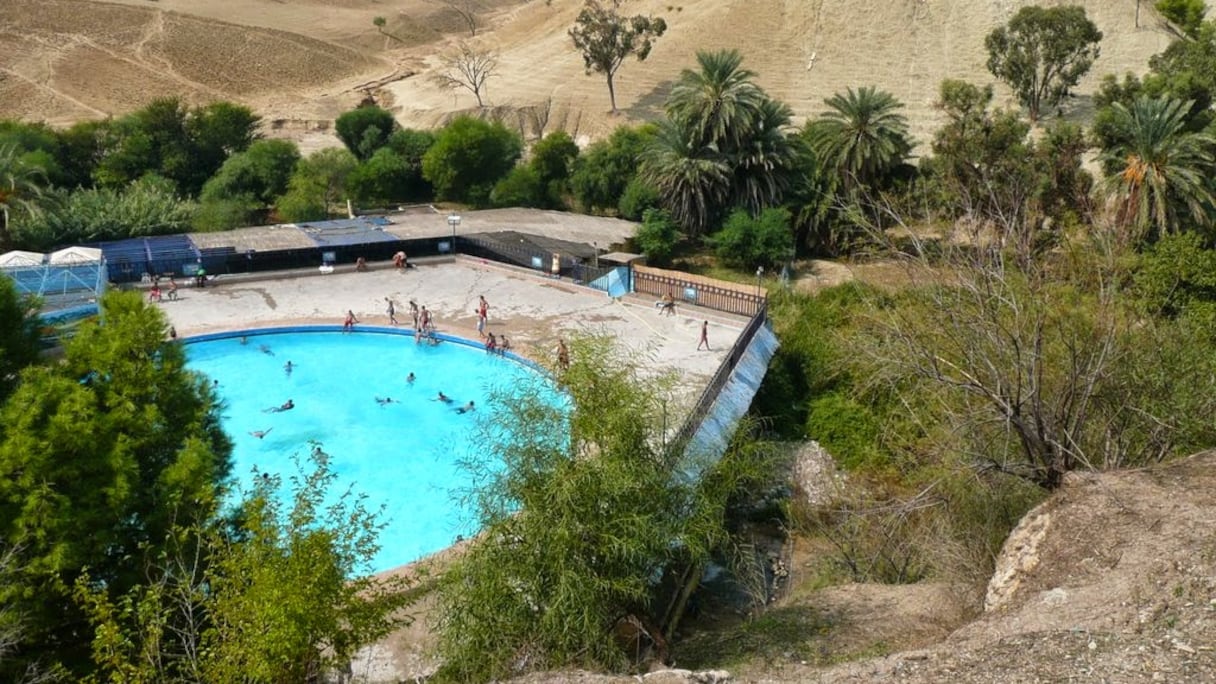
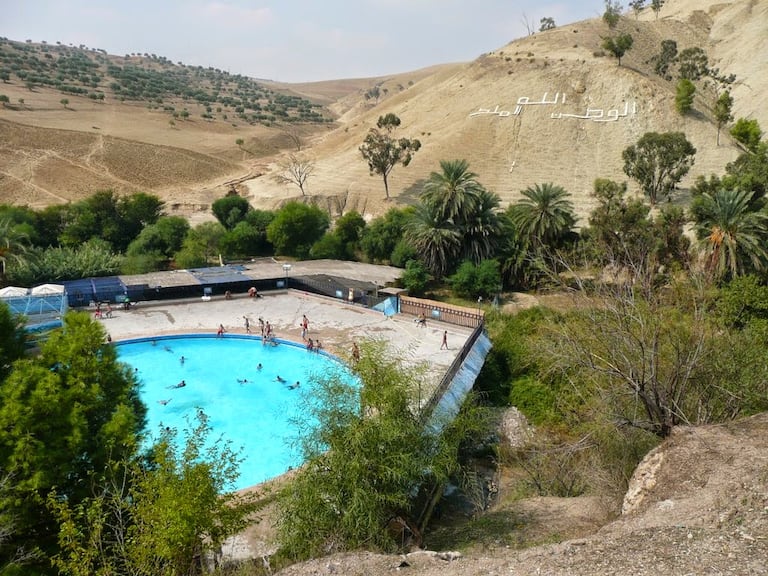
Halfway between the bustle of Fez and the renowned spa town of Moulay Yacoub lies Aïn Allah, a thermal spring that remains largely overlooked—and that is precisely what gives it its quiet charm.
Located just 14 kilometers from the imperial city of Fez, Aïn Allah makes no attempt to impress with luxury facilities or elaborate infrastructure. Instead, it blends naturally into a rural landscape where golden wheat fields stretch toward the first rolling hills of the Middle Atlas.
Technically, the spring draws its water from an artesian borehole reaching a depth of 1,650 meters, where it emerges naturally at a constant temperature of 30°C.
Although Aïn Allah is not promoted as a medical spa, it offers something far rarer: total immersion in authentic Moroccan life, far from the country’s better-known tourist destinations.
From the moment visitors arrive, the spring’s understated charm becomes apparent. Warm water flows continuously, creating an atmosphere that immediately invites relaxation. Rather than dazzling visitors with modern amenities, the site encourages them to reconnect with the essentials. That simplicity is what makes Aïn Allah unique—it offers an informal wellness experience where everyone creates their own moment of escape.
Over time, the site has also become home to distinctive local wellness traditions. Regular visitors gather for spontaneous body scrubs and massages in an atmosphere shaped more by community than commercial tourism.
Between the warmth of the spring and the genuine interactions it fosters, Aïn Allah has become an essential stop for travelers seeking more than sightseeing—those hoping to experience the true spirit of the Middle Atlas.
For visitors in search of rest, spending an hour or two beside the spring after a long drive or a day of hiking through the surrounding mountains can be remarkably restorative. Simply sitting by the warm water and letting the day’s fatigue fade away becomes a therapeutic ritual in itself.
The experience, however, extends well beyond the pools. Aïn Allah also serves as an ideal starting point for exploring the surrounding countryside. Trails winding through nearby farmland offer opportunities for walking or cycling across an unspoiled rural landscape. The area is perfect for leisurely hikes, with panoramic views over the rugged terrain of the Middle Atlas.
Those interested in meeting local communities can stop along the way to speak with farmers, observe seasonal agricultural activities, and better understand the close relationship between the region’s people and their fertile land.
To fully embrace this slower pace of life, staying in one of the small rural guesthouses nearby is highly recommended. Waking up to the sounds of the countryside—far from traffic and city noise—offers visitors the chance to experience daily life in Morocco’s heartland, in harmony with the rhythms of the mountains.