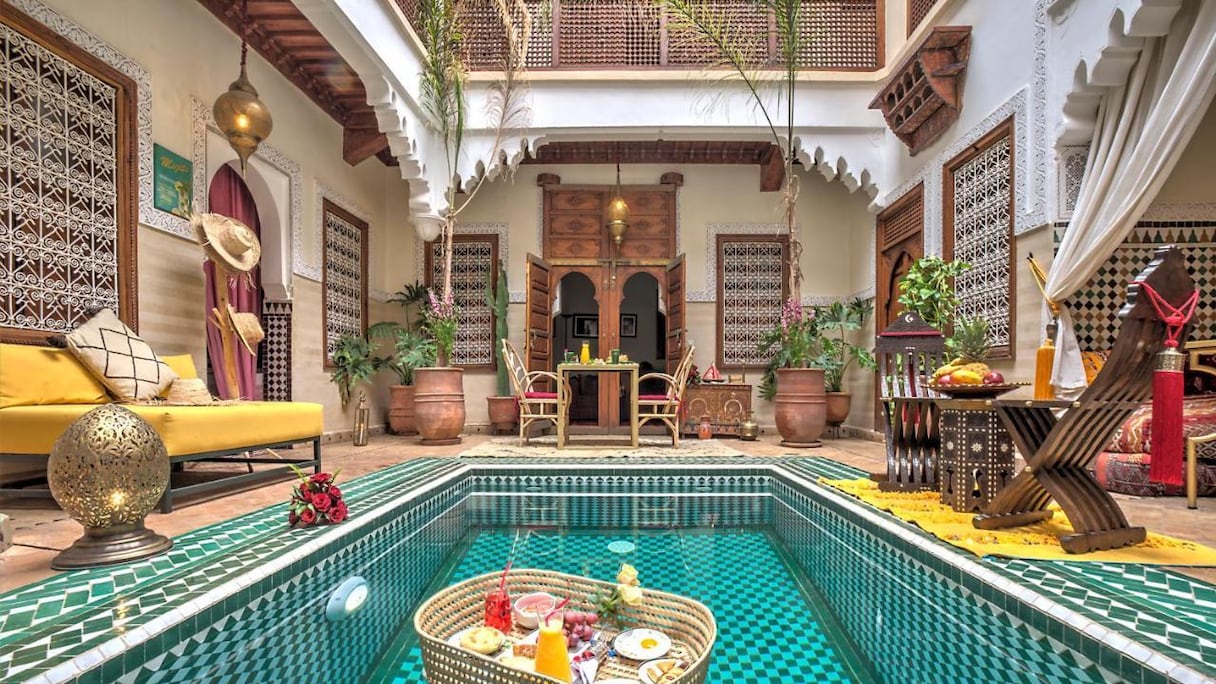
Morocco’s vacation rental market is expanding rapidly as travelers look beyond traditional hotels for accommodation offering greater flexibility, privacy and a stronger sense of place.
Private villas, riads, furnished apartments and holiday homes are increasingly being marketed as tourism products in their own right. They appeal to domestic and international visitors seeking accommodation tailored to families, groups and travelers who value independence and personalized services.
Tourism expert Zoubair Bouhout said the trend reflected a broader shift in traveler expectations.
“Today’s traveler is no longer looking only for a place to sleep but for a complete experience combining comfort, privacy, authenticity, and personalization,” Bouhout said. “Families seek accommodation suited to several generations; groups want spaces where they can share memorable moments, while high-end travelers increasingly favor exclusive experiences offering greater freedom and personalized services."
Read also : Two Moroccan hotels named among world’s 100 best
International booking platforms have accelerated that shift by allowing owners and operators to market properties directly to travelers around the world. Guests can compare accommodation, review amenities, read previous visitors’ comments and make reservations online within minutes.
The increased visibility, however, has also made the market more competitive.
“The market has become far more competitive, and travelers have grown accustomed to international hospitality standards,” Bouhout said. “The quality of listing photos, property presentation, guest reviews, response times, interior design, available amenities and services all play a decisive role in booking decisions.”
Running a successful vacation rental now requires more than making a property available online. Owners must combine digital marketing, pricing, guest relations, maintenance and day-to-day operations, often across several booking platforms.
Read also : ONMT unveils new Morocco Pavilion concept for major international tourism fairs
Marrakech Leads, but Growth Is Spreading
Marrakech remains Morocco’s leading vacation rental destination, supported by its international profile, cultural heritage and established luxury tourism market.
Riads in the medina and villas in areas such as the Palmeraie continue to attract visitors looking for private and highly customized stays. The city’s existing tourism infrastructure and global visibility have also made it easier for operators to reach international clients.
The sector’s growth potential, however, is not limited to Marrakech.
“Agadir can build on its seaside appeal and family tourism, Essaouira on its authenticity and lifestyle; Tanger on its international positioning, while rural and mountain regions can develop experiences centered on nature, cultural heritage and local immersion,” Bouhout said.
That expansion could help distribute tourism more evenly across the country, particularly in destinations seeking to attract visitors beyond established hotel circuits.
Vacation rentals are also broadening the range of services they offer. Airport transfers, private chefs, guided tours, wellness treatments and cultural activities are increasingly being included as part of the stay.
The development brings some operators closer to the service model of upscale hotels, while preserving the privacy and independence associated with private accommodation.
Professionalization Becomes a Key Test
For property owners, the sector offers a potentially attractive source of income, but returns depend heavily on location, occupancy, operating costs and the quality of management.
Bouhout said successful operators increasingly rely on strategic pricing, professional presentation, strong online visibility and consistent service. Specialized management companies are also taking a larger role, handling reservations, guest communication, cleaning, maintenance and revenue optimization on behalf of owners.
The sector’s rapid growth nevertheless presents risks.
Uneven service standards, inaccurate listings, inconsistent property management and weak oversight can damage traveler confidence and affect the reputation of destinations. The spread of short-term rentals can also create wider questions over housing use, local competition and the relationship between private accommodation and the regulated hotel industry.
“The rapid expansion of vacation rentals requires better structuring to ensure consistent quality, strengthen travelers’ confidence and protect Morocco’s image as a destination,” Bouhout said.
He argued that vacation rentals should not be treated simply as direct competitors to hotels.
“The objective is not to pit vacation rentals against traditional hotels but to build complementarity between two models capable of serving different traveler needs.”
A Growing Role in Morocco’s 2030 Ambitions
Morocco is seeking to expand its tourism capacity and diversify its accommodation offering as it prepares for a period of rising international demand through 2030.
Vacation rentals could help absorb part of that demand, particularly during major events and peak travel periods. They may also widen the range of destinations and experiences available to visitors.
Their long-term contribution, however, will depend on the sector’s ability to move from fragmented individual activity toward a more structured hospitality model.
Clearer standards, professional management and reliable service will be central to determining whether vacation rentals become a lasting pillar of Morocco’s tourism economy or remain an uneven segment of the accommodation market.
Bouhout said the opportunity lies in converting Morocco’s real estate and tourism assets into a professional sector capable of generating sustainable value for owners, travelers and destinations across the Kingdom.
