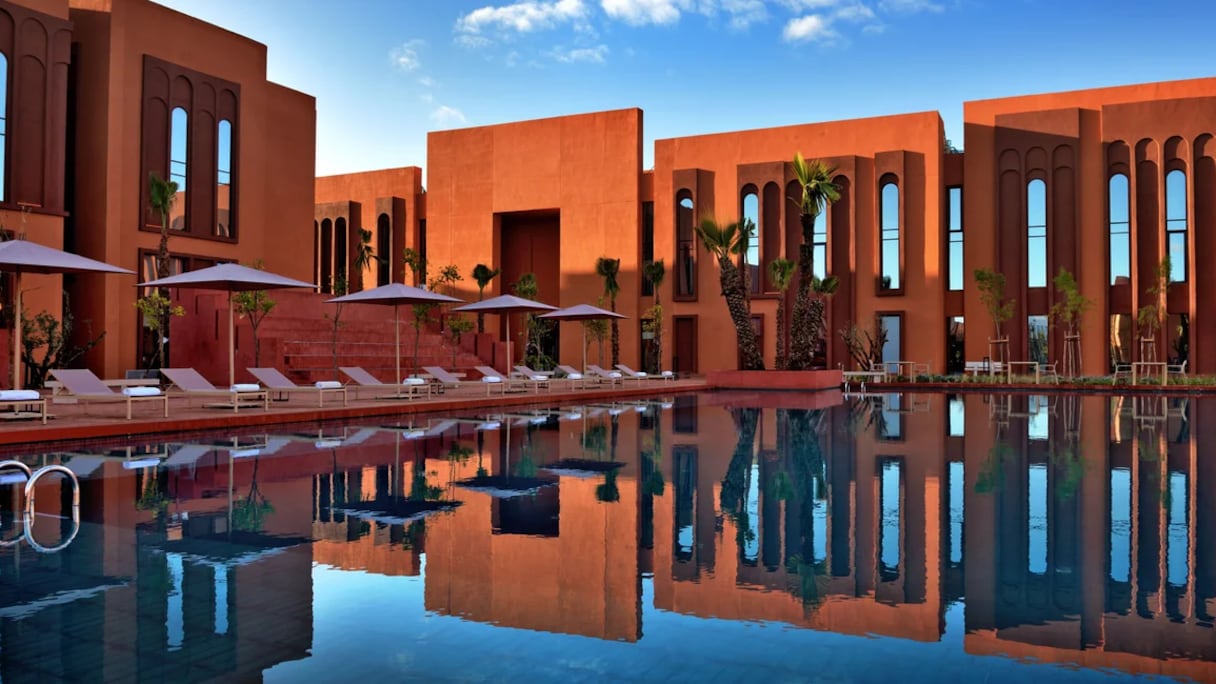
After years focused on attracting visitors, the Kingdom is now increasingly drawing the attention of the world’s largest hotel groups, many of which are expanding their footprint or announcing new projects as they position themselves for what they see as one of the Mediterranean’s most promising hospitality markets.
For tourism expert Zoubair Bouhout, this wave of investment reflects something more fundamental than an increase in hotel capacity.
“It is above all a vote of confidence in Morocco’s long-term tourism prospects,” he told Le360.
According to Bouhout, international operators are responding to a combination of structural advantages that few destinations can match: geographical proximity to Europe, political stability, a diverse tourism offering, rich cultural heritage and a climate that supports year-round travel.
Those fundamentals have become even more attractive as Morocco continues to post record tourism figures while implementing an ambitious national tourism roadmap.
Read also : Tourism in North Africa: Morocco maintains its lead over Egypt
Improved air connectivity, access to new international markets, hosting of the 2025 Africa Cup of Nations, and preparations for the 2030 FIFA World Cup have further strengthened investor confidence.
More than new hotels
The growing presence of international hotel brands does not necessarily mean those companies are financing the construction of new properties themselves.
Instead, Bouhout says the dominant model is based on partnerships with Moroccan investors.
International operators contribute their brands, management expertise, operational standards and global reservation networks, while local investors finance and own the assets.
The arrangement immediately gives Moroccan hotels access to worldwide marketing platforms, internationally recognized quality standards and millions of loyal customers enrolled in global loyalty programs.
Each new international brand also sends a broader signal to the market.
“Every new international hotel strengthens Morocco’s credibility as a destination,” Bouhout said.
That credibility, he argues, extends beyond tourism by reinforcing Morocco’s reputation among international investors more broadly.
Read also : Morocco’s vacation rental boom faces a test of quality and regulation
Government incentives
Policy has also played an important role.
Bouhout highlighted Morocco’s new Investment Charter, which can cover up to 30% of eligible project costs, improving financial viability for investors.
He also pointed to the Cap Hospitality program, designed to modernize existing hotels through financing mechanisms that support renovation and upgrades.
Together, these initiatives are making Morocco increasingly competitive against other Mediterranean destinations seeking international tourism investment.
A changing industry
The expansion of global hotel brands is also accelerating the professionalization of Morocco’s hospitality sector.
International operators bring standardized management systems, performance indicators, staff training and operational practices that raise service quality across the industry.
At the same time, traveler expectations continue to evolve.
Today’s visitors increasingly seek authentic experiences alongside environmental sustainability, with growing attention paid to water conservation, waste reduction, local sourcing and responsible tourism.
According to Bouhout, international hotel companies possess sophisticated market intelligence that allows them to anticipate these shifts and adapt their products accordingly.
Beyond Marrakech
While Marrakech remains Morocco’s flagship tourism destination, Bouhout believes investment is increasingly spreading across the country.
He cites Casablanca for business tourism, Rabat for its urban transformation, Dakhla for water sports and nature tourism, and growing interest in Fez, Tangier, the southern provinces and several emerging destinations.
For Bouhout, however, Morocco’s biggest challenge over the coming years will not be attracting visitors.
It will be ensuring that service quality keeps pace with demand.
“The expansion of accommodation capacity must be accompanied by greater investment in human resources, service quality and modern management practices,” he said.
As Morocco prepares to host the 2030 FIFA World Cup, he believes the country has an opportunity to cement its place among the world’s leading tourism destinations.
Whether it succeeds, he argues, will depend less on the number of hotels it builds than on its ability to make service excellence and human capital the defining features of Morocco’s tourism brand.