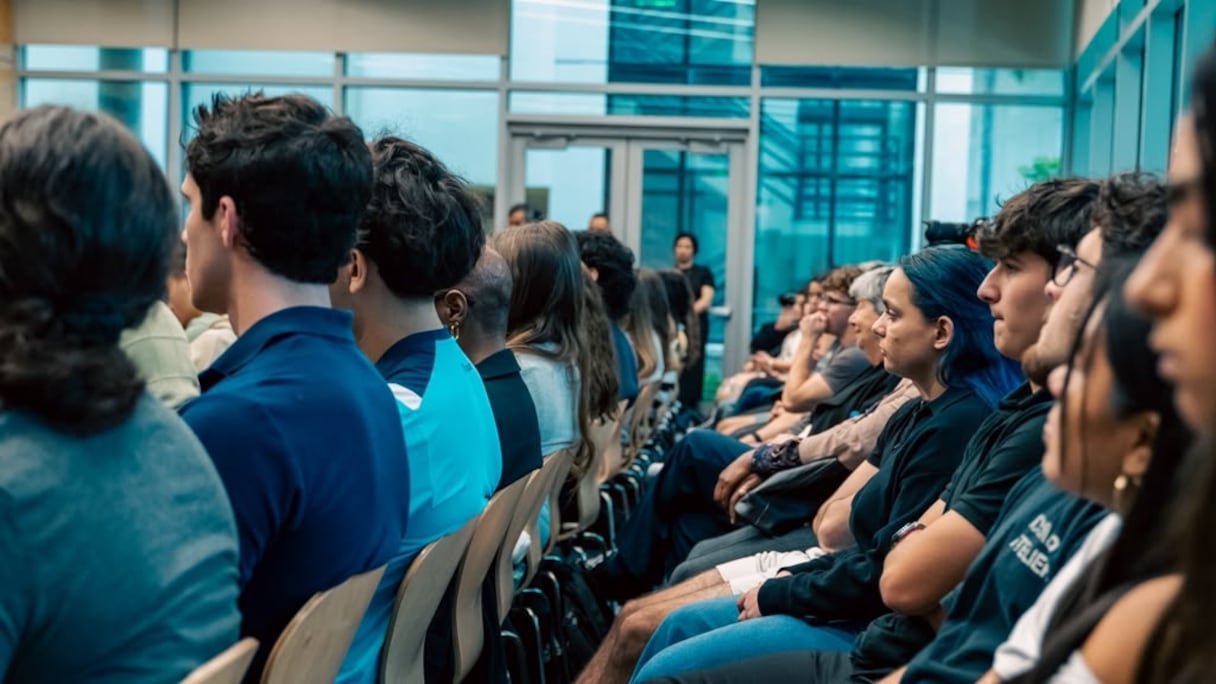
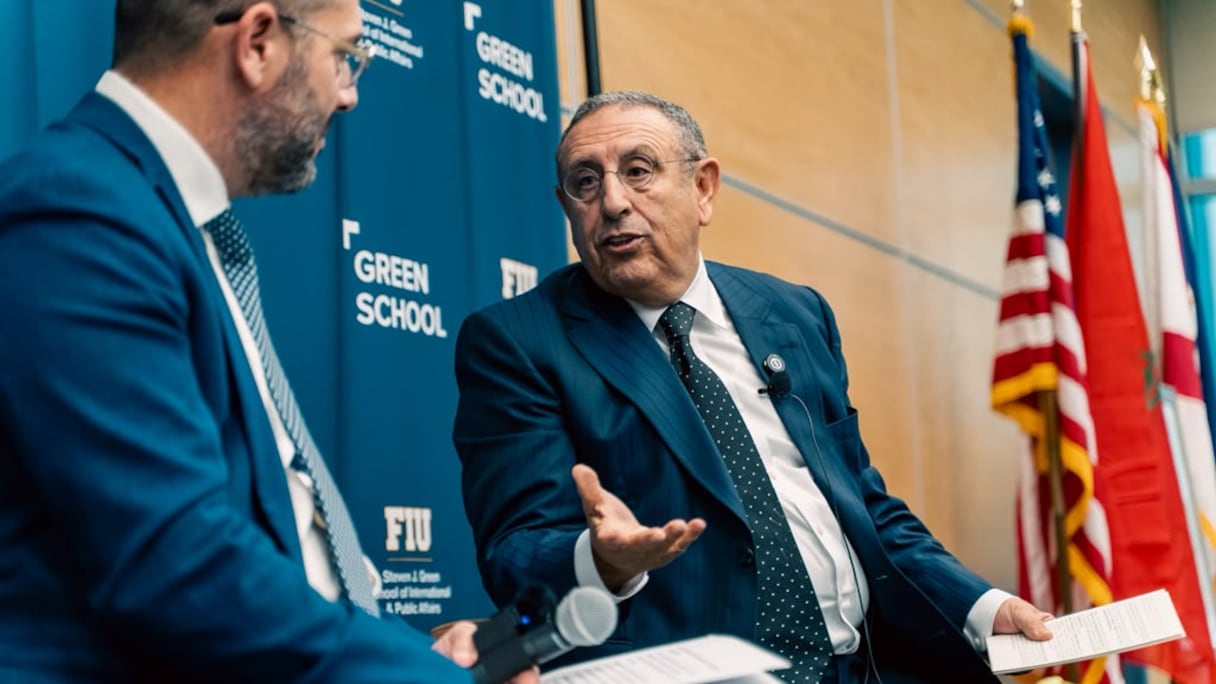
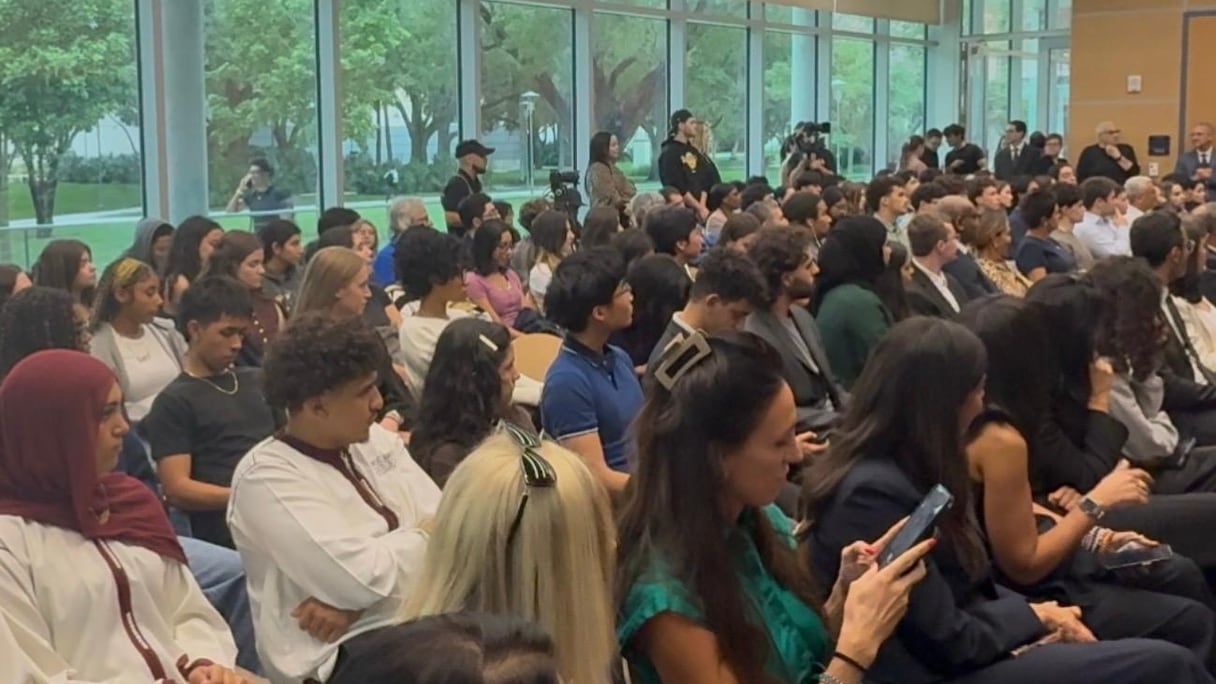
Morocco wants to be more than a crossroads between continents. It aims to help shape solutions, seize opportunities and play a full part in the major transformations reshaping the world, Ambassador Youssef Amrani told an audience at Florida International University (FIU) in Miami.
“Our geography has shaped our history, but it does not define the limits of our ambition. Morocco intends to be much more than a crossroads between continents. It wants to contribute to solutions, seize opportunities and play its full part in the major transformations taking place around the world,” Amrani told American students, academics and faculty members.
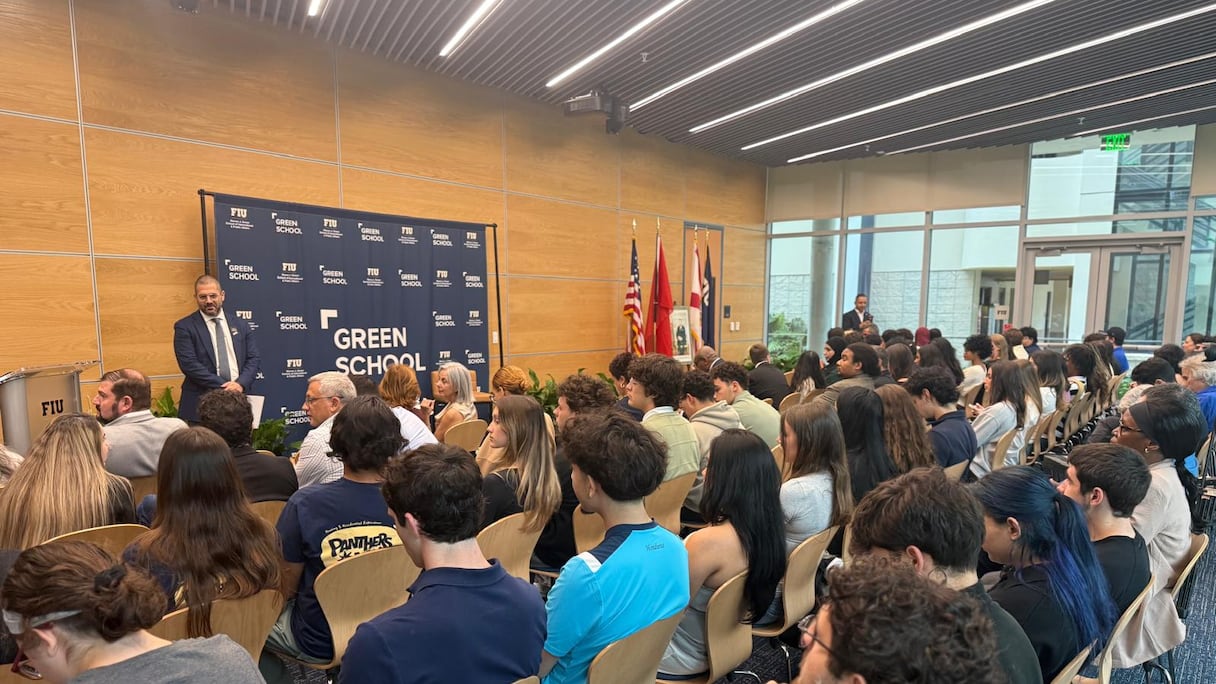
The discussion, held recently at FIU’s Steven J. Green School of International & Public Affairs and moderated by its dean, Dr. Shlomi Dinar, gave the ambassador an opportunity to outline Morocco’s strategic priorities, its international role and the prospects for expanding the Moroccan-American partnership.
Read also : In Miami, Morocco seeks to turn strong US political ties into an engine of economic growth
Rooted in its identity, focused on the future
Asked what sets Morocco apart in a rapidly changing world, Amrani said the Kingdom has turned its position at the crossroads of Africa, Europe, the Arab world and the Atlantic into an asset for dialogue, openness and cooperation.
“Under the leadership of King Mohammed VI, this openness has been accompanied by a profound transformation of the economy, the development of modern infrastructure and investment in industry, energy and education and training,” he said.
The event also formed part of the inaugural Morocco Days in Miami, organized from October 22 to 24 by the Moroccan Consulate General in Miami.
“Morocco does not choose between tradition and modernity. It brings the two together,” the ambassador said, arguing that a strong sense of national identity provides a foundation for preparing for the future.
He also highlighted the growing role of women in Morocco’s transformation. Their increasing presence in universities, businesses, research and public institutions reflects the changes taking place across Moroccan society.
“Women’s representation in Parliament has risen from just two members in 1993 to 107 today,” Amrani said, describing the increase as a significant development that underscores the importance of women’s participation in the country’s progress.
“You cannot understand Morocco today without understanding the place women hold in its society. The appointment of Fatima Ezzahra El Mansouri as head of the Moroccan government marks a historic milestone in the country’s institutional evolution,” he said.
An economy connected to global markets
“This transformation also reflects a clear economic ambition: to make Morocco a hub for manufacturing, investment and value creation, capable of connecting markets and participating in major international supply chains,” the ambassador continued.
“At a time when businesses are looking for reliable partners, efficient infrastructure and secure supply chains, the Kingdom has significant advantages,” he added, stressing that these strengths create new opportunities for cooperation with the United States.
“The goal now is to move beyond trade and develop joint projects in manufacturing, innovation and access to new markets,” Amrani said, noting that Morocco remains the only African country with a free trade agreement with the United States.
Read also : Morocco seeks shift in Mexico’s position on Sahara
Making development a driver of regional stability
Turning to major international challenges, Amrani outlined the principles guiding Moroccan diplomacy: “clear positions, commitments honored, and lasting partnerships.”
“Faced with crises and geopolitical tensions, Morocco stands by a simple conviction: stability cannot last without economic development, regional cooperation and opportunities for people,” he said.
That approach is reflected in Morocco’s engagement across Africa and in the Royal Initiative to facilitate Atlantic Ocean access for Sahel countries. The aim, Amrani explained, is to turn geographic isolation into economic opportunity by improving connectivity and giving those countries new routes to international markets.
Miami as a bridge between Morocco, the United States and the Atlantic
Amrani said Morocco and the United States share an ambition to turn their strong political and strategic relationship into an increasingly powerful engine of shared economic prosperity.
He highlighted the role South Florida could play in bringing the two countries closer together. Miami provides a gateway to Latin America and the Caribbean, while Morocco offers strong connections to Africa, Europe and the wider Atlantic region.
“This complementarity creates tangible opportunities for economic cooperation,” he said, pointing to the direct Casablanca–Miami air link and the sister-region agreement signed in 2025 between Miami-Dade County and the Casablanca-Settat region. Both, he said, could help generate new projects in trade, logistics, tourism, innovation and business.
For American companies looking towards Africa, Morocco offers far more than a gateway: it offers a reliable partner with which to build, produce and succeed together.
Read also : U.S. congressional delegation led by Mike Rogers discusses defense cooperation in Morocco
Preparing a new generation with a global outlook
Responding to students’ questions about the future of diplomacy, Amrani stressed that diplomacy is no longer confined to relations between governments. It is also forged in businesses, universities, research laboratories and the industries shaping the global economy.
The ambassador also emphasized the role universities can play in strengthening ties between Morocco and the United States. He encouraged greater academic exchanges and joint research, particularly in water management, energy, climate resilience and women’s entrepreneurship.
“Governments can sign agreements, but it is the women and men we educate today who will give those agreements their full meaning tomorrow,” he said.
“Nearly 250 years after recognizing American independence, Morocco intends to continue strengthening and deepening this special relationship. The ambition is clear: to turn an exceptional historical legacy into new opportunities for cooperation, growth and progress for the benefit of both peoples,” the ambassador concluded.
