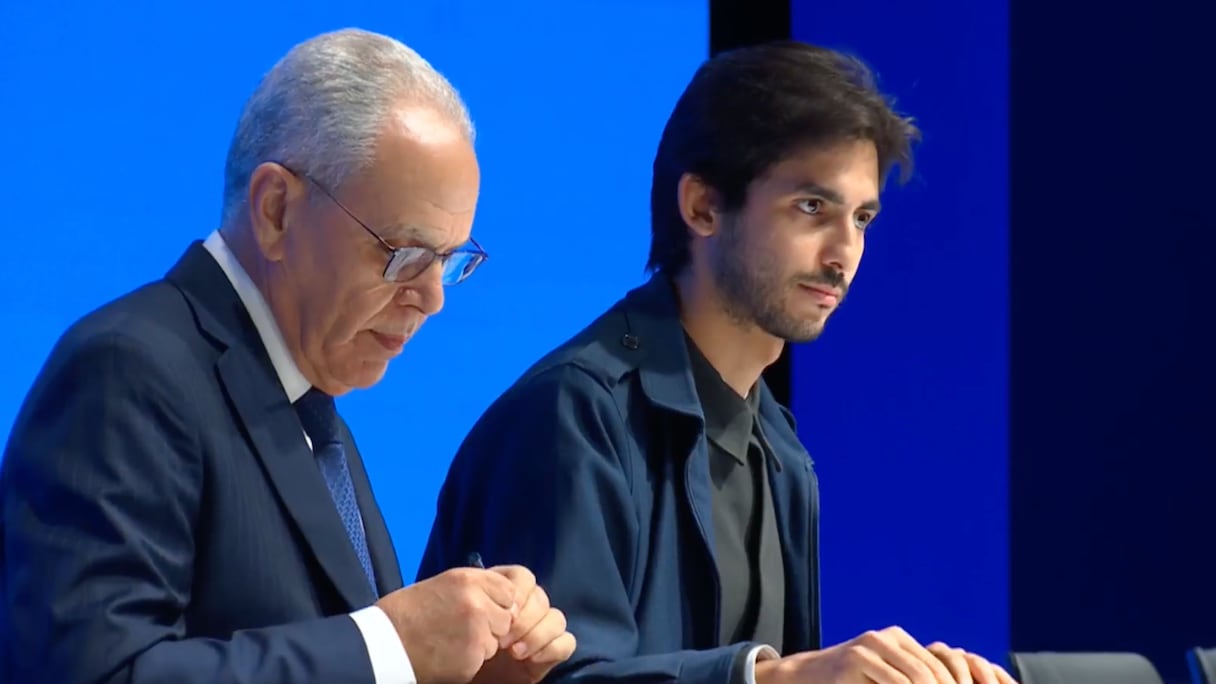
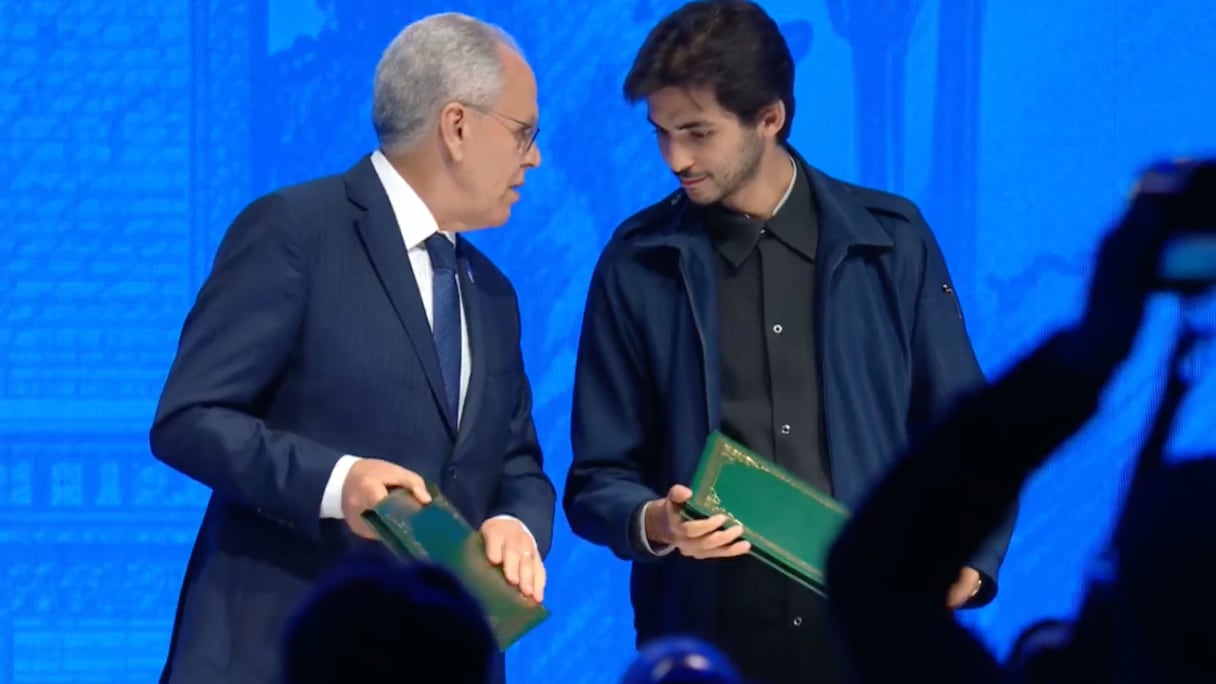
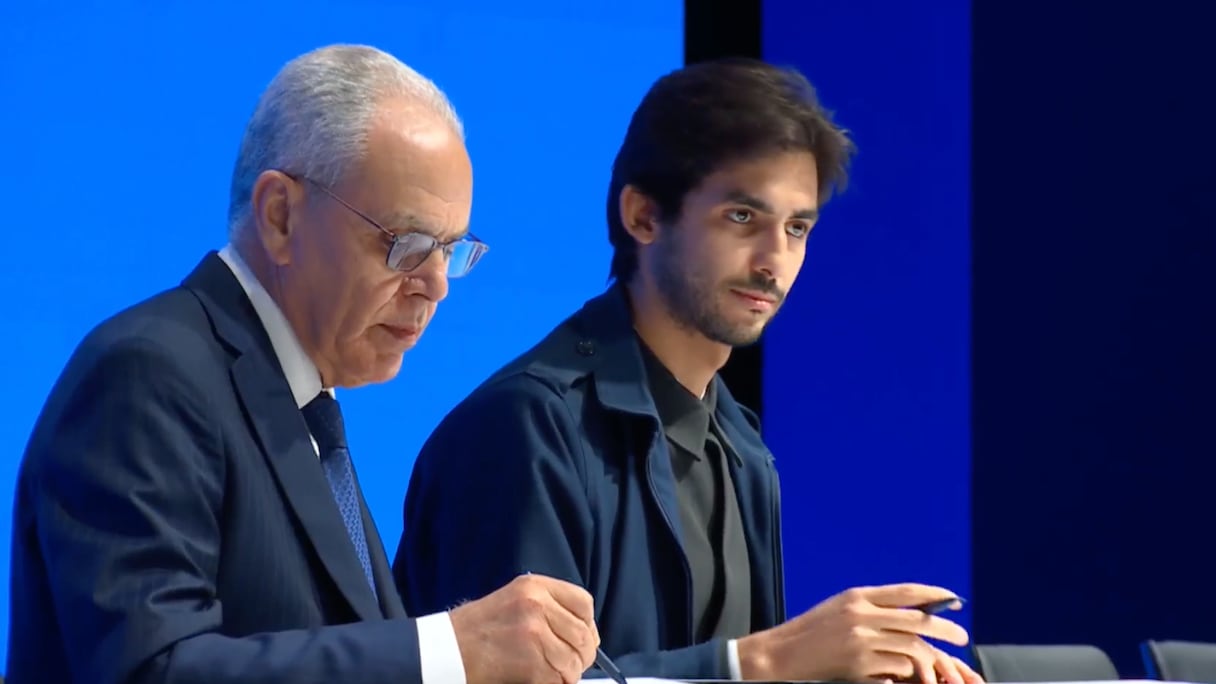
King Mohammed VI, accompanied by Crown Prince Moulay El Hassan, launched the “Morocco Offer” and the roadmap for the defense and security industries on Wednesday, November 18, during a working session he chaired at the Royal Palace in Rabat. At the close of the meeting, the King instructed that the plans be implemented “swiftly and effectively.”
The presentation was delivered to the King by Lieutenant General Mohammed Berrid, Inspector General of the Royal Armed Forces (FAR) and Commander of the Southern Zone, and Ali Seddiki, Director General of the Moroccan Investment and Export Development Agency (AMDIE).
According to the Royal Office statement, the initiative builds on the King’s longstanding ambition to establish a domestic defense industrial and technological base. It is not starting from scratch. Law 10-20, adopted in 2020, opened the sector to industrial investment. On June 1, 2024, a Council of Ministers chaired by the King approved a decree establishing two defense industrial acceleration zones on land belonging to the Military Housing and Equipment Agency (ALEM). The zones were designated for manufacturing defense materiel, equipment and ammunition, as well as providing related services.
Tax incentives followed. In November 2024, the government added defense equipment manufacturing to the list of industrial activities eligible for temporary corporate tax exemptions. Projects in the sector are also expected to qualify under the strategic investment framework of the Investment Charter.
On October 7, at the opening of the eighth Marrakech Air Show, the Minister Delegate in charge of the National Defense Administration set out the foundations of this ambition, as reported by Le360.
Abdellatif Loudiyi described a phased approach driven by the King’s vision: first a legal framework, then dedicated industrial zones, followed by incentives and stronger support for investors. Together, these measures have paved the way for projects serving both domestic demand and export markets.
The minister identified two priorities: attracting foreign investment and bringing military technology production onto Moroccan soil. He recalled that the King had referred to this industrial base in his most recent Throne Day speech. The objective, he explained, was to transform Morocco from an importer of defense capabilities into “a country that builds its own national capabilities.”
Three numbers that define the model
By 2035, Morocco’s defense industrial and technological base is expected to create nearly 50,000 direct and indirect jobs, meet around 40% of the requirements of the Royal Armed Forces and security agencies, and generate more than 65% of its revenue from exports.
Of those three figures, the last is perhaps the most revealing. If more than 65% of revenue is to come from exports, Morocco’s defense industry will not simply be supplying the FAR. It will have to sell abroad.
Morocco has followed much the same model in the automotive and aerospace industries. Major manufacturers were brought in, local suppliers established themselves around them, and factories eventually began exporting. The Royal Cabinet’s statement explicitly draws that parallel, pointing to the Kingdom’s achievements in aerospace, automotive manufacturing and electronics.
In a 2024 interview with Le360, Hicham El Hafdi, a former senior Royal Guard officer, geopolitical analyst and economic intelligence consultant, explained that no defense industry can survive on domestic orders alone. Exports, in turn, provide a means of exercising diplomatic influence. Africa, where Morocco has cultivated extensive economic and political ties, has long been identified as the natural market.
The 40% target is equally revealing: it means that 60% of requirements will still be met through imports. The goal is selective sovereignty, not self-sufficiency at any cost. El Hafdi had a neat way of putting it: sovereignty means “choosing your dependencies.”
There is room in the budget to pursue that ambition. The 2027 draft Finance Act authorizes 190.5 billion dirhams in advance defense commitments, up from 157 billion in 2026, an increase of 21%. The special account financing defense procurement and support for the industry has been allocated 11.49 billion dirhams. This public procurement spending provides the leverage to impose local production requirements on suppliers.
Six sectors, with civilian and military applications
The six priority areas are drones and autonomous systems, land-based systems, naval systems, defense electronics, cyber defense, and artificial intelligence. The ambition extends across the entire value chain, from design and manufacturing to maintenance, testing and storage.
Several of these sectors already have an industrial foothold.
Drones. This is the most developed segment. Turkish manufacturer Baykar established a Moroccan subsidiary, Atlas Defense, in early 2025 to design, manufacture and maintain drones.
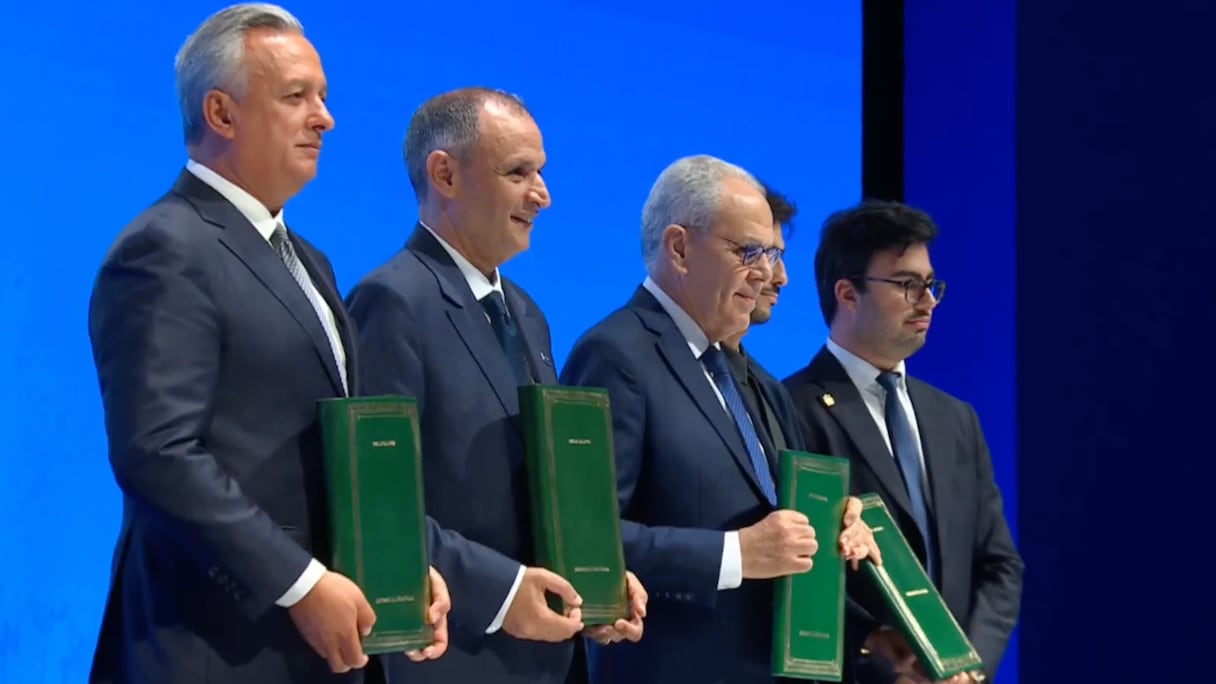
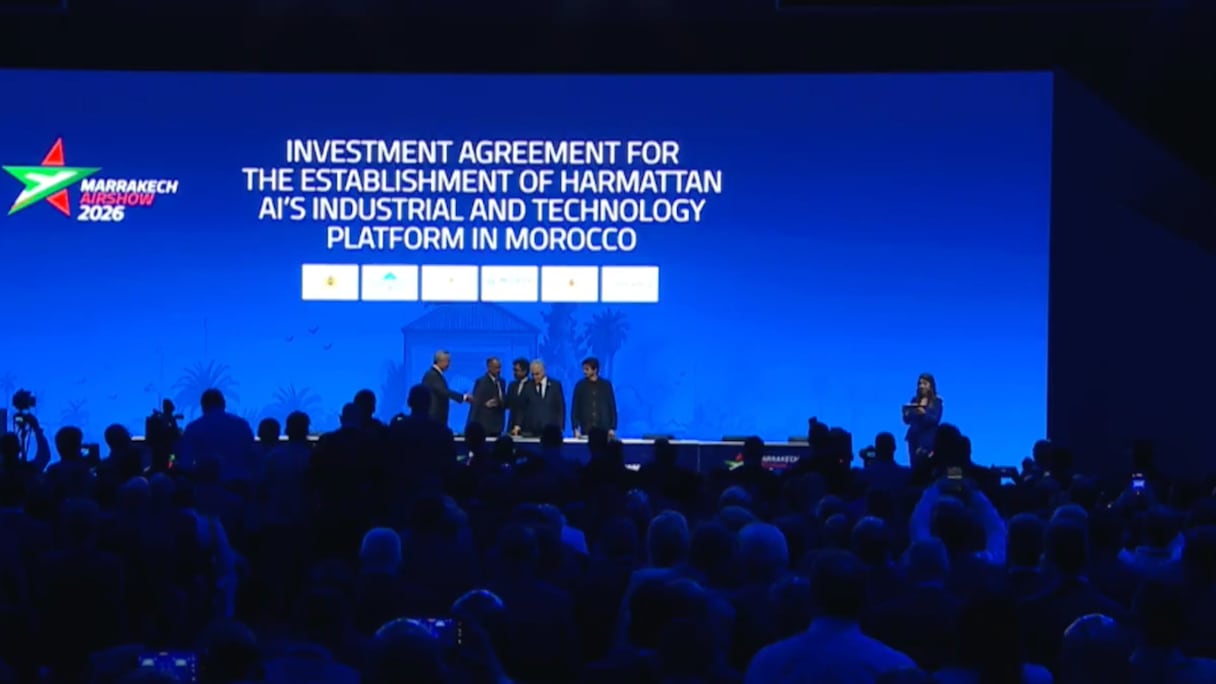
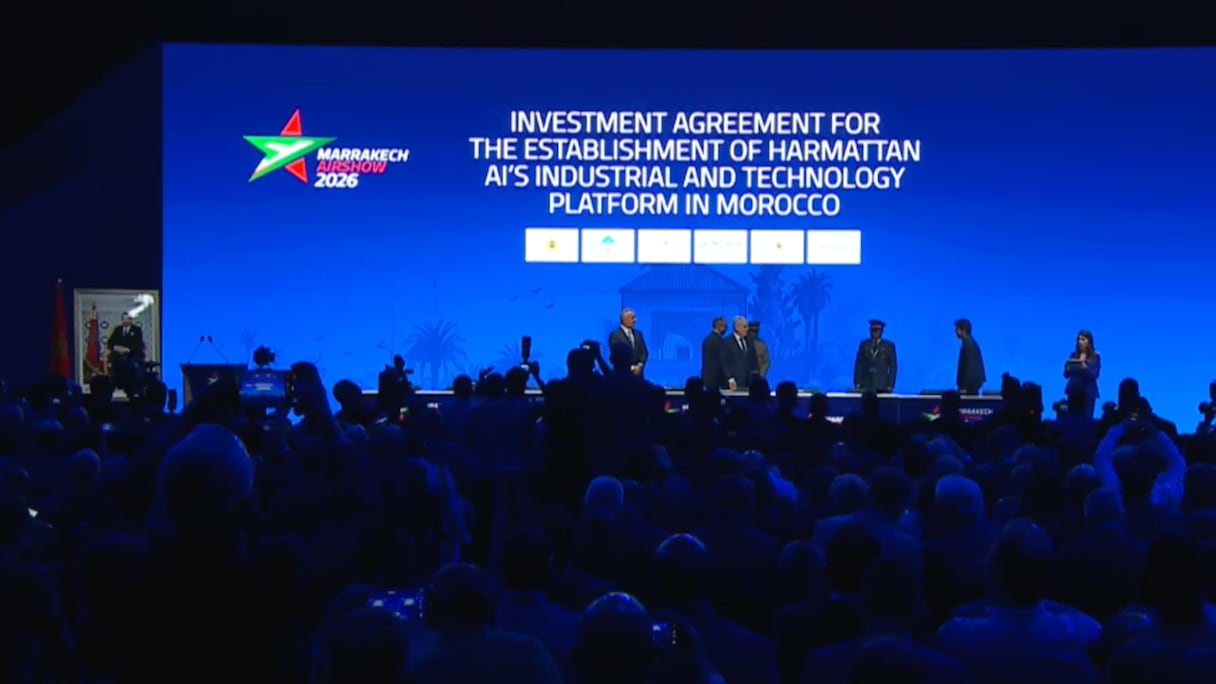
French company Harmattan AI signed a letter of intent in October to develop IRIFI, a strike drone with a range of 2,000 kilometers, building on a partnership agreed with the FAR in June. The project rests on three pillars: a factory near Casablanca, an artificial intelligence research and development center in Rabat, and partnerships with Moroccan higher education institutions. The company is promising full-scale manufacturing rather than mere final assembly.
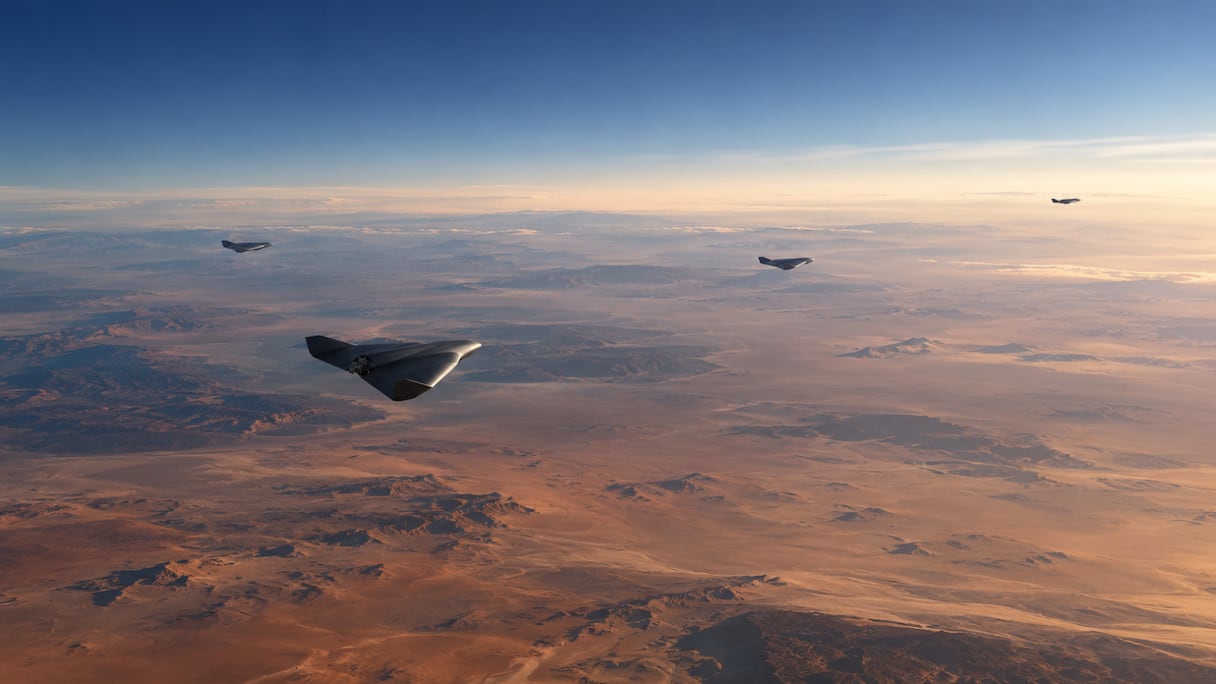
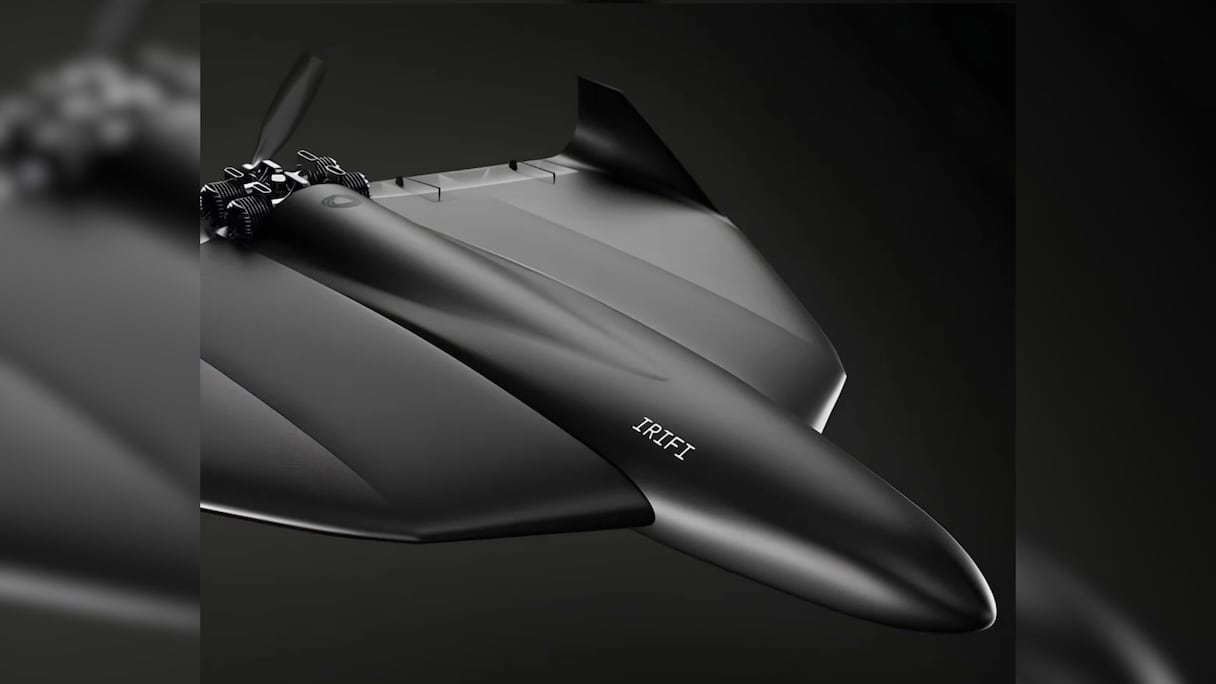
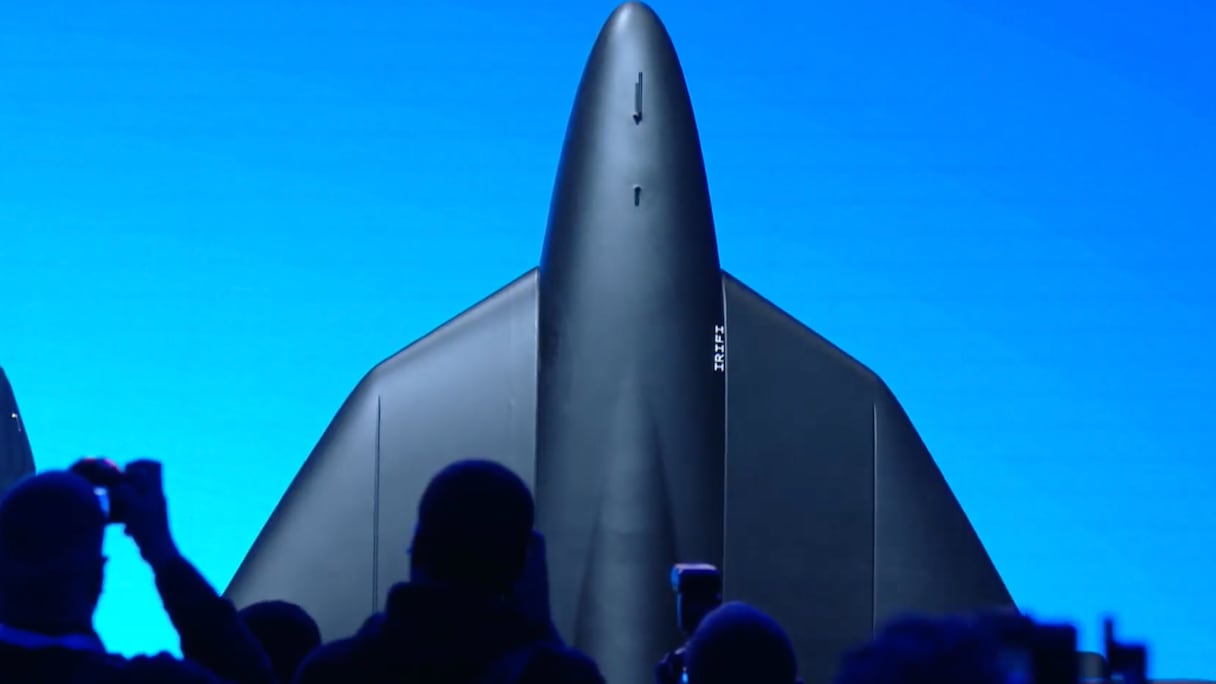
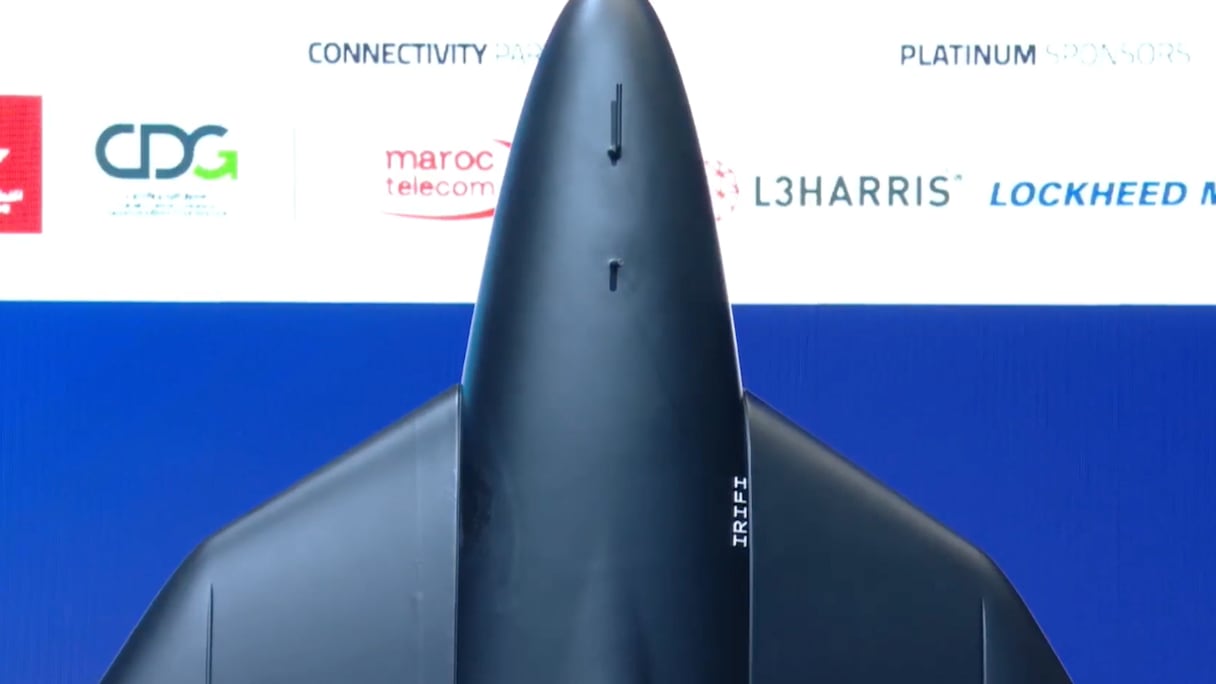
IRIFI. (PHOTO: Harmattan AI)
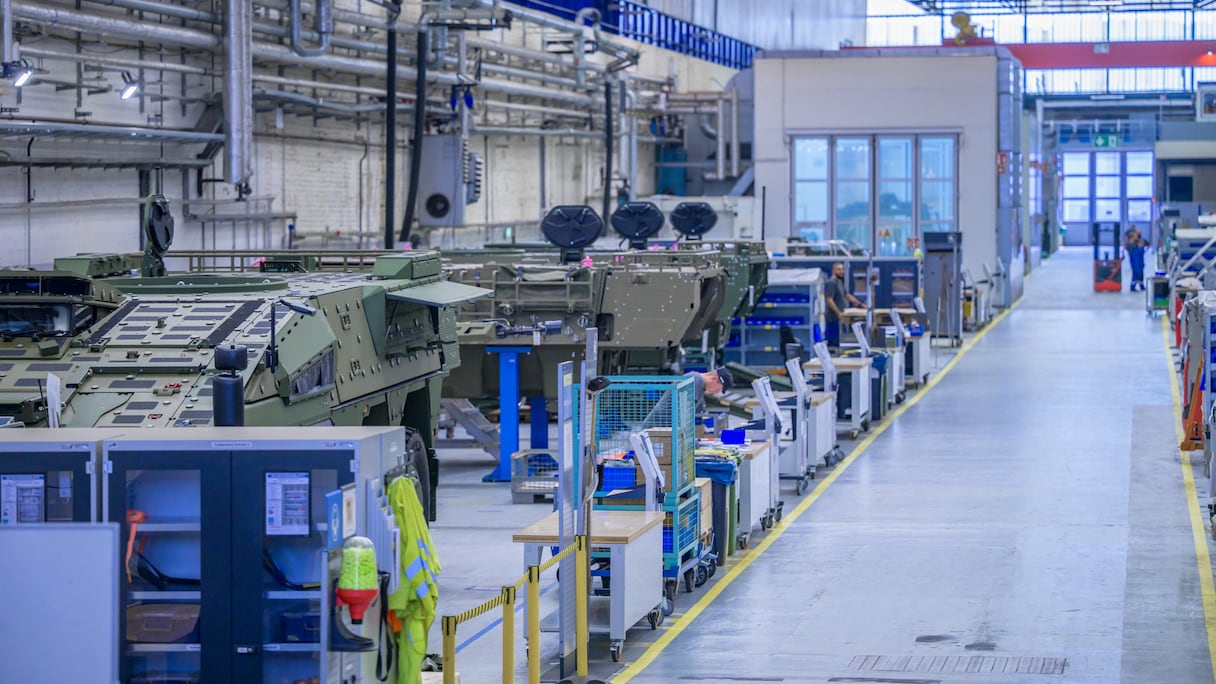
Land systems. The partnership signed in September 2024 with India’s Tata Advanced Systems covers local production of the WhAP 8x8 armored vehicle. Local content is expected to start at 35%, rising eventually to 50%.
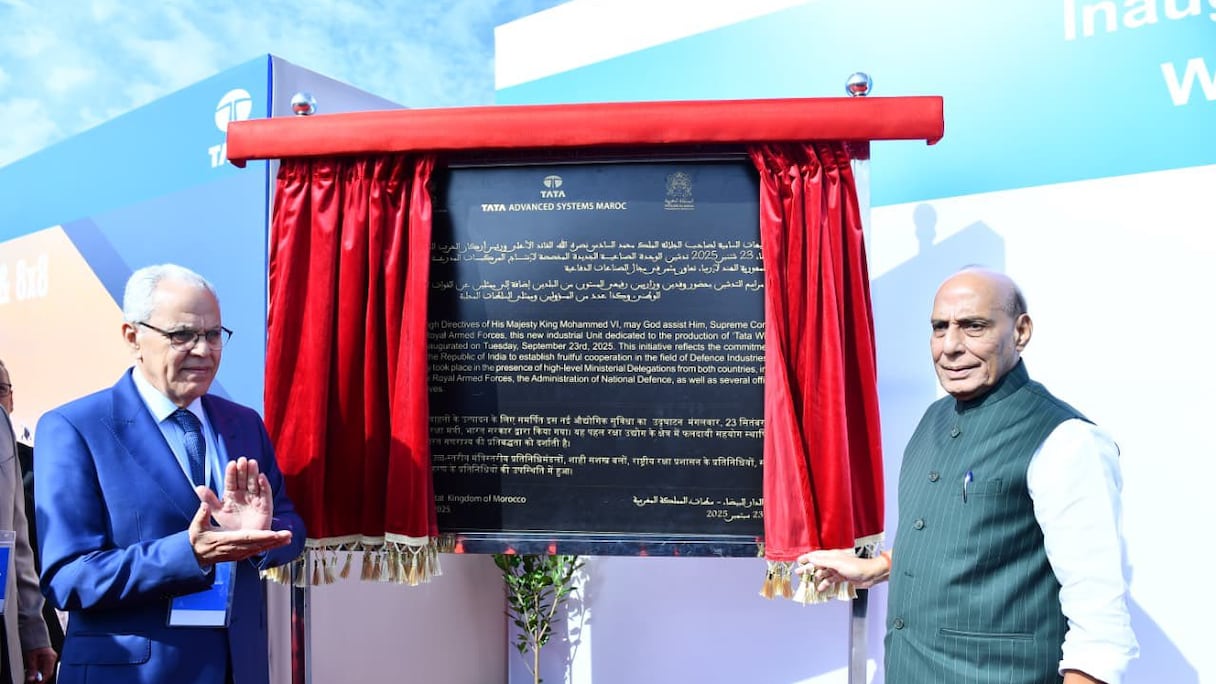
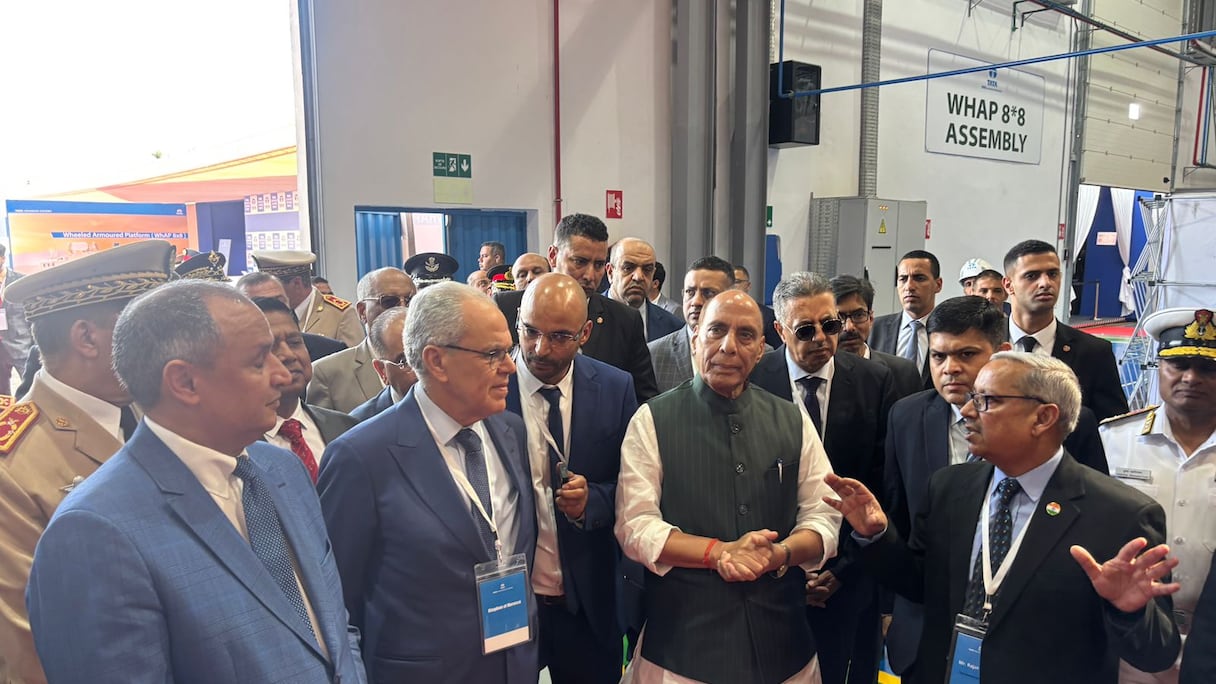
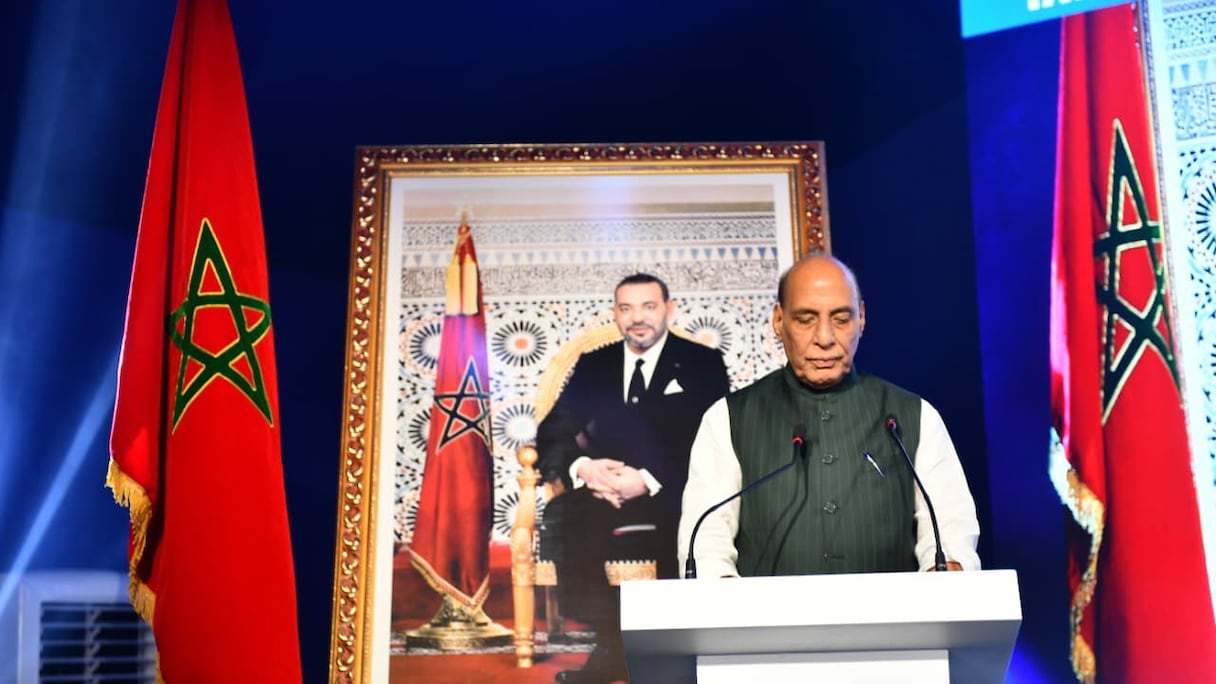
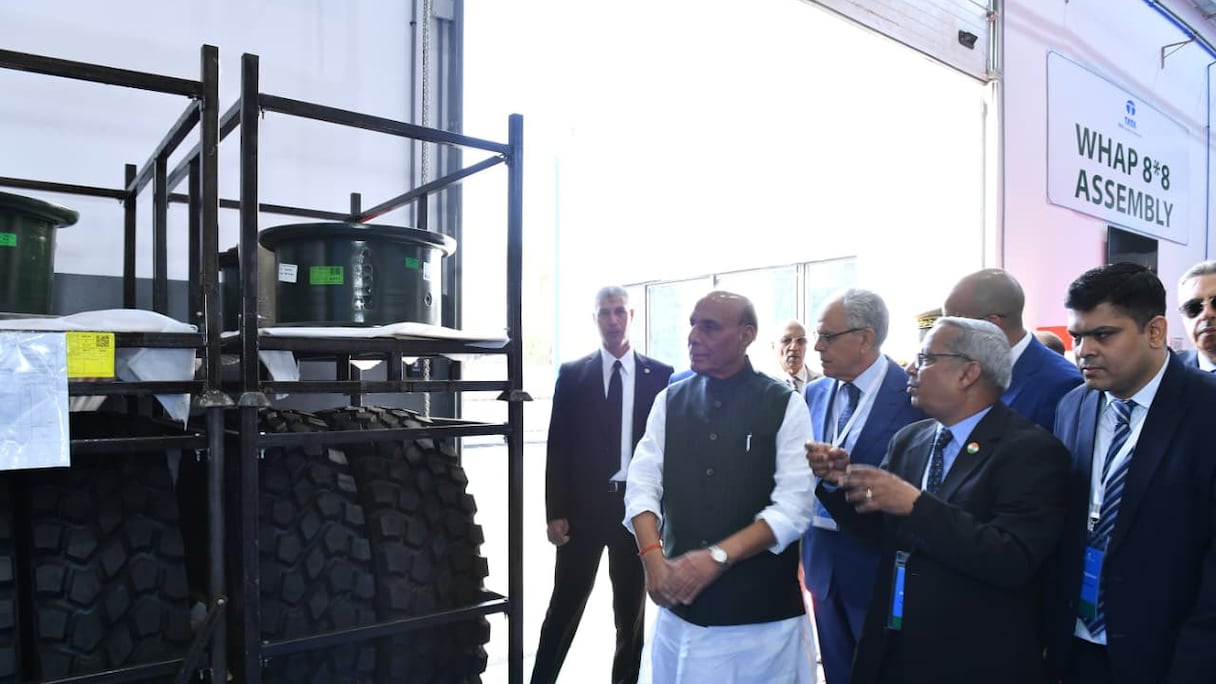
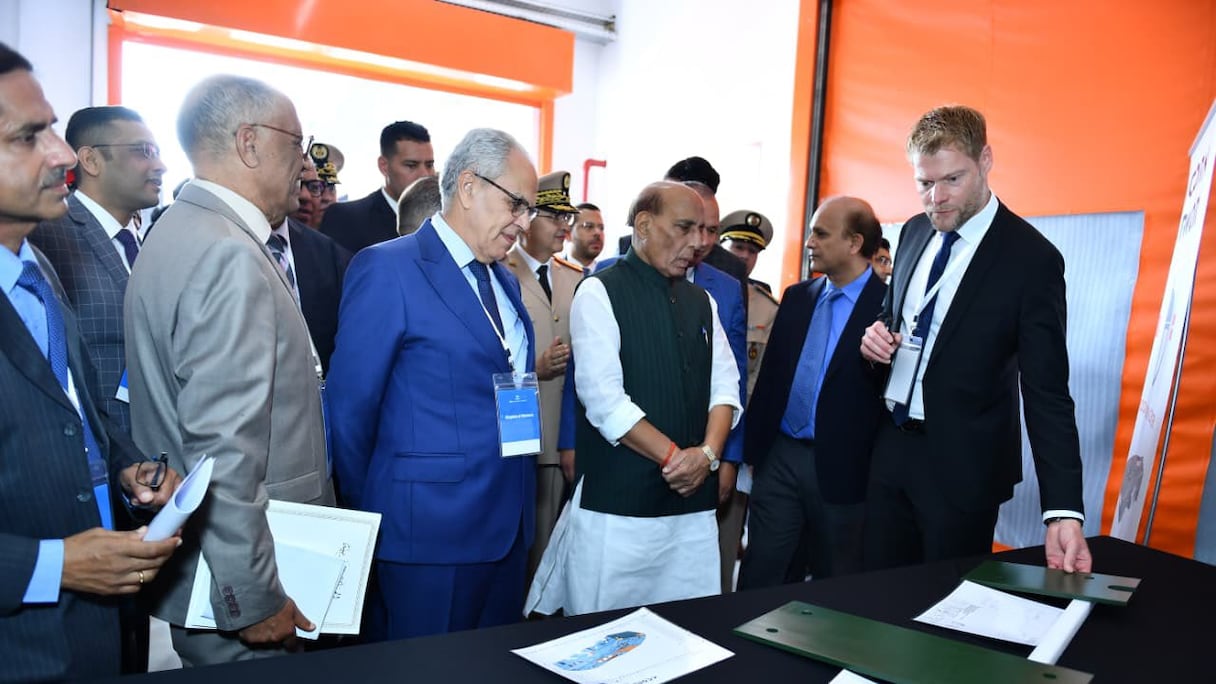
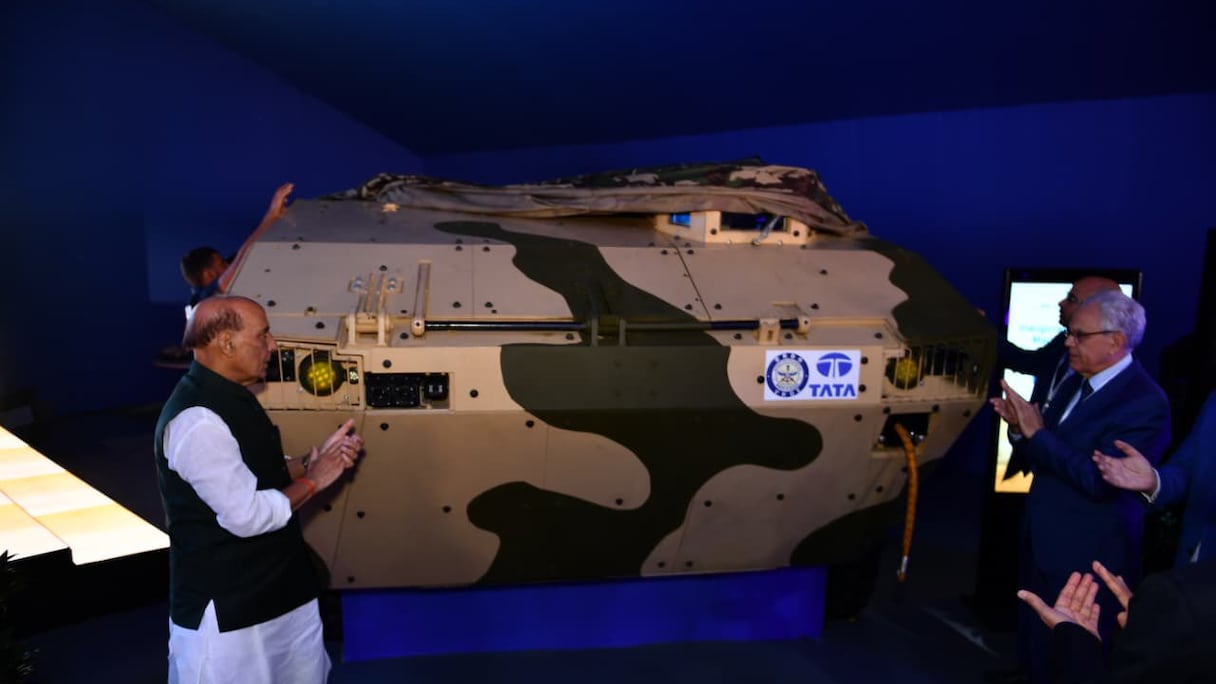
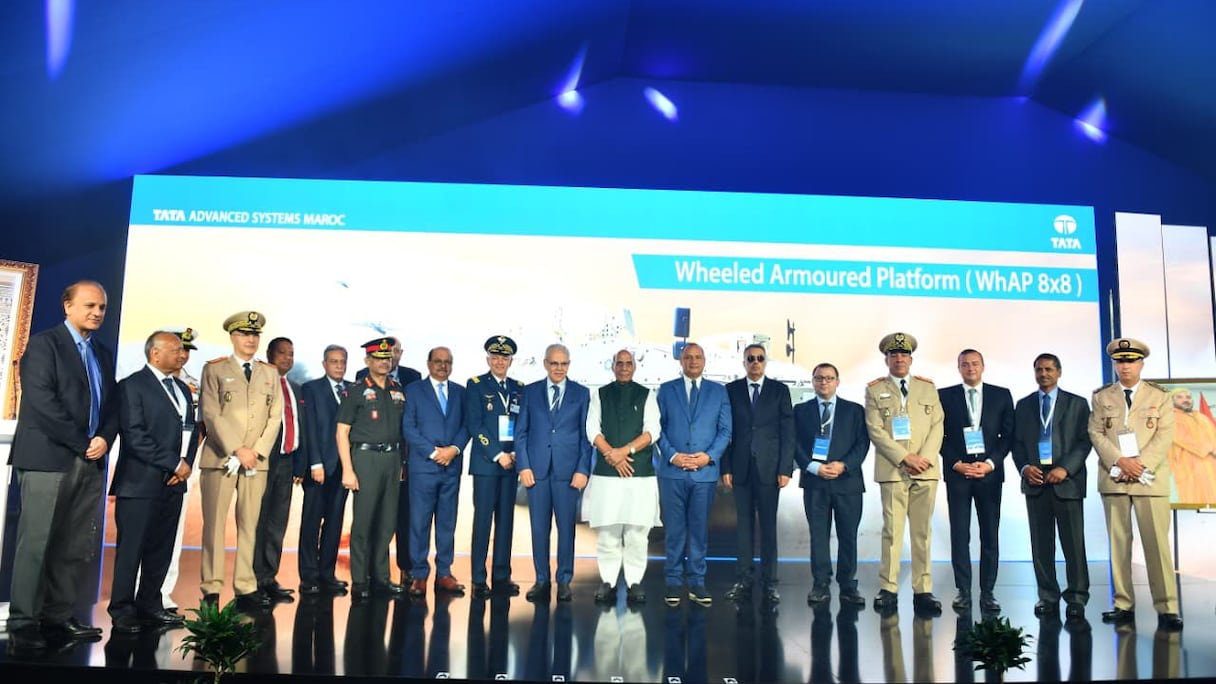
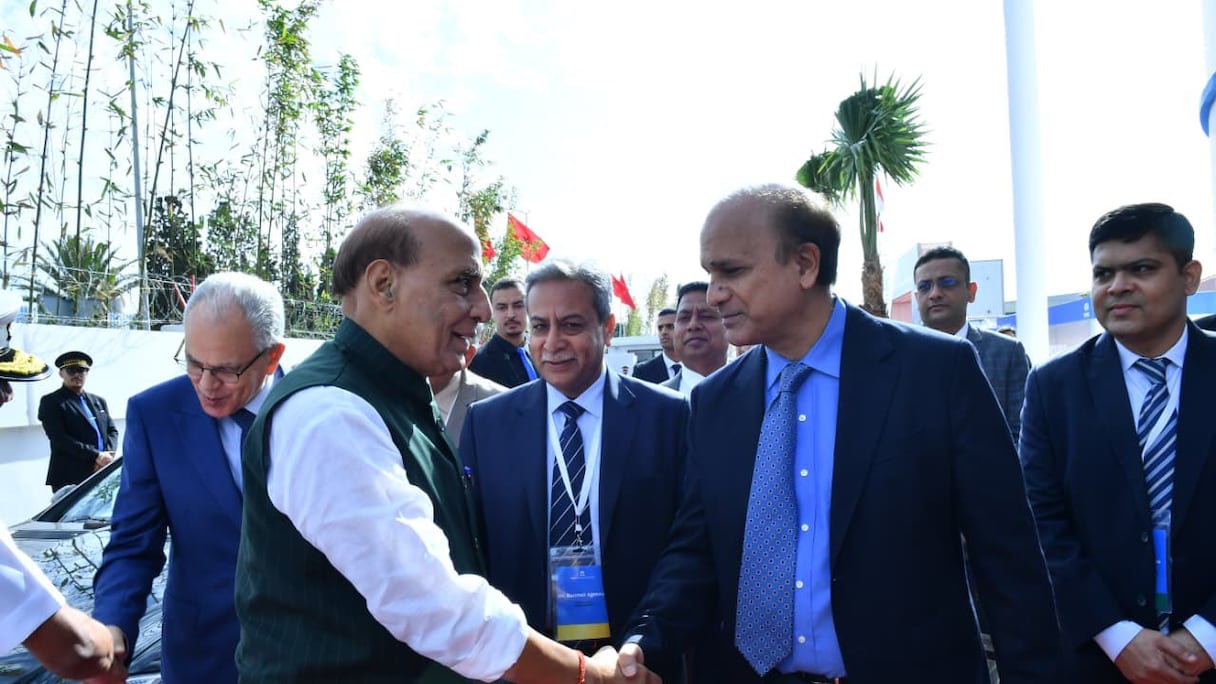
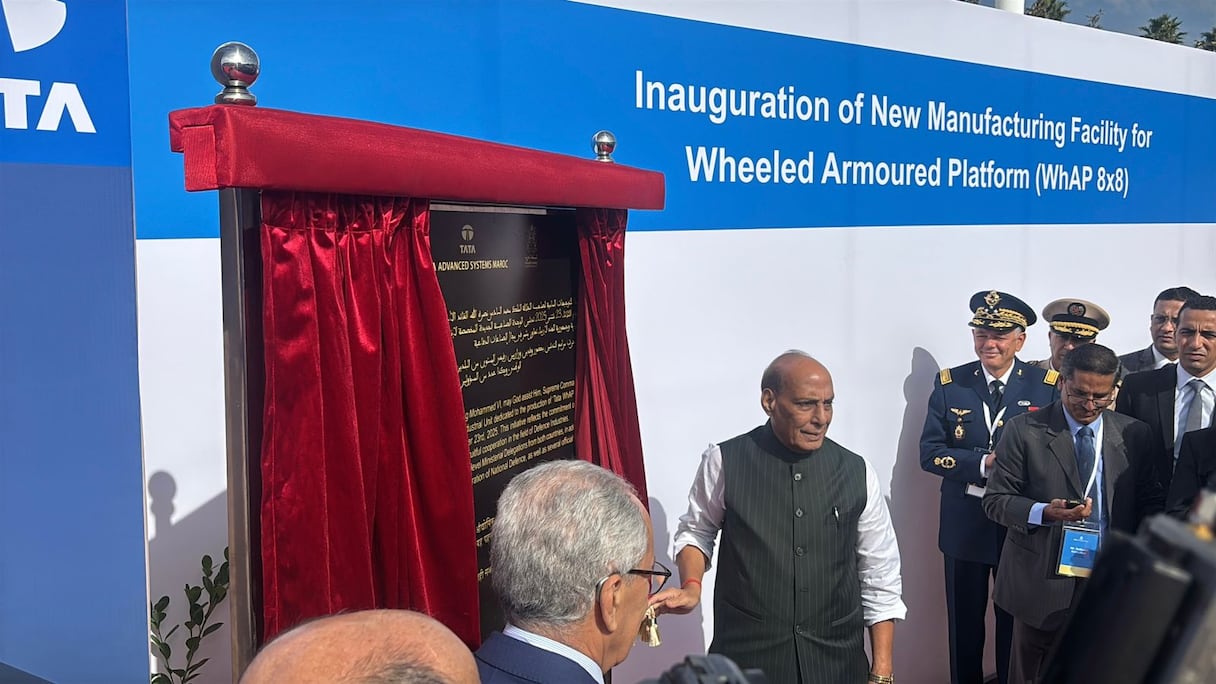
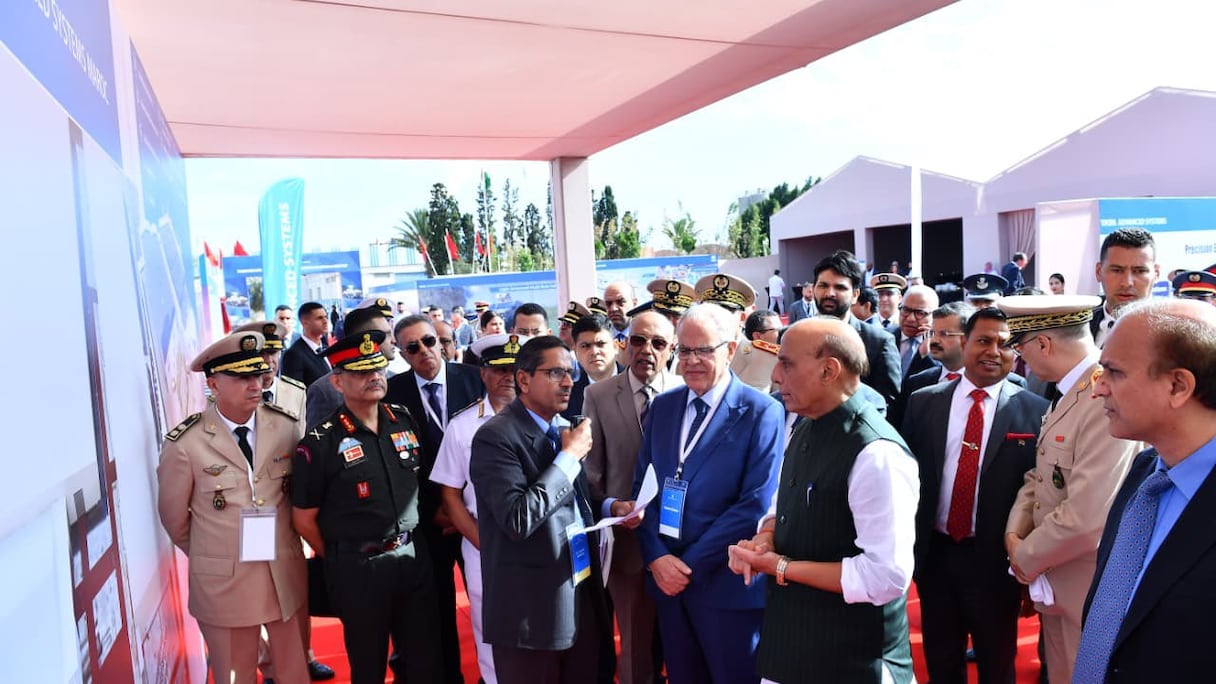
The inauguration of the Tata Advanced Systems Maroc (TASM) plant in Berrechid on Tuesday, September 23.
A network of subcontractors is already taking shape around the program. Moroccan Military Industry (MMI) is due to deliver its first turrets to the FAR in March 2027 and will also manufacture the accompanying ammunition. The company has a factory at Midparc and is developing a second site in Sidi Yahya for medium- and large-calibre ammunition. Its chief executive says it already has a European NATO-member customer for exports.
Military aviation and ammunition. The UAE’s EDGE Group signed a contract in October to supply precision-guided munitions for Royal Moroccan Air Force combat drones. The agreement was accompanied by a memorandum of understanding with Moroccan companies covering local production of small arms and aircraft engines.
Read also : Morocco’s 2027 budget: How defense spending breaks down
An agency to steer the strategy, a holding company to invest
This is the roadmap’s principal institutional innovation. A strategic agency will oversee implementation of the national strategy and support investors. An industrial holding company will organize industrial ecosystems, mobilize public and private capital, and help create homegrown industry leaders.
The arrangement makes particular sense in light of Law 10-20, which requires authorized companies to be majority-owned by Moroccan shareholders. National partners are therefore needed to hold those stakes. Until now, that role has largely fallen to public-sector players such as MEDZ, a subsidiary of the CDG group.
The King has established the order of priorities: first, put the governance bodies and financing plan in place while simplifying investment procedures and mobilizing Morocco’s private sector.
Four industrial zones, two alongside air bases
A substantial amount of land has already been secured. The two zones managed by SGZID, at Nouaceur and Sidi Yahya, cover a combined 675 hectares. They serve different purposes. Nouaceur, spanning 75 hectares, offers plots of between 3,000 and 9,000 square meters for sale, suited to medium-sized industrial operations close to Casablanca’s aerospace hub. Sidi Yahya, near Kenitra, extends over 600 hectares, with plots of three to 60 hectares available to lease, purpose-built storage bunkers meeting safety standards, and land held in reserve. It is designed for heavy industrial and explosives-related activities.
The management company, established in July 2025, is owned in equal shares by ALEM and MEDZ and says it has more than ten clients. Around ten memorandums of understanding were announced at the Marrakech Air Show, covering ammunition and weapons systems, drones, aircraft maintenance, defense electronics, and materials.
Benguerir and Benslimane will host the two new zones, building on activities already under way there. Both cities have military air bases that the first industrial projects launched in 2024 were already intended to equip for military aircraft maintenance.
Read also : U.S. congressional delegation led by Mike Rogers discusses defense cooperation in Morocco
Benslimane already has an operational maintenance hub. As Le360 reported on Wednesday, Maintenance Aero Maroc returned its first C-130 to the Royal Moroccan Air Force in 2025 following a major overhaul and is now working on a second aircraft.
Its new hangar, covering more than 8,000 square meters and certified for both C-130s and F-16s, is expected in the first quarter of 2027. The project brings together Sabena Engineering, MEDZ and Lockheed Martin, and the commercial opportunity is clear: Morocco has ordered 25 F-16 Block 72 fighters, the first of which flew in October. A nearby industrial zone would allow aircraft maintenance subcontractors to cluster around this core operation.
The human factor: the real bottleneck
A specialist academy developed with industry partners, an early careers guidance program for young talent expanded vocational training and recruitment from civilian, military and diaspora talent pools: skills development occupies a prominent place in the new roadmap accompanying the Morocco Offer.
Creating 50,000 jobs will require a major training effort. As early as 2024, El Hafdi warned that the emerging industrial clusters would struggle to grow without dedicated training centers and affiliated research institutes. Manufacturers, for their part, are already making local skills a selling point. MMI says 99% of its workforce, including engineers, is Moroccan. Harmattan AI intends to recruit Moroccan engineers for its research and development operations, while MAM is training technicians to work on C-130s and F-16s through knowledge transfer from Belgium.
MAD 4 billion to get things moving
On the King’s instructions, the Hassan II Fund for Economic and Social Development will contribute four billion dirhams. This initial funding is intended to capitalise the holding company, develop the new industrial zones and provide seed capital for equity investments.
The bulk of the financing, however, will come from investors whom the Morocco Offer aims to attract by drawing on the Kingdom’s strategic partnerships. Diversification is already taking shape: American, French, Belgian, Israeli, Turkish, Emirati, Indian and Brazilian companies are either involved or in discussions. It is a strategy designed to avoid dependence on any single supplier.
