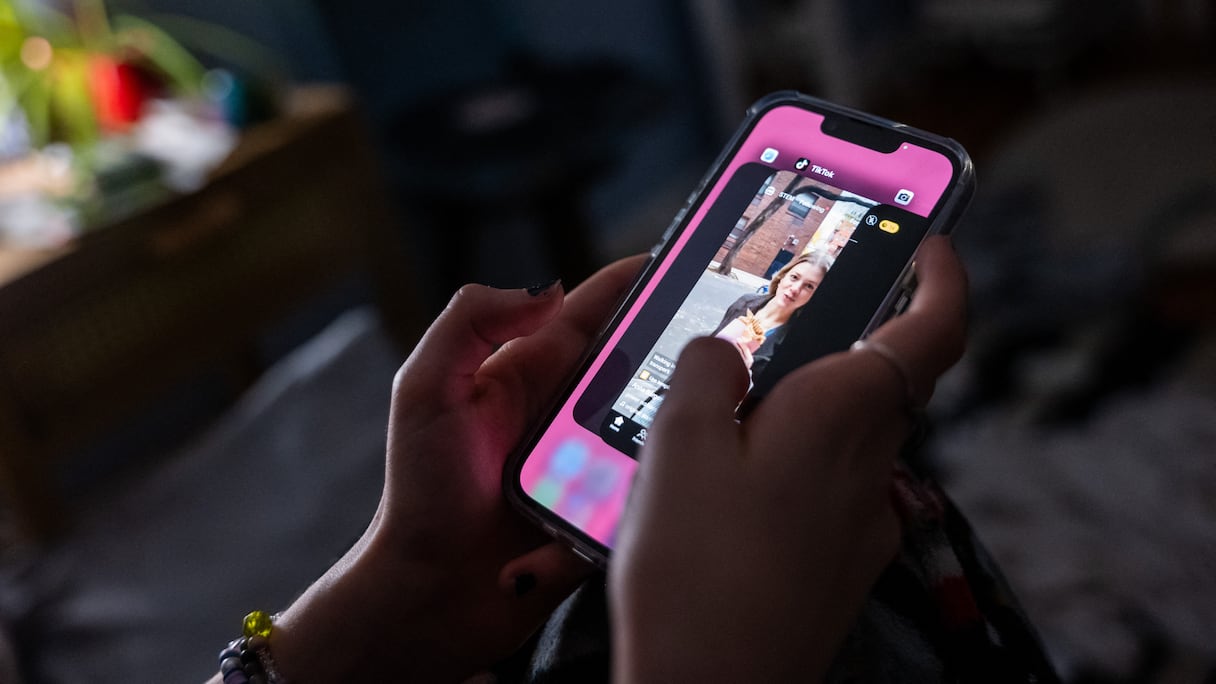
The Ceuta incident is worth revisiting because it encapsulates everything there is to understand about the issue. Since September 2025, the same scenario has played out at regular intervals. On Sept. 15, 2025, then Oct. 11, Jan. 18 and May 12, 2026, calls for an orchestrated assault around the enclaves of Ceuta and Melilla were circulated on social media. Another wave emerged last July. Each time, the same mechanism: a viral message, a few hours of rapid dissemination, and hundreds of young people ready to put themselves at risk.
It would have been easy to see this as a spontaneous outburst by idle young people. But that was not entirely the case. Spanish analyst José María Gil Garre identified several pages and groups in a 70-page report whose operation was anything but spontaneous. The European Commission itself considered the lead serious. Its commissioner for digital affairs, Henna Virkkunen, asked Meta and TikTok to provide evidence about the true origins of these campaigns. It raises serious questions about what a simple anonymous account can do in 2026, mobilizing teenagers in a single evening before any family or institutional authority has time to see it coming.
Read also : UN calls for urgent action to protect children from AI and online risks
Because that is the heart of the problem. That day in Ceuta, as elsewhere, it was neither parents nor schools that influenced hundreds of minors. It was faceless accounts, sometimes little more than manipulation factories, that knew how to speak to teenagers better than anyone else, through channels where no adult is ever invited. While families slept, the algorithm was at work.
Parental authority taken away
What Ceuta brought into the open is a reality many Moroccan parents had sensed but could not put into words. TikTok, Instagram, Facebook and their counterparts have effectively become a substitute parental authority, dictating behavior, dress codes, ways of speaking and even the causes for which people take to the streets. The result: blind conformity has replaced critical thinking, while the need to project an image has become a constant obsession. iPhones, designer bags, branded clothes, a culture of easy money, superficial glamour, obscene content promoted by trends that change every week... Millions of teenagers are growing up under the authority of an algorithm that was never designed to raise them, but simply to capture their attention minute after minute. And no one in Moroccan homes signed up for that.
Mental health specialists are no longer mincing their words about it. Apps are designed, engineered and optimized to maximize the time users spend online, using reward mechanisms that directly draw on the mechanisms behind substance addiction. Notifications arriving at just the right moment, endless scrolling that never lets users pause, likes that validate or humiliate... Nothing is left to chance. Deprived of critical thinking and drawn into a system designed to keep them engaged, many young people develop deep distress. Some turn to risky behavior. Others, fewer but very real cases, go as far as suicide.
The Economic, Social and Environmental Council (CESE) has put figures and terminology to what many parents were already observing at home in an opinion on children’s digital environment. The institution identifies a range of risks associated with minors’ use of social media, including the spread of fake news, manipulation of public opinion, blackmail, extortion, cyberbullying, incitement to hatred, violence and suicide. It also points to more serious threats, including recruitment by terrorist networks and sexual exploitation, with consequences extending far beyond psychological well-being to affect the social relationships, values and civic engagement of an entire generation.
The CESE draws on a 2021 survey by the Moroccan Center for Polytechnics and Innovation (CMRPI) of 1,293 Moroccan children and young people aged 8 to 28. It found that 80% regularly use the internet and 70% use social media. And the combined effects are enough to alarm any parent. In terms of health, 43% of those surveyed suffer from sleep disorders and neglect basic needs such as food and rest in favor of uncontrolled digital use. Socially, 35.6% report open conflicts with family or friends. Academically, 41.5% report declining performance. One-third have already experienced cyberbullying. As many as 40% share personal data with complete strangers, while 40% do not even know how to manage their own profile’s privacy settings.
The CMRPI also lists the psychological and behavioral problems associated with excessive use, including addictive and violent behavior, anxiety disorders, social withdrawal, isolation, self-harm, sleep disorders, concentration problems, depression, suicide attempts and suicide. The CESE rightly describes a genuine downward spiral, from dropping out of school to abandoning education altogether, through various forms of addiction, running away from home, the development of mental disorders, social exclusion and, in some cases, life on the streets. Some young people eventually become NEETs — not in employment, education or training. A generation sacrificed at the altar of endless scrolling, with no one, for now, seeming in any hurry to bring it back.
Read also : Calls for mass Ceuta Crossing trigger unprecedented security deployment in Northern Morocco
A 2023 report by the Higher Council for Education, Training and Scientific Research, in partnership with UNICEF, reinforces this assessment in the school environment. Cyberviolence is increasing — and not by a little. Online psychological or sexual bullying is intensifying and has reached alarming levels in some communities. Nearly 10% of primary school students say they have received “unpleasant, mean or insulting messages on the internet.” A significant number have also been targeted by unwanted posts or simply excluded from online groups, at an age when they should still be worrying about marbles and recess.
International data only confirm what Morocco is already seeing at home. A large-scale U.S. study of 6,595 children aged 12 to 15 examined the link between time spent on social media and the internalization of psychological difficulties. The result was clear: children who spend more than three hours a day on social media face twice the risk of developing mental health problems, particularly symptoms of anxiety and depression. The study’s authors themselves called for future research into the effects of daily usage limits, better media education and a fundamental redesign of platforms.
A more recent survey of 1,480 American teenagers aged 13 to 17 offers a more nuanced picture, but hardly a reassuring one. These young people readily acknowledge the benefits of social media, and many say they are open to restrictions, showing that they themselves recognize the problem. But 46%, nearly one in two teenagers, believe social media harms their body image. For nearly half of those surveyed, social media use damages the way they perceive themselves, with psychological consequences that researchers themselves consider significant.
A danger that extends far beyond the screen
In a Le360 column on protecting children online, sociologist Soumaya Naamane Guessous points to an obvious reality that many prefer to ignore. “Eight out of 10 Moroccans use social media, which is not controlled by any entity,” she writes.
She describes a space where incitement to violence, child sexual abuse material, weapons-making tutorials, advertisements for irregular migration and drugs are all freely accessible. A supermarket of the worst, open 24 hours a day, with no security guard, no checkout and no age limit at the door.
The physical effects are no less significant. Blue light from screens blocks melatonin secretion and disrupts sleep, leading in turn to problems with concentration and memory. Psychologically, isolation, social withdrawal, stress, depression and mood disorders are regularly observed among intensive young users. Physically, poor posture, dry eyes, vision problems, migraines and weight gain linked to a sedentary lifestyle add to an already long list of concerns.
Minors are also exposed to webcam blackmail, extortion attempts and, less frequently but in particularly chilling cases, criminal recruitment. In France, a 14-year-old was recruited as a contract killer through social media for 50,000 euros. Influencers, meanwhile, foster a compulsive attachment among young people to outward signs of wealth, fueling a social competition in which not having the right brand can mean rejection by the group, or even blackmail after intimate photos are shared. This, in essence, is the real face of platforms that Morocco continues to leave within easy reach of any child or middle-school student.
Faced with this reality, one country has moved beyond simply raising the alarm. Australia was the first to take concrete action. Parliament passed a law in late November 2024 requiring platforms — TikTok, Instagram, Facebook, Snapchat, YouTube, X, Threads, Reddit, Kick and Twitch — to prevent anyone under 16 from creating or keeping an account. The law took effect on Dec. 10, 2025. Some, including the industry giants, accused the government of censorship. Canberra did not back down. In late June, the government even decided to double fines for non-compliant platforms to nearly 60 million euros and strengthen the powers of its digital regulator. It was a world first, and Australia saw it through.
France took another eight months to act, but eventually followed. A law introduced by lawmaker Laure Miller and adopted on July 21, 2026, after a year and a half of often heated parliamentary debates, bans social media access for children under 15. It followed an inquiry by the National Assembly into TikTok’s psychological effects, whose report offered a stark assessment of the mechanisms driving addiction to content. According to Arcom, 12- to 17-year-olds spend an average of 1 hour and 21 minutes a day on TikTok alone, whose algorithm specifically favors the spread of the most extreme content. The law is due to take effect on Sept. 1, 2026, for new accounts and Jan. 1, 2027, for existing accounts. It also bans mobile phones in high schools.
Indonesia introduced a similar ban in March 2026. Malaysia followed, with a law taking effect in June that bars under-16s from the major platforms. Turkey adopted a comparable law in April, with implementation expected by the end of the year. The United Kingdom announced a similar law for under-16s in mid-June, with implementation planned for early 2027. Greece is also targeting Jan. 1, 2027. Canada has announced plans to do the same, with a bill setting the minimum age for opening an account at 16. The European Commission, meanwhile, is expected to present a proposal this summer to ban social media for minors across the European Union, as several member states increase pressure to strengthen child protection.
That leaves the question no one wants to hear: What is Morocco waiting for? The CESE has quantified the problem, documented it and cross-checked Moroccan data against international studies. The Higher Council for Education and UNICEF have confirmed the same worrying trend in schools. Ceuta has repeatedly provided a real-world demonstration of what these platforms can do to teenagers left to fend for themselves. By now, almost everyone agrees on the diagnosis. What is sorely lacking is action.
Writer Fouad Laroui, in a column welcoming Australia’s decision, offers a reminder of a truth we seem to have forgotten. Boredom has value: it fuels the imagination, builds independence and teaches children to trust themselves. He worries about entire generations being consumed by screens from the moment they wake up, no longer able to experience that feeling, and calls on Morocco to follow Australia’s example without hesitation.
