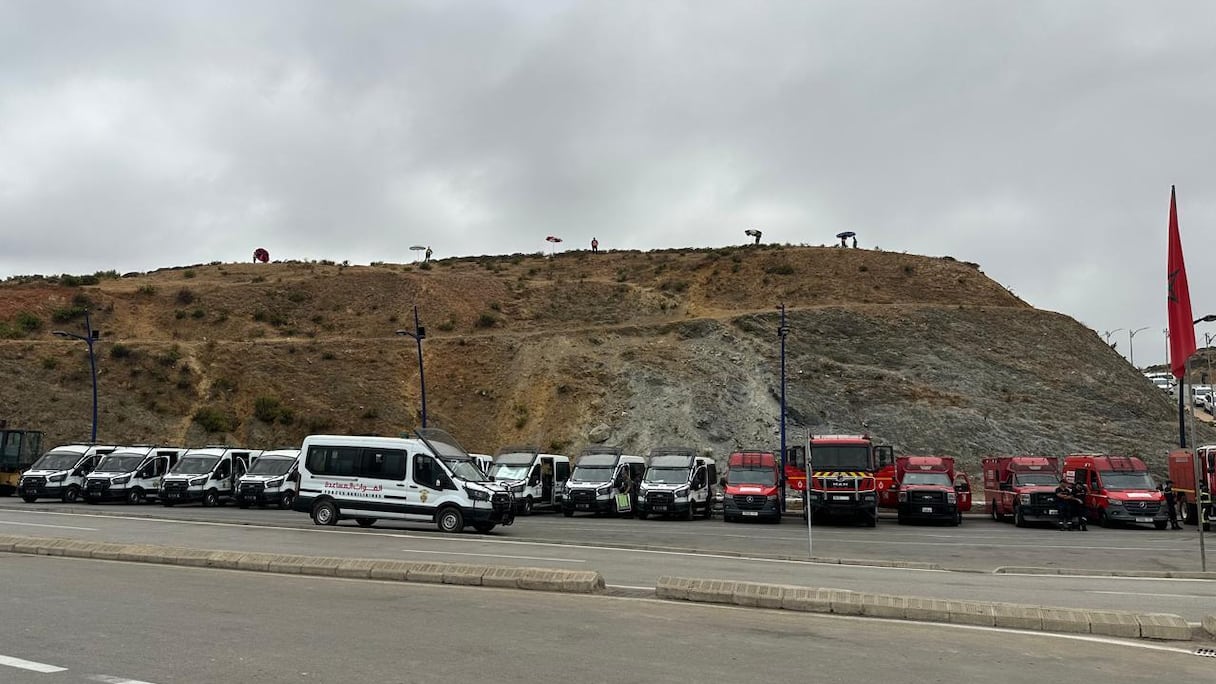
Over the past several days, public security forces, the National Security, the Royal Gendarmerie and Auxiliary Forces have significantly stepped up control and preventive measures along all roads and maritime access routes leading to the occupied city of Ceuta, ahead of Aug. 15, the date targeted by viral calls for collective clandestine crossings.
On the ground, the instructions are to prevent any attempt at infiltration or assault. Judicial checkpoints and strict control points have been deployed along strategic roundabouts connecting Belyounech and Fahs-Anjra province, as well as access routes to M’diq, Tetouan and surrounding areas.
Particular attention is being paid to public transportation. Grand taxis and buses coming from different parts of the country are being thoroughly searched, with the aim of intercepting any suspicious individual or group before they reach contact points with the enclave.
Forest searches, interceptions and transfers
Alongside the road security measures, mixed patrols involving the Royal Gendarmerie and Auxiliary Forces are carrying out large-scale searches in forested areas near the barrier separating Fnideq and Ceuta. These areas have traditionally been used as gathering or hiding places by people seeking to migrate.
Read also : Spain’s PP blames Morocco for Ceuta crisis, following Vox’s lead
These proactive operations have already led to the arrest of dozens of migrants in an irregular situation, mainly from sub-Saharan Africa. In line with the administrative and logistical procedures in force, they were transferred by bus to several cities to ease pressure on the northern region.
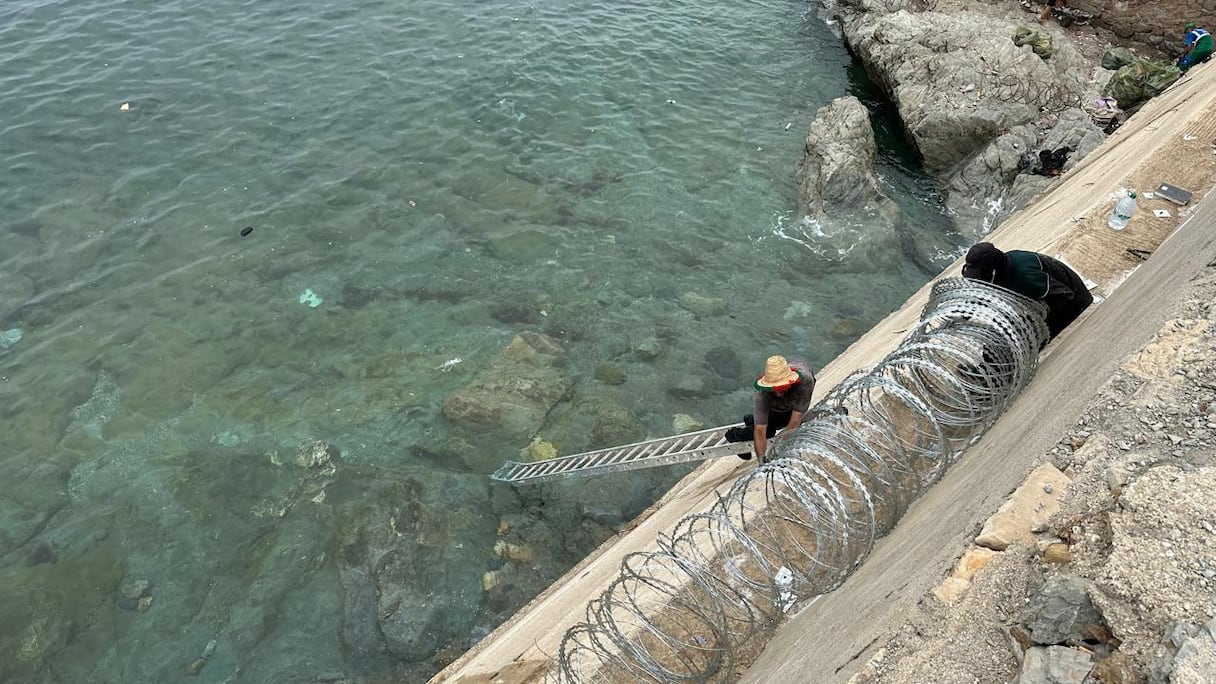
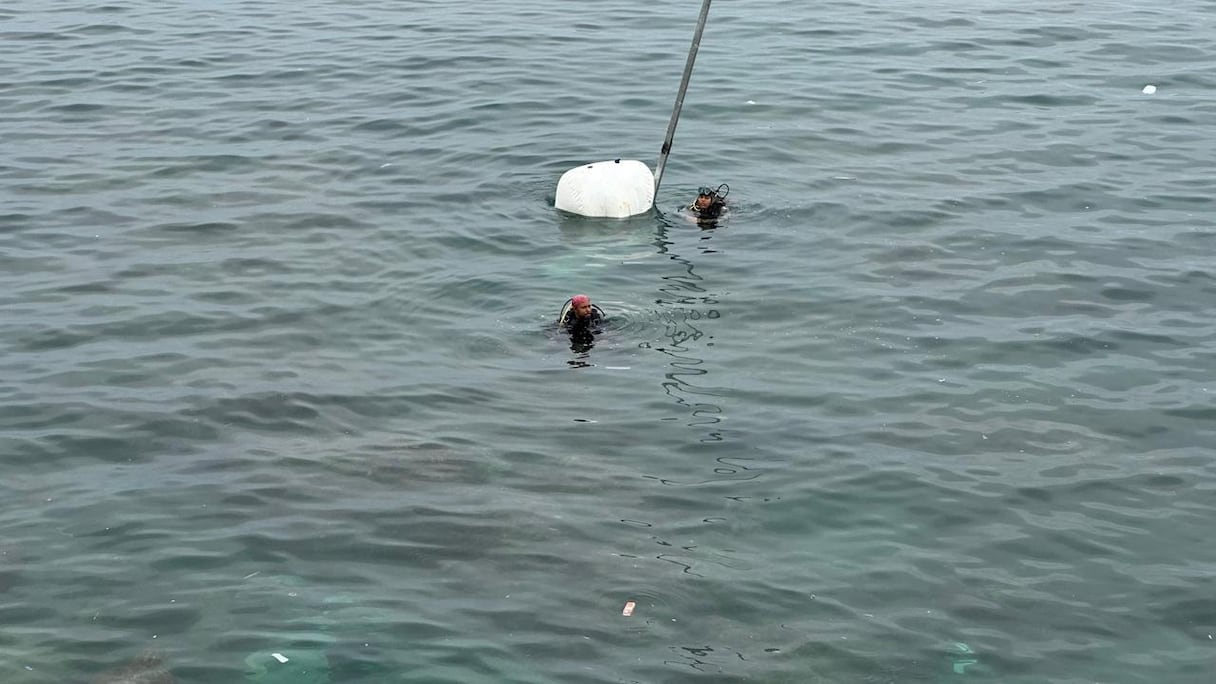
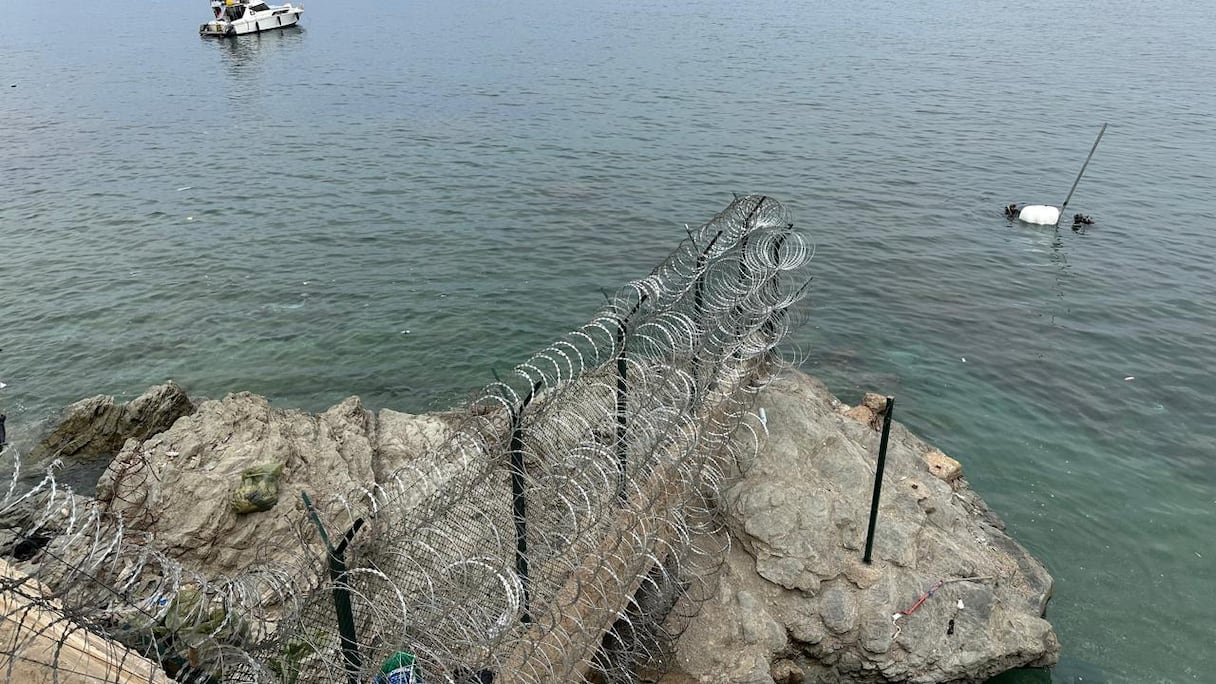
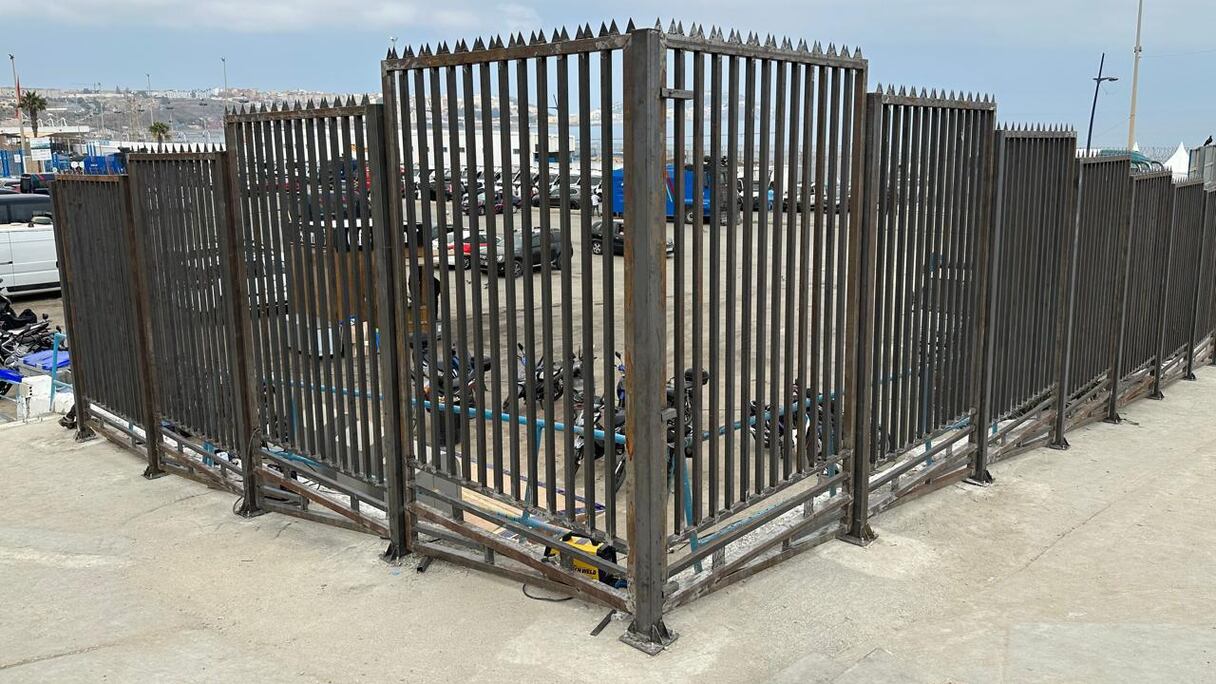
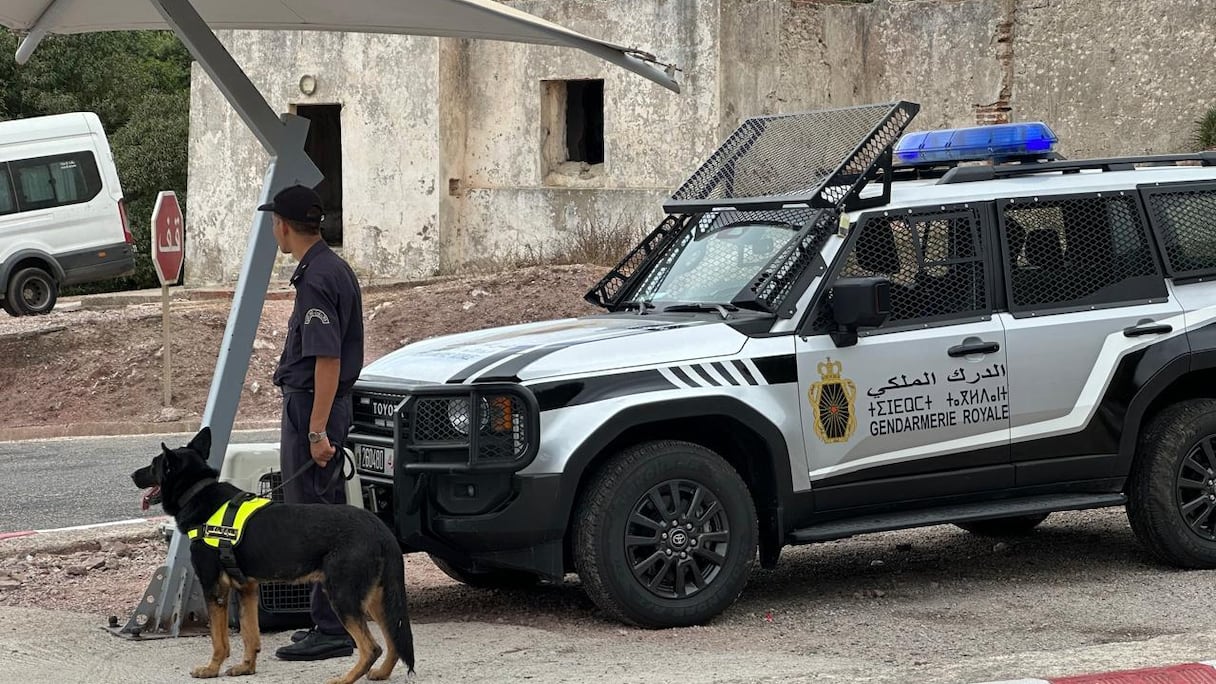
As Aug. 15 approaches, the date targeted by viral calls for collective clandestine crossings into the occupied enclave of Ceuta, authorities have activated an exceptional security operation. (S. Kadry/Le360)
Vigilance is also at its highest along the national road linking Ksar Sghir, Belyounech and Fnideq. Gendarmes are systematically stopping anyone, Moroccan or foreign, whose behavior or route raises suspicions that they are being transported toward the coastal area.
A concrete example of these measures came Tuesday, Aug. 11, 2026, when Tetouan security services intercepted two vehicles at fixed checkpoints set up at the city’s entrances. Several people seeking to migrate illegally were found on board. Under the direct supervision of the competent public prosecutor’s office, a judicial investigation was opened to determine the circumstances of the operation and identify any possible migrant-smuggling networks.
The heightened security measures follow the viral circulation on various social media platforms of anonymous messages calling for simultaneous collective assaults on Saturday, Aug. 15, 2026.
In response to these online calls to violate the border, the governorates and prefectures of Fnideq, Tangier and Tetouan have stepped up coordination among their various services. The aim is to prevent any large-scale disorder and ensure strict maintenance of public order throughout the region.
Steel pillars planted in the Mediterranean
The most striking part of the response is taking place along the coast. Under the direct supervision of Younes Tazi, wali of the Tangier-Tetouan-Al Hoceima region, the governor of M’diq-Fnideq prefecture and senior military officials in the area, the city of Fnideq is the site of technical maritime works.
On Fnideq beach and immediately around the crossing point, Le360 observed the reinforcement of the land-based metal fence separating the two territories, as well as the installation of reinforced steel pillars in the Mediterranean waters, arranged along a line extending between 5 and 10 meters from the shoreline. Barbed wire and new fencing are also being installed between these underwater pillars to physically block any attempt to swim around the pier. Dozens of additional meters of metal fencing have also been deployed directly at the maritime access point of the Ceuta crossing.
In a statement delivered by its spokesman, the Interior Ministry also said Wednesday that all its services had been fully mobilized. The ministry announced enhanced security measures and firm legal action to counter what it described as dangerous and criminal calls.
Read also : Ceuta: Spanish Gov’t says it’s working with Morocco to reunite 1,527 minors with their families
To neutralize threats to public order, security forces have already arrested several people suspected of using the internet to incite clandestine migration. The suspects are currently under judicial investigation supervised by the competent public prosecutor’s office, the Interior Ministry said.
Call to Spanish authorities
The ministry stressed that security forces’ vigilance is not limited to a specific date, but is part of a continuous system of monitoring that is adapted to developments around border areas. Anyone attempting to take part in these illegal crossings will be immediately intercepted and face legal proceedings.
The Interior Ministry stressed the principle of shared responsibility in confronting human-trafficking networks. In this context, it expressly called on the Spanish authorities to accelerate procedures for the repatriation of unaccompanied minors currently in Ceuta so they can return to their families in Morocco, in accordance with their best interests and with administrative obstacles removed.
The authorities reiterated the strategic importance of the immediate-return mechanism, whose effectiveness has already been demonstrated on the ground, and called for balanced and effective cooperation with Madrid to address migration challenges over the long term.
