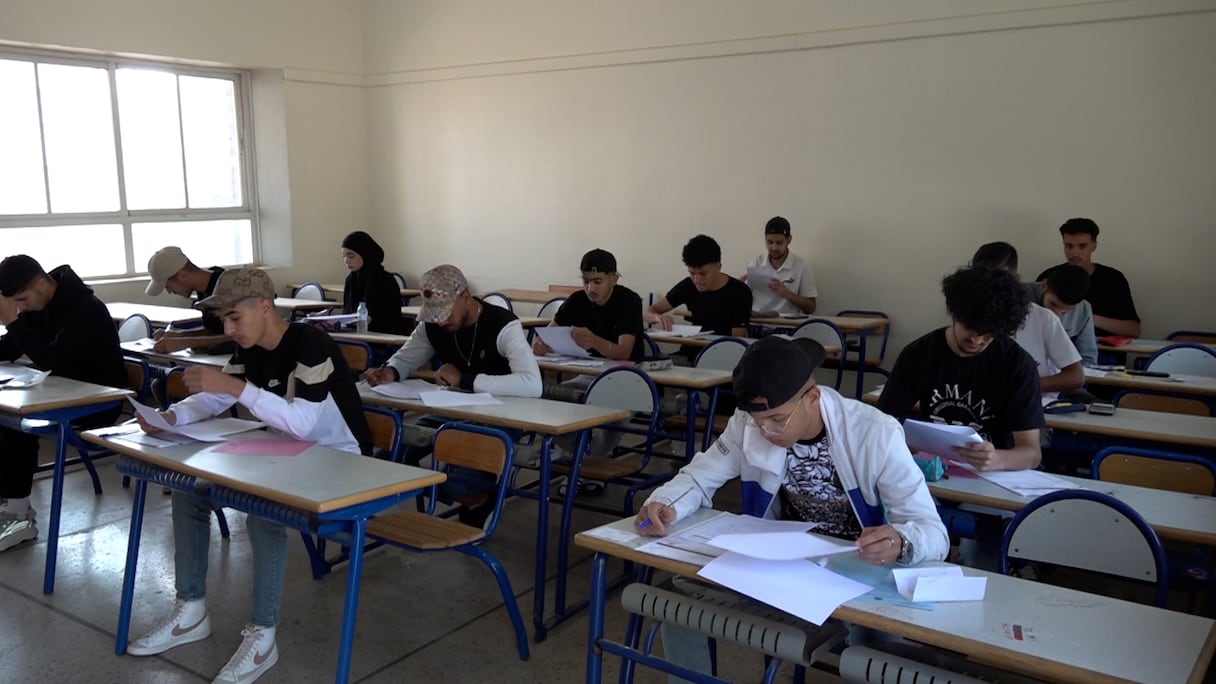
Unions want Saturday and Sunday to become the education sector’s weekend, arguing that six consecutive working days are taking a toll on teachers and leave them worse off than employees in other parts of the public sector.
But fitting the school week into five days presents its own problems.
Overcrowded classrooms, shortages of school facilities and the particular timetables of primary schools could make redistributing teaching hours difficult. Rural areas face an additional constraint in organizing school transport around new schedules.
Abdelali Lazaar, a member of the National Office of the National Education Union and its regional secretary in the Oriental region, said the demand goes beyond simply giving teachers another day off.
The weekend issue, he told Le360, is part of a broader demand to reduce working hours, particularly in primary education, where teachers can work more than 28 to 30 hours a week.
The question gained prominence during the 2023 education protests and subsequently entered talks with the ministry.
According to Lazaar, the ministry linked any change in working hours to a review of curricula and educational programs. A committee was set up to examine the issue and find a formula that would provide greater equity between different levels of education.
Read also : Union questions legality of Saturday work in public schools
Nearly three years later, unions say they have yet to receive either a proposed model or a timetable.
Lazaar described the delay as “procrastination”, arguing that six consecutive days in school, combined with teaching, administrative and other educational duties, leave teachers with insufficient time to recover.
A five-day week, he said, could improve both teachers’ working conditions and classroom performance.
Teacher and union activist Toufik Allal also questioned why education workers continue to work Saturdays when much of the public sector has a two-day weekend.
He said the six-day week affects teachers’ family and social lives as well as their work, leaving less time for grading, administrative tasks, childcare and other family responsibilities.
Read also : MAD 700 in public schools, up to MAD 4,000 in private: The back-to-school Bill
How could five days work?
One proposal under discussion would redistribute weekly teaching hours across Monday to Friday, making greater use of morning and afternoon periods.
Schools facing space constraints could also divide pupils into groups, while Saturdays could be used when necessary for continuing training or extracurricular activities rather than regular teaching.
Implementing such a timetable across the school system would be more difficult.
Overcrowding limits schools’ ability to rearrange classes, while some areas lack sufficient facilities. Primary education has its own scheduling requirements, and changes in rural schools would also have to account for the availability of school transport.
Unions are now asking the ministry to move beyond committee discussions and provide either a timetable for introducing the five-day week or a clear decision on whether the proposal will go ahead.
