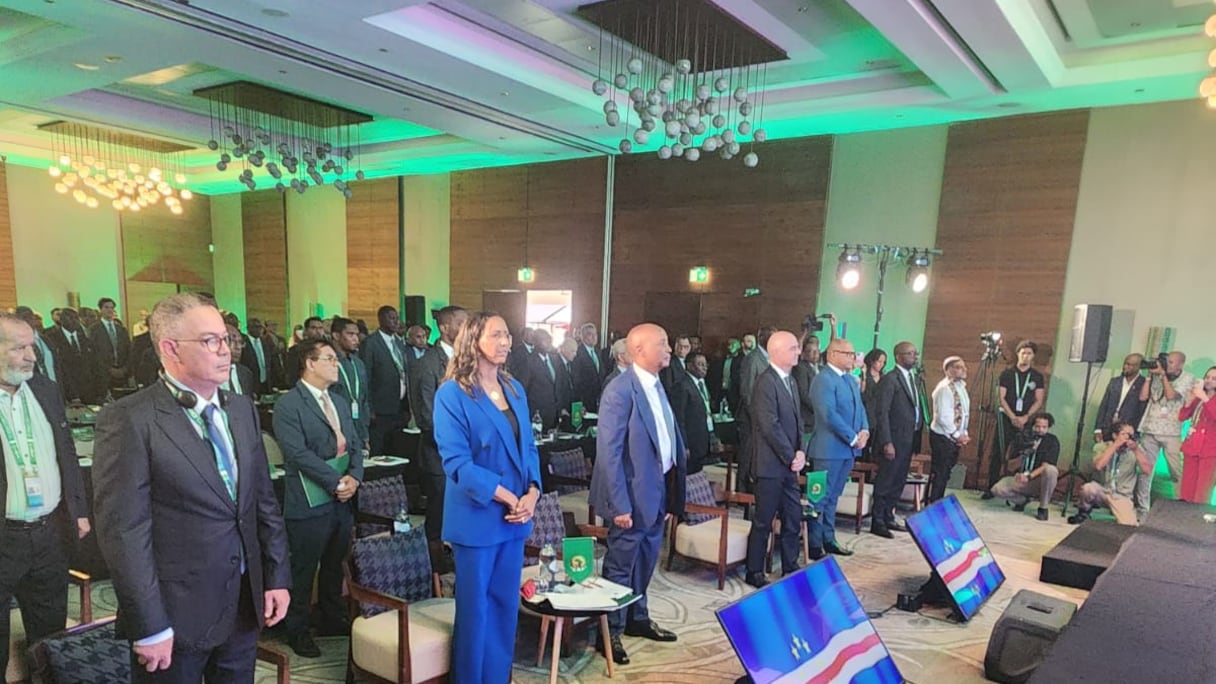
The Confederation of African Football (CAF) concluded a two-day strategic meeting on Friday, October 9, in Sal, Cape Verde, bringing together the organization’s senior officials, leading figures in African football and international experts.
The summit produced several major announcements and proposals concerning the future of African football, from increased financial support for national associations to possible changes in the Africa Cup of Nations and the introduction of video assistant referees in continental club competitions.
Read also : CAF raises annual financial support for member associations to $700,000
Motsepe announces funding increase and AFCON review
CAF President Patrice Motsepe announced that annual financial support for member associations would rise from $200,000 to $700,000, a step toward greater financial independence for national federations.
At a press conference, he also recalled the shared ambition among stakeholders in African football to see an African team win the FIFA World Cup in the near future.
Motsepe said CAF’s Executive Committee would study the possibility of returning the Africa Cup of Nations to a two-year cycle. The tournament is currently expected to move to a four-year cycle from 2028, with subsequent editions planned for 2032, 2036 and every four years thereafter. Announced in December 2025, the proposed change has drawn criticism from many observers and may ultimately not be implemented.
Despite concerns over preparations in the three host countries, Motsepe reaffirmed that the 2027 AFCON would take place in East Africa. “We will go to Kenya, Tanzania and Uganda, and we will have the most successful AFCON,” he said.
The CAF president and all member associations also reiterated their firm support for FIFA President Gianni Infantino, who is seeking another term at the head of world football’s governing body. FIFA’s 77th Congress, where the election will take place, is scheduled for March 18, 2027, in Rabat.
Motsepe, who was re-elected to a second four-year term as CAF president on March 12, 2025, also announced that he would not seek to remain in office beyond 2029. He said he hoped his successor would take African football “even further.”
Read also : Football: Motsepe signals possible U-turn on AFCON every four years
Changes under consideration for club competitions
CAF’s interclub competitions could also undergo significant changes. The confederation’s interim secretary general, Samson Adama, announced plans to introduce video assistant referees (VAR) during the group stages of the CAF Champions League and CAF Confederation Cup.
The move would represent a major step for the continent’s club competitions. The possible introduction of a Man of the Match award was also discussed.
CAF will also review the away-goals rule, which has been abolished in some other confederations, including UEFA. Its removal from CAF competitions could significantly change how two-legged ties are decided.
Read also : Football: Mohamed Ouahbi calls for better use of international breaks
National teams call for better preparation
Morocco coach Mohamed Ouahbi, speaking alongside African coaches whose teams will compete at the 2026 World Cup, called for national-team gathering periods to be used more effectively. He said players would be better able to absorb technical instructions if preparation time were optimized.
Long journeys, the frequency of matches and limited training time remain major challenges for coaching staffs, Ouahbi said. He also stressed the importance of arranging matches against top-level national teams.
Several coaches and national-team managers attending the meeting in Cape Verde called for more effective support for African coaching staffs and greater opportunities in the future.
FIFA experts also cited Morocco’s performances at the 2026 World Cup as an example for other African national teams. Ball control, collective organization, pressing efficiency and quick ball recovery were highlighted by Arsène Wenger, FIFA’s Chief of Global Football Development, and FIFA Technical Study Group experts Otto Addo and Arron Ackerman.
The CAF meeting aimed to lay the groundwork for far-reaching reforms across African football, involving both clubs and national teams, to address future challenges, particularly the 2030 World Cup, which Morocco will co-host with Spain and Portugal.
