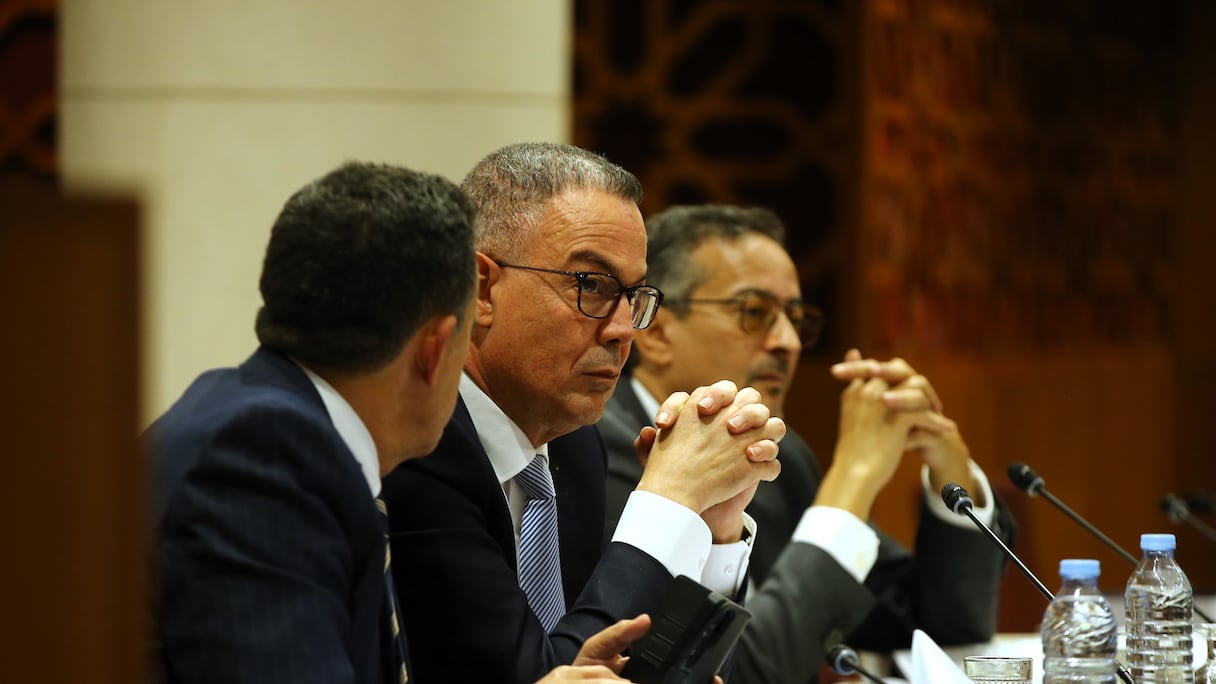
With less than four years to go until the 2030 FIFA World Cup, Morocco’s preparations are entering a decisive phase. On Tuesday, November 3, Fouzi Lekjaa, Minister of Economy, Finance and Public Sector Performance, presented the key figures and challenges surrounding the tournament to the House of Representatives’ Finance and Economic Development Committee. Morocco will co-host the competition with Spain and Portugal.
The meeting formed part of the committee’s continued detailed examination of the 2027 Finance Bill. Discussions centered on infrastructure funding, planned tax exemptions for World Cup stakeholders, the expected economic benefits and the future of facilities built for the tournament.
For Lekjaa, the World Cup must amount to more than the matches played in 2030. “The World Cup is the compass guiding what we will become in 2030,” he said, outlining a vision in which the tournament serves as a catalyst for Morocco’s development projects.
Read also : World Cup 2030: Fouzi Lekjaa makes the case for Hassan II Stadium to host the final
More than 600 sites across six Moroccan cities
The 2030 World Cup will feature 48 national teams and 104 matches spread across the three host countries. In Morocco, six cities will stage matches: Rabat, Casablanca, Marrakech, Tangier, Agadir and Fez.
According to figures presented by Lekjaa, preparations involve more than 600 sites across the Kingdom. The plans include 172 team service centers, 164 training grounds, 122 hotels, 72 airports or reception points, and 13 designated fan zones.
More than 30 team base camps will also need to be developed to accommodate the participating national sides.
These figures illustrate the scale of preparations, which extend far beyond building and renovating stadiums. Accommodation, transport, delegation reception facilities, training grounds and logistics will all have to meet FIFA requirements.
Casablanca, the “beating heart” of the 2030 World Cup
Asked about the location of the Grand Stade Hassan II, approximately 50 kilometers from Casablanca, Lekjaa insisted that Morocco’s economic capital would play a central role in hosting the tournament.
“Casablanca will be the beating heart of the 2030 World Cup,” he declared, pointing to major projects planned for the metropolis, including airport infrastructure development, the construction of a new airport and the introduction of a regional express rail network (RER).
The rail network is expected, in particular, to connect Casablanca with the Grand Stade Hassan II in Benslimane and make it easier for supporters to travel between the city and the stadium.
As for the distance between Casablanca and the stadium, Lekjaa argued that a journey of an hour or less was in line with international standards. He cited the example of New York–New Jersey, the venue for the 2026 World Cup final, as well as the journeys made by Morocco’s Atlas Lions for their matches in the United States.
The minister also stressed the importance of road and rail projects in improving connections between host cities, facilitating travel for delegations and strengthening Casablanca’s role in the tournament’s logistical operations.
Read also : World Cup 2030: Nearly MAD 2 billion earmarked for Morocco’s six stadiums in 2027 budget
Grand Stade Hassan II: At least 25 matches a year for Raja, Wydad and the Atlas Lions
The future of the Grand Stade Hassan II after the World Cup was another subject of discussion. On this point, Lekjaa insisted that the 115,000-seat venue would not be reserved exclusively for the tournament.
Casablanca’s Raja and Wydad football clubs, along with the national team, are expected to be able to play their most important fixtures there even before the competition begins.
According to the minister, studies have identified at least 25 matches per season with the potential to attract more than 100,000 spectators. These include domestic league and continental competition fixtures involving Casablanca’s two leading clubs, as well as matches played by the Atlas Lions.
The scheduling of these fixtures will also have to accommodate the time needed to maintain the pitch and facilities.
Lekjaa was keen to distinguish Morocco’s situation from that of Qatar, which had planned to dismantle certain facilities after the 2022 World Cup. In his view, the Grand Stade Hassan II must meet lasting sporting needs and remain operational long after 2030.
The importance of ensuring a lasting legacy for these facilities was also emphasized in a statement from the Finance Committee. The minister stressed that investment in stadiums should help develop Moroccan football, improve sporting conditions and broaden access to sports facilities.
What will the Grand Stade Hassan II ultimately cost?
Another issue raised during the discussions was the construction cost of the Grand Stade Hassan II, following the circulation of several substantial estimates in recent months.
Lekjaa did not provide a final figure. He explained that construction was being carried out in successive phases, each with its own budget. According to the minister, the project’s total cost can only be established once it has been fully completed and handed over.
He also invited members of the Finance and Economic Development Committee to visit the construction site in Benslimane to see the progress for themselves.
The stadium debate is also part of the wider competition among the co-hosting countries to stage the 2030 World Cup final.
On this issue, Lekjaa said the rivalry between candidate cities and stadiums was part of a broader competition among the host nations. He nevertheless stressed that Morocco’s ambitions should extend beyond securing matches, however prestigious they might be.
Read also : 2030 World Cup final venue could be announced in 2028
840,000 jobs and a projected 13.2% increase in GDP
Turning to the economy, Lekjaa presented projections associated with hosting the 2030 World Cup. According to figures shared with lawmakers, overall investment is expected to record cumulative growth of 21.2% between 2023 and 2030, while gross domestic product (GDP) could increase by 13.2%.
The forecasts also point to the creation of more than 840,000 jobs across various sectors.
Tourism is expected to be among the main beneficiaries of this momentum. Morocco aims to welcome 26 million tourists annually by 2030, generating tourism receipts exceeding MAD 156 billion.
According to the projections presented, the sector could create more than 158,000 additional jobs.
These figures remain forecasts, and their realization will depend in particular on the progress of investment projects and the ability of different sectors to capitalize on the momentum generated by the World Cup.
Tax exemptions planned through 2031 and 2032
Another major focus of the meeting was the exceptional tax and customs measures planned as part of preparations for the World Cup.
Lekjaa outlined the proposed provisions benefiting organizations and individuals involved in preparing and staging the tournament.
These measures include temporary, targeted exemptions from certain taxes, duties and levies. Their application will be subject to legal conditions and deadlines that vary according to the type of exemption and category of beneficiary. Some provisions are expected to remain in force until 2031 or 2032.
The framework also provides for simplified electronic procedures to access these benefits, alongside stronger tax audit safeguards.
The tax revenue generated by World Cup-related activities was also discussed, particularly in relation to international companies marketing television broadcasting rights.
Lekjaa stressed the importance of ensuring that Morocco benefits from these activities while developing its own audiovisual production capabilities.
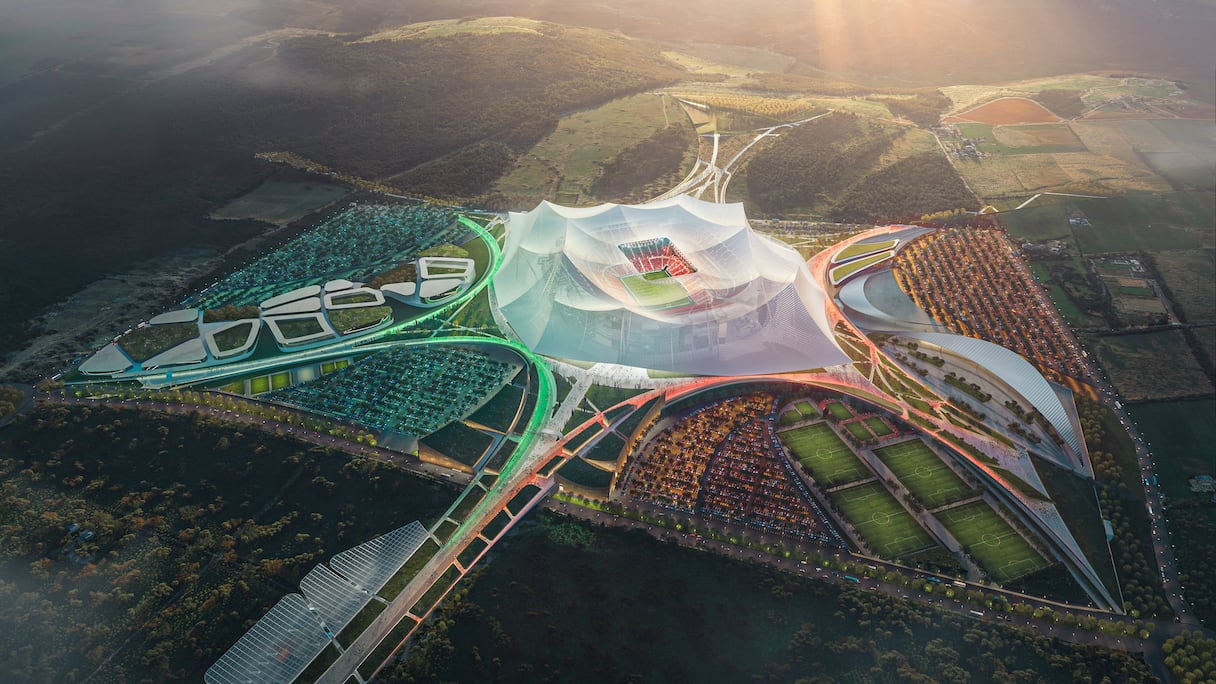
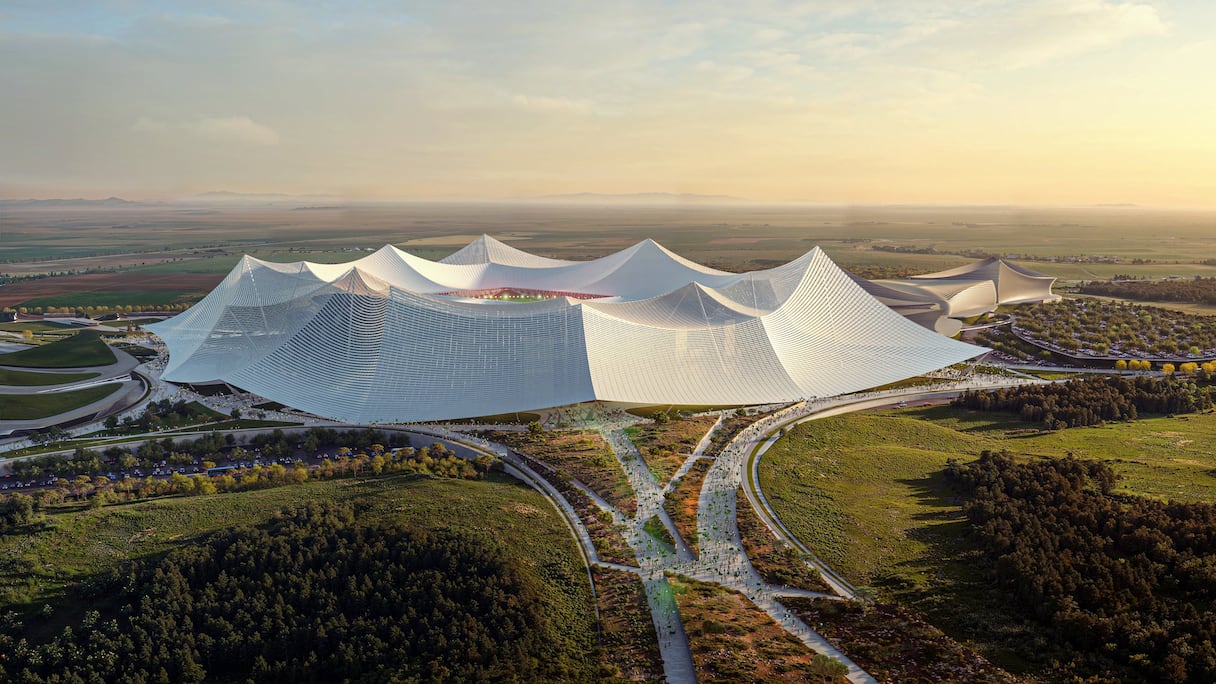
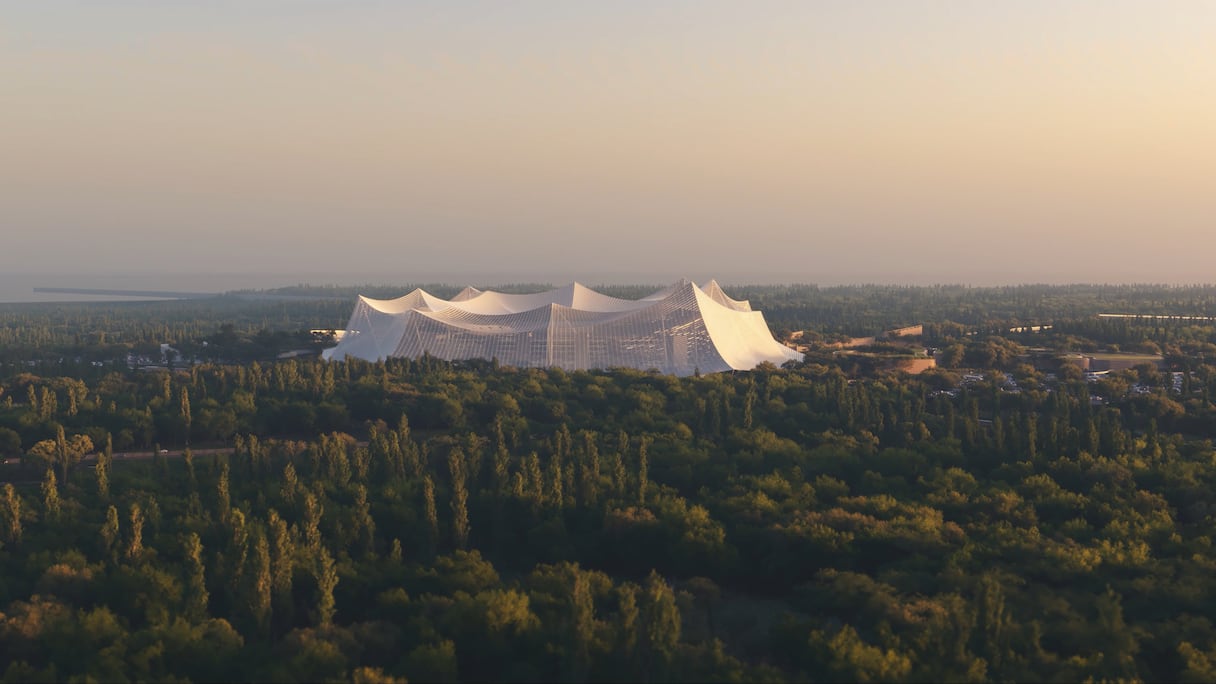
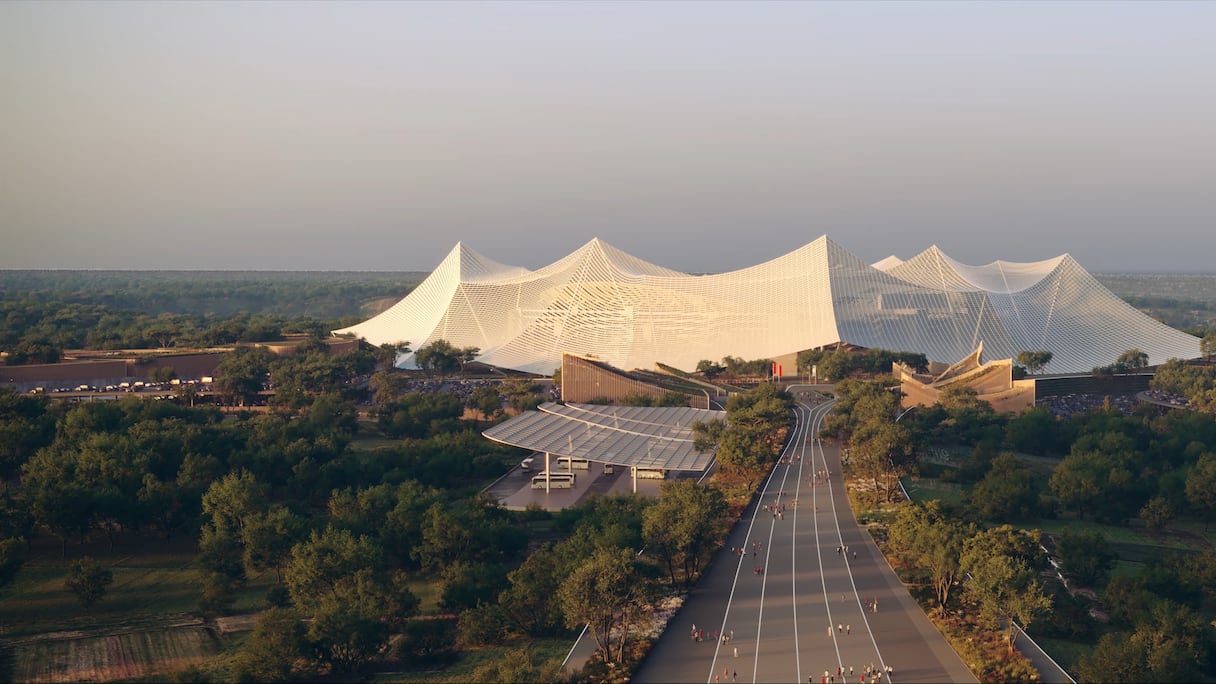
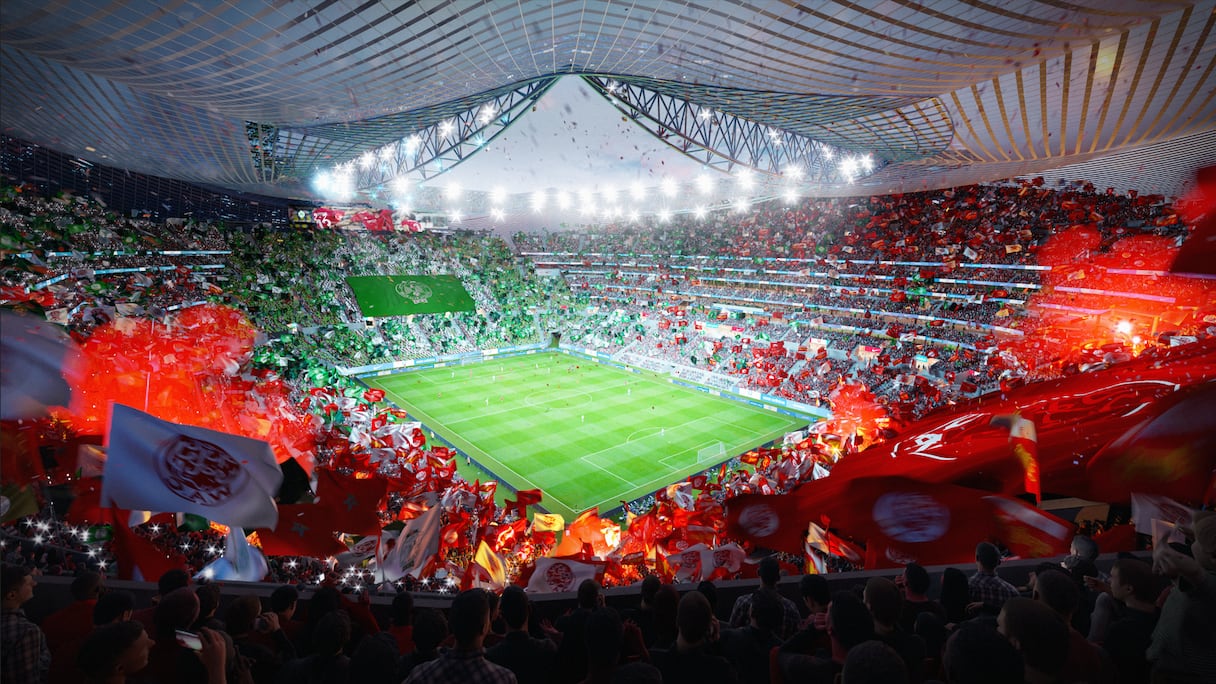
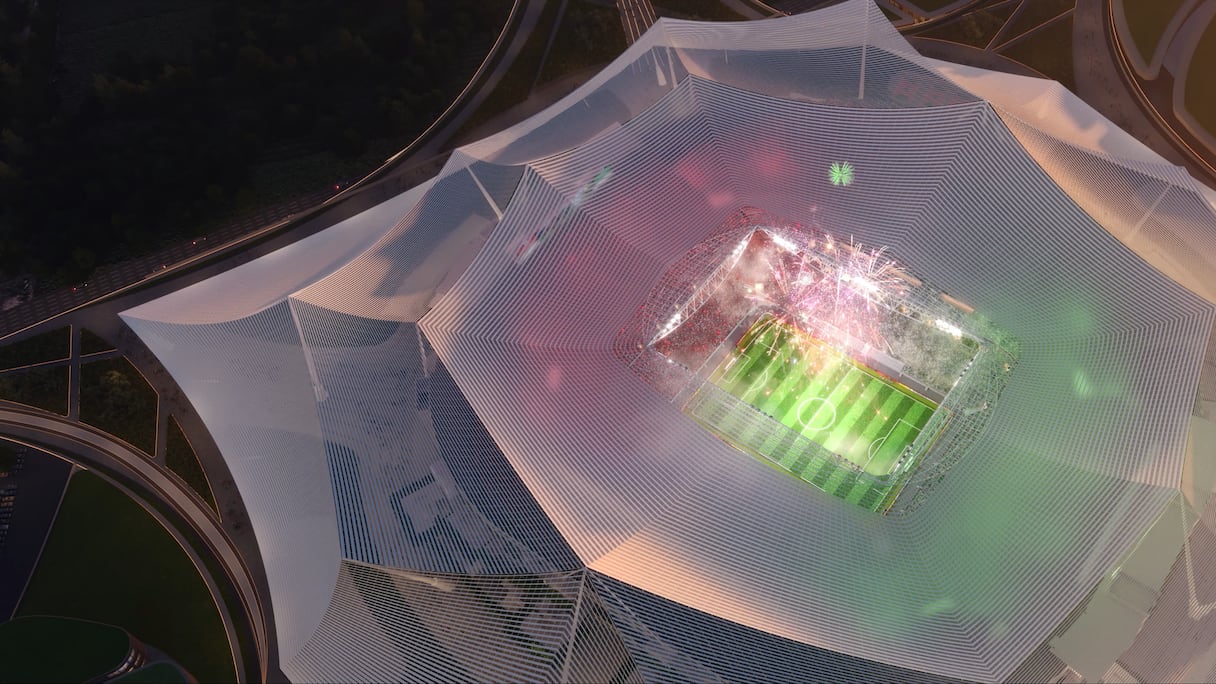
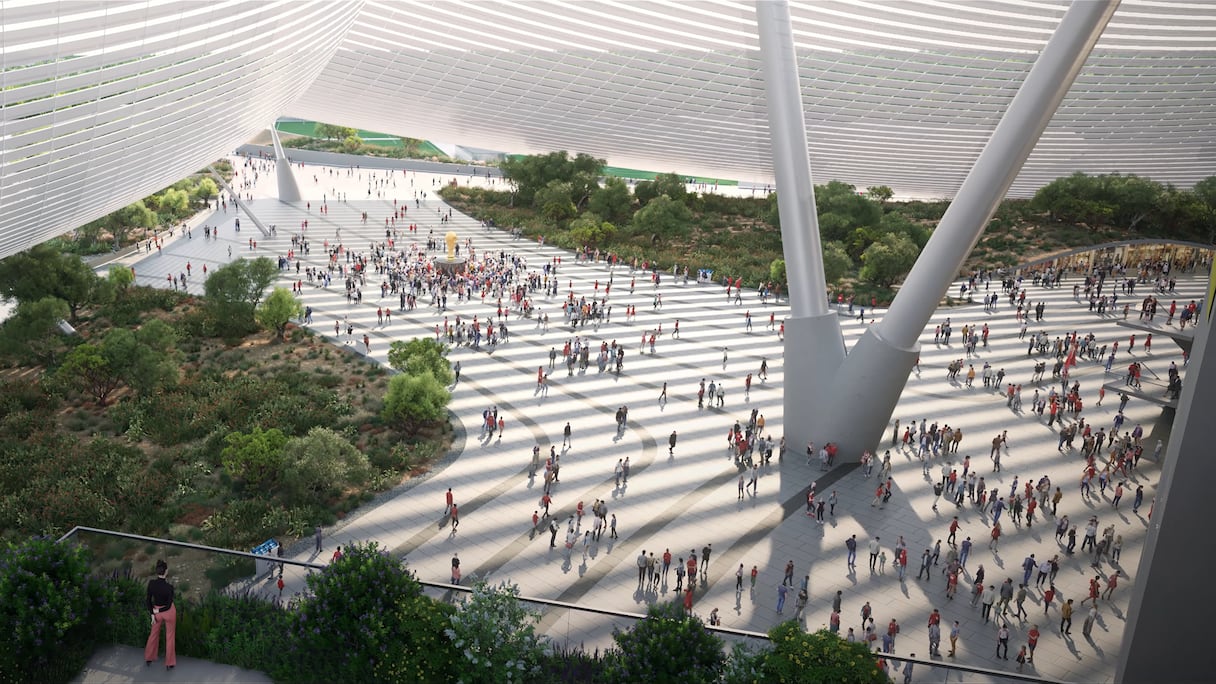
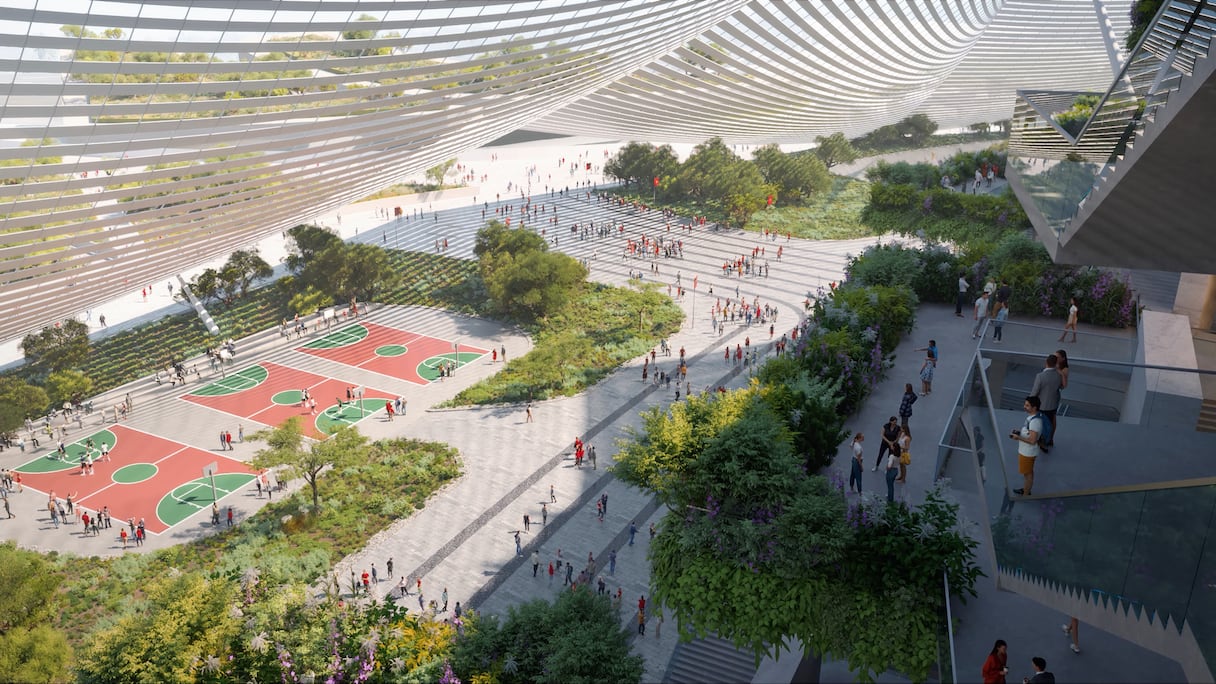
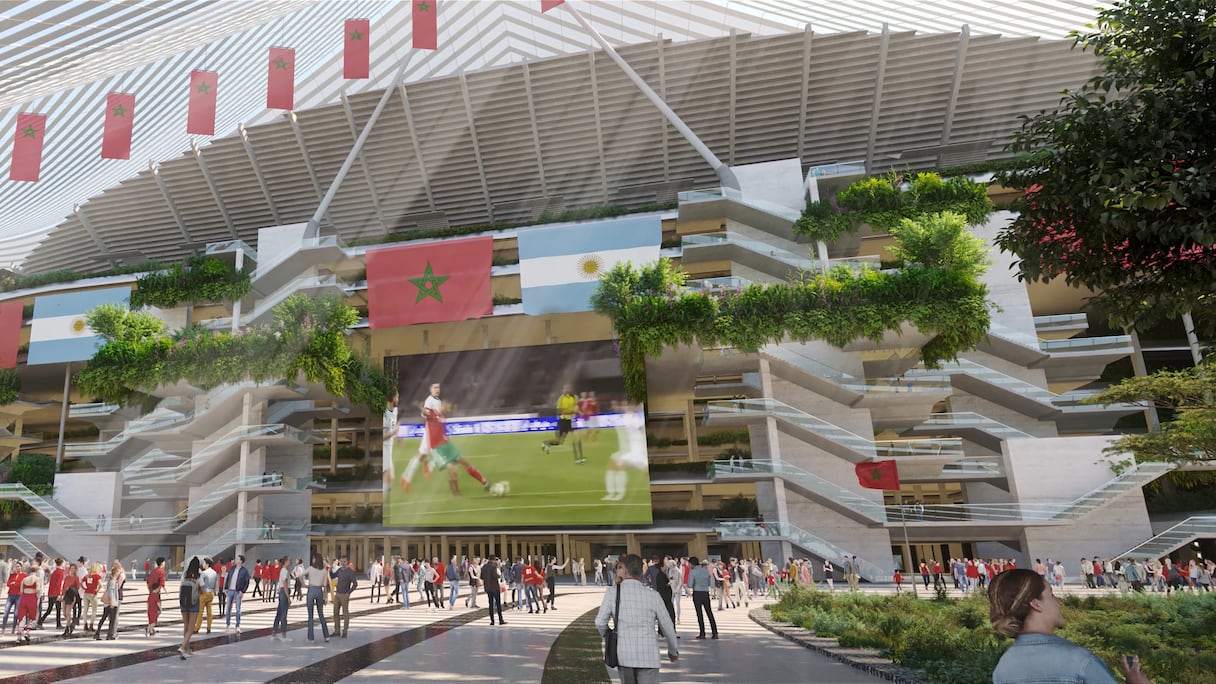
Model of the Grand Hassan II Stadium in Benslimane.
He pointed in particular to the experience gained during the Africa Cup of Nations and the ambition to eventually acquire the technical expertise and human resources needed to handle television production for World Cup matches.
The minister also recalled that FIFA has sponsors and commercial partners, and that services associated with organizing the tournament are governed by detailed specifications. This, he argued, makes it all the more important to enable Moroccan companies to participate in the economic activities generated by the competition.
Public procurement: Lawmakers demand greater transparency
Lawmakers also raised the question of Moroccan companies’ access to public contracts associated with World Cup preparations.
Several speakers stressed the need to guarantee transparency, competition and equal opportunities in awarding contracts, while applying the principle of national preference.
The aim is to ensure that large companies, as well as small and medium-sized enterprises (SMEs) and microenterprises, can benefit from the projects under way.
Lawmakers notably proposed establishing a national platform to monitor public procurement contracts, oversee their execution and ensure compliance with deadlines.
They also called for stronger support for Moroccan businesses, particularly those facing difficulties accessing these contracts, to improve their competitiveness and enable them to sustain their operations after construction work is completed.
World Cup legacy fund: Questions over financing
The World Cup legacy fund also prompted several questions. Lawmakers sought clarification on its funding sources, objectives, operations, governance and the bodies responsible for managing it.
They also wanted to know FIFA’s precise role in overseeing projects associated with the tournament, as well as Morocco’s share of the funding arrangements agreed with Spain and Portugal. Questions were also raised about which projects might benefit from these resources.
Lekjaa recalled that the legacy mechanism is designed to ensure that the host country retains a share of the value added generated by the event, with resources intended in particular for the social development of football.
To improve oversight of these commitments, several lawmakers called for regular reports to be submitted to the relevant parliamentary committee.
These reports would make it possible to assess construction progress, compliance with schedules, and the fulfillment of financial and organizational commitments. Lawmakers also requested a comprehensive post-tournament evaluation to measure its economic, social and regional impact.
Read also : Fouzi Lekjaa: “We will mobilize all institutions and Moroccans to host the 2030 World Cup final”
MAD 104 billion for ONCF: Lekjaa rejects counting rail investment as a World Cup cost
On infrastructure financing, Lekjaa called for a distinction between expenditure directly related to hosting the World Cup and investment intended for Morocco’s broader development.
He cited the MAD 104 billion investment program of the National Railways Office (ONCF), rejecting the idea that the entire amount should automatically be counted as a World Cup cost or as debt attributable to the tournament.
According to the minister, these investments address mobility and economic development needs that extend well beyond 2030.
Lekjaa highlighted the extension of the high-speed rail line between Kenitra and Marrakech, with the prospect of a further extension to Agadir and subsequently the southern provinces.
Rail network development also includes strengthening the connection between Fez and Kenitra, as well as electrifying the line linking Fez and Oujda.
These projects are intended, in particular, to improve passenger and freight transport and strengthen connections between the Kingdom’s different regions.
Investments must benefit every region of Morocco
Discussions also addressed the balance between investment devoted to the World Cup and other national priorities.
Several lawmakers called for World Cup-related projects to benefit all regions of the Kingdom, particularly rural and mountainous areas, rather than being concentrated solely in the six host cities.
They stressed the need to accelerate regional development programmes, particularly in healthcare, education, roads and transport infrastructure.
To make the case for a more balanced distribution of investment across the Kingdom, the minister cited sporting projects already completed or planned in several cities, including Laâyoune, Dakhla, Kenitra and Meknes.
He also emphasised the need to make sports facilities and participation in sport more accessible to young people, particularly those from disadvantaged backgrounds.
For Lekjaa, the 2030 World Cup must leave a legacy that goes beyond stadiums and infrastructure directly required for the tournament. It must also help improve Moroccans’ daily lives, strengthen the capabilities of domestic businesses and accelerate development projects.
