Morocco’s tourism sector has expanded rapidly in recent years, drawing visitors to a combination of historic cities, cultural sites, beaches and established resorts. But the country’s tourism potential extends well beyond the destinations that have traditionally attracted the largest numbers of visitors.
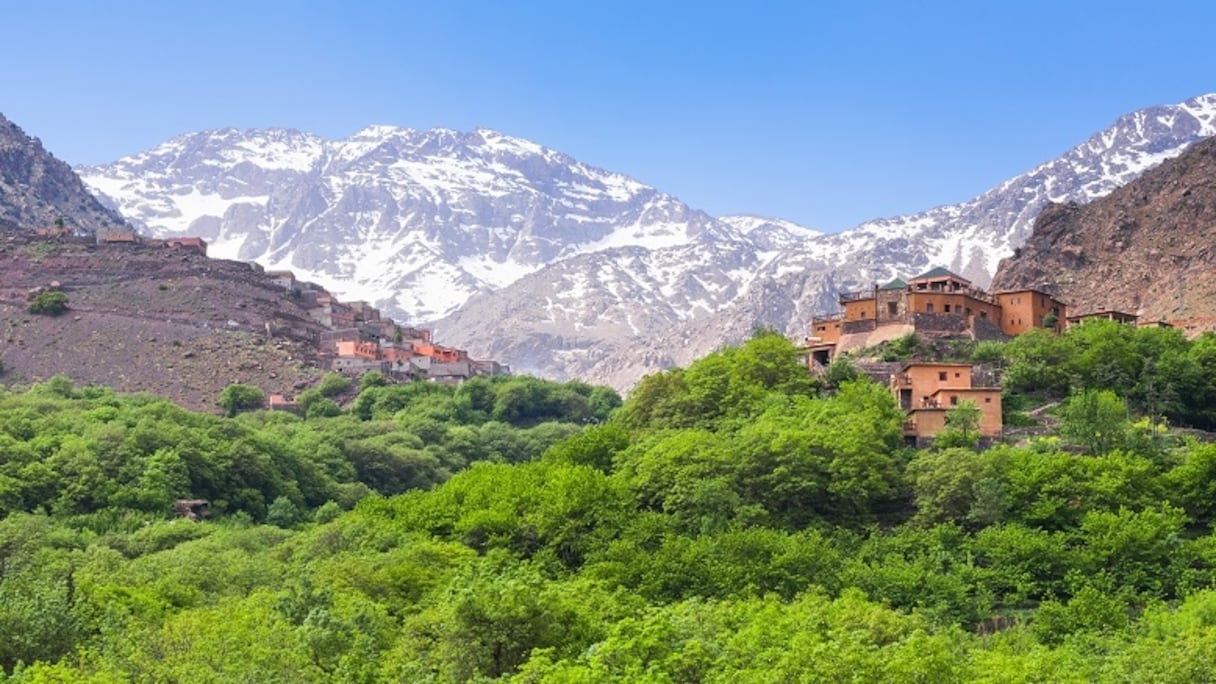
Across the Atlas and Rif mountains, Morocco has a different set of assets: valleys and forests, mountain villages, waterfalls, hiking routes, traditional agriculture, crafts and cultural heritage. These areas can offer visitors a more locally rooted experience while opening tourism activity to communities that remain outside the country’s main tourist circuits.
The development of rural and mountain tourism is therefore becoming part of the broader effort to diversify Morocco’s tourism offer. The challenge is not only to attract more visitors, but also to give them more reasons to travel beyond the country’s best-known destinations and discover other parts of Morocco.
Tourism expert Zoubair Bouhout told Le360 that Morocco has significant room to develop this segment, particularly in the Atlas and Rif.
“Visitors are increasingly looking for disconnection, nature, authenticity and local experiences,” Bouhout said.
Read also : Can reinventing the all-inclusive model help Morocco reach its tourism ambitions?
From mountain landscapes to local tourism economies
The High Atlas already has several destinations capable of responding to that demand. The Ourika Valley, Ouirgane and Imlil offer mountain landscapes and hiking opportunities, while Aït Bouguemez provides a different experience built around agricultural landscapes, traditional villages and mountain life.
For Bouhout, the region’s potential extends well beyond its better-known destinations.
“The potential of the High Atlas is not limited to destinations that are already known. Many valleys and mountain areas still have significant development possibilities,” he said, pointing to the need for better accessibility, accommodation, services, signage and marketing.
The Middle Atlas has its own appeal, with forests, lakes, springs and mountain villages. Ifrane and Azrou can serve as gateways to nature tourism, hiking and ecotourism, while their proximity to Fès and Meknès gives the region the possibility of attracting visitors already travelling through major urban destinations.
The Rif offers another combination of attractions. Chefchaouen has a strong tourism identity built around its medina, architecture and mountain setting, while nearby Akchour and Talassemtane National Park offer opportunities for hiking and nature tourism. Further east, the Béni Snassen area, including Zegzel, has natural assets but remains less familiar to international visitors.
Bouhout sees the Atlas and Rif as complementary parts of a wider rural tourism network.
“The Atlas and the Rif could progressively constitute the two major pillars of a national network of rural and mountain destinations,” he said, describing a model combining “hiking, cultural discovery, nature, gastronomy, heritage, ecotourism, family stays or adventure tourism.”
Read also : Where Nature heals: Exploring the thermal springs of Morocco’s Middle Atlas
That approach would also allow tourism spending to reach more local businesses. A rural stay can bring together accommodation providers, guides, restaurants, artisans, farmers, transport operators and activity providers.
“In these territories, accommodation can be associated with hiking activities, village discovery, gastronomy, crafts, local agriculture or cultural experiences,” Bouhout said. “The stay thus becomes a combination of several services rather than simply an overnight stay.”
The potential market also extends beyond international visitors. Bouhout sees opportunities among Moroccan families and Moroccans living abroad, particularly during the summer, when mountain areas can offer cooler conditions, quieter surroundings and opportunities to discover Morocco’s natural and cultural heritage.
A policy shift towards rural destinations
The potential identified across these rural and mountain areas is also increasingly reflected in the Kingdom’s tourism strategy.
Under the 2023-2026 tourism roadmap, the Ministry of Tourism, Handicrafts and Social and Solidarity Economy, in partnership with the Moroccan Society of Tourism Engineering (SMIT), launched a program to develop 16 rural villages across several regions in January 2025.
The 188-million-dirham program includes infrastructure improvements, tourism, cultural and leisure facilities, and efforts to strengthen the visibility of the selected villages. The sites include Imlil, Oukaïmeden, Ouzoud and Zaouiat Ahensal, as well as villages in the Rif and Béni Snassen.
Read also : Morocco’s vacation rental boom faces a test of quality and regulation
The program also seeks to build tourism products around local cuisine, cultural festivals, handicrafts and local products, reinforcing the idea of tourism as part of a wider local economy.
For Bouhout, development must nevertheless preserve the character of these territories rather than reproduce the model of large coastal resorts.
“The value of rural tourism lies precisely in its integration into the territory and in preserving its identity,” he said.
That also means protecting the resources on which the sector depends.
“Water, forests, landscapes, soils and ecosystems constitute both environmental resources and tourism assets,” Bouhout said.
For the expert, that balance will be central to whether Morocco can turn its rural and mountain areas into lasting tourism destinations rather than simply places of occasional visits.
“The objective is to build a tourism model that creates economic value for local communities while preserving the natural and cultural resources that make these territories attractive in the first place.”
