It is a whodunnit of the kind only Algeria’s regime could produce. The title was supplied by TSA on October 20: “Algeria: Who ‘ate’ the imported meat?” The crime is clear enough. What the press describes as “enormous” quantities of meat have entered the country, yet prices have not fallen. Locally produced meat costs more than 3,300 dinars a kilogram. Imported meat, initially sold for between 800 and 1,200 dinars, has ended up costing just as much. Somewhere between the port and the butcher’s counter, the price changed. Nobody seems to know how.
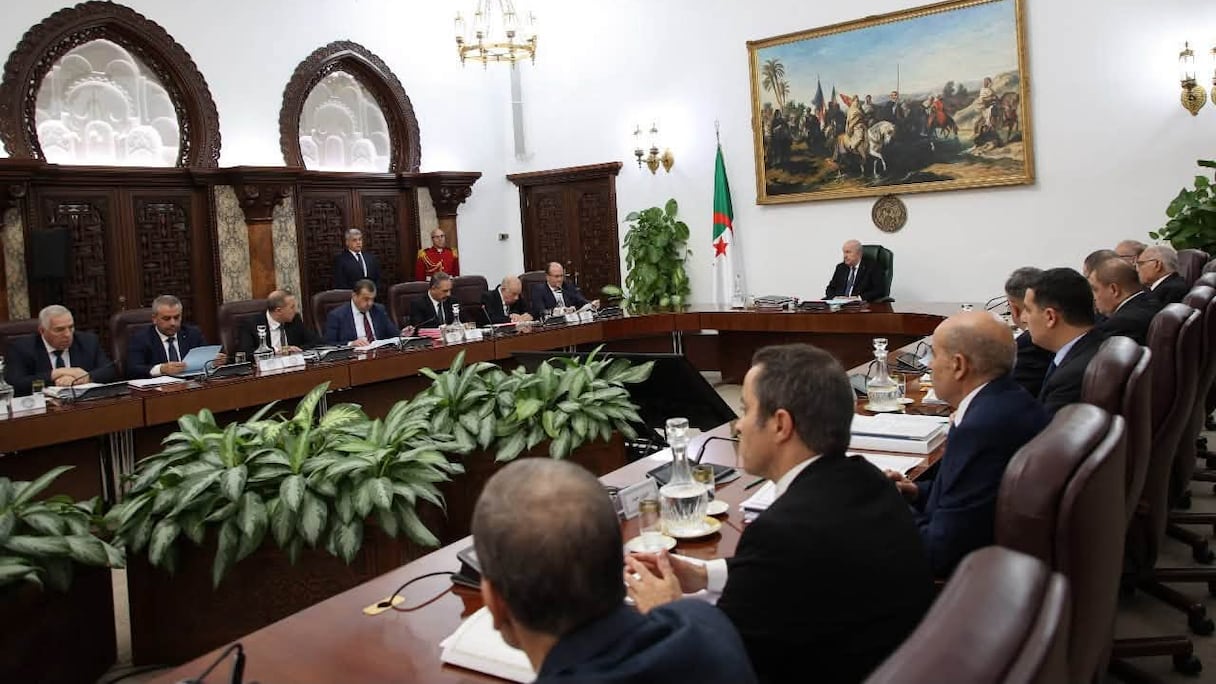
The ministers’ council therefore opened an investigation on October 18. It identified “monopolies established by certain importers,” butchers selling imported meat at domestic prices, and price differences “between provinces and between neighborhoods.” President Tebboune instructed the prime minister to investigate. The Trade Ministry dispatched inspectors the very next day. Now we await the findings. In Algeria, that wait can be long. Very long.
To assist the investigators, let us review the evidence. In September 2023, it was the Agriculture Ministry that authorized meat imports, using a digital platform through which the administration decides who gets to import. In April 2024, an executive decree capped profit margins at 4% for importers, 5% for wholesalers and 8% for retailers. The 2026 Finance Act cut customs duties to 5%, while the draft 2027 Finance Act proposes extending that concession until 2029. Every stage of the supply chain bears the state’s signature. The suspect has left fingerprints everywhere.
Yet the regime has already found its culprits: the importer, the butcher and the middleman. It is the usual cast of characters. A few weeks ago, the army named Amir DZ, an exiled YouTuber, as the man responsible for the forest fires. This week, it is the neighborhood butcher who is starving the nation. In Tebboune’s Algeria, every problem has a culprit—and it is never the people in charge.
The proposed remedies are every bit as remarkable as the diagnosis. The cabinet has approved seven measures. The Walis will personally buy up surplus produce, store it and release it onto the market when prices rise. The Trade Ministry will impose price ceilings and profit margins on vegetables, pulses, pasta and meat. Inspection teams will conduct daily checks throughout the year. A digital database will alert the authorities to abnormal price increases. A new law will regulate middlemen. The Wali becomes a wholesaler, the civil servant becomes a butcher, and the computer keeps watch over the potatoes.
There is, admittedly, a certain consistency to all this. A system that created opportunities for rent-seeking by choosing who could import now proposes to solve the problem by appointing more officials to supervise those importers. If meat disappears somewhere between the port and the shop counter, the answer is to add another administrative checkpoint in between. Algeria’s command economy does not reform itself. It simply adds another layer.
Figures from the National Statistics Office give some idea of the scale of the problem. In August 2026, fresh food prices rose 4.7% in a single month. Chicken prices jumped 40.5%, while fruit rose 22.8%. Consumer prices were up 8.3% year on year. These figures come as the energy minister announces $37.5 billion in hydrocarbon revenues over nine months. Algeria has never had so many petrodollars. Nor has it ever paid so much for its chicken.
The most astonishing part of this affair is the government’s surprise. The ministers’ council appears to have just discovered that imported meat is being sold at the same price as locally produced meat. Every Algerian who has been grocery shopping over the past three years already knew that. The regime, meanwhile, learns about it in a meeting at the presidential palace.
Perhaps the investigation will establish who ate the meat. It will not establish who set the table.
