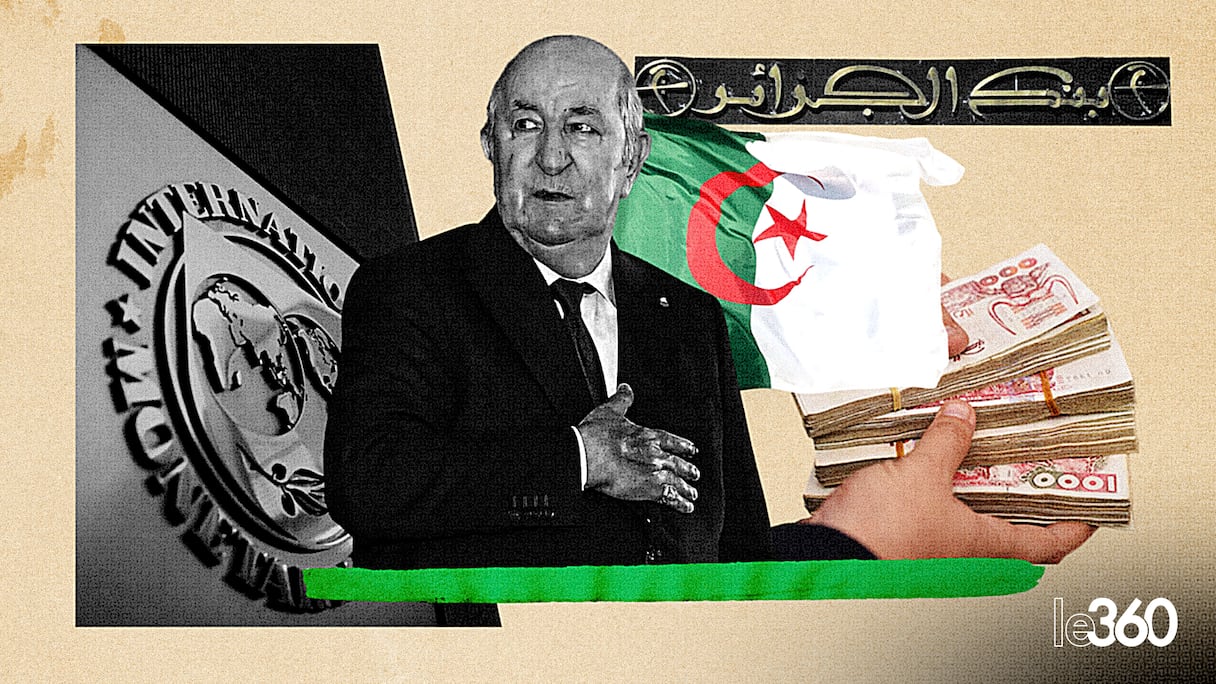
It began in the autumn of 2017. Algeria’s foreign exchange reserves had dwindled from $194 billion at the end of 2013 to around $100 billion. The budget deficit had approached 15% of GDP in 2015. Rather than undertake reforms, Ahmed Ouyahia’s government took the easy way out: it amended the Money and Credit Law to allow the Bank of Algeria to lend directly to the Treasury. The measure, Article 45 bis, came with the suitably discreet label “non-conventional financing.” Algerians had a more straightforward term for it: printing money.
Within little more than a year, the presses were running at full tilt. By January 31, 2019, the Bank of Algeria had created 6.5 trillion dinars, equivalent to roughly a third of the country’s GDP. None of it represented new wealth. The money went towards paying salaries, plugging budget holes, settling the debts of Sonatrach and Sonelgaz, and bailing out the National Pension Fund.
2019: An end in name only
In June 2019, as the Hirak protest movement swept the country, the government announced an end to non-conventional financing. Abdelmadjid Tebboune, elected president that December, promised neither to borrow abroad nor to resort to printing money. The promise did not survive the realities of the public finances.
By July 2021, the Bank of Algeria was back with a 2.1 trillion-dinar “special refinancing program.” The method was less conspicuous, but the effect was much the same. The Treasury bought loans made by public banks to state-owned enterprises, paying for them with government bonds. The banks then deposited those bonds with the Bank of Algeria in exchange for liquidity, which they used to buy more Treasury securities. Even Algeria’s own press called it “money printing in disguise.”
Since then, the arrangement has become a fixture of public financing. State-owned banks have absorbed an ever-growing share of domestic government debt, refinancing themselves through a central bank whose balance sheet is increasingly loaded with government securities rather than foreign currency. The 2026 Finance Law further relaxes the limits on the size and duration of Bank of Algeria advances to the Treasury, allowing it to intervene “at its discretion.” The projected deficit for 2026 stands at 5 trillion dinars, or around 12% of GDP. The finance minister insists that it will be “financed entirely through domestic debt” and that it “poses no risk to price stability.” In other words, the central bank is keeping the government afloat, either directly or through the state-owned banks.
The IMF is not fooled. In July 2026, at the end of its annual mission, the Fund noted that central bank financing of the government had “increased” in 2025 and urged Algiers to put a stop to it. The budget deficit reached 10.5% of GDP in 2025, a level the IMF described as “very high,” while public debt stood at 52.1% of GDP.
The risks: A ticking time bomb
The authorities have one figure they like to point to: official inflation fell to 2.2% in September 2025. But that figure says more about the effect of price controls and subsidies than about the health of the currency. The dangers are no less real for being kept out of sight.
The first is pent-up inflation. When the money supply expands faster than the economy produces goods and services, the excess dinars eventually have to find an outlet. For now, price caps and generous subsidies are holding back the pressure. But the markets offer a warning: between late June and mid-August 2026, the price of a tray of eggs rose by around 65%, while chicken became a third more expensive. Once the government can no longer afford to subsidize prices, the accumulated effects of money printing will hit consumers all at once.
The second is the collapse of confidence in the dinar. On October 8, a euro cost 150 dinars at the bank and 276 on the parallel market, a difference of more than 80%. That gulf says plenty about how Algerians regard their currency: they are turning their backs on it. Every dinar created without any corresponding increase in wealth fuels the black market, the informal economy and the hoarding of foreign currency.
The third is the depletion of foreign exchange reserves. They fell to $51 billion in 2025. IMF projections suggest they could shrink to just $19.8 billion by 2031, barely enough to cover three months of imports. Algeria imports much of the food it consumes. Without sufficient reserves, the country would have to devalue its currency. And in an economy so dependent on imports, devaluation means a sudden surge in food prices.
The fourth is the dependence binding the state, public banks and the central bank together. The Treasury borrows from state-owned banks, which refinance themselves with the Bank of Algeria, which accepts Treasury securities as collateral. It is a closed circuit. It works as long as nobody looks too closely at the balance sheets. It becomes dangerous the moment state-owned enterprises, already on life support, stop repaying their loans.
The fifth is the squeeze on the private sector. Banks lend to the government and state-owned enterprises, while credit to private businesses stagnates. The part of the economy that could create jobs and generate exports beyond oil and gas is being starved of funding.
The sixth and final risk is Algeria’s exposure to oil prices. The entire system rests on hydrocarbon revenues. Another prolonged downturn would strip the state of revenue, foreign currency and room for maneuver all at once. Printing money would then be the only option left, this time with no safety net. Venezuela has shown where that road leads.
Easy money, no need for reform
The most damaging consequence of printing money is not economic. It is political. It allows the regime to put off reform indefinitely: reforming subsidies, restructuring state-owned enterprises, overhauling taxation and changing the way the administration works. It buys time and social peace by passing the bill to the future. Nine years after 2017, Algeria is just as dependent on hydrocarbons, its deficits are larger and its reserves have dwindled further.
The IMF speaks of “urgency.” The Algerian government speaks of stability. The young people risking the sea crossing and the families exchanging their savings for euros on the black market have already reached their own verdict.
