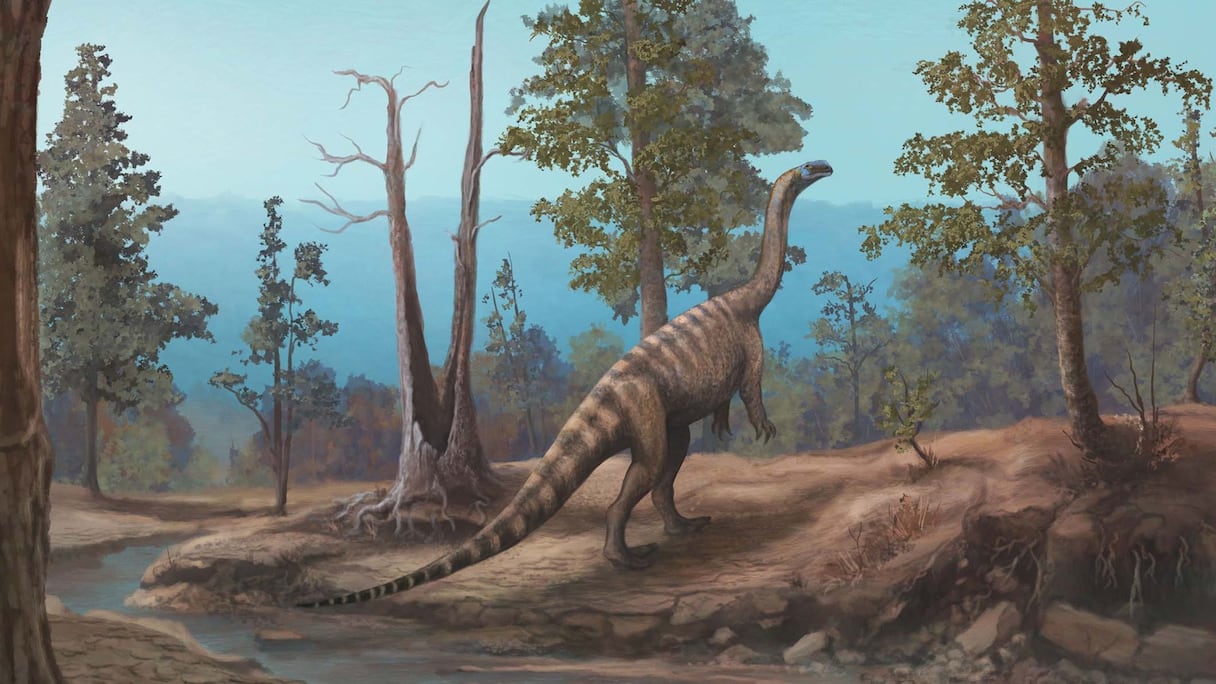
Named Musango matusadonaensis, the dinosaur lived about 210 million years ago during the Late Triassic period. It was a two-legged sauropodomorph, an early relative of long-necked dinosaurs such as Diplodocus. Researchers estimate it was about 4.5 meters long and weighed around 220 kilograms.
The fossils were discovered in 2018 and include parts of the spine, ribs, shoulder and hip bones, arms, legs and feet. No skull was found, leaving scientists unable to determine its diet with certainty. The specimen had reached at least eight years of age when it died and was likely a late juvenile or adult.
Musango is the fifth dinosaur species formally named from Zimbabwe. The discovery also marks the second major dinosaur find from the Lake Kariba area by the research team, following Musankwa sanyatiensis, which was named in 2024.
Read also : Dinosaur fossils, thermal springs and fairy chimneys: Boulemane’s hidden geoheritage
Paul Barrett, head of fossil vertebrates at the UK’s Natural History Museum and lead author of the study, told CNN that researchers had assumed dinosaurs from the region would be similar to those found elsewhere in southern Africa. Instead, he said, “the more we look, the more they’re different.”
Expedition leader Jonah Choiniere, a professor at South Africa’s University of the Witwatersrand, said the region still holds many fossils waiting to be discovered. “I think it is 100% the tip of the iceberg,” he told CNN.
The researchers plan to return to Lake Kariba in early 2027. The species was formally described in the Journal of Systematic Palaeontology in July.
