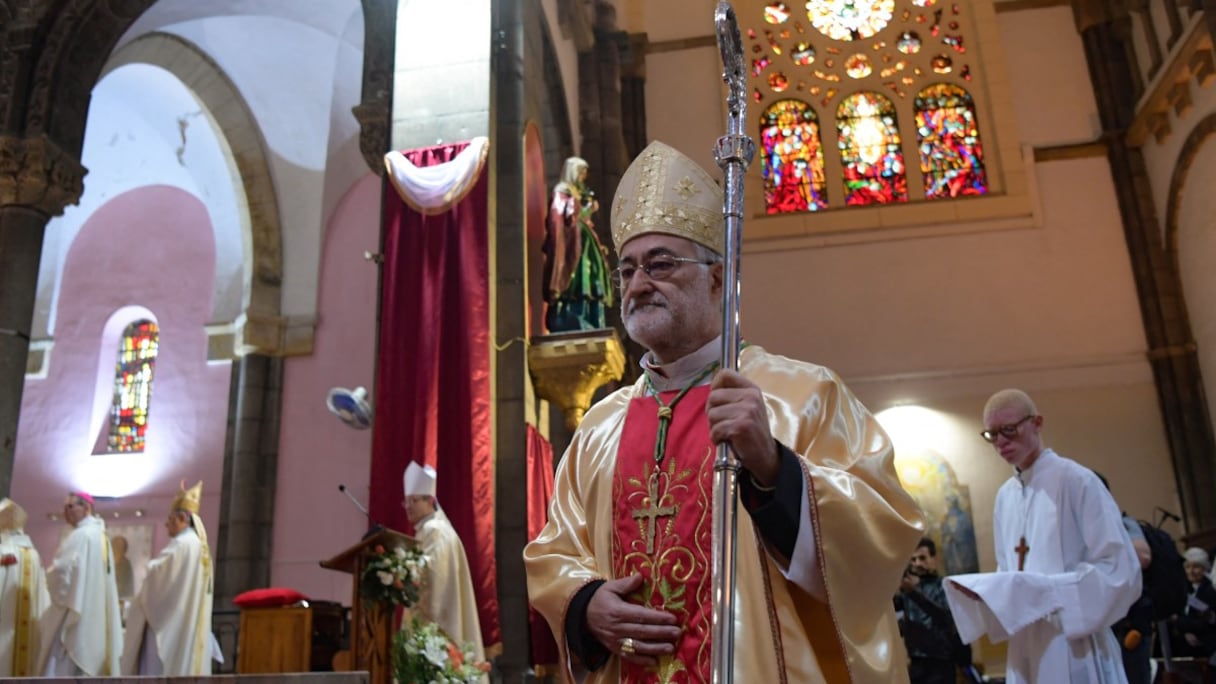
AFP spoke with a retired woman active in the Catholic Church in Morocco, who said she had been subjected to repeated sexual assaults by the cardinal but did not authorize the news agency to disclose the full details of her testimony at this stage.
AFP also reviewed the written testimony of another woman, submitted to the Apostolic Nunciature, the Vatican’s embassy in the Moroccan capital.
In her statement, she accuses the 74-year-old Spanish cardinal of “physical gestures” that she “perceived as inappropriate,” including “particularly prolonged and insistent hugs” and “an attempt at physical closeness that could be interpreted as an attempt” to kiss her, which she said she managed to avoid.
A source within the diocese also told AFP that at least three other women had reported being victims of “similar acts.”
Contacted by AFP about the allegations, López Romero said he had “committed neither assault, violence nor sexual harassment” and called for “the principle of the presumption of innocence to be fully respected.”
He added that he had “responded to (his) ecclesiastical superiors” and said, “I will continue to cooperate fully with them in the investigation” that has been opened.
In a separate statement addressed to members of the diocese and shared with AFP, he announced: “During this period of investigation, so as not to hinder it, I will step back, presiding over no public celebrations and taking part in no pastoral activities.”
The Holy See did not immediately respond to AFP’s request for comment.
During the May 2025 conclave that elected Pope Leo XIV to succeed Pope Francis, López Romero was considered one of the Church’s most prominent and influential cardinals. Several media outlets identified him as a papabile, a term used to describe cardinals considered among the leading candidates to become pope.
“Abuse of authority”
No complaint has been filed with the Moroccan courts so far, according to Marc Helfer, the diocese’s vicar general and López Romero’s deputy.
According to Nadia Debbache, a lawyer specializing in such cases, the allegations described by the retired woman could amount to “aggravated sexual harassment and aggravated sexual assault,” while those made by the second woman could constitute “aggravated sexual harassment and attempted aggravated sexual assault,” with “the aggravating factor being the abuse of authority by the alleged perpetrator.”
AFP said it was unable to establish the precise nature of the three other reports.
A member of two Vatican dicasteries, López Romero belongs to the Salesian order founded by Saint John Bosco in the 19th century and is known for promoting interfaith dialogue. He was made a cardinal by Pope Francis in 2019.
The case adds to a series of allegations involving senior Catholic clergy in recent years, including former US cardinal Theodore McCarrick, who was dismissed from the priesthood in 2019 for sexually abusing minors, and French cardinal Jean-Pierre Ricard, who acknowledged inappropriate conduct involving a minor.
The Catholic Church continues to face the legacy of decades of revelations of sexual abuse committed by members of the clergy and efforts to conceal those crimes.
Under the previous pontificate (2013–2025), the Vatican reaffirmed a zero-tolerance policy and introduced several reforms aimed at improving the handling of abuse allegations.
Critics, however, continue to argue that a culture of silence persists within the Church and that these principles are applied unevenly across countries and dioceses.
