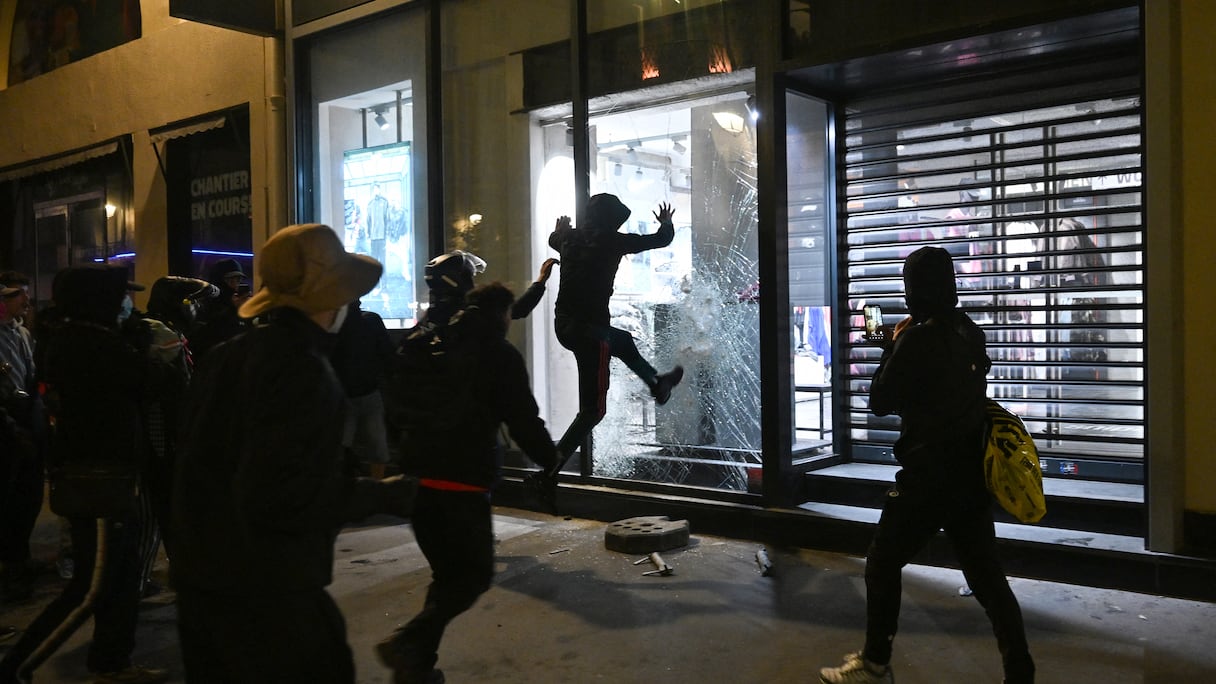
On October 21, the Financial Times published an investigation titled “EU probes pro-Kremlin disinformation around French riots”. The British newspaper reported that European regulators were examining possible online interference originating outside the EU as France emerged from a day of violence that saw more than 1,800 arrests, over 500 police officers, gendarmes and firefighters injured, and much of Limoges City Hall destroyed.
Russia is the prime suspect. According to security officials cited by the FT, pro-Russian and far-right accounts previously linked to similar campaigns circulated videos of the violence to fuel the chaos. But the newspaper names two other countries under suspicion: Iran and Algeria. French disinformation researcher David Colon points to indications of Iranian and Algerian influence operations in France.
Algeria’s appearance alongside Russia and Iran is hardly a coincidence. In June 2025, Viginum, the French government agency responsible for monitoring foreign digital interference, submitted a confidential report of around 40 pages to the prime minister’s office, later disclosed by Le Canard enchaîné. It described an organized network of fake accounts linked to Algiers, capable of posting identical content within minutes of one another. The report documented a campaign alleging a DGSE conspiracy in December 2024, calls to boycott French brands in January 2025, and doctored images showing Macron kneeling before Tebboune. Investigators traced the operation to a messaging server belonging to an Algerian cybercrime agency attached to the Defense Ministry, suspected of being at the center of the network.
The same pattern extended beyond social media. In January 2025, at the height of the diplomatic crisis between Paris and Algiers, several Algerian influencers living in France were arrested over videos calling for violence. One of them, known as “Zazou Youssef,” was sentenced to 18 months in prison for incitement to terrorism. Another, “Doualemn,” was deported to Algeria, only to be turned away on arrival and sent back to France by the Algerian authorities. Bruno Retailleau, then France’s interior minister, saw the move as an attempt to “humiliate France.”
This time, Algiers did not even need fake accounts to make clear where it stood. On October 20, Algérie Patriotique, a website founded by Lotfi Nezzar, son of former defense minister Khaled Nezzar, ran a front-page article titled “Jijel fires orchestrated from Paris: The revenge of Franco-Algerian youth”. It portrayed the burning of French town halls as an “act of retaliation” and a fitting application of “an eye for an eye” following the summer forest fires in Algeria, which the regime blames on an opposition figure living in exile in France. The article remains online.
Read also : French town halls set ablaze: Algerian regime mouthpiece applauds ‘revenge’
Algeria’s response was predictable. The website Awras picked up the FT investigation, emphasizing the absence of detailed evidence. But its coverage left out the essentials: not a word about the network described by Viginum, nor about the Algérie Patriotique article. Algiers demands evidence. It supplies its own.
France now has three pieces of evidence, and suspicion is only one of them. There is a report from its own intelligence services, there are convictions handed down by its courts, and there is an Algerian editorial celebrating the burning of its town halls. France does not need the Financial Times to know what Algiers thinks of it.
