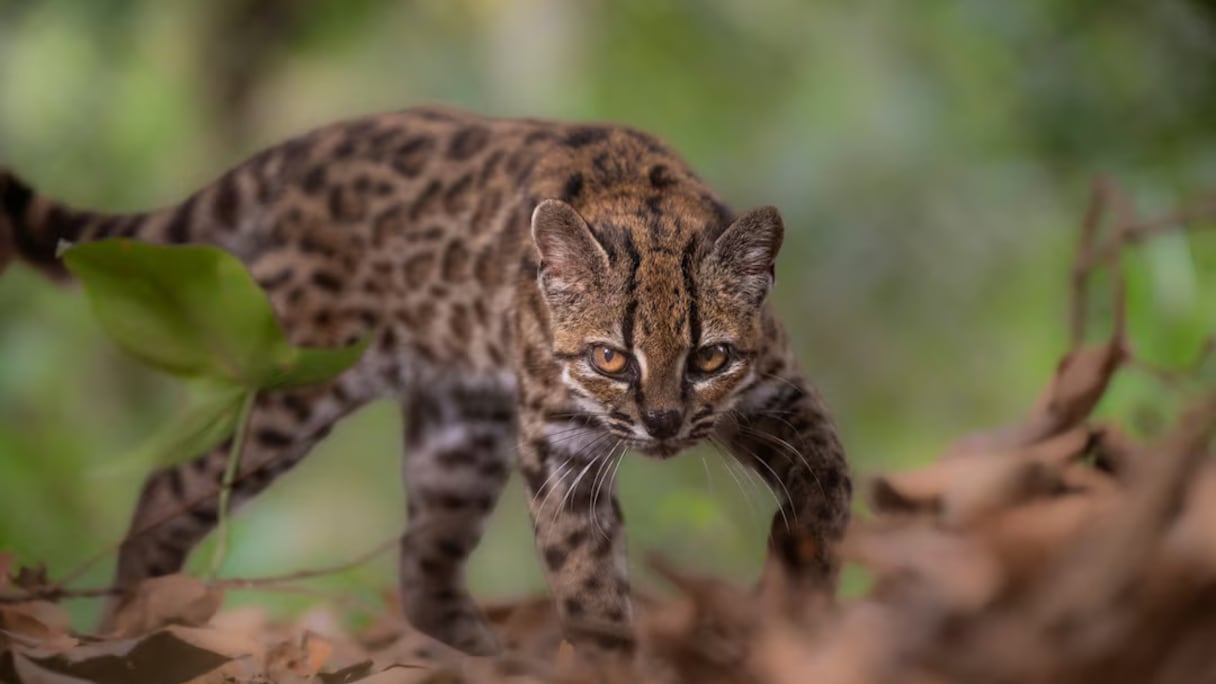
Named Leopardus tilcayo, the small spotted cat lives in the Yungas cloud forests on the eastern slopes of the Andes. It is smaller than an average domestic cat, measuring about 18 inches from head to the end of its body and weighing roughly 1.36 kg (3 pounds).
The discovery began in 2016, when Bolivian biologist and National Geographic Explorer Paola Nogales-Ascarrunz was called to the Senda Verde Wildlife Sanctuary after a local man brought in what he believed was a domestic kitten.
The animal had been found on a road near a forest and raised for about a year. Its owner eventually realized that it was wild and could not care for it.
Read also : New Zealand’s endangered kākāpō population reaches 325 after record breeding season
Nogales-Ascarrunz initially believed the cat belonged to Leopardus tigrinus, a species commonly known as the tiger cat, oncilla or little spotted cat.
But in 2019, while preparing a guide to Bolivia’s wild cats, she noticed that the animal’s large rosettes did not match those of tiger cats shown in reference material from neighboring Brazil.
Further genetic research eventually confirmed that the animal belonged to a distinct lineage. Researchers analyzed genetic material from the sanctuary cat and another individual that later arrived at Senda Verde. The two animals were found to belong to the same species, which diverged from other tiger cat lineages about 1.4 million years ago. The findings were published Thursday in the journal Current Biology.
The scientific name Leopardus tilcayo comes from the name used by local communities for the animal. Nogales-Ascarrunz said people in the area have known the cat as a “tilcayo” for generations, although they do not associate the word with a particular meaning in Spanish or local Indigenous languages. The researchers chose to preserve the traditional name rather than give the species a new one.
The discovery also changes scientists’ understanding of tiger cats. The new study identifies five distinct tiger cat species in South America, showing that what was once considered a single species was actually a complex of genetically distinct lineages.
Small wild cats are difficult to study because they are elusive and often inhabit remote forests. Physical characteristics such as coat patterns, tail length and teeth can help distinguish species, but the researchers used genomic analysis to establish the tilcayo’s distinct position on the cat family tree.
Read also : Casablanca: Five Pumas have landed in Aïn Sebaâ Zoo—and you can see them from July 20
The team analyzed the genomes of 38 cats, including 26 Leopardus specimens. Unlike some recently recognized mammals that were split from already known species, L. tilcayo had not previously been identified by scientists. Researchers found no museum specimens that had been collected and identified as the species.
Its population in the wild remains unknown.
Nogales-Ascarrunz is now working to install camera traps in the Yungas forests to find more evidence of the species and determine how many tilcayos remain.
The researchers say the discovery also highlights the need to protect the Yungas, where development and agriculture are putting pressure on habitats used by tiger cats and other wildlife.
