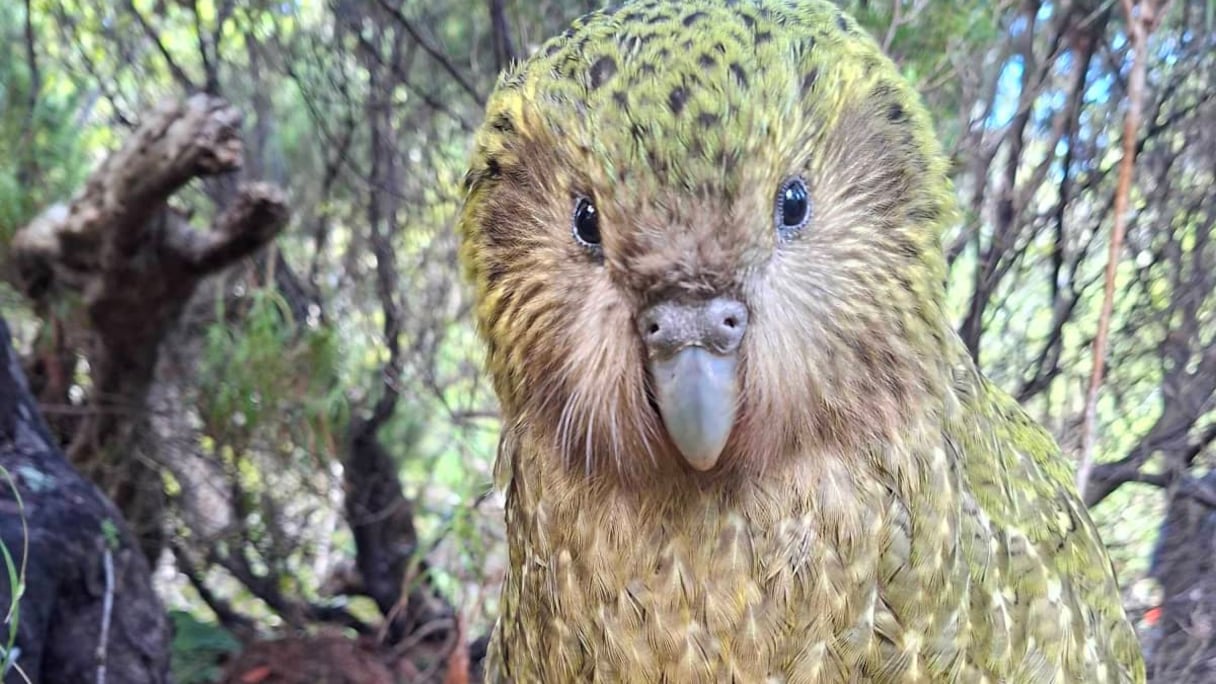
The 2026 breeding season produced a record 90 chicks, pushing the population above 300 birds for the first time in as many as 75 years, according to New Zealand’s Department of Conservation.
The youngest chick, a female named Awarua-A3, hatched on March 30 and reached 150 days old at the end of August. At that age, kākāpō chicks are considered independent enough to be added to the official population count.
“This year’s 90 surviving chicks set a record,” said Deidre Vercoe, operations manager of the Kākāpō Recovery Programme.
Vercoe noted that it took 16 years to produce the same number of chicks during the early years of the recovery program.
Read also : Casablanca: Five Pumas have landed in Aïn Sebaâ Zoo—and you can see them from July 20
The kākāpō is the world’s heaviest parrot and the only nocturnal, flightless parrot. The species was once widespread across New Zealand but suffered a dramatic population decline following the introduction of predators such as cats and rats.
When the Kākāpō Recovery Programme began in 1995, only 51 birds remained, including 20 females. Conservationists have since worked to address challenges including low genetic diversity, infertility and poor hatching rates.
The 2026 breeding season followed a four-year gap between breeding seasons. Kākāpō typically breed every two to four years, with breeding triggered by the mass fruiting of native trees such as rimu.
This year, a particularly abundant rimu crop on two breeding islands in Fiordland provided enough food for females to raise their chicks without supplementary feeding. On Whenua Hou/Codfish Island, however, the rimu crop failed to ripen, requiring additional food for breeding females.
The season saw 79 females nesting, 258 eggs laid and 106 chicks hatched. Of those, 90 survived to reach 150 days.
Conservationists also reduced some of the intensive management used in previous breeding seasons. The program relied more heavily on remote monitoring technology, while reducing egg and chick checks and supplementary feeding where possible. Only two chicks that required medical treatment were ultimately hand-reared.
Each kākāpō in the recovery program carries a small radio transmitter that allows conservation teams to monitor its location and activity.
The birds currently live across three predator-free breeding sites: Whenua Hou/Codfish Island near Rakiura/Stewart Island, and Pukenui/Anchor Island and Te Kāhaku/Chalky Island in Fiordland.
Read also : Fossil traces in Morocco’s Anti-Atlas offer clues to trilobite behavior 358 million years ago
Despite the population milestone, conservationists say more safe habitat will be needed as numbers grow. The existing islands are already under pressure, while a predator-free Rakiura/Stewart Island remains a long-term goal for the recovery program.
The next breeding season could come as early as 2028, according to early modeling.
The recovery program is also beginning to move away from individually managing every bird. Most of the 2026 chicks will receive names next year, but a small number will deliberately remain unnamed as a symbol of a future in which the species can live with less intensive human intervention.