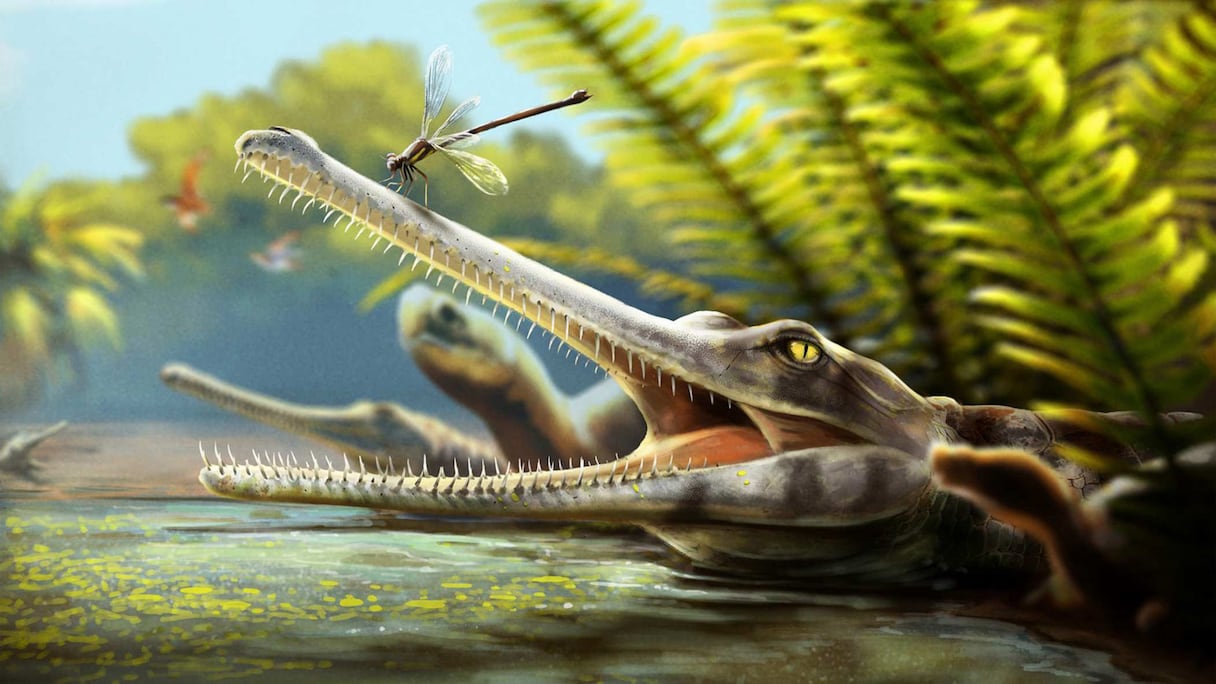
Named Ctenosuchus tenuidens, the reptile lived in freshwater environments during the Middle Jurassic, about 165 million years ago. Its exceptionally slender, needle-like teeth set it apart from other known members of the crocodile lineage, according to the Journal of Vertebrate Paleontology.
The findings are based on two partial specimens recovered from red clay deposits near Talsint by local fossil traders. Researchers say the animal’s distinctive tooth structure offers new insight into the diversity and evolution of ancient crocodile relatives.
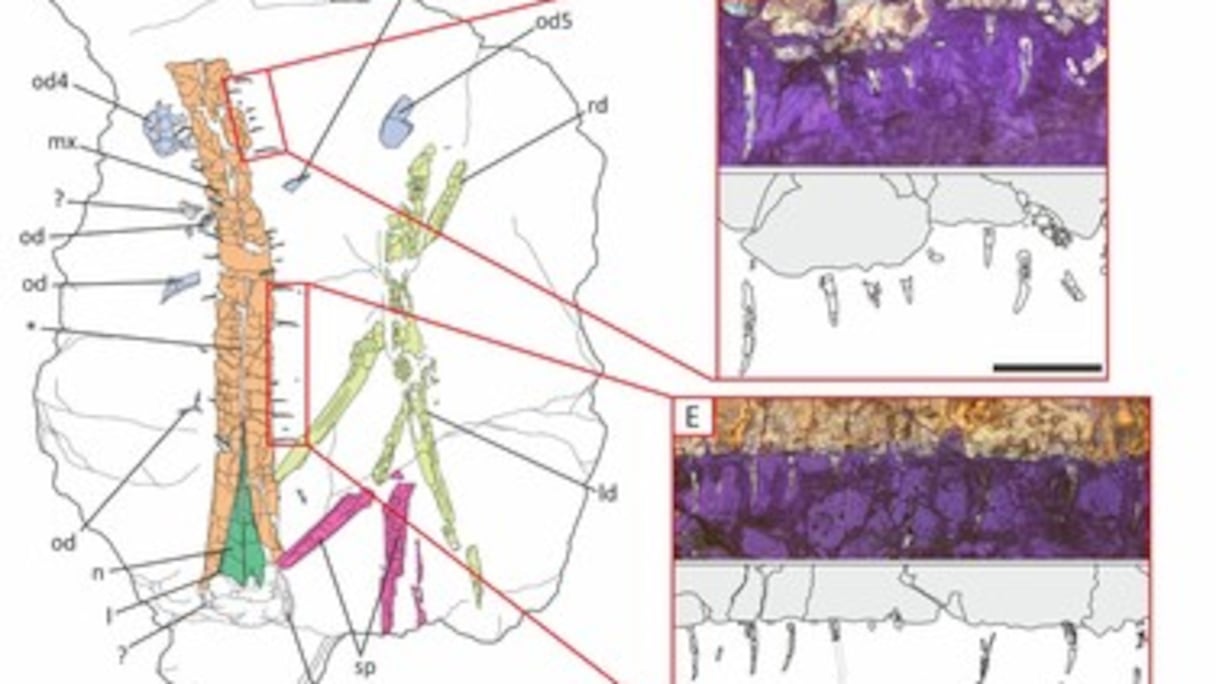
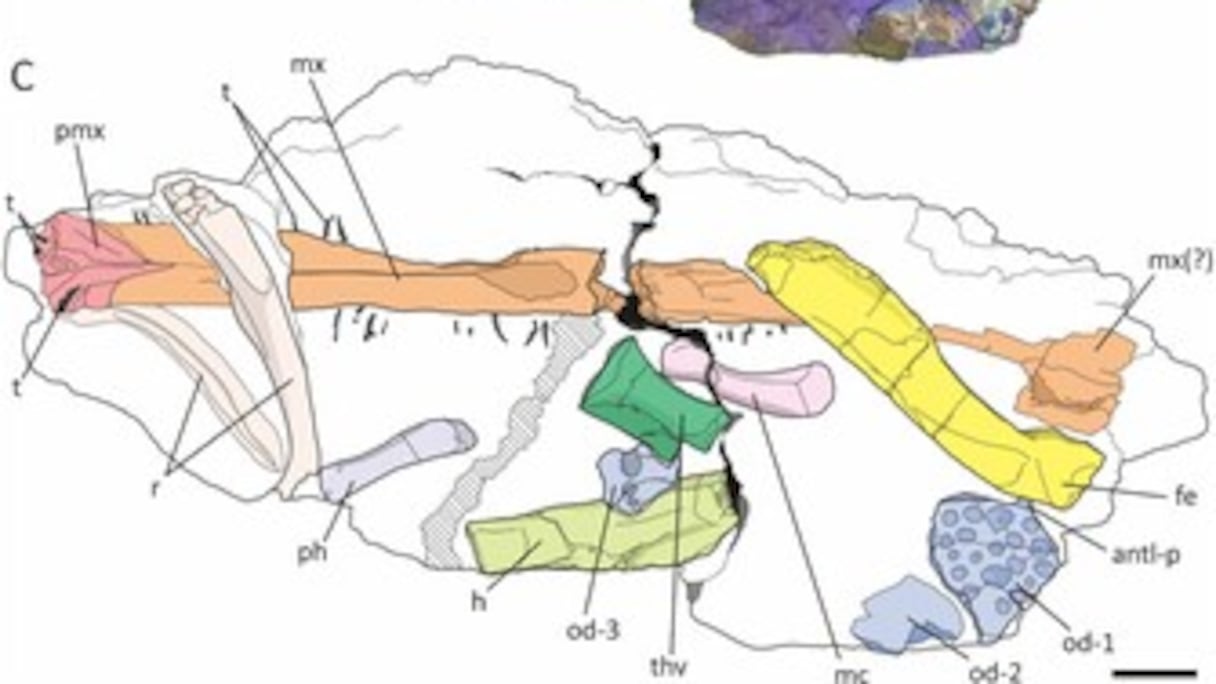
The holotype specimen FSAC-TLSNT-200 preserves parts of the skull, teeth and osteoderms in a mudstone block. (Image: Journal of Vertebrate Paleontology)
The predator belonged to the family Teleosauridae, within the group Thalattosuchia, which included marine crocodile-like reptiles. Its long jaws were lined with extremely thin teeth, each about 10 times longer than it was wide. The teeth were spaced approximately 2.3 millimeters apart, a configuration that may have helped the animal catch fish and small crustaceans and hold onto soft-bodied prey.
Read also : Dinosaur fossils, thermal springs and fairy chimneys: Boulemane’s hidden geoheritage
A rare freshwater species in Gondwana
Hamza Imran, a paleontologist at the University of Portsmouth, said crocodile-like archosaurs diversified across a wide range of environments during the Mesozoic Era, inhabiting rivers and lakes as well as the open sea.
The Moroccan fossils are significant because the historical fossil record of this family has been concentrated mainly in northwestern Europe, including Germany, Britain and France. The discovery in North Africa could help researchers better understand the group’s distribution, migration routes and adaptations.
According to the report, Ctenosuchus tenuidens is the only known teleosaurid adapted to freshwater environments in the ancient southern supercontinent of Gondwana.
The discovery adds to Morocco’s Jurassic fossil record and represents the country’s second documented Jurassic teleosaurid, alongside the genus Machimosaurus.
Read also : The battle against fossil trafficking: How Morocco is protecting its geological heritage
The fossils were found in the Talsint-Anoual area, where extensive sedimentary deposits preserve geological evidence from the Mesozoic Era. The region contains marine limestone alongside red continental deposits dating from the Jurassic and Cretaceous periods.
The discovery provides further evidence of the diversity of ancient reptiles that inhabited the region and offers researchers additional material for studying the evolution of crocodile-like species.
