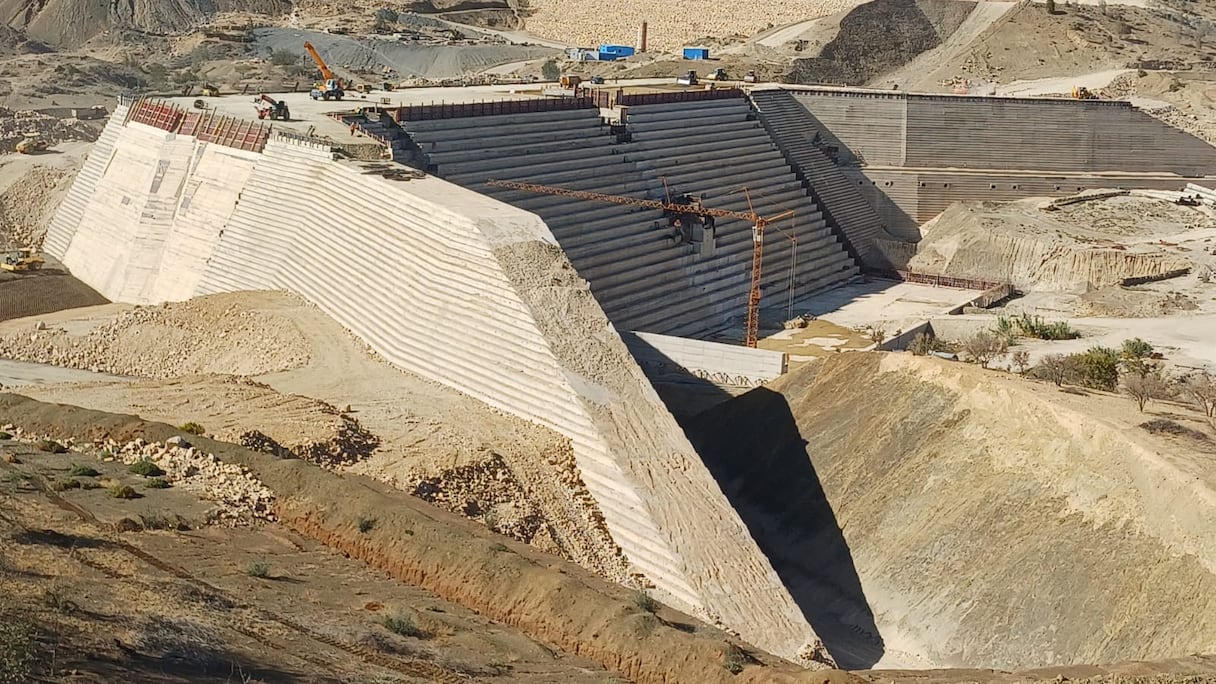
Built on the Kert River in the municipality of Telat Azlaf, about 25 kilometers from the city of Driouch, the Beni Azimane Dam has entered its final phase of construction. Work on the project began in October 2021 and is scheduled for completion in December 2026. Reservoir filling began last May, while construction has now reached 98% completion.
“This project is part of the National Drinking Water Supply and Irrigation Program 2020-2027, launched by King Mohammed VI,” said Abdelaziz Zaki, project manager for the Beni Azimane Dam. The project comes amid water stress and recurring droughts and aims to strengthen Morocco’s national water infrastructure. Rising 70 meters above its foundations, the dam will have a storage capacity of approximately 44 million cubic meters. Work is currently underway around the clock to complete the final stages of the project.
“We are currently working on the final stages, including completing the embankments on the right and left banks, installing monitoring and control systems, and developing the reservoir,” Abdelaziz Zaki explained. Work also covers ancillary structures and the various technical and hydraulic tests required before the reservoir is fully filled.
The dam also has a distinctive technical feature. It is a mixed-type structure combining concrete and compacted earth. The design was selected following extensive technical and geological studies that took into account the mountainous characteristics of the site.
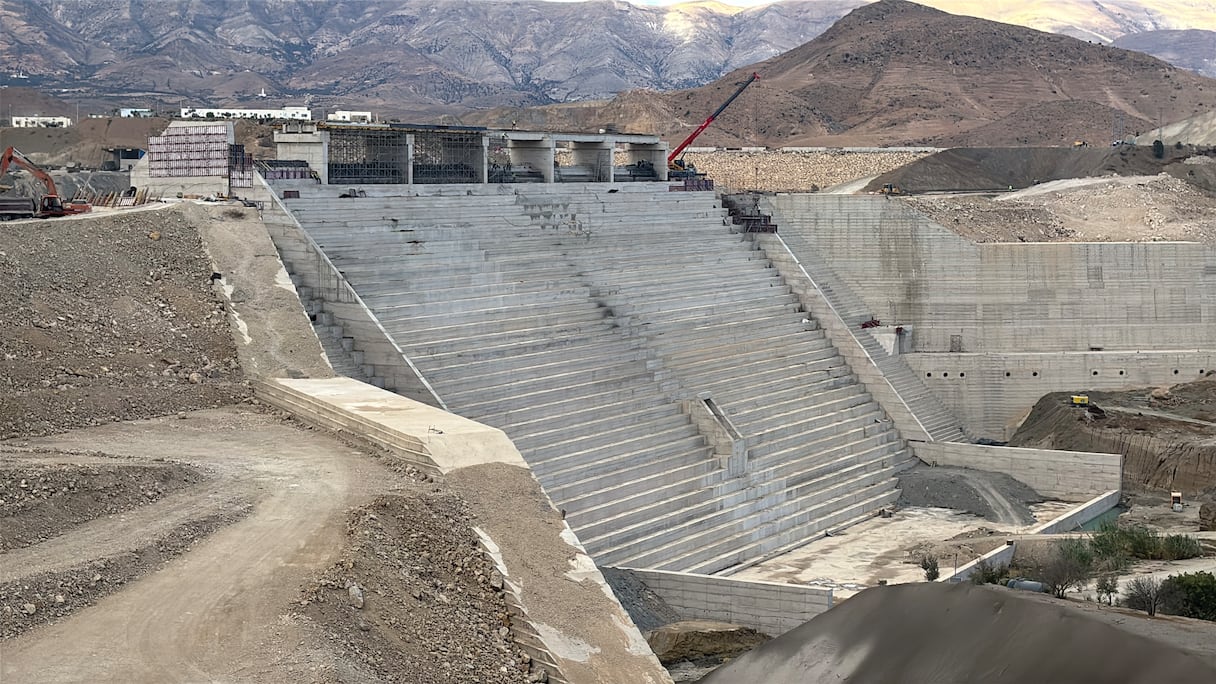
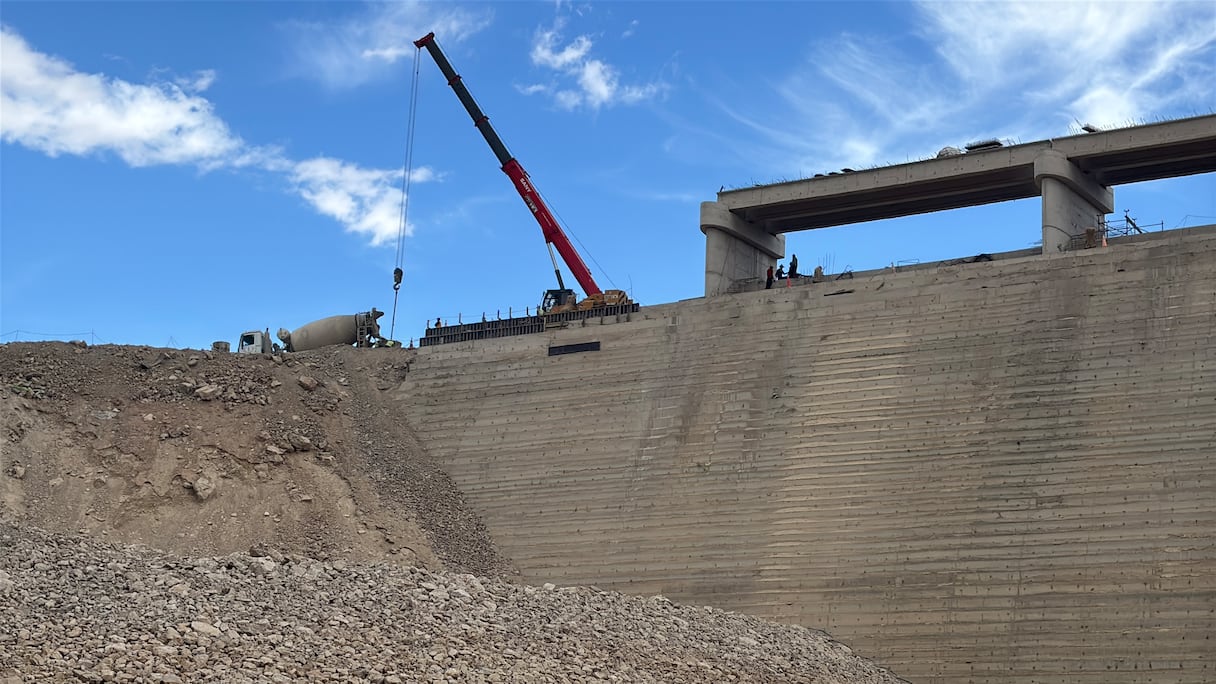

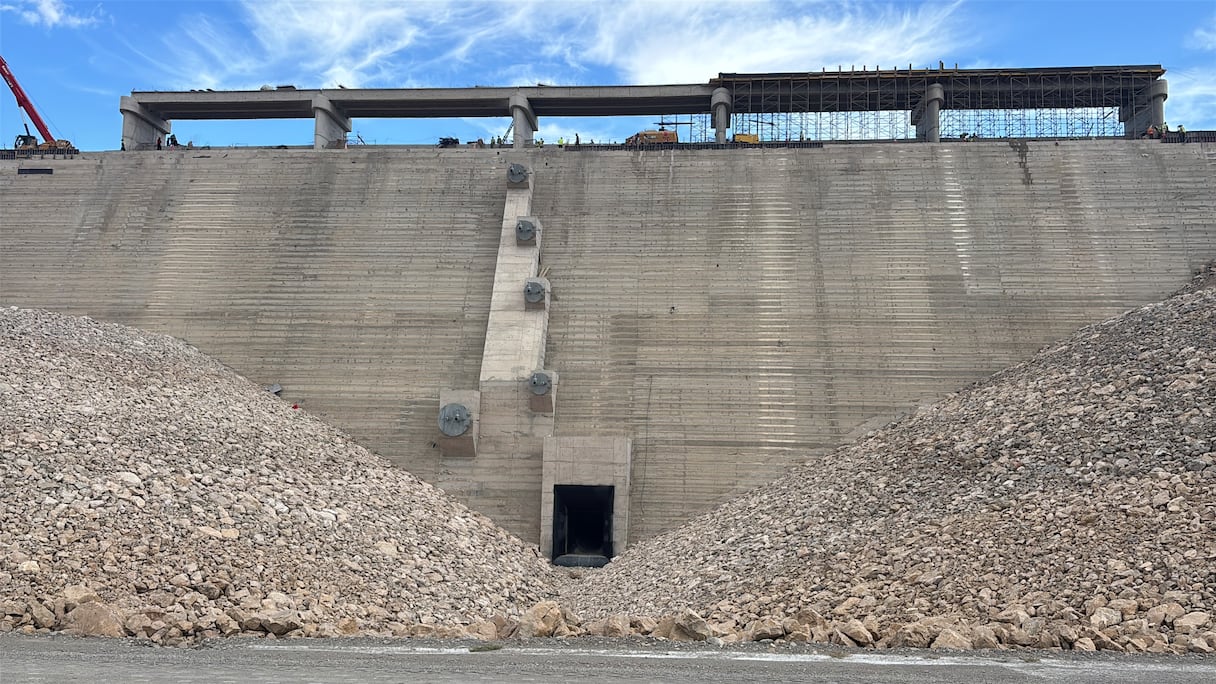
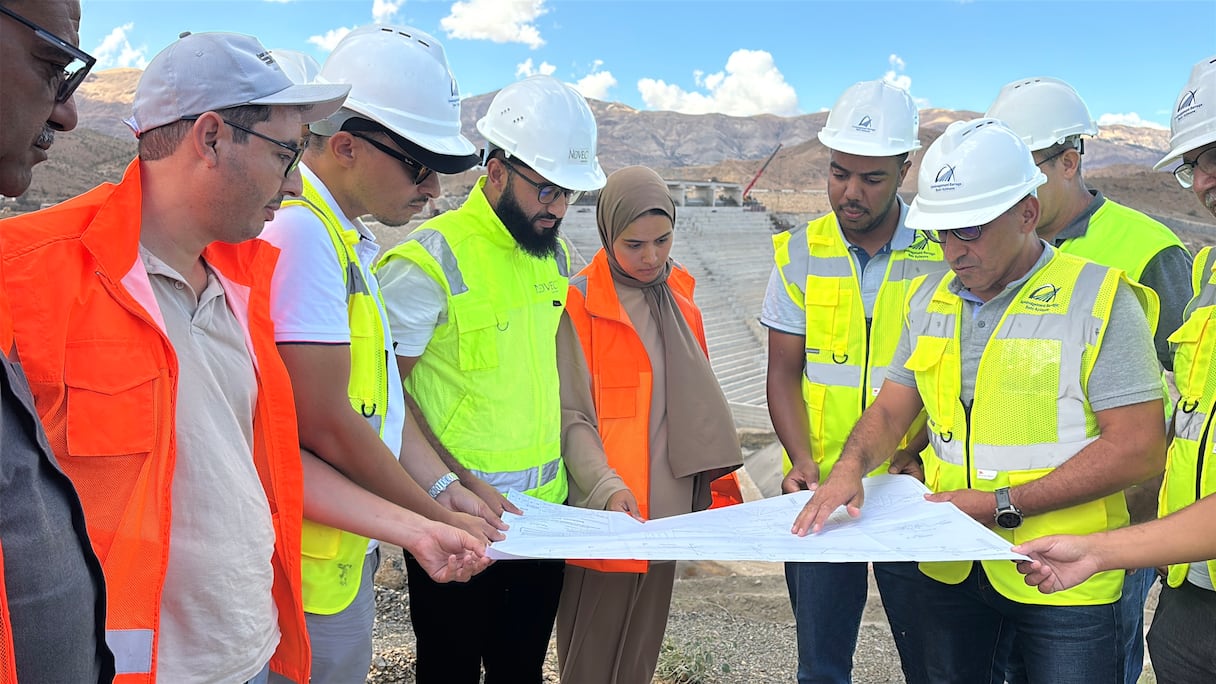
Construction work at the Beni Azimane Dam in Driouch province. (M. Chellay/Le360). Le360
Beyond water storage, the Beni Azimane Dam is expected to meet several needs in Driouch province and surrounding areas. The infrastructure is set to contribute to drinking water supplies, irrigation for nearby farmland and protection against flood risks. “The dam will play an important role in strengthening the region’s water security, particularly in the face of climate change and recurring periods of drought,” the project manager said.
The construction project has also provided a significant boost to local employment. Since its launch, it has generated more than 600,000 workdays while contributing to the training and skills development of the local workforce.
In the long term, the project is also expected to benefit the agricultural sector. Improved access to water should help develop and diversify production, with the aim of increasing farmers’ incomes. The future reservoir lake could also create new opportunities for ecotourism around the site and help curb rural migration.
Read also : Sebou Basin to study new dam and sub-basin water interconnections
The construction of the dam has brought together several Moroccan institutions and areas of expertise. The Directorate of Hydraulic Infrastructure, under the Ministry of Equipment and Water, oversees the project. Engineering and consulting firm NOVEC is responsible for studies and supervision, while the Public Laboratory for Testing and Studies (LPEE) conducts inspections and tests. A specialized company is responsible for the electromechanical work.
With 98% of construction now complete, the Beni Azimane Dam is only a few steps away from completion. Once fully operational, the dam is expected to provide further support for water security in Driouch province while benefiting agriculture, flood prevention and the economic and tourism development prospects of the Oriental region.