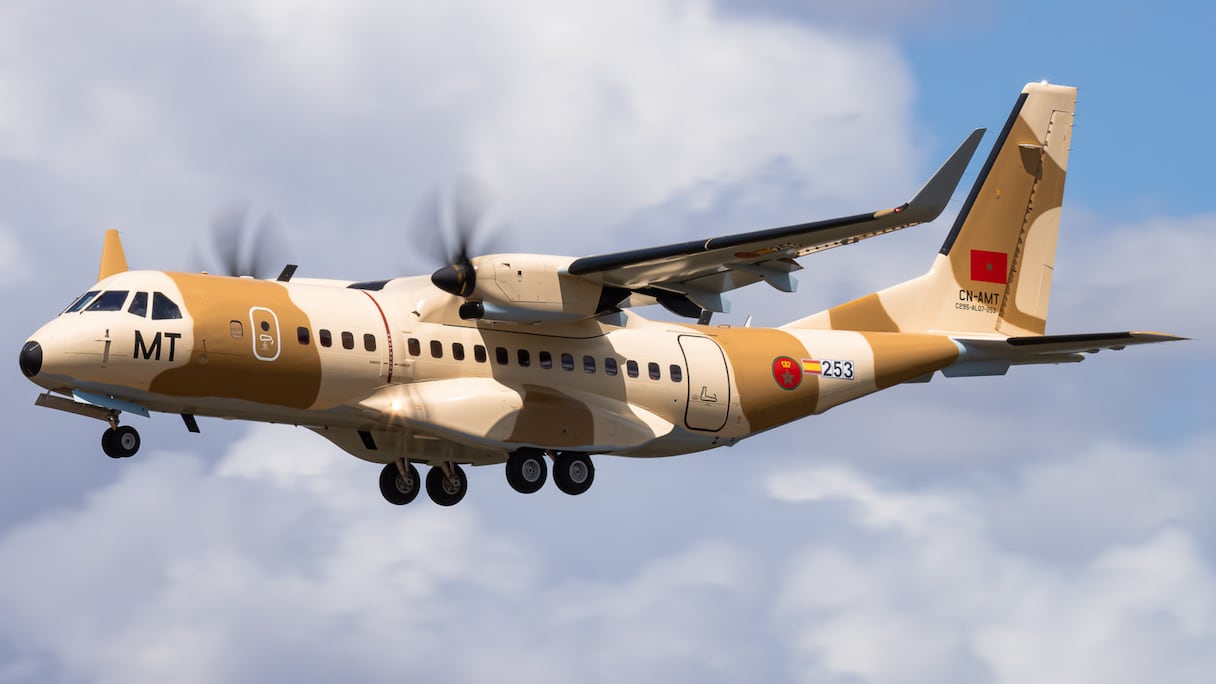
Airbus is stepping up its activities in Morocco, with the delivery of the first C-295W military transport aircraft to Kenitra, an order for 10 H225M helicopters by the Royal Armed Forces and the expansion of its industrial operations.
In an interview with Le360, Mickaël Bertrand, Airbus Country Representative for Morocco, discussed the group’s activities in the Kingdom and its plans for further growth. He described the expansion of Airbus’ Moroccan operations as “almost mechanical,” given the country’s key role in the company’s supply chain.
The A350F, which made its maiden flight on September 29, incorporates aerostructures manufactured in Morocco. Airbus has also completed its acquisition of Spirit AeroSystems, whose local site has become Airbus Atlantique Maroc Aero. Meanwhile, the group expects its composite materials activity in Morocco to grow by 30% in the coming months.
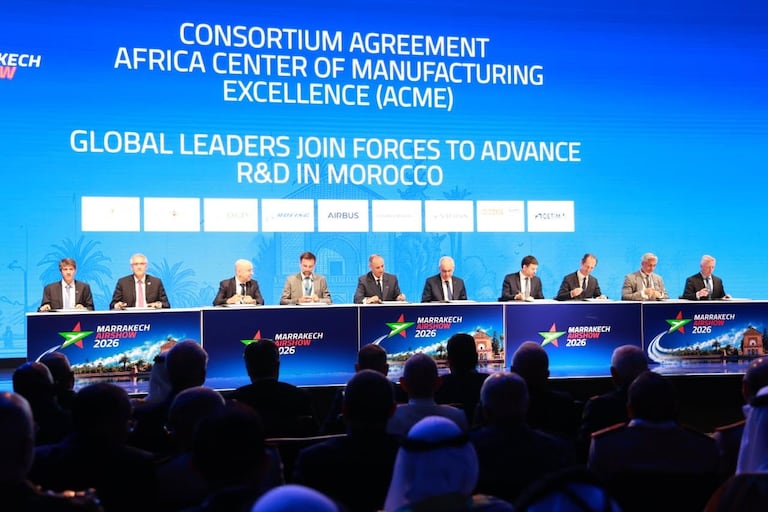
On the military side, Airbus plans to establish an Airbus Helicopters Morocco division with a maintenance center designed to serve West Africa as well as the Royal Armed Forces. The group has also presented a concept for a helicopter working alongside a drone and is one of the four founding members of the Africa Center for Manufacturing Excellence’s ACME collaborative research and development platform, which focuses on advanced manufacturing.
Decarbonization remains a priority for the group, Bertrand said. He declined to comment on Royal Air Maroc’s aircraft procurement plans but said Airbus was ready to support the airline’s growth. The group’s Moroccan operations rely on 1,300 direct employees and nearly 10,000 indirect jobs.
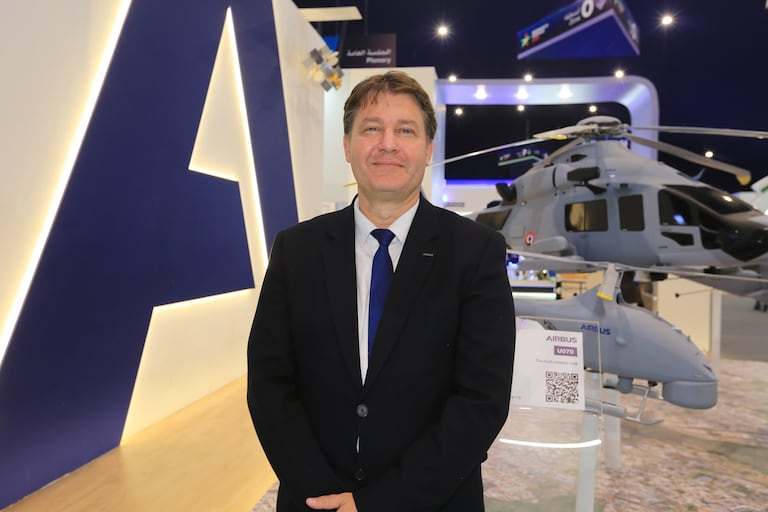
Le360: Is Morocco already involved in the industrial supply chain for the A350F, which made its maiden flight on Tuesday, September 29? What components are manufactured in the Kingdom?
Mickaël Bertrand: As with every Airbus aircraft flying today, at least one component is made in Morocco. Beyond basic components that are common to several aircraft programs, Morocco also produces structural elements. These are aerostructures manufactured in the Kingdom that play an active role in the A350 program.
Where does the acquisition of Spirit AeroSystems stand?
The acquisition of Spirit is now complete. The brand is in the process of being integrated, and the site is now fully an Airbus facility under the name Airbus Atlantique Maroc Aero. It is now 100% Airbus-owned.
Spirit is one of three industrial entities operating at the Nouaceur site, alongside two facilities in Midparc and Airbus Composite’s long-established site near the airport. The factory is now fully integrated into our supply chain. It is expected to continue growing in line with Airbus’ rising order volumes, contributing to production across all its components.


Un atelier de production dans l'usine Airbus Atlantic Maroc Composites. (A. Et-Tahiry / Le360)
How much does Airbus purchase from Morocco’s aerospace industry, and what are its targets for the coming years?
Growth in Morocco is almost mechanical because the Kingdom plays a key role in Airbus’ supply chain. Production rates will increase significantly in the coming years, starting next year.
This growth will also benefit Morocco and the components manufactured at the three industrial sites. Today, aerospace growth depends above all on human capital. We have 1,300 direct employees and nearly 10,000 indirect jobs. To give a more concrete example, our composite materials activity is expected to grow by 30% in the coming months.
Does Airbus plan to assign new programs or work packages to its Moroccan sites?
In commercial aviation, with production rates and growth prospects of this scale, the main challenge is to manage higher volumes while maintaining quality and meeting deadlines. Military aviation and space activities are opening up a new area of development, with genuine growth potential.
We are starting with helicopters through the creation of the Airbus Helicopters Morocco division. It will include a maintenance center fully integrated into Morocco’s defense industrial and technological base. The center is intended to serve the Royal Armed Forces as well as the wider West African market.
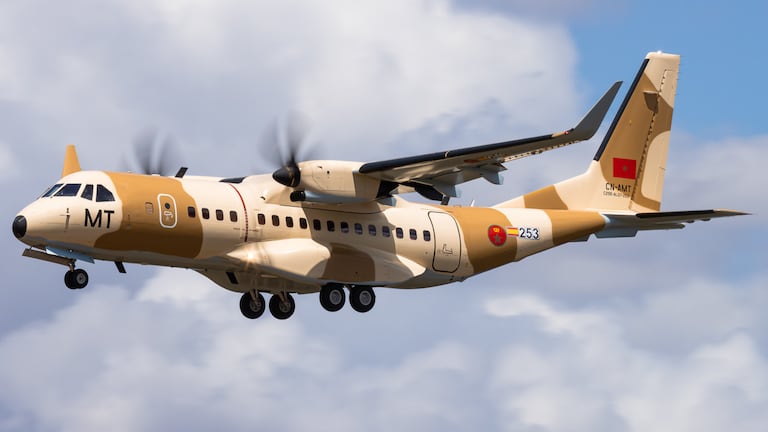
The first C-295W for the Royal Moroccan Air Force arrived in Kenitra on September 29. Are more aircraft expected, and on what schedule?
I cannot go into the details of our contractual arrangements. I will leave it to our customer to communicate that information. We thank the Royal Moroccan Air Force for its confidence in us. The C-295 has now arrived in Morocco. We are extremely proud of this and convinced that it is the right solution. It is a latest-generation tactical transport aircraft.
Are plans in place for C-295 training and maintenance activities in Morocco?
Maintenance will begin with helicopters, for which we will establish the full maintenance, repair and overhaul (MRO) activity. We need to move quickly, as this also requires a regulatory framework and training programs.
We will continue to rely on the ecosystem built around the Moroccan Aerospace Industries Association (GIMAS), together with the Institute of Aeronautical Trades (IMA) and the Specialized Institute of Aeronautical Trades and Airport Logistics (ISMALA). These longstanding partners remain extremely relevant.
Training technicians specialized in helicopter maintenance is already a major challenge for the coming years. Our other development priority is research and development, particularly engineering. We have signed the agreement and are one of the four founding members of ACME. This is a major area for us in terms of added value.
What are the prospects for Airbus Helicopters in Morocco’s civil, para-public and military markets?
On the military market, we have been supporting nearly 60 aircraft for many years. The Royal Armed Forces have once again placed their trust in us, and we thank them for it, by ordering 10 H225M helicopters, a latest-generation tactical transport model. These aircraft will strengthen our existing position.
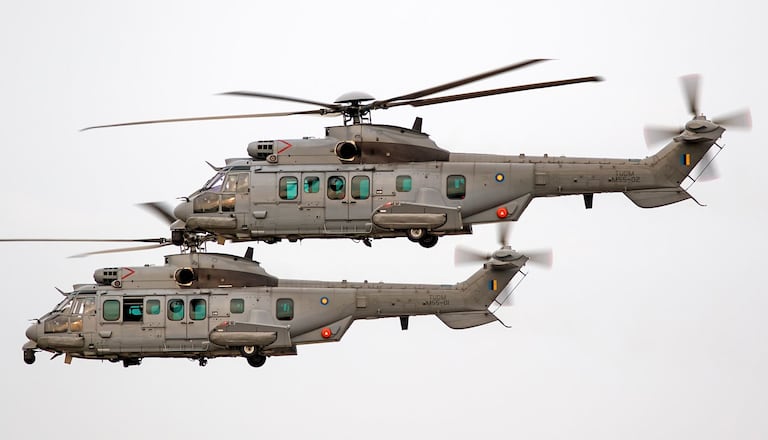
The fleet is expected to exceed 65 or even 70 helicopters in the coming years. We want to build on this industrial base, starting with maintenance, to serve the private market and, above all, the regional market, where demand is growing, particularly for maintenance services.
What future projects could Airbus develop in Morocco, including assembly, heavy maintenance, hydrogen and sustainable aviation fuel?
We are committed to all these areas, which have become essential for Airbus. Sustainability will remain central to our work, particularly in environmental protection and sustainable aviation. Decarbonization is an imperative for us.
We will also build on engineering and research and development. This work focuses more directly on aerospace technology, covering both civil and military applications. ACME will provide an excellent framework for these activities.
What training partnerships does Airbus plan to develop to support the growth of Morocco’s aerospace ecosystem?
Beyond the existing ecosystem, GIMAS is quite unique in the aerospace sector. We must continue to build on it, coordinating with IMA and ISMALA, which focus specifically on technical training for the aviation industry.
We will also continue to rely on engineering, which means innovating and working through innovative platforms. We have presented a new helicopter concept that operates in conjunction with a drone, known as manned-unmanned teaming, or cooperation between a crewed aircraft and an uncrewed one.
This is a broad field with room for further development, as the sector is moving rapidly. Drone activity alone shows how much is happening.
Can you share any good news about Royal Air Maroc’s aircraft procurement program?
I cannot comment on the commercial aspects of this type of process. I can say that we are closely following Royal Air Maroc’s needs and vision. The airline wants to quadruple its fleet by 2037, and we are paying close attention to that goal and doing our best to address its questions. We would be extremely privileged to partner with Royal Air Maroc during this period of growth.
