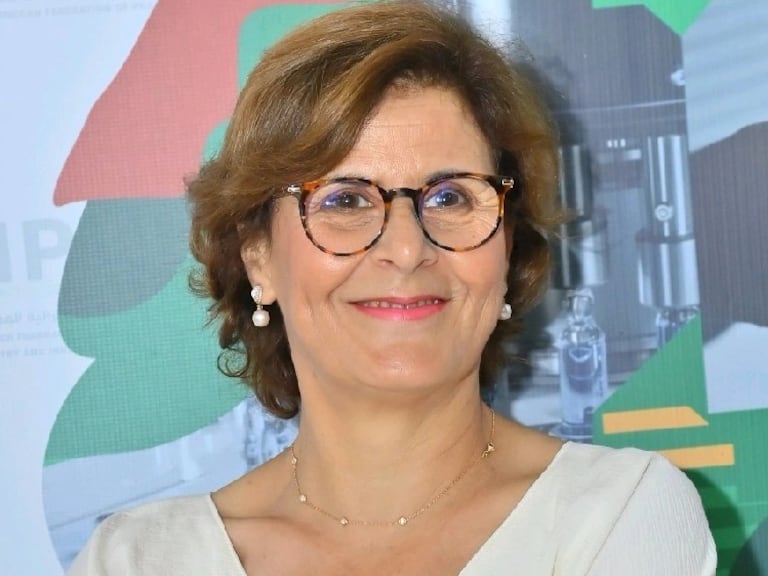
At the intersection of public health, industry, and pharmaceutical policy, Layla Laassel Sentissi has, over the years, established herself as one of the leading voices in Morocco’s pharmaceutical sector. A pharmacist by training who worked both in community pharmacy and the pharmaceutical industry, she now serves as Director General of the Moroccan Federation of the Pharmaceutical Industry and Innovation (FMIIP), where she advocates for the development of a more innovative and competitive domestic pharmaceutical industry capable of meeting the Kingdom’s healthcare sovereignty objectives.
Le360: The reform of Law 17.04, adopted in June 2026, has been presented as an alignment with international standards. In practical terms, which provisions represent the biggest changes for Moroccan manufacturers, and when are they expected to be implemented?
Layla Laassel Sentissi: You know, in our industry, regulation first creates a climate of trust. It shapes the quality of healthcare, investment, and the country’s ability to establish international partnerships.
This reform advances several key areas. The new marketing authorizations, accelerated, conditional, or export-specific, provide greater flexibility and support manufacturers pursuing international strategies.
Pharmacovigilance also occupies a central place. A laboratory’s responsibility follows a medicine throughout its entire life cycle, with continuous monitoring of its safety.
Morocco is also continuing its path toward achieving the World Health Organization’s Maturity Level 3 for regulatory systems. In my view, this is a strategic milestone that will strengthen both the credibility of our regulatory framework and the attractiveness of our pharmaceutical industry.
The next step is implementation. The implementing texts will need to establish clear procedures, predictable timelines, and smooth coordination between authorities and manufacturers. It is the quality of this implementation that will determine the full impact of the reform.
Does Galenica’s first shipment of medicines to Russia pave the way for similar partnerships? How is the FMIIP supporting Moroccan laboratories as they expand into new export markets?
This shipment has real demonstrative value. It confirms that a Moroccan laboratory can meet the regulatory requirements of a highly selective market. It is also part of an ongoing trend, as medicines manufactured in Morocco are already marketed in more than 40 countries, including several European markets.
Exporting is a long-term effort. Every country has its own regulations, procedures, and local partners. Success depends on quality, regulatory confidence, market knowledge, and strong commercial partnerships.
Read also : Cancer care in Morocco: Health Ministry reviews progress, sets new priorities for 2027–2029 plan
These are precisely the areas in which the FMIIP supports its members. We build bridges through trade missions, B2B meetings, international trade fairs, and exchanges with authorities in several countries. We also work on regulatory convergence and recognition of quality standards, which play a decisive role in gaining market access.
In my view, every individual success strengthens the credibility of Morocco’s entire pharmaceutical industry. Our role is to turn those successes into lasting partnerships and integrate more Moroccan laboratories into international value chains.
The export of a GMP-certified pharmaceutical cannabis extract by Cannaflex and Sothema marks a first. What potential does the therapeutic cannabis sector hold for Morocco’s pharmaceutical industry in the coming years?
This first export confirms that our industry is moving up the value chain. The sector is now entering a new phase focused on industrial processing, pharmaceutical quality, research, and value creation.
Morocco has several advantages to build this sector: industrial expertise, an evolving regulatory framework, and a strengthening scientific ecosystem. Bringing these together could enable the development of products that meet international standards.
You know, every pharmaceutical innovation follows a demanding path. It depends on mastering production processes, robust scientific data, manufacturing quality, and the confidence of healthcare professionals. Therapeutic cannabis follows the same logic.
Read also : Laayoune joins military medicine network in first expansion beyond Rabat
This momentum can also create new opportunities in clinical research. Partnerships between manufacturers, universities, and research centers will play a major role in documenting therapeutic uses and developing solutions tailored to patients.
This export marks a starting point. It shows that Morocco has the expertise to position itself in this segment. The next step is to strengthen the ecosystem and place this sector on a path of research, production, and exports.
Morocco is often described as a future pharmaceutical hub for Africa. In your view, what industrial strengths are already in place, and what are the main obstacles—financing, regulation, training—that still need to be addressed?
You know, the word “hub” carries responsibility. To me, it refers to a country capable of producing at scale, guaranteeing quality, serving multiple markets, and facilitating the movement of expertise and technology.
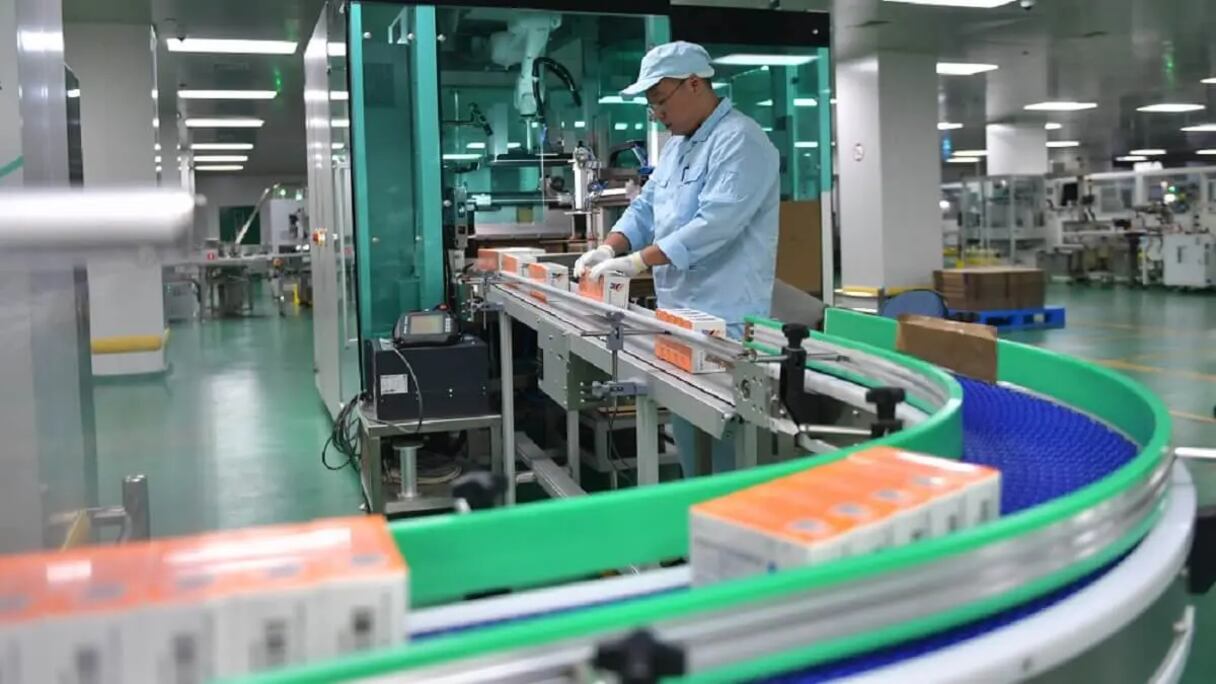
Morocco has already reached several milestones. We have more than 60 years of experience, 57 pharmaceutical manufacturing facilities, and production capabilities covering conventional medicines, injectables, insulin, cancer treatments, vaccines, biotechnology products, and biosimilars. Our medicines are marketed in more than 40 countries, and our industrial facilities operate at around 50% of their capacity. That spare capacity can support new projects aimed at African markets.
Scaling up requires three conditions.
The first concerns financing. Investors look at project quality, expected volumes, and market visibility. Health coverage, public procurement, and pooled purchasing can make demand more predictable.
The second concerns regulation: convergence of regulatory frameworks, mutual recognition, and digitalization of procedures.
Read also : Staff shortages, outdated facilities strain Morocco’s forensic medicine system, lawmakers warn
The third concerns skills. Moving up the value chain requires more professionals in manufacturing, quality, regulatory affairs, bioprocessing, and technology transfer. The planned Institute for Training in Pharmaceutical Industry Professions could meet Morocco’s needs while also welcoming professionals from across Africa.
In my view, the foundations are already in place. The next step is to connect them within a continental strategy.
Morocco is advocating for African pharmaceutical sovereignty alongside AUDA-NEPAD. What concrete role does the FMIIP play in this continental effort, particularly in terms of transferring expertise to other African countries?
African pharmaceutical sovereignty will be built through complementarity. Every country has its own capabilities, experience, and needs. Our shared responsibility is to connect these strengths and organize value chains across the continent.
The Casablanca Forum was created with that ambition. It was the second event of its kind organized by AUDA-NEPAD after Kenya. Morocco was chosen for a specific reason: to extend this initiative to North Africa, which accounts for nearly half of the value of Africa’s pharmaceutical market and already has significant industrial and scientific capabilities.
The FMIIP was selected for the same reason. The Federation is the exclusive international representative of Morocco’s pharmaceutical industry. We have developed relationships with manufacturers, institutions, regulatory agencies, and funding organizations through trade missions, Pharma Day, hosting African delegations, and events such as CPHI and Arab Health.
Following the Forum, the FMIIP received a specific mandate: to serve for 12 months as the secretariat of the Casablanca Communiqué alongside AUDA-NEPAD and national focal points. We are responsible for monitoring commitments, coordinating technical consultations, connecting project leaders with financiers, and supporting the industrial implementation of these initiatives.
Regarding knowledge transfer, our vision is one of co-development: training, sharing manufacturing processes, quality assurance, regulatory expertise, maintenance, research, bioequivalence, and, depending on the projects, manufacturing partnerships or joint ventures.
Ultimately, our role is to bring together the right stakeholders and move cooperation from intention to implementation.
As parts of Europe’s pharmaceutical industry are expected to relocate, what concrete advantages can Morocco offer to attract these investments over competing destinations such as Eastern Europe or Asia?
You know, European manufacturers are now looking for proximity, security, and execution capacity. In my view, Morocco offers all three.
As I mentioned earlier, we already have an established industrial base: 57 pharmaceutical manufacturing facilities, skilled teams, existing infrastructure, and available production capacity. A European company can rely on an ecosystem that already produces mature medicines, injectables, cancer treatments, vaccines, and biosimilars.
Geography is also an advantage. Morocco is close to Europe, connected to its markets through short logistics routes, and open to the African continent. Producing in Morocco therefore makes it possible to serve both European demand and growing African markets.
Our proposal is based on co-manufacturing: contract manufacturing, licensing agreements, gradual technology transfer, and joint projects in vaccines, biotechnology, and biosimilars, combined with research and training components.
Read also : Regulatory reform could unlock Morocco’s 3 billion-dirham supplements market, study says
Regulatory confidence will also influence investment decisions. Closer cooperation between the Moroccan Agency for Medicines and Health Products (AMMPS) and European regulatory agencies on inspections, good manufacturing practices, pharmacovigilance, and assessment methods would strengthen the attractiveness of our production sites.
Morocco can therefore offer Europe a nearby industrial base connected to two continents and capable of contributing to the security of strategic supply chains.
During the May 2026 symposium on clinical research, what were the main recommendations for strengthening Morocco’s capabilities in this field, and what obstacles are currently holding back the development of clinical trials in the Kingdom?
The symposium made it possible to establish a shared diagnosis. Morocco already has the foundations: a legal framework, medical expertise, a structured pharmaceutical industry, developing research centers, and committed institutions. The challenge now lies in our collective ability to make this ecosystem fully operational.
For an international sponsor, predictability is crucial. They need to know the timelines, the institutions involved, the review process, and the applicable requirements. Insufficient coordination among ethics committees, the AMMPS, the National Commission for the Control of Personal Data Protection (CNDP), and healthcare institutions can result in a clinical trial being lost before it even begins.
The first recommendation therefore concerns the organization of procedures: setting timeline targets, making application progress visible, and establishing technical coordination. The procedures governing interventional clinical trials and observational studies also need to be more clearly distinguished.
The second priority concerns health data. Its value depends on quality, coding, traceability, and interoperability. We can make progress by establishing registries for priority diseases and developing real-world studies.
Read also : Bloating and digestive discomfort: how to keep your gut happy this summer
The third priority concerns workforce development. Investigators need study coordinators, hospital-based clinical research associates, data managers, biostatisticians, and quality specialists. The symposium also highlighted the importance of bioequivalence and pharmacometrics in strengthening the evidence supporting generic medicines and biosimilars.
A working paper was subsequently prepared with the panelists and submitted to the relevant stakeholders. Starting in September, working meetings will be held to turn these recommendations into concrete actions. The objective remains clear: to develop clinical research in Morocco in order to accelerate access to innovative medicines and strengthen confidence in generic medicines and biosimilars.
