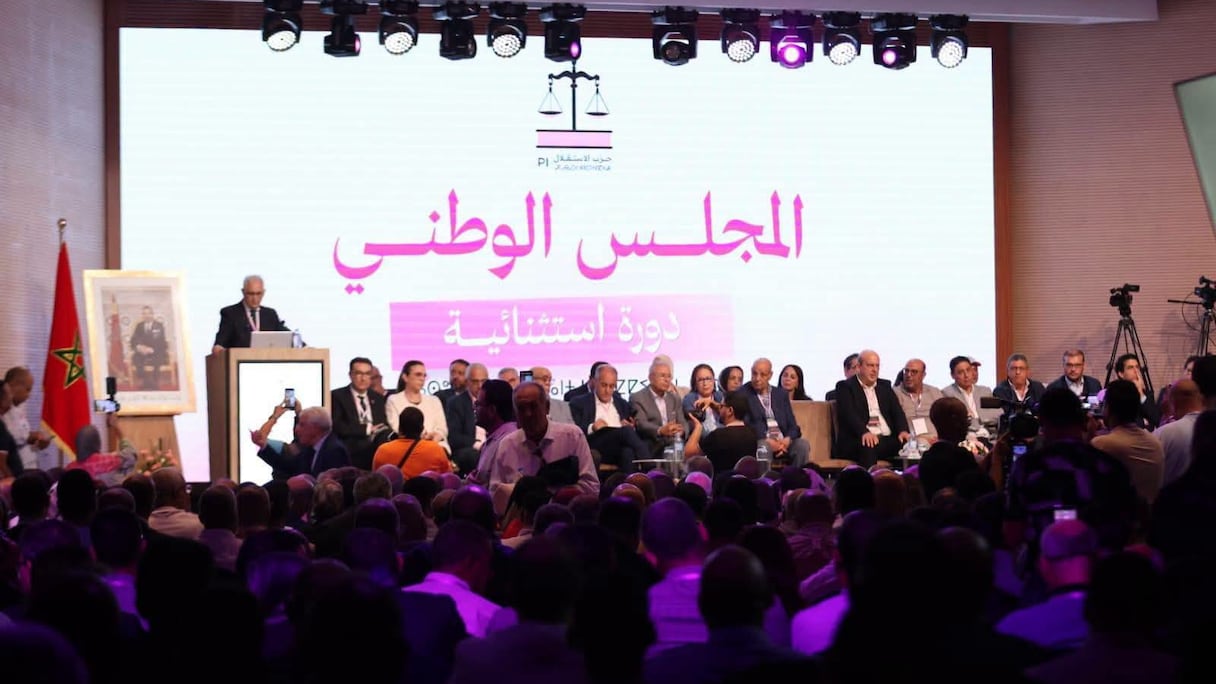
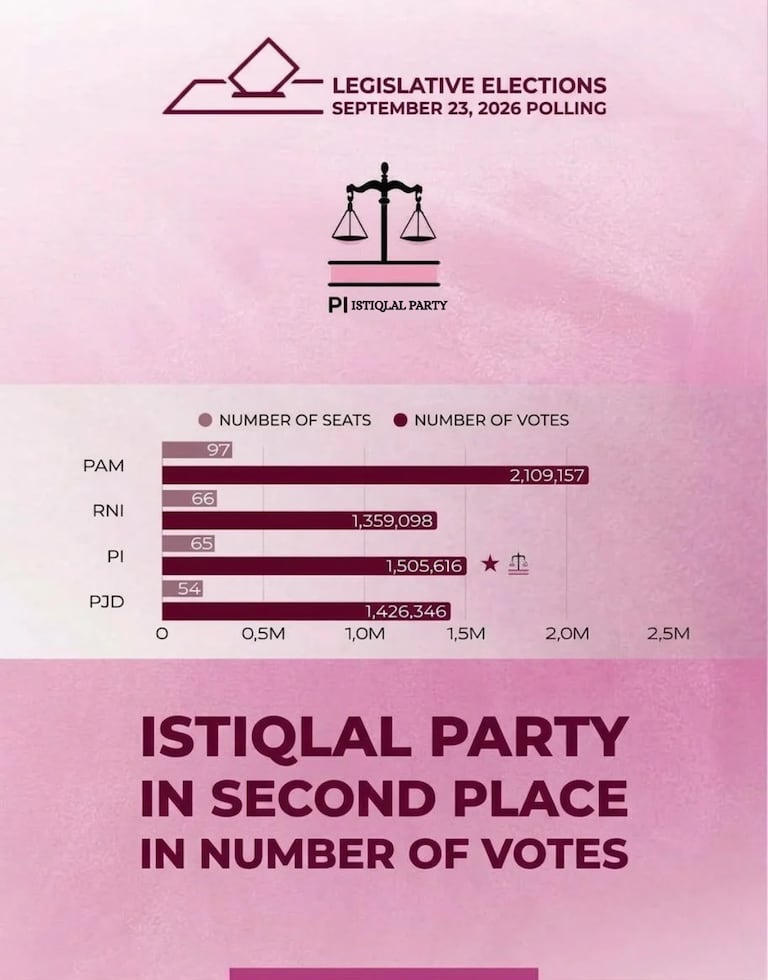
Istiqlal won 65 seats in the 2026 elections, down from 81 in 2021. According to figures presented by Baraka at an extraordinary meeting of the party’s National Council in Salé on Saturday, Istiqlal candidates won 751,672 votes on local lists, compared with about 1.2 million in 2021. Including regional lists, the party received 1,505,616 votes in 2026.
Baraka said the decline in seats should be viewed in the context of lower turnout. “80% of the decline is due to the drop in the number of people who voted,” he told members of the National Council, arguing that the smaller electorate affected the results of several parties, including Istiqlal.
He also cautioned against comparing the 2026 results only with those from 2021. Based on the figures he presented, Istiqlal won 15.34% of the vote this year, compared with 16.8% in 2021, but he noted that the party’s share remained above its results in the 2016 and 2011 legislative elections.
Read also : 2026 elections: Electoral complaints fall by more than 60%
Baraka also pointed to the PJD’s return as a major factor. The party, led by Abdelilah Benkirane, won 54 seats on September 23, compared with just 13 in 2021.
He said the PJD’s comeback changed the distribution of votes in several constituencies. The 2021 election had taken place after a major drop in support for the PJD, he noted, while the return of part of its traditional electorate affected Istiqlal because the two parties share what Baraka described as “the same political reference” and have overlapping voter bases and local networks in several areas.
Baraka said Istiqlal had nevertheless retained its core electorate and remained one of the country’s main political forces.
Several seats lost by narrow margins
Baraka also highlighted constituencies where Istiqlal candidates narrowly missed winning a seat. In Fahs-Anjra, he said, the difference was just 12 votes, while the gap in Rabat-Océan was 17 votes.
Published results show that Istiqlal candidate Driss Saour Mansouri received 4,892 votes in Fahs-Anjra, compared with 4,904 for PAM candidate Abdeslam Chellaf.
In Rabat-Océan, Istiqlal candidate Abdelilah Bouzidi El Idrissi also fell short by 17 votes, according to the published figures.
Across the country, 47 constituencies saw fewer than 1,000 votes separating the last winning list from the first unsuccessful one. Five had gaps of fewer than 100 votes. Istiqlal had the highest number of lists falling within 1,000 votes of a seat, with 11 such cases.
Baraka said the party could have won eight additional seats with roughly 2,700 more votes, given the narrow margins in several constituencies.
He also argued that the electoral contest “was not always fair despite its intensity,” referring to practices he believes affected the results in some constituencies.
Read also : PAM freezes Tangier mayor Laymouri’s membership after detention in election case
Baraka pointed to several individual results to underline what he described as Istiqlal’s continued electoral base.
In Laâyoune, he cited turnout of more than 75% and more than 53,000 votes for Istiqlal candidates, which he described as a record for the party in the constituency.
Three of the five highest individual scores nationwide also went to Istiqlal candidates, he said: Hamdi Ould Errachid, M’barek Tarmounia and Abdessamad Kayouh. He also highlighted Madiha Khayr, who received the highest number of votes nationally among female candidates running on local lists.
At the end of its meeting, Istiqlal’s extraordinary National Council authorized Baraka to continue consultations over the party’s possible participation in the next government led by Fatima Ezzahra El Mansouri.
Baraka will lead the talks with the designated head of government and determine the party’s position once the consultations are complete.
