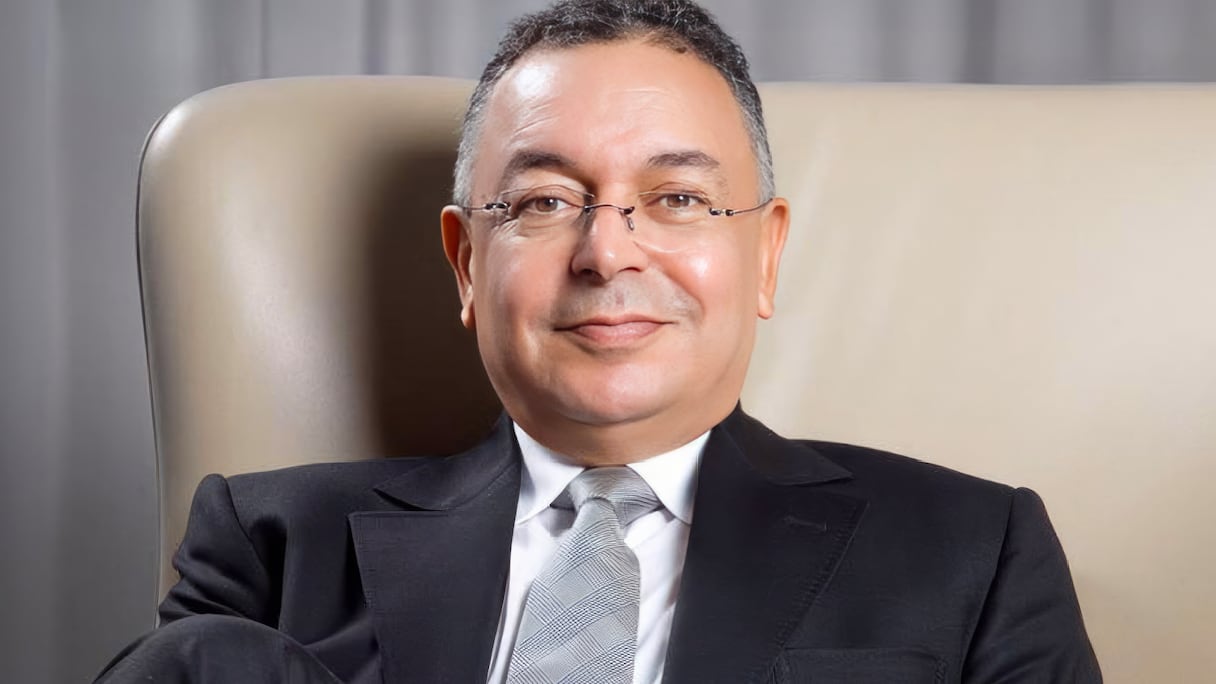
After Spanish channel Cuatro broadcast comments openly calling for the “political and economic destruction” of Morocco without any challenge from the panel, academic and politician Lahcen Haddad approached professional media bodies in Spain. The Madrid Press Association has since formally referred his complaint to the Commission for Journalism Ethics. Haddad spoke to us about the process, what he sees as an imbalance in Spanish media coverage of Morocco, and the need to prioritize editorial responsibility in the debate.
You were the first to react to comments by a guest introduced as a “Sahrawi activist” who called for the “political and economic destruction” of Morocco on the debate program Horizonte, broadcast on Spanish channel Cuatro. What shocked you most about the statement?
What shocked me most was not that an individual could express an extreme opinion. In a democracy, freedom of expression also protects very harsh, and even deeply disturbing, opinions.
What really struck me was that a guest could speak on television about “politically and economically destroying” a country of nearly 40 million people without being immediately asked what such “destruction” would mean in practical terms for millions of people.
Destroying an economy is not an abstraction. It means affecting jobs, incomes, businesses, families, public services and the daily lives of ordinary citizens.
And it is precisely because Spain is a democracy that this question needs to be asked. Freedom of expression does not exempt the media from their editorial responsibility: to provide context, question, challenge and, when necessary, contradict.
What does this say about some Spanish media outlets that present themselves as neutral and impartial?
I would be reluctant to generalize about all Spanish media. Spain has a diverse and professional press that is often highly demanding, including when it comes to Morocco.
What concerns me more is that in some areas of the media there is a degree of imbalance when Morocco is concerned. Extremely serious accusations or statements can sometimes be made with very little challenge or demand for evidence.
So my question is very simple: would the same standards be applied if someone went on television and proposed the “political and economic destruction” of Spain, France, Algeria or any other country?
I am not asking for favorable treatment of Morocco. I am simply asking for the same journalistic standards to be applied to everyone.
The Madrid Press Association (APM) officially confirmed that it had referred your complaint to the Commission for Arbitration, Complaints and Journalism Ethics, Spain’s highest competent body for ruling on breaches of media ethics. To what extent have you obtained justice?
I first chose the most direct route: publicly addressing Cuatro, Mediaset España, the Horizonte program and its officials, asking them for an editorial explanation.
I never asked for the guest to be censored or prevented from expressing himself. I asked how the editorial team assessed, according to its own journalistic standards, the fact that a call for the “political and economic destruction” of a country had been broadcast without any immediate challenge over its human consequences.
After receiving no response, I then approached Spanish professional bodies. The Madrid Press Association informed me that it had forwarded my complaint to the commission responsible for journalism ethics.
So I would not say that I have “obtained justice.” There has not yet been a ruling on the substance of the complaint. But the fact that the issue has now been brought before a competent ethics body is an important step. I am calmly awaiting what comes next.
Are you considering further action?
At this stage, I am fully committed to the journalistic and ethical route.
My aim is not to wage a battle against a Spanish media outlet or an individual contributor. It is to have a matter of principle examined: what is the editorial responsibility of a media outlet when a guest calls for the political and economic destruction of an entire country?
I will therefore wait for the response from the bodies that have received the complaint. Depending on that response, I will naturally consider the appropriate next steps, without prejudging at this point what they might be.
What does this situation say about the lack of Moroccan voices in Spain?
This case does indeed highlight a lack of Moroccan representation in part of the Spanish public debate.
Spain has many journalists, academics and specialists who work seriously on Morocco. But when a crisis emerges between the two countries, the media debate is still very often shaped mainly by Spanish voices, sometimes joined by figures who are strongly opposed to Morocco.
There should be more Moroccans able to take part directly in this conversation, in Spanish, with facts and arguments and without aggression.
Defending Morocco’s position does not mean asking Spanish journalists to become pro-Moroccan. It means ensuring that Morocco is a participant in the debate, rather than simply an object that others debate.
I would also like to make clear that I never asked for Mr. Alisalem to be banned from appearing on television or for a media outlet to stop inviting people who oppose Moroccan positions. That would go against everything I stand for. I am asking for exactly the opposite: more journalism, more challenge and greater factual rigor.